Get a quote
Big Cheer to homebuyers Homes may get cheaper with lower GST on Cement

Sep 10 2025

The cost of building or buying your dream home may soon drop, as the government decided to lower the GST on cement to 18% from 28% during the 56th GST Council meeting yesterday. As per the GST notification, “Portland cement, aluminous cement, slag cement, super sulphate cement and similar hydraulic cements, whether or not colored or in the form of clinkers,” will see their GST rate go from 28% to 18%, effective September 22, 2025. However, the actual savings for homebuyers will depend on when and how much of this benefit the cement companies choose to pass on. As Anupama Reddy, Vice President & Co-Group Head, ICRA Ltd, explains, “Rural housing will be a key beneficiary from the government’s decision to reduce GST on cement from 28% to 18%, since this tax cut translates into a 0.8%–1.0% reduction in overall construction expenses. The price benefit of Rs 26-28/bag will be transferred to the retail customer, without materially affecting the profitability of cement manufacturers.”

How does the GST reduction on cement bring down housing costs?

With GST on cement reduced from 28% to 18%, the total post-tax cost per bag of cement will come down, subsequently lowering the total construction cost for builders. If developers pass on this tax benefit, the per-square-foot prices of houses could come down. Experts suggest that lower construction costs translate into immediate price correction or more attractive pre-launch offers for consumers.
 Moreover, if an individual homeowner is in the process of building an under-construction house, the benefits will land more directly in their pockets in the form of lower GST on each cement bag and, hence, cheaper cement as raw material upfront. As CA Siddharth Surana puts it, “While most real estate developers opt for the 5% GST scheme without Input Tax Credit (ITC), and a large share of infrastructure projects are exempt or do not claim ITC, cement continues to remain one of the biggest cost drivers.” “This rate cut is therefore more than just a tax relief—it directly translates into lower project costs and improved cash flows and offers a strong boost to housing affordability and infrastructure development,” he continues. How will this move impact affordable housing? According to ANAROCK research, the affordable housing category (which includes properties priced below Rs 45 lakh) has seen its share of total sales decline from 38% in 2019 to just 18% in 2024. This GST rate cut, if translated into reduced home prices, will make the new homes more affordable to homebuyers. “The share of new supply dropped even more dramatically from 40% in 2019 to just 12% in the first half of 2025. The reduced construction costs, if passed on to homebuyers, can boost demand in these segments. India currently has a shortfall of nearly 1 crore budget homes in urban markets, and such interventions could help bridge this gap,” the research continues. As Reddy further notes, cement accounts for nearly 10-12% of total construction costs, particularly in rural housing.


https://www.livehomes.in/news_letter


New Building ruls may drive sale of independent homes in Chennai

Sep 09 2025

Families aspiring to own villas and independent homes in Chennai have reason to cheer, with the Tamil Nadu govt now permitting stilt + two-floor buildings up to 10 metres. The change unlocks stilt space for parking and speeds up handovers, making villas more practical for buyers. Developers and investors, meanwhile, expect the move to spark fresh demand for plotted developments across the city and suburbs. S Ramprabhu, chairman of the DTCP committee at Builders Association of India, said the change will support the growing demand for independent homes in Chennai. "Earlier, when self-certification was limited to G+1 homes, parking space was added to the FSI, which led to roadside parking. Now that it has been extended to stilt + two floors, it will be far more beneficial. We will soon see more villas on OMR and ECR. The self-certification scheme, launched by chief minister M K Stalin on July 22, 2024, was designed to benefit economically weaker sections and middle-income groups by enabling immediate building permits through a single-window online portal. Initially, it applied to G+1 constructions up to 7 metres in height, with a built-up area of 3,500 sqft on plots of up to 2,500 sqft. More than one lakh citizens availed themselves of the facility since its launch. According to Sivakumar P, global sales head of G Square, the scheme is a game changer for the real estate sector. "By simplifying approvals for G+2 and G+1 homes, it saves time and cost for builders while making the process more transparent and convenient for customers. Customers also benefit from time savings, transparent guidelines, instant downloads of approved plans, and the convenience of applying from home — without repeated visits to govt offices. Applicants must submit building plans signed by registered professionals at https://onlineppa(dot)tn(dot)gov(dot)in/ along with documents such as sale de ..


https://www.livehomes.in/news_letter


GST council approves two tier tax structures to be implemented from September 22

Sep 06 2025

GST tax rates on common use items ranging from hair oil to corn flakes, TVs, and personal health and life insurance policies were slashed after the all-powerful GST Council on Wednesday approved a complete overhaul of the tangled Goods and Services Tax regime. The GST Council approved rate overhaul by limiting slabs to 5 per cent and 18 per cent effective from September 22, the first day of Navaratri. Almost all personal use items will see rate cuts as the government looks to boost domestic spending and cushion the economic blow of the US tariffs. Briefing reporters after a marathon daylong GST Council meeting, Union Finance Minister Nirmala Sitharaman said all decisions were taken unanimously, with no disagreement with any state. The panel approved simplifying the goods and services tax (GST) from the current four slabs -- 5, 12, 18 and 28 per cent -- to a two-rate structure -- 5 and 18 per cent. A special 40 per cent slab is also proposed for a select few items such as high-end cars, tobacco and cigarettes. The new rates for all products, except gutkha, tobacco and tobacco products and cigarettes, will be effective September 22 -- the first day of Navratri. While daily use food items will continue to attract nil tax rate, common use food and beverages ranging from butter and ghee to dry nuts, condensed milk, sausages and meat, sugar boiled confectionery, jam and fruit jellies, tender coconut water, namkeen, drinking water packed in 20-litre bottles, fruit pulp or fruit juice, beverages containing milk, ice cream, pastry and biscuits, corn flakes and cereals, and sugar confectionery are likely to see a cut in tax rate to 5 per cent from the current 18 per cent. The Indian economy is heavily reliant on consumption with private consumption accounting for 61.4 per cent of the nominal GDP last fiscal. The GST reforms are likely to boost the economy by up to 0.5 percentage points by the second year of its implementation, effectively neutralising the full impact of the US tariff, economists. 


https://www.livehomes.in/news_letter


Housing ministry launches unified RERA portal

Sep 05 2025

In the fifth meeting of the central advisory council (CAC), Manohar Lal Khattar, union minister of housing & urban affairs (MoHUA) launched the unified RERA portal rera(dot)mohua(dot)gov(dot)in, providing a common platform for stakeholders, enhancing transparency and enabling sharing of best practices among States/UTs. The launch of the Unified RERA Portal is a major step in strengthening transparency and accountability in the real estate sector," said housing ministers. He also added that RERA has empowered homebuyers, ensured timely delivery of projects and infused discipline in the sector. He asked States and UTs to implement RERA in letter and spirit to protect the interests of citizens. Tokhan Sahu, MoHUA observed that over the last eight years, RERA has emerged as a transformative reform for the real estate sector. He also said that the priority now is faster resolution of homebuyers’ grievances and revival of stalled projects so that trust between buyers and developers is further strengthened. The meeting was attended by Kuldip Narayan, joint secretary (Housing), MoHUA, Srinivas Katikithala, secretary (HUA), various RERA chairpersons, among others. Greater uniformity in RERA implementation across States was recommended, along with clarity in definitions, faster registration processes, and stronger compliance mechanisms. To streamline reforms,the council proposed the formation of a central-level committee within MoHUA comprising representatives of all stakeholders to ensure rules and regulations under the Act remain aligned with its parent framework.


https://www.livehomes.in/news_letter


Apartment owners are requesting the withdrawal of the Goods and Services Tax that is being collected through their residential association fees.

Sep 04 2025

As discussions have begun on revising certain tax slabs, a group representing apartment residents has started a petition seeking the removal of the 18 per cent Goods and Services Tax (GST) imposed on apartment maintenance charges. Members of the group noted that a notification issued in 2019 has placed an undue financial burden on residential associations and apartment owners.

The petition states that GST is currently levied on the full monthly maintenance charges collected by residential associations if the amount exceeds ?7,500 per month per household. It further highlights that rising living expenses are particularly challenging for middle-class families, who are often forced to adjust their budgets and cut back on essential needs.

The petition also explains that although GST was introduced to streamline indirect taxes and make essential goods more affordable, its application to residential maintenance charges creates hardship for those who depend on collective residential management for the upkeep of their homes and surroundings. It also points out that individual residents do not receive any GST input credit but still pay tax at the rate of 18 per cent.

The petition further argues that the ?7,500 threshold is arbitrary and does not reflect variations in living costs across regions. It urges the authorities to reconsider the rule, raise the exemption limit in line with inflation, and reduce the applicable GST rate.


https://www.livehomes.in/news_letter


Why the 2.5 BHK is redefining urban Indian Living today

Sep 03 2025

There is slow yet substantial change taking place in the Indian urban setting. As the standard of living improves and cities become more congested, homebuyers — especially in the Indian context — seek smarter and more adaptable, flexible housing solutions. The 2.5 BHK configuration seems to be gaining popularity among working professionals, nuclear families, and even investors. The change has only accelerated in the last two decades because of socio-economic factors such as the rising availability of remote work, urban migration, nuclear families, dual-income households, and a need for greater privacy. In the given context, the 3 BHK can be financially daunting, while a 2 BHK in this situation becomes suffocating. With its “half” room, the 2.5 BHK offers the best of both worlds — and that is precisely where its advantage lies. 

What makes the 2.5 BHK tick? 

The main distinction between the 2 BHK and the 2.5 BHK is the addition of a small room — usually around 8x10 feet or smaller. Though not ample for a full-sized bedroom, this small area can be used for a wide range of things. It can be crafted into a soft office, study, prayer room, hobby area, or even a tiny guest room. Changes to modern life can be attributed to the increasing popularity of this format. Noteworthy factors include: 

Remote and hybrid work models: There has been a sustained need for home offices or quiet zones ever since the pandemic, which allows for productive remote or hybrid work. The “half” room serves as a professional space that doesn’t interfere with household routines.

Growing children: There are families with toddlers or school-aged children who often need an additional study or playroom, but can’t be comfortably accommodated within a standard 2 BHK.

Frequent visitors or elderly parents: A large part of the Indian population continues to accommodate visiting parents or extended family for long periods of time. These families can readily house them without any loss of general everyday comfort in a 2.5 BHK.

Cost-effective upgrade: The 2.5 BHK is relatively less expensive compared to a 3 BHK and comes with lower EMIs, maintenance, and tax implications — making it a practical choice for middle-income earners.

Buyer behaviour and market response Recent trends in the urban housing markets indicate a sharp increase in the demand for 2.5 BHK units in Bengaluru, Pune, Hyderabad, Chennai, and certain areas of the Mumbai Metropolitan Region. 

Developer strategies and design innovations

Now, real estate developers are contorting floor plans to utilise the new “half” room. Some are providing modular options that enable the space to either be opened up or enclosed depending on the buyer’s preferences. In some cases, the 0.5 room is now being strategically placed to capture natural light, enhance ventilation, or provide better acoustic separation — the room is highly functional even within limited space.

A glimpse into the future

Aside from a room, the 2.5 BHK offers myriad opportunities. For couples just starting a life together, it could translate into a space needed to enable a new business idea. For children, it could mean focused academic attention. For professionals, it allows for greater separation between work and home life. These cities are well-connected and serve as hubs for young professionals and IT sector employees, thus serving as a hot market for first-time homeowners who are value-conscious. This demographic tends to view this format as a long-term investment that is flexible enough to cater to persisting family needs, thus allowing less urgency to upgrade to larger homes later on. This configuration enhances these clients’ value propositions. Even basic housing units are more appealing to real estate investors, as they can understand the functionality for a broader target market.


https://www.livehomes.in/news_letter


Chennai to get 14.2km Elevated Corridor on ECR from Thiruvanmiyur To Uthandi

Sep 02 2025

A major road project has been launched along the East Coast Road (ECR). A four-lane elevated corridor, covering 14.2 km from Thiruvanmiyur to Uthandi, will soon be constructed to ease heavy traffic congestion. The project cost is estimated at ?2,100 crore.

The corridor will start near a major landmark in Thiruvanmiyur and extend up to Uthandi. It will be built along the road median with support pillars and will also include pedestrian pathways. The structure will have a width ranging from 16 to 20 metres and a clearance height of 5.5 metres for vehicles travelling below.

International construction tenders were issued on August 26. Officials confirmed that the project will follow a hybrid financing model combining both engineering-procurement-construction and toll-based operation methods.

The current travel time between Thiruvanmiyur and Uthandi during peak hours is about one hour. Once the elevated corridor is completed, motorists heading towards Mamallapuram, Puducherry, and Cuddalore are expected to cover the same stretch in just 15 to 20 minutes.

The project will ease pressure across 13 heavily congested junctions, including Neelankarai, Kottivakkam, Vettuvankeni, Injambakkam, Akkarai, and Panaiyur. Exit ramps are planned at several key points along the route. The corridor will operate as a toll road under a closed-gate system, with charges based on the distance travelled.

In addition to reducing congestion on ECR, the corridor will serve as an alternative route for commuters travelling from Adyar to Kelambakkam, Thiruporur, and Mambakkam, reducing traffic on the busy parallel route. The section currently handles nearly 70,000 passenger car units per day, and officials expect the new elevated stretch to significantly streamline movement for both local and long-distance travellers.

Alongside this project, the six-laning of a 9.2 km stretch between Thiruvanmiyur and Akkarai is nearing completion, with about 90 per cent of the work finished. At present, the state’s longest operational elevated corridor is 7.3 km in length. Upon completion, the Thiruvanmiyur–Uthandi corridor will become the longest elevated roadway of its kind in the state.


https://www.livehomes.in/news_letter


A major real estate developer is planning to sell one of its commercial properties in Chennai that is currently leased to a major technology supply-chain firm.

Aug 29 2025

A foreign real estate investor is in the process of selling an industrial facility in Chennai that is currently leased to a major electronics manufacturing firm, according to people familiar with the development. The 750,000 sq ft property is expected to fetch around ?600 crore, and several global investment groups are reported to be bidding for it.

One source said the asset is on a long-term lease and holds significant value because high-demand electronic products are manufactured there. The investor’s board is reassessing the process after receiving initial bids, and although multiple international firms have expressed interest, a decision on whether to invite revised offers has not been made yet.

Industry insiders estimate that about 750,000 electronic devices are produced at this facility, including units undergoing refurbishment. They described it as a high-end industrial complex and one of the largest of its kind in the country for this type of manufacturing.

Parties involved in the transaction declined to comment on the matter.

A recent industry survey indicates that a majority of manufacturers are expanding operations due to improved infrastructure support, with most reporting better logistics access driven by government initiatives. The study also noted strong optimism about the positive impact of ongoing national infrastructure development programmes


https://www.livehomes.in/news_letter



Live Services

Livehomes News Letters

Livehomes Insights

Image 1
Kottivakkam Standalone Apartment Price Trend 2021To 2026 Flats for Sale

Explore the Kottivakkam standalone apartment price trend 2021–2026, flats for...

Image 1
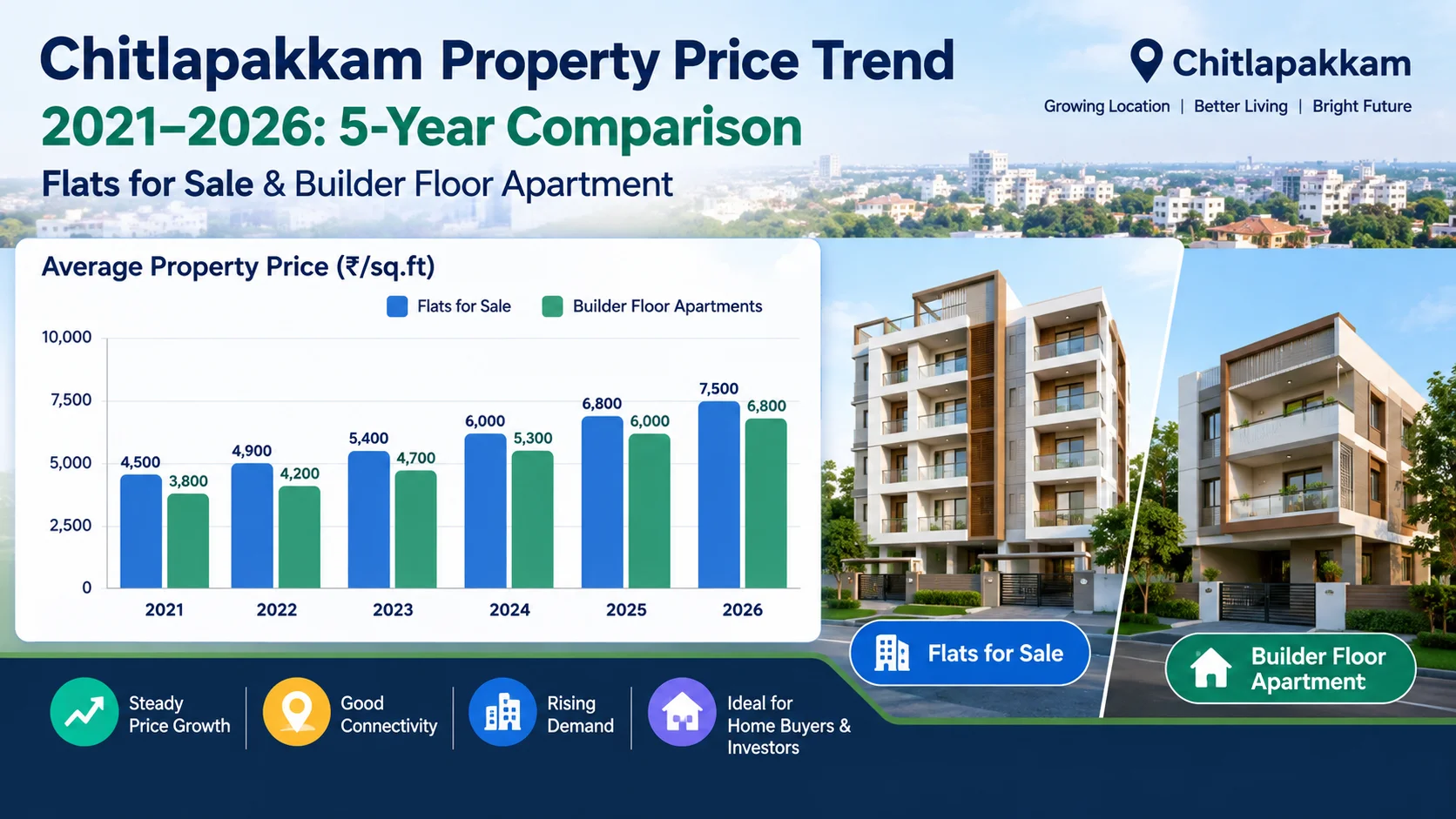
Chitlapakkam Property Price Trend 2021 to 2026: 5 Year Comparison, Flats for Sale & Builder Floor Apartments

Explore Chitlapakkam Property Price Trend 2021–2026, 5-year price comparison, flats...

Image 1
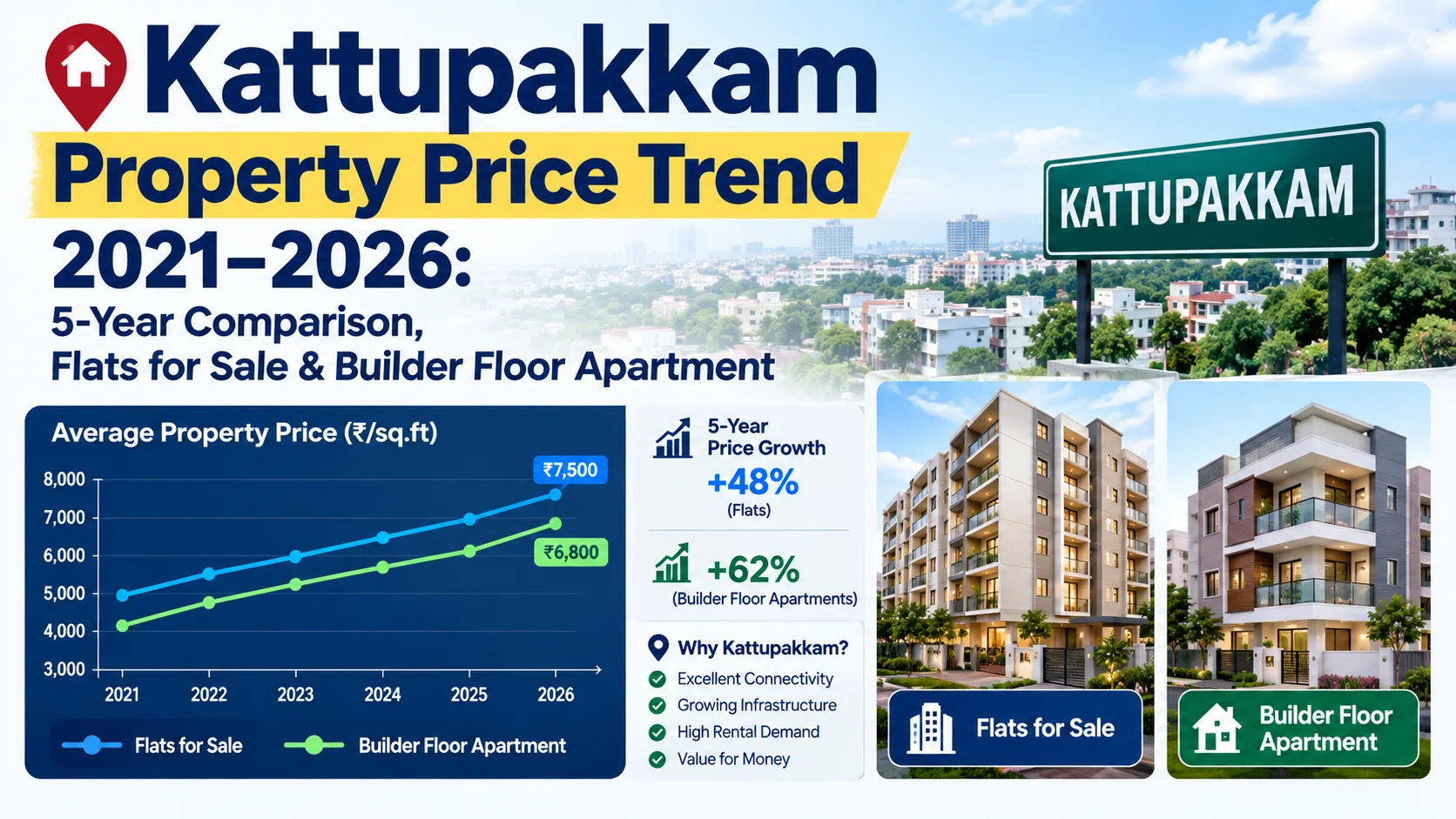
Kattupakkam Property Price Trend 2021To 2026: 5 Year Comparison, Flats for Sale & Builder Floor Apartment

Kattupakkam property prices have changed steadily from 2021 to 2026....

Image 1
Image 2
Image 3
Image 4

Download Livehomes App
and Notification for New Properties

Play Store Logo iOS App Store Logo

To Make Your Builder Floor Apartment, flats, Villa, Search convenient and attractive  

Real Time Experience | Budget friendly Search | Notification as on Date

Frequently asked questions

Yes, we offer property management services for landlords who require assistance with managing their rental properties. Our services include finding tenants, collecting rent, handling maintenance issues, and ensuring compliance with legal requirements.

Construction is the process of building, assembling, or erecting structures, infrastructure, or facilities.

Look for designers with experience in projects similar to yours, check their portfolio, and ensure they understand your vision and budget.

Trends vary, but some popular ones include sustainable design, biophilic design (connecting with nature), and minimalist aesthetics.

The borrower receives a lump sum of money from the lender, which is then repaid over time with interest, typically through monthly payments.


About Us | Properties | Home Loan | Join Venture | Contact us