What Is Immovable Property?
Immovable property refers to property that cannot be moved from one place to another without causing damage or altering its nature. It includes land and anything permanently attached to the land, such as buildings, houses, trees, or infrastructure.
Examples of Immovable Property
- Land
- Houses and buildings
- Apartments and flats
- Offices and shopping malls
- Factories and warehouses
Immovable property plays a vital role in economic development, investment, and personal wealth creation.
Main Classification of Immovable Property
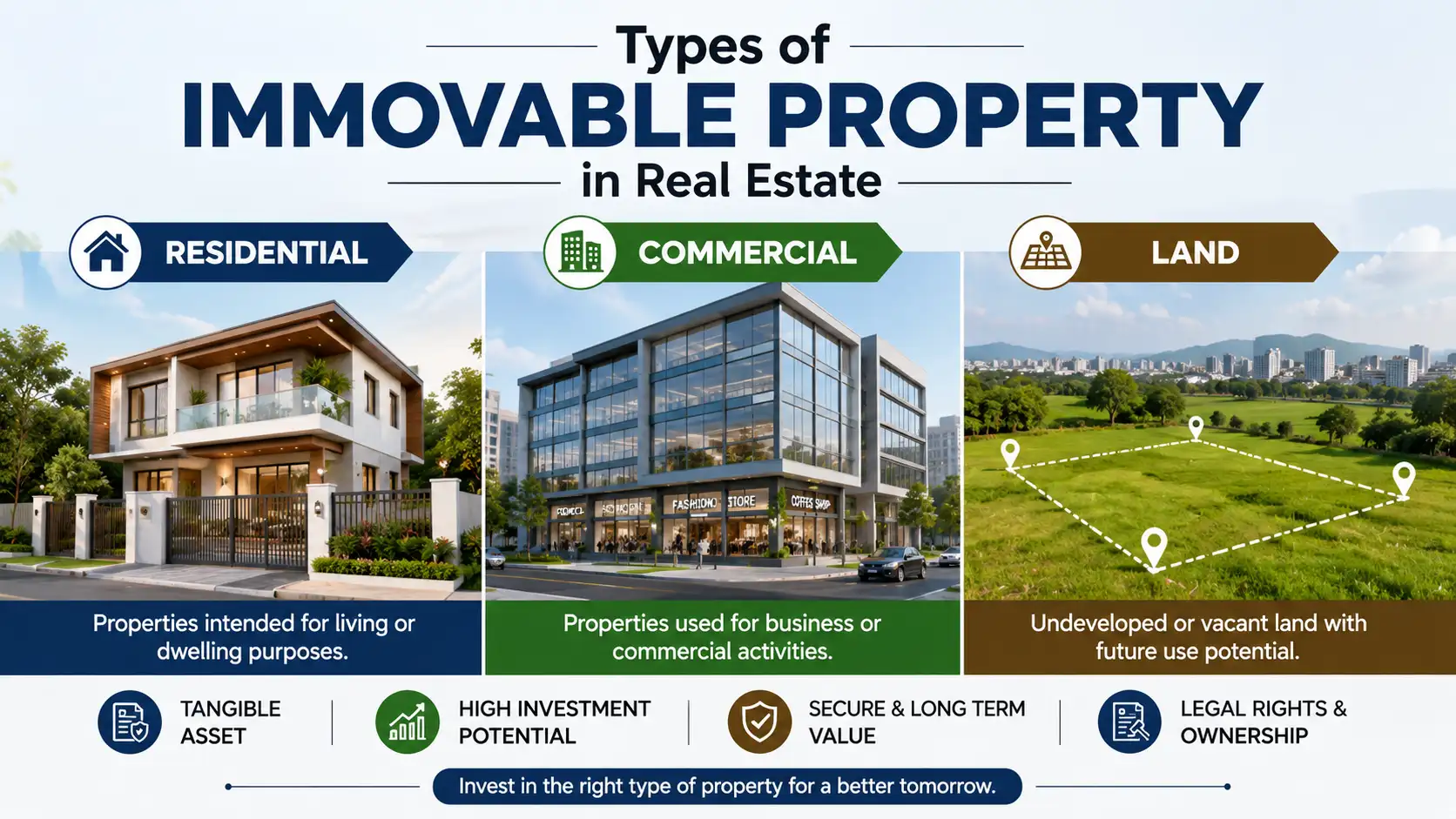
Immovable property in real estate is broadly classified into three main categories:
- Residential Property
- Commercial Property
- Land Property
Each category serves a different purpose and has unique legal, financial, and investment characteristics.
1. Residential Property
Meaning of Residential Property
Residential property is real estate that is used for living or dwelling purposes. It is meant to provide shelter and comfort to individuals and families and is not primarily intended for business activities.
Types of Residential Property
1. Single-Family House
- Independent structure
- Occupied by one family
- Full ownership of land and building
2. Apartments / Flats
- Individual units in a multi-story building
- Shared facilities like lifts, parking, and corridors
3. Villas
- Luxury residential homes
- Often located in gated communities
- Larger living space and private amenities
4. Row Houses / Townhouses
- Houses built in a row sharing side walls
- Separate entrances and ownership
5. Duplex / Triplex
- One building divided into two or three living units
- Can house multiple families
6. Condominiums (Condos)
- Individual ownership of units
- Common areas maintained by associations
7. Co-operative Housing
- Ownership through membership in a housing society
- Collective decision-making
Characteristics of Residential Property
- Used mainly for personal residence
- Generates income through rent or resale
- Lower risk compared to commercial properties
- High emotional value for owners
- Subject to residential zoning laws
Advantages of Residential Property
- Stable and consistent demand
- Easier financing and home loans
- Suitable for first-time investors
- Tax benefits on home loans (in many countries)
- Easier resale compared to other property types
Disadvantages of Residential Property
- Lower rental yield
- Regular maintenance expenses
- Rent control laws may limit rent increases
- Tenant management issues
2. Commercial Property
Meaning of Commercial Property
Commercial property is immovable property used for business, trade, professional, or income-generating activities. These properties are leased to businesses rather than individuals.
Types of Commercial Property
1. Office Buildings
- Corporate offices
- IT parks and business centers
2. Retail Properties
- Shops
- Showrooms
- Shopping malls
3. Industrial Properties
- Factories
- Manufacturing plants
- Production units
4. Warehouses and Logistics Centers
- Storage of goods
- Distribution hubs
5. Hospitality Properties
- Hotels
- Resorts
- Serviced apartments
6. Mixed-Use Developments
- Combination of residential, retail, and office spaces
Characteristics of Commercial Property
- Leased to companies or organizations
- Long-term lease agreements
- Higher rental income potential
- Value closely linked to economic conditions
- Professional management required
Advantages of Commercial Property
- Higher rental yields
- Long lease periods ensure stable income
- Tenants often handle maintenance
- Rental increases are contractually fixed
Disadvantages of Commercial Property
- High purchase cost
- Requires significant capital investment
- Vulnerable to economic downturns
- Longer vacancy periods
- Complex legal documentation
3. Land Property
Meaning of Land Property
Land property refers to vacant or undeveloped land without permanent structures. It is the most basic form of immovable property and forms the foundation for all real estate development.
Types of Land Property
1. Residential Land
- Used for constructing houses or apartments
2. Commercial Land
- Used for business buildings like malls or offices
3. Industrial Land
- Used for factories and warehouses
4. Agricultural Land
- Used for farming and cultivation
5. Mixed-Use Land
- Approved for multiple purposes
6. Recreational Land
- Used for parks, resorts, and leisure activities
Characteristics of Land Property
- No structural depreciation
- Value depends on location and zoning
- Limited immediate income
- Long-term investment asset
Advantages of Land Property
- Minimal maintenance cost
- High appreciation potential
- Flexible future use (as per zoning)
- No building repair expenses
Disadvantages of Land Property
- Does not generate regular rental income
- Risk of illegal occupation or encroachment
- Long holding period required
- Legal verification is critical
Importance of Immovable Property
- Creates long-term wealth
- Provides housing and business infrastructure
- Acts as collateral for loans
- Supports urban development
- Generates employment opportunities
Frequently Asked Questions
1. What is immovable property in simple words?
Immovable property is property that cannot be moved, such as land and buildings.
2. Which type of immovable property is best for beginners?
Residential property is best for beginners due to lower risk and easier financing.
3. Can land be rented?
Yes, land can be leased, but it usually does not generate high regular income.
4. Which property type gives the highest return?
Commercial property usually offers higher rental returns, while land offers long-term appreciation.
5. Is immovable property a safe investment?
Yes, if proper legal checks are done and the property is in a good location.
6. What documents are required before buying immovable property?
- Title deed
- Sale agreement
- Zoning approval
- Property tax receipts
- Encumbrance certificate
7. Can residential property be converted to commercial?
Yes, but only with approval from local authorities and zoning laws.