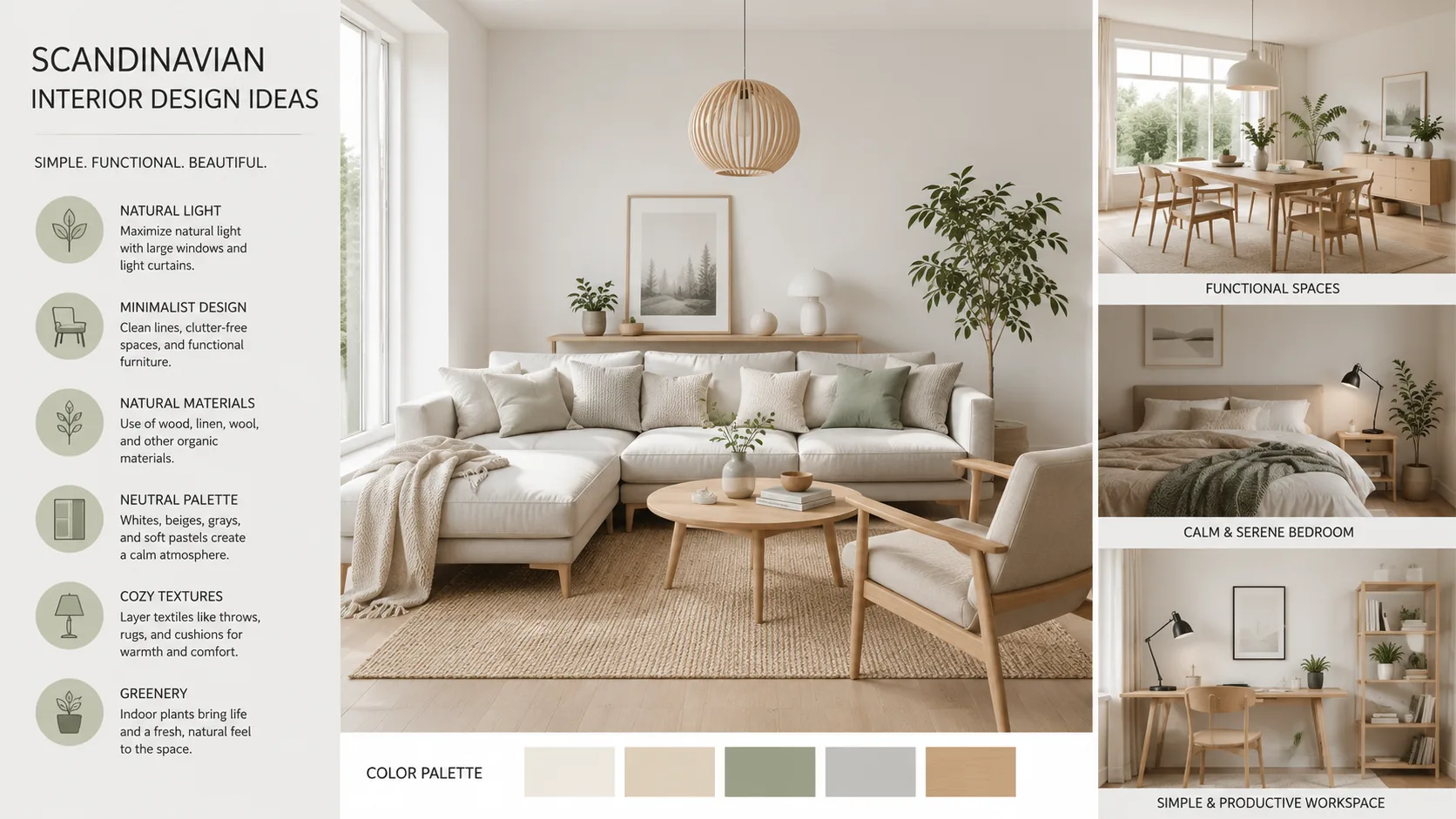
Scandinavian interior design is a complete lifestyle-oriented design philosophy, not just a visual trend. It combines minimalism, comfort, practicality, craftsmanship, and nature to create spaces that are calm, functional, and timeless. This style developed in Northern Europe—mainly Sweden, Denmark, Norway, and Finland—where people needed bright, warm interiors to balance long, cold, and dark winters.
1. Historical Background of Scandinavian Design
Scandinavian design emerged in the early 20th century and gained global popularity after World War II.
Why it developed:
- Harsh winters and limited daylight
- Need for practical and affordable homes
- Social values emphasizing equality and simplicity
- Respect for craftsmanship and durability
Designers believed good design should be accessible to everyone, not just the wealthy. This led to interiors that are
- Affordable
- Functional
- Long-lasting
- Visually calming
2. Core Principles of Scandinavian Interior Design
1. Simplicity
- Clean lines
- Uncomplicated forms
- No unnecessary decoration
2. Functionality
- Every object has a purpose
- Furniture often serves multiple functions
- Storage is integrated and hidden
3. Comfort & Well-Being
- Homes should feel emotionally safe
- Cozy atmospheres encourage relaxation
- Furniture prioritizes ergonomics
4. Natural Connection
- Wood, stone, wool, linen
- Indoor plants
- Earth-inspired tones
Also Read: Boho Chic Interior Design
3. Scandinavian Color Palette
Primary Colors
- White (warm white preferred over pure white)
- Soft gray
- Cream and beige
- Pale taupe
Secondary / Accent Colors
- Muted blues
- Sage green
- Dusty pink
- Charcoal (used sparingly)
Purpose of the Palette
- Reflect natural light
- Make rooms feel larger
- Create mental calm
- Allow furniture and textures to stand out
Important: Scandinavian interiors avoid loud or glossy colors.
4. Materials Used in Scandinavian Interiors
Wood (Most Important Material)
- Oak
- Birch
- Pine
- Ash
Used for:
- Floors
- Furniture
- Wall accents
- Shelving
Textiles
- Wool (rugs, throws)
- Linen (curtains, bedding)
- Cotton (upholstery)
Other Materials
- Ceramic
- Stone
- Leather (used minimally)
- Glass (for light diffusion)
These materials age beautifully and emphasize sustainability.
5. Scandinavian Furniture Design
Furniture Characteristics
- Slim profiles
- Tapered wooden legs
- Neutral upholstery
- Low visual weight
Functional Design
- Sofas with deep seating for comfort
- Extendable dining tables
- Storage benches
- Floating shelves
Furniture Philosophy
Instead of many decorative items, Scandinavian homes rely on well-designed furniture as décor.
6. Lighting in Scandinavian Interiors (Critical Element)
Lighting compensates for lack of sunlight.
Types of Lighting
- Ambient lighting – overall room glow
- Task lighting – reading, cooking, working
- Accent lighting – lamps, candles, wall lights
Common Lighting Choices
- Pendant lights with simple shapes
- Paper or fabric lampshades
- Warm white bulbs
- Candlelight for evening warmth
Rule: One ceiling light is never enough.
7. Hygge & Emotional Comfort
The Danish concept of hygge is essential.
Hygge in Design Means:
- Soft blankets
- Layered rugs
- Calm lighting
- Personal objects
- Inviting seating arrangements
Hygge transforms minimalism into emotional warmth.
8. Scandinavian Décor & Styling
Décor Rules
- Fewer objects, higher meaning
- Handmade or natural items
- Functional décor (bowls, trays, lamps)
Common Décor Items
- Ceramic vases
- Abstract or nature-inspired art
- Indoor plants
- Neutral rugs
9. Scandinavian Interior Design by Room
Living Room
- Neutral sofa
- Wooden coffee table
- Textured cushions
- Area rug
- Floor lamp and plants
Bedroom
- Soft neutral walls
- Wooden bed frame
- Layered bedding
- Minimal décor
- Warm bedside lighting
Kitchen
- White or light cabinetry
- Wooden countertops
- Matte finishes
- Open shelving
- Black or brass hardware
Bathroom
- White tiles
- Wooden vanity
- Stone accessories
- Minimal storage
10. Scandinavian Design Psychology
Scandinavian interiors:
- Reduce mental clutter
- Improve focus
- Encourage relaxation
- Promote mindful living
The calm color palette and uncluttered spaces support mental well-being.
11. Sustainability in Scandinavian Design
Sustainability is not a trend—it’s a foundation.
- Long-lasting furniture
- Natural materials
- Fewer disposable items
- Timeless design over fast trends
Also Read: Compare modern and traditional interior design styles
12. Common Mistakes to Avoid
Too much white without texture
- Cold lighting
- Over-minimalizing (empty space)
- Cheap faux materials
- Ignoring comfort
Frequently Asked Questions
1. Is Scandinavian interior design suitable for small homes?
Yes. Light colors and minimal furniture make small spaces feel larger.
2. Can Scandinavian design be colorful?
Yes, but colors must be muted and subtle, not bright or bold.
3. What flooring works best?
Light wood floors are ideal, but light tiles or laminate also work.
4. Is Scandinavian design still trendy?
It’s not a trend—it’s timeless.
5. Can I mix Scandinavian with other styles
Yes. It blends beautifully with modern, Japandi, and contemporary styles.
6. Is Scandinavian interior design good for families?
Absolutely. It emphasizes comfort, durability, and functionality.