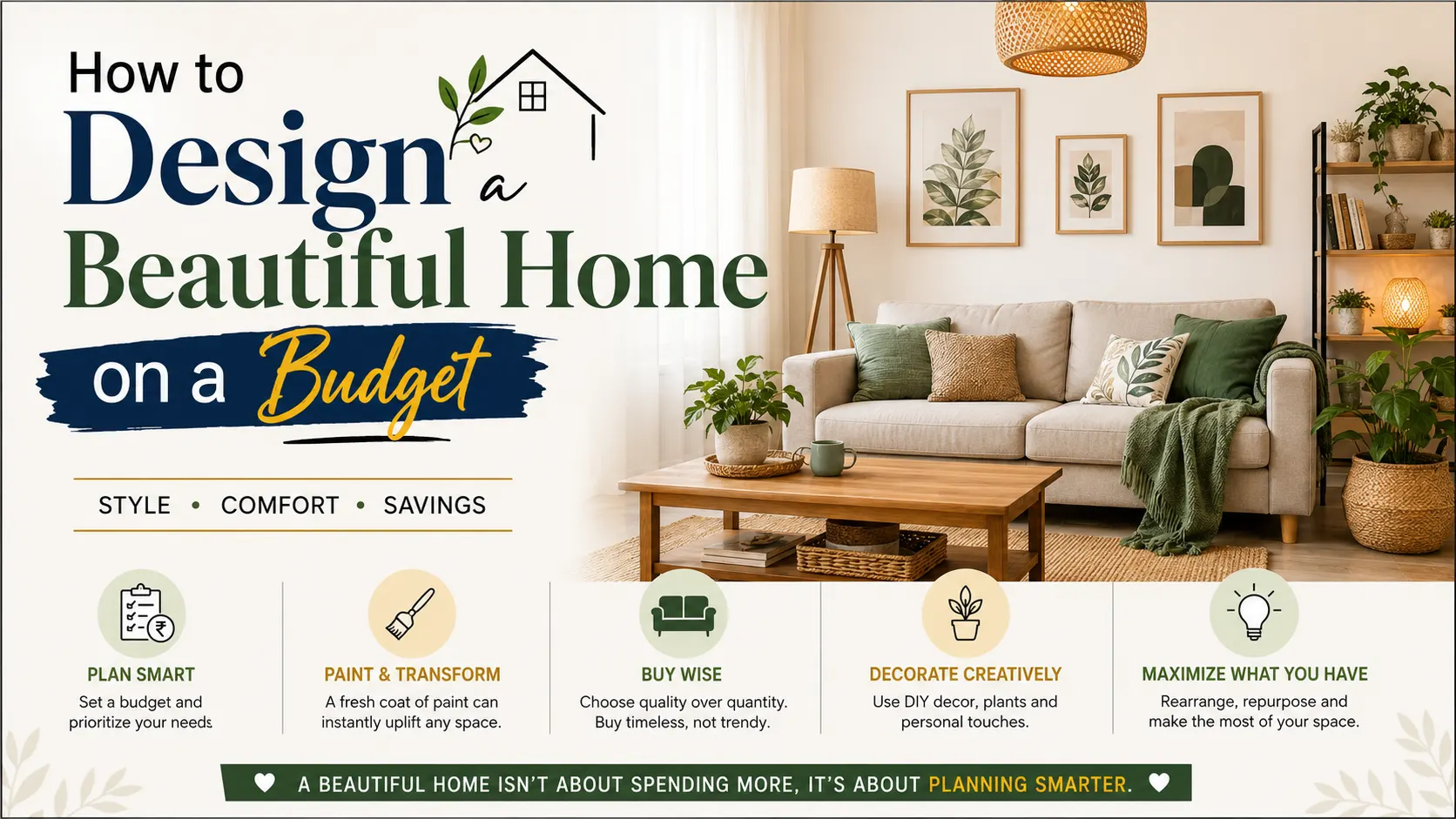
1. Start With a Clear Vision
A clear vision prevents impulse purchases and costly mistakes.
Define Your Style
Choose one main design style and stick to it:
- Modern / Minimal
- Scandinavian
- Traditional
- Industrial
- Boho
- Farmhouse
Tip: Browse Pinterest, Instagram, or home magazines and save only images that truly resonate with you.
Set Priorities
Decide what matters most:
- Comfort?
- Storage?
- Visual beauty?
- Durability?
Focus your budget on high-impact areas like the living room, kitchen, and bedroom.
2. Set a Realistic Budget
Break Your Budget Into Categories
Example:
- Furniture: 35%
- Paint & finishes: 15%
- Lighting: 10%
- Decor & accessories: 10%
- Storage solutions: 10%
- Emergency buffer: 20%
Always keep a buffer—unexpected costs will come.
Track Every Expense
Use:
- Google Sheets
- Budget apps
- Simple notebook
This keeps overspending under control.
3. Plan the Layout Smartly (Design Without Spending)
Good layout = beautiful home even with simple furniture.
Measure Everything
- Room size
- Door swings
- Window placements
Optimize Space
- Keep walkways clear
- Avoid oversized furniture
- Use corners efficiently
4. Use Paint as Your Biggest Budget Weapon
Paint is cheap and transformative.
Choose Budget-Friendly Colors
- White, beige, light grey for walls
- One accent wall for character
- A matte finish hides imperfections
5. Buy Smart Furniture
Focus on Essentials First
- Sofa
- Bed
- Dining table
- Storage
Spend more on comfort and structure, not looks.
Budget Furniture Tips
- Buy simple designs (easier to style)
- Look for local carpenters
- Flat-pack furniture saves money
- Shop during seasonal sales
Multi-Purpose Furniture
- Storage beds
- Sofa beds
- Foldable dining tables
- Ottomans with storage
6. Lighting: The Secret to a Luxurious Look
Good lighting can make a budget home look premium.
Layer Your Lighting
- Ambient (ceiling lights)
- Task (reading lamps)
- Accent (wall lights, LEDs)
Budget Lighting Hacks
- Warm LED bulbs
- DIY pendant lights
- Fairy lights for bedrooms and balconies
Also Read: Types of Lights Used in Interiors
7. Decor That Doesn’t Break the Bank
Use Fewer, Bigger Pieces
Instead of many small items, choose:
- One large mirror
- One statement artwork
- One bold rug
DIY Decor Ideas
- Framed fabric or wallpaper samples
- Handmade wall art
- Painted old vases
- Repurposed jars as planters
8. Soft Furnishings Make Everything Cozy
Curtains, cushions, and rugs add warmth instantly.
Smart Choices
- Neutral curtains with texture
- Cushion covers instead of new cushions
- Cotton or polyester blends (budget-friendly)
9. Storage = Clean = Beautiful
Clutter destroys even expensive interiors.
Budget Storage Solutions
- Open shelves
- Floating shelves
- Under-bed boxes
- Baskets
- Wall hooks
10. Add Greenery (Cheap and Powerful)
Plants bring life and freshness.
Budget Plant Ideas
- Snake plant
- Money plant
- Pothos
- Artificial plants for dark areas
11. Reuse, Repurpose, and Upcycle
Before buying new:
- Repaint old furniture
- Change handles/knobs
- Reupholster chairs
- Use old trunks as tables
12. Final Styling
This is where your home feels “finished.”
Styling Checklist
- Align cushions neatly
- Add throws to sofas
- Group decor in odd numbers
- Keep tabletops minimal
Common Mistakes to Avoid
- Buying everything at once
- Ignoring measurements
- Overdecorating
- Choosing trends over comfort
- Skipping a budget buffer
FAQs
1. Can a home really look luxurious on a low budget?
Yes. Good layout, lighting, neutral colors, and decluttering matter more than expensive items.
2. What should I spend most of my budget on?
Spend more on:
- Sofa
- Bed
- Mattress
- Lighting
Save on decor and accessories.
3. Is DIY worth it?
Absolutely. DIY painting, decor, and small furniture upgrades can save 30–50%.
4. How do I make a small home look bigger?
- Light colors
- Mirrors
- Minimal furniture
- Vertical storage
- Good lighting
5. How long does budget home design take?
Usually 1–3 months if done gradually. Designing slowly avoids mistakes.
6. Should I hire an interior designer?
If your budget is tight, you can:
- Hire for consultation only
- Use online design services
- Follow DIY guides and planning tools