1. Core Design Philosophy
Modern Interior Design
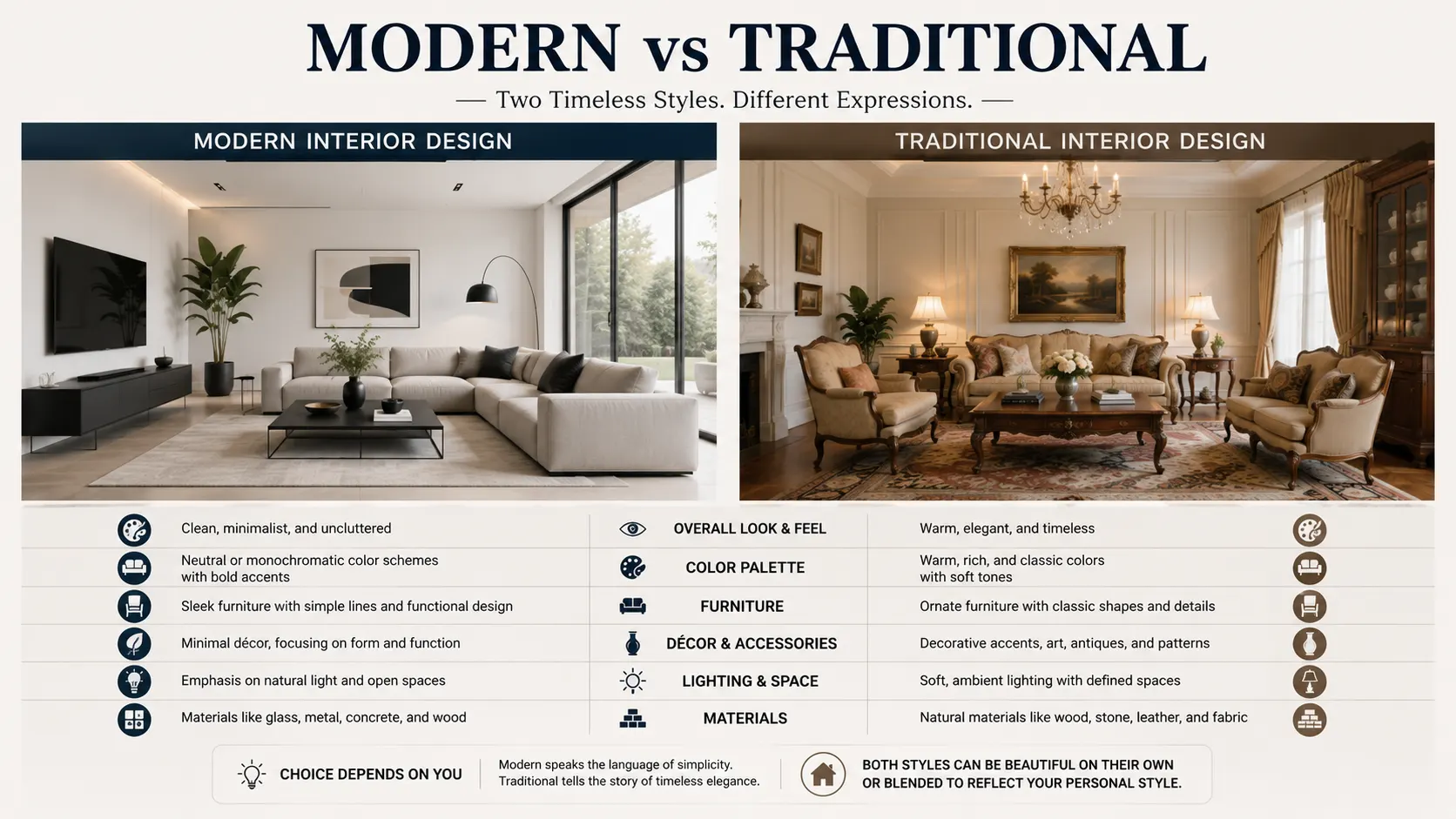
Modern interior design is based on simplicity, efficiency, and purpose-driven design. Every element exists for a reason. Decorative excess is eliminated to allow the architecture and materials to stand out.
- “Less is more” philosophy
- Focus on function over ornament
- Emphasis on space, light, and geometry
- Visual calm and order are priorities
Psychologically, modern design promotes the following:
- Mental clarity
- Reduced stress
- Focus and productivity
Traditional Interior Design
Traditional interior design emphasizes comfort, familiarity, heritage, and elegance. It reflects cultural values, craftsmanship, and a sense of belonging.
- “More is comforting” philosophy
- Focus on ornament, detail, and history
- Emotional warmth and storytelling
- Visual richness and depth
Psychologically, traditional design promotes the following:
- Emotional security
- Nostalgia
- Family connection
2. Historical Evolution
Modern Style Origins
- Emerged in early 1900s
- Influenced by industrialization
- Reaction against excessive ornamentation
- Encouraged mass production and efficiency
- Inspired by minimalism and functionalism
Modern design evolved alongside:
- Urbanization
- Smaller living spaces
- Technological progress
Traditional Style Origins
- Rooted in European classical architecture
- Influenced by royalty, aristocracy, and craftsmanship
- Styles passed through generations
- Strong regional and cultural identity
Traditional interiors evolved with:
- Large estates
- Family-centric homes
- Artisan furniture making
3. Architectural Layout & Space Planning
Modern Layout
- Open floor plans
- Fewer walls and partitions
- Seamless room transitions
- Minimal architectural detailing
Key architectural traits:
- Flat ceilings
- Large windows
- Straight edges
- Asymmetry allowed
Traditional Layout
- Clearly defined rooms
- Formal separation of spaces
- Symmetrical planning
- Decorative moldings and trims
Key architectural traits:
- Crown moldings
- Columns and arches
- Ceiling medallions
- Symmetry is essential
4. Color Psychology & Application
Modern Color Scheme
- Neutral base (white, grey, beige, black)
- Accent colors used sparingly
- Often monochromatic
Color impact:
- Makes spaces feel larger
- Enhances natural light
- Creates a clean visual flow
Traditional Color Scheme
- Warm, layered tones
- Earthy and jewel shades
- Coordinated but not minimal
Color impact:
- Creates warmth and coziness
- Adds depth and luxury
- Feels emotionally grounding
Also Read: 8 Home Color Combinations That Never Go Out Of Style
5. Furniture Design & Construction
Modern Furniture
- Clean lines, sharp edges
- Lightweight appearance
- Low-profile seating
- Modular and multifunctional
Construction details:
- Engineered wood
- Metal frames
- Minimal upholstery
- Visible legs for openness
Traditional Furniture
- Ornate carving
- Heavy and solid build
- Curved silhouettes
- Plush upholstery
Construction details:
- Solid hardwood
- Hand-carved details
- Thick cushions
- Decorative trims and legs
6. Materials & Surface Finishes
Modern Materials
- Glass
- Steel and chrome
- Concrete
- Marble
- Laminates
Finishes:
- Matte or high-gloss
- Smooth and seamless
- Industrial look
Traditional Materials
- Natural wood
- Stone
- Brick
- Fabric (silk, velvet)
Finishes:
- Polished or distressed
- Textured surfaces
- Handcrafted appearance
7. Lighting Design Philosophy
Modern Lighting
- Functional lighting
- Recessed and hidden fixtures
- Accent lighting for art or walls
- Maximized daylight
Lighting mood:
- Bright and efficient
- Clean illumination
- Shadow-free spaces
Traditional Lighting
- Decorative lighting
- Chandeliers as focal points
- Layered lamps
- Warm tones
Lighting mood:
- Cozy and intimate
- Romantic ambiance
- Soft shadows
Also Read: Types of Lights Used in Interiors
8. Decor, Accessories & Styling
Modern Décor
- Minimal accessories
- Abstract or geometric art
- Statement pieces
- Hidden storage
Styling rule:
One statement piece is better than many small ones
Traditional Décor
- Layered décor
- Rugs, drapes, cushions
- Family photos and antiques
- Visible storage and display units
Styling rule:
Each item tells a story
9. Room-by-Room Functional Differences
Living Room
- Modern: Sleek sofa, minimal décor, neutral palette
- Traditional: Upholstered seating, rugs, layered lighting
Bedroom
- Modern: Platform bed, uncluttered look
- Traditional: Carved bed, heavy drapery, lamps
Kitchen
- Modern: Handle-less cabinets, glossy finishes
- Traditional: Wooden cabinets, classic handles
Bathroom
- Modern: Floating vanity, frameless glass
- Traditional: Decorative vanity, framed mirrors
10. Cost, Maintenance & Longevity
Modern Design
- Generally cost-efficient
- Lower maintenance
- Easy upgrades
- May feel trend-dependent
Traditional Design
- Higher initial cost
- More upkeep
- Long-lasting appeal
- Timeless aesthetic
11. Sustainability & Future Relevance
Modern
- Encourages sustainable materials
- Energy-efficient lighting
- Minimal waste
- Ideal for future urban living
Traditional
- Long-lasting furniture reduces waste
- Natural materials
- Less adaptable to compact living
12. Who Should Choose Which Style?
Choose Modern If:
- You prefer simplicity
- You live in a smaller space
- You like clean aesthetics
- You value functionality
Choose Traditional If:
- You love heritage
- You value comfort
- You have a large home
- You enjoy decorative richness
FAQs
1. Can I combine modern and traditional interiors?
Yes. This is called transitional interior design, balancing modern simplicity with traditional warmth.
2. Which style increases property value more?
Modern interiors appeal to a wider market today, but traditional homes retain long-term charm.
3. Is modern design cold or uncomfortable?
Not if warm lighting, textures, and fabrics are used properly.
4. Does traditional design look outdated?
Only if not refreshed. Mixing modern lighting or neutral colors keeps it relevant.
5. Which style is better for families?
Traditional is emotionally warmer, but modern works well with durable materials.
6. Which style is best for rental homes?
Modern interiors are easier to maintain and update.
7. Which style ages better?
Traditional ages gracefully; modern needs periodic updates.