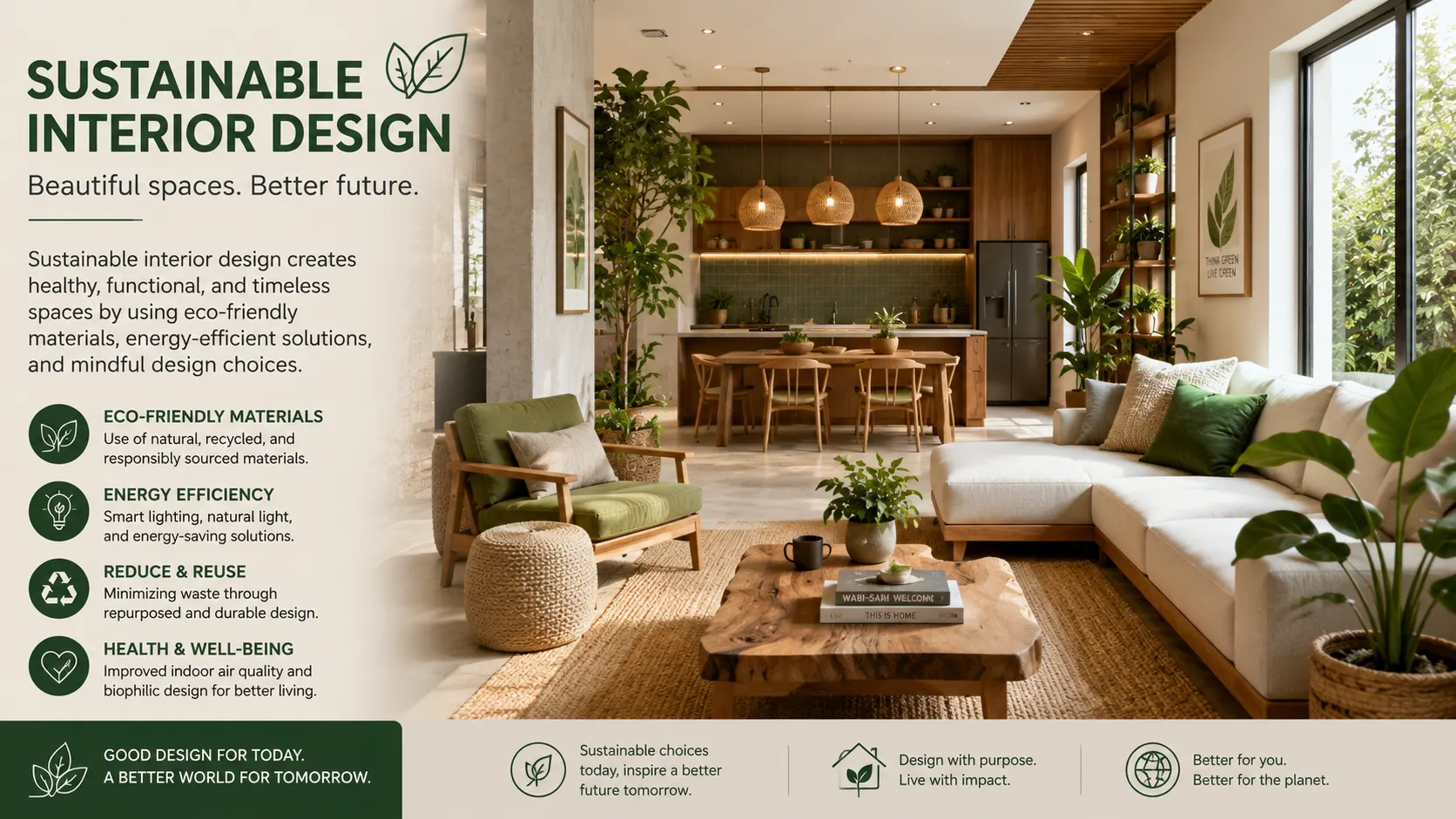
Sustainable interior design is a holistic design philosophy that creates interior spaces which are environmentally responsible, healthy for occupants, economically efficient, and durable over time. It does not focus only on aesthetics; instead, it evaluates how a space is designed, built, used, maintained, and eventually dismantled.
1. Meaning of Sustainable Interior Design
Sustainable interior design refers to the planning, designing, and execution of interior spaces in a way that:
Minimizes environmental damage
- Conserves natural resources
- Enhances indoor health and comfort
- Supports long-term usability
- Reduces waste and pollution
It aligns interiors with the principles of sustainability, which balance:
- Environmental protection
- Human well-being
- Economic feasibility
2. Why Sustainable Interior Design Is Important
2.1 Environmental Impact of Conventional Interiors
Traditional interior design often:
- Uses non-renewable materials
- Emits harmful chemicals (VOCs)
- Produces excessive construction waste
- Consumes high energy and water
2.2 Sustainable Design as a Solution
Sustainable interiors:
- Reduce carbon emissions
- Limit resource extraction
- Prevent indoor pollution
- Promote responsible consumption
Also Read: Boho Chic Interior Design
3. Core Principles of Sustainable Interior Design
3.1 Environmental Responsibility
- Reduced energy consumption
- Reduced water usage
- Lower waste generation
- Responsible material sourcing
3.2 Health and Well-being
- Improved indoor air quality
- Non-toxic materials
- Comfortable lighting and acoustics
- Psychological comfort through nature
3.3 Durability and Longevity
- Long-lasting materials
- Timeless design instead of trends
- Easy maintenance and repair
3.4 Resource Efficiency
- Less material, more function
- Multi-purpose spaces
- Smart planning to avoid excess
4. Sustainable Materials in Interior Design
4.1 Renewable Materials
Materials that regenerate naturally:
- Bamboo (fast-growing, strong)
- Cork (harvested without killing trees)
- FSC-certified wood
- Natural rubber
4.2 Recycled and Reclaimed Materials
- Reclaimed wood from old buildings
- Recycled glass tiles
- Recycled metal fixtures
- Upcycled furniture
4.3 Low-Impact and Non-Toxic Materials
- Low-VOC or zero-VOC paints
- Natural lime plaster
- Clay finishes
- Water-based adhesives
4.4 Sustainable Fabrics
- Organic cotton
- Linen
- Hemp
- Wool (naturally fire-resistant)
Also Read: Scandinavian Interior Design Ideas
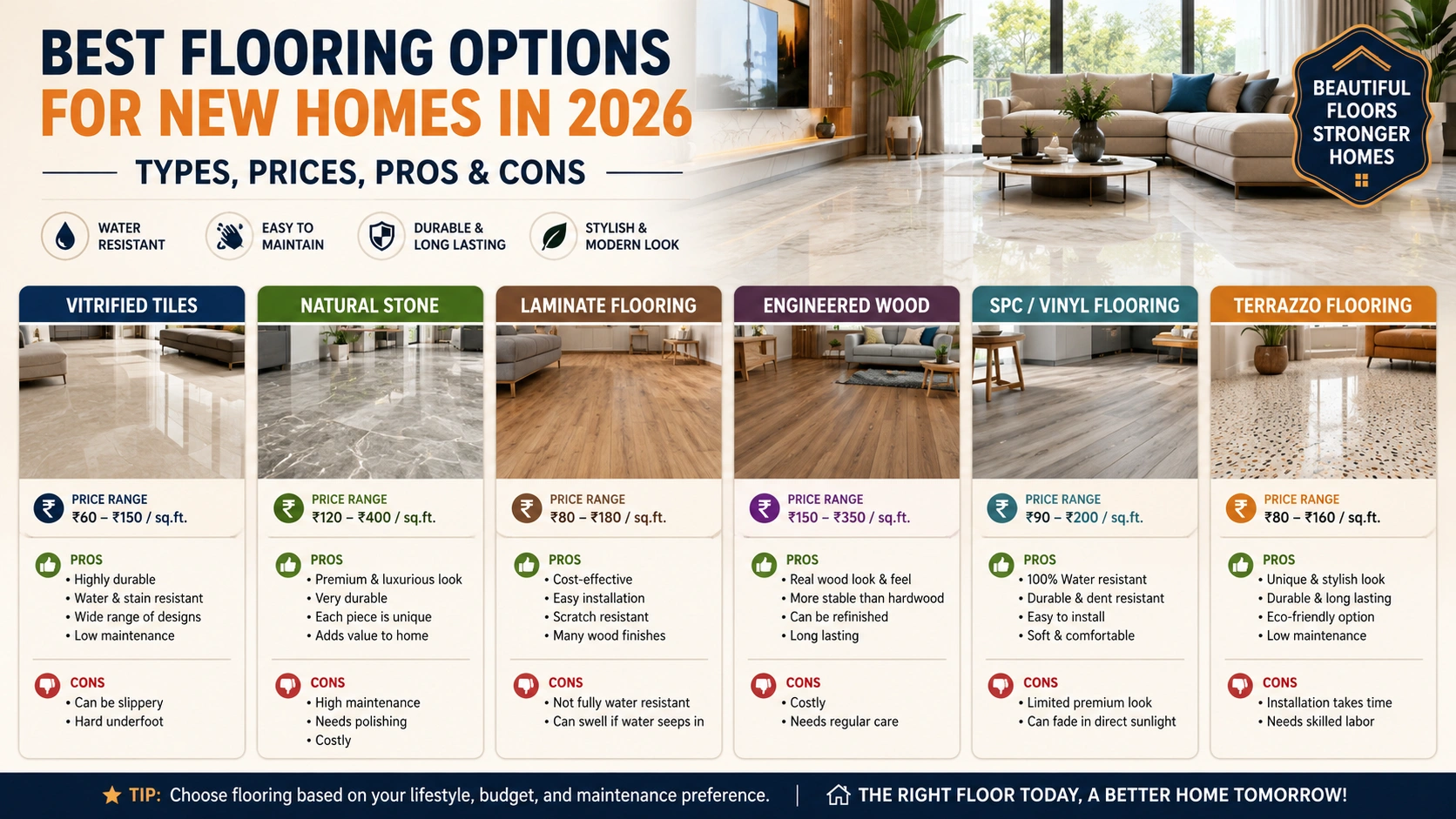
5. Sustainable Flooring Options
- Bamboo flooring
- Cork flooring
- Reclaimed hardwood
- Natural linoleum
- Polished concrete (low maintenance)
These options are durable, recyclable, and healthier than synthetic flooring.
6. Energy Efficiency in Interior Design
6.1 Lighting Design
- LED lights (use up to 80% less energy)
- Daylight optimization
- Motion sensors
- Task lighting instead of over-lighting
6.2 Passive Design Strategies
- Large windows for daylight
- Light-colored interiors to reflect light
- Thermal insulation
- Window shading and curtains
6.3 Smart Technology
- Smart thermostats
- Automated lighting
- Energy monitoring systems
7. Water Efficiency in Interior Spaces
- Low-flow taps and showerheads
- Dual-flush toilets
- Water-efficient appliances
- Leak-detection systems
- Greywater reuse (advanced interiors)
8. Indoor Air Quality & Healthy Interiors
8.1 Sources of Indoor Pollution
- Paints and finishes
- Synthetic furniture
- Cleaning chemicals
- Poor ventilation
8.2 Solutions
- Low-VOC materials
- Natural ventilation
- Air-purifying plants
- Mechanical ventilation systems (ERV/HRV)
8.3 Biophilic Design
Biophilic design improves mental health by connecting interiors with nature through:
- Indoor plants
- Natural light
- Organic textures
- Earthy color palettes
9. Sustainable Furniture and Decor
9.1 Eco-Friendly Furniture
- Locally manufactured furniture
- Modular and flexible designs
- Furniture made from recycled materials
9.2 Ethical Production
- Fair labor practices
- Handcrafted products
- Transparent supply chains
9.3 Minimalist Approach
- Fewer but better-quality items
- Purpose-driven decor
- Reduced clutter
10. Waste Reduction & Circular Design
- Reusing existing furniture
- Designing modular interiors
- Designing for disassembly
- Recycling construction waste
- Avoiding single-use materials
This supports the circular economy, where materials stay in use longer.
11. Sustainable Interior Design Process
Step 1: Site & User Analysis
- Climate and orientation
- User lifestyle and needs
- Existing materials and furniture
Step 2: Goal Setting
- Energy targets
- Material sustainability goals
- Budget and performance targets
Step 3: Concept Design
- Space optimization
- Natural light planning
- Sustainable material palette
Step 4: Design Development
- Detailed drawings
- Material specifications
- Energy and lighting simulations
Step 5: Procurement
- Certified materials
- Local suppliers
- Ethical manufacturers
Step 6: Construction & Installation
- Low-waste construction
- Efficient installation methods
- Quality control
Step 7: Post-Occupancy Evaluation
- Energy consumption tracking
- Indoor air quality checks
- User comfort feedback
12. Benefits of Sustainable Interior Design
Environmental Benefits
- Reduced carbon footprint
- Conservation of natural resources
- Less landfill waste
Health Benefits
- Cleaner indoor air
- Fewer allergies
- Reduced stress and fatigue
Economic Benefits
- Lower energy bills
- Reduced maintenance costs
- Higher resale and rental value
Social Benefits
- Ethical labor support
- Local economy growth
- Better quality of life
13. Challenges in Sustainable Interior Design
- Higher initial costs
- Limited availability of materials (in some regions)
- Lack of awareness
- Greenwashing (false sustainability claims)
14. Future of Sustainable Interior Design
- Net-zero interiors
- Carbon-neutral materials
- Regenerative design
- AI-based energy management
- Circular furniture systems
Frequently Asked Questions
1. Is sustainable interior design only for luxury homes?
No. It can be applied to any budget, from small apartments to large commercial spaces.
2. Is sustainable design the same as green design?
Green design focuses mainly on the environment; sustainable design includes environment, health, and economy.
3. How long does a sustainable interior last?
Typically 20–30% longer than conventional interiors due to better materials and planning.
4. Can I make my existing interior sustainable?
Yes. Start with:
- LED lighting
- Low-VOC paint
- Reusing furniture
- Improving ventilation
5. What is VOC?
VOC (Volatile Organic Compounds) are toxic chemicals released from paints, furniture, and finishes.
6. Does sustainable design affect aesthetics?
No. Sustainable interiors can be modern, minimal, traditional, or luxurious.
7. What is the biggest mistake people make?
Focusing only on “eco-looking” products instead of checking material composition and certifications.
8. Is sustainable interior design future-proof?
Yes. It adapts better to climate change, rising energy costs, and health concerns.