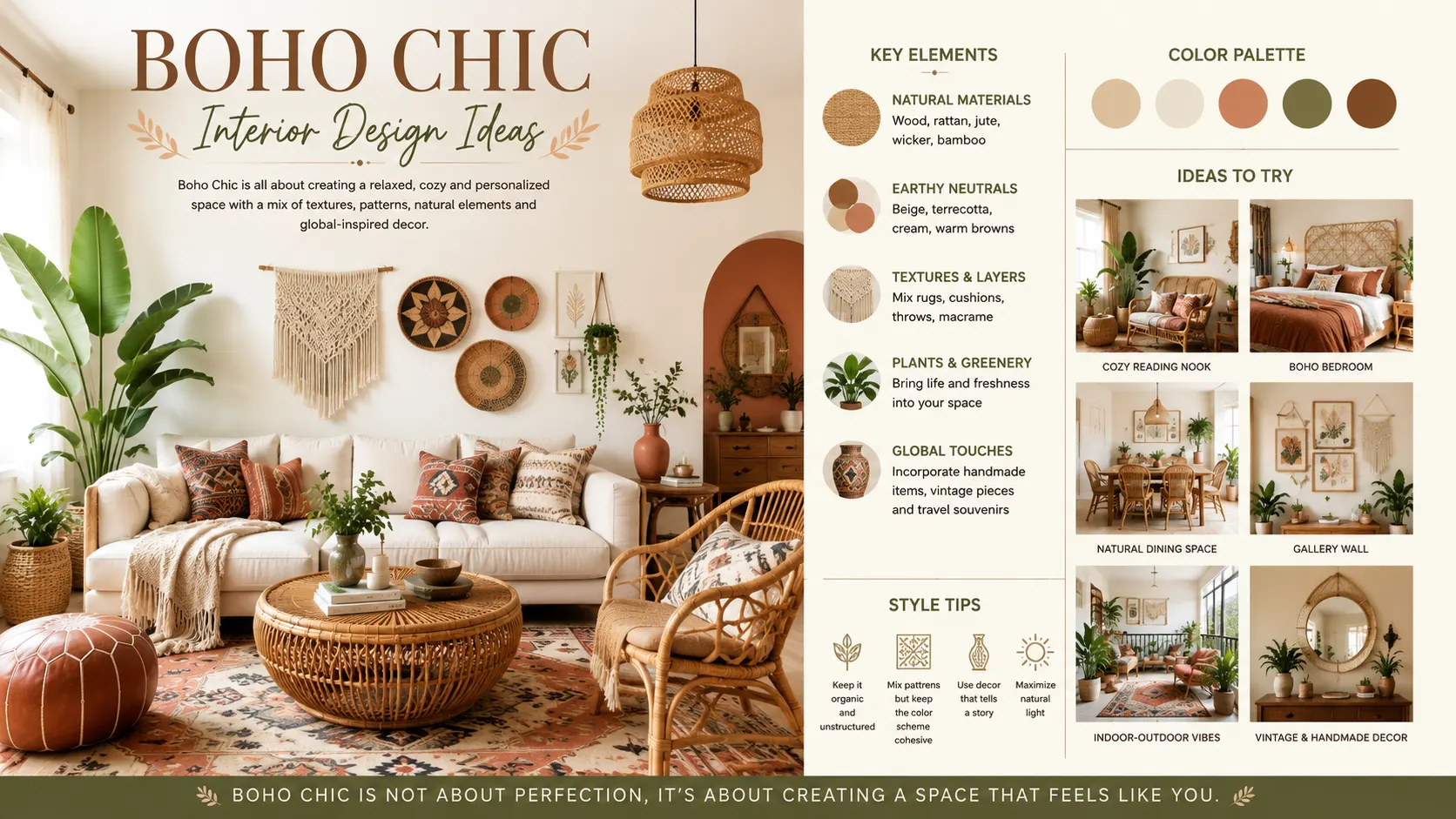
Boho chic interior design is a lifestyle-driven design philosophy, not just a decorating trend. It combines bohemian freedom, artisan craftsmanship, and modern sophistication to create interiors that feel warm, expressive, and effortlessly stylish.
1. Origins & Evolution of Boho Chic Design
Historical Roots
- Originates from bohemian culture (artists, writers, travelers)
- Influenced by nomadic lifestyles and global craftsmanship
- Popularized in the 1960s–70s counterculture movement
Evolution into “Boho Chic”
Traditional bohemian interiors were:
- Very colorful
- Maximalist
- Chaotic and highly layered
Boho chic evolved by blending:
- Clean modern lines
- Neutral foundations
- Curated decor instead of clutter
Result: Relaxed yet polished interiors
2. Psychological Feel & Atmosphere
Boho chic spaces are designed to:
- Feel emotionally comforting
- Encourage creativity and calm
- Reflect the personality of the homeowner
- Feel lived-in, not staged
Emotional Keywords
- Warm
- Earthy
- Soulful
- Calm
- Inviting
- Artistic
This makes boho chic especially popular in:
- Homes
- Boutique hotels
- Cafés
- Wellness spaces
3. Color Theory in Boho Chic
Base Color Strategy (Foundation)
Walls and large furniture usually stay neutral to avoid visual fatigue.
Most common base colors:
- Warm white
- Cream
- Beige
- Greige
- Soft sand
Secondary Earth Tones (Depth)
Used in furniture, rugs, or accent walls:
- Terracotta
- Clay
- Rust
- Cinnamon
- Olive green
Accent Colors (Personality)
Used sparingly through decor:
- Indigo
- Mustard
- Teal
- Burnt orange
- Charcoal black
Golden Rule:
60% neutral + 30% earthy + 10% accent
4. Textures: The Backbone of Boho Chic
Boho chic is texture-driven, not color-driven.
Why Texture Matters
- Adds visual interest without clutter
- Makes neutral spaces feel rich
- Creates depth and warmth
Core Textural Elements
- Soft: linen, cotton, wool
- Rough: jute, sisal, raw wood
- Detailed: embroidery, macramé, fringe
- Smooth: ceramic, glass, polished wood
Tip:
If you remove patterns, boho chic should still work through textures alone.
Also Read: Scandinavian Interior Design Ideas
5. Furniture Design Language
Furniture Shape & Form
- Rounded edges over sharp angles
- Low-profile seating
- Relaxed proportions
Furniture Types
- Linen sofas with loose cushions
- Wooden coffee tables (often handcrafted)
- Poufs and ottomans
- Rattan or cane chairs
- Daybeds or floor seating
Wood Finishes
- Light oak
- Teak
- Walnut
- Reclaimed or distressed wood
Avoid glossy finishes — matte and natural is key.
6. Layout & Space Planning Philosophy
Boho chic rejects rigid symmetry.
Layout Principles
- Asymmetrical balance
- Open flow
- Furniture placed for conversation, not formality
- Cozy corners instead of empty spaces
Visual Weight Balance
- Heavier furniture balanced with light decor
- Dark elements grounded by neutral surroundings
- Think organic flow, not showroom perfection.
7. Lighting Design
Lighting sets the emotional tone.
Natural Light
- Sheer curtains
- Light-filtering fabrics
- Minimal window obstruction
Artificial Lighting Layers
- Ambient: woven pendants, ceiling lights
- Task: table lamps, reading lights
- Accent: candles, lanterns, string lights
- Warm lighting only (yellow tone).
- Avoid cool white lights—they kill the boho mood.
8. Decor Styling & Accessories
Boho chic decor tells a story.
Wall Decor
- Macramé wall hangings
- Textile art
- Handmade mirrors
- Organic-shaped frames
Surface Decor
- Ceramic vases
- Stacked books
- Bowls and trays
- Sculptural objects
Global Influence
- Moroccan lanterns
- Indian block prints
- African baskets
- Tribal-inspired patterns
Decor should look collected over time, not bought all at once.
9. Role of Plants in Boho Chic
Plants are non-negotiable.
Why Plants Matter
- Add organic movement
- Soften furniture lines
- Improve air quality
- Reinforce nature connection
Plant Styling Tips
- Mix floor plants + hanging plants
- Use ceramic or woven planters
- Vary heights and leaf shapes
Recommended plants:
- Monstera
- Fiddle leaf fig
- Snake plant
- Pothos
- Palms
10. Surfaces: Walls, Floors & Ceilings
Walls
- Neutral paint
- Limewash or textured plaster
- Accent walls with woven art
Floors
- Wood or wood-look flooring
- Patterned tiles
- Layered rugs (jute + patterned rug)
Ceilings
- Wooden beams (if available)
- Statement pendants
- Fabric or woven light shades
11. Room-by-Room Deep Breakdown
Living Room
- Neutral sofa as anchor
- Multiple cushions (different textures)
- Layered rugs
- Coffee table with decor trays
- Plants in corners
Bedroom
- Low bed
- Natural bedding
- Textured throws
- Soft bedside lighting
- Calm, clutter-free styling
Dining Area
- Solid wood table
- Mixed chairs or bench seating
- Linen table runners
- Handmade ceramics
Bathroom
- Earth-toned tiles
- Wooden accessories
- Woven baskets
- Indoor plants
Best Home Interior Designer In Chennai
12. Modern Boho Chic vs Other Styles
Boho Chic vs Scandinavian
- Scandinavian = minimal + cool
- Boho chic = layered + warm
Boho Chic vs Minimalism
- Minimalism removes
- Boho chic layers thoughtfully
Boho Chic vs Rustic
- Rustic = heavy
- Boho chic = airy
13. Common Design Mistakes
- Too many patterns
- Ignoring negative space
- Artificial-looking decor
- Matching everything
- Overcrowding small rooms
Balance + breathing space = elegance
14. Budget to Luxury Execution
Budget Homes
- Thrifted decor
- DIY macramé
- Affordable rugs
- Indoor plants
Luxury Homes
- Custom furniture
- Handwoven rugs
- Artisan ceramics
- Natural stone accents
- Boho chic works at every budget level.
15. Who Should Choose Boho Chic?
Perfect for:
- Creative professionals
- Travel lovers
- Wellness-focused homes
- Relaxed family living
- People who dislike rigid design rules
Frequently Asked Questions
1. Is boho chic timeless or trendy?
Boho chic is timeless because it’s rooted in natural materials and personal expression.
2. Can boho chic look professional and elegant?
Yes. Neutral palettes and curated decor make it refined and elegant.
3. How do I start boho chic from scratch?
Start with:
- Neutral base
- Natural furniture
- Textured textiles
- Plants
- Personal decor
- 4. Can boho chic be clutter-free?
Yes. Boho chic is curated, not messy.
5. Is boho chic suitable for apartments?
Absolutely. Use light colors, mirrors, and vertical decor.
6. How many textures are ideal?
At least 4–6 textures per room for depth.