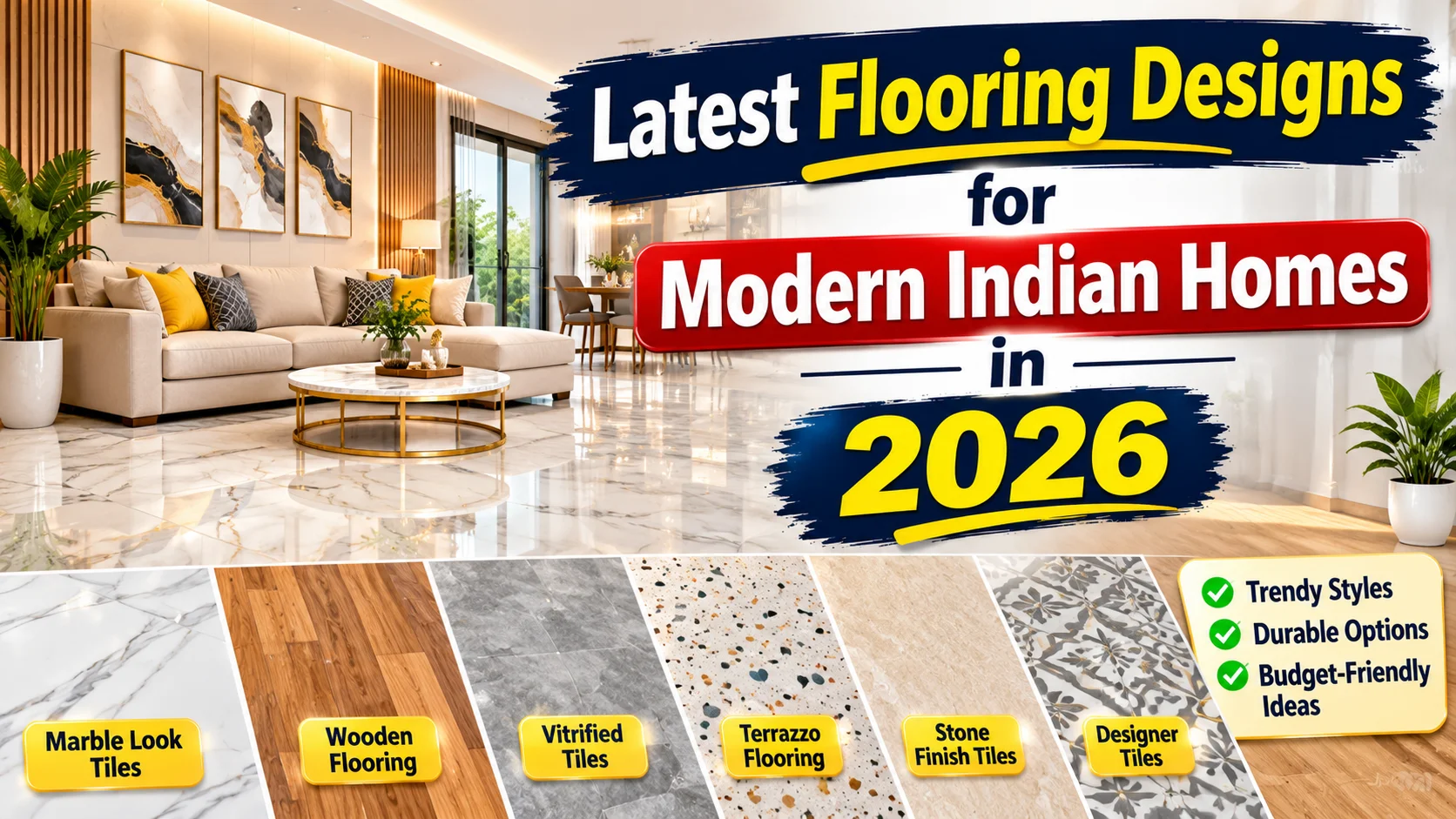
Flooring is one of the most important elements of modern home design. It influences the overall appearance, comfort, maintenance requirements, durability, and value of a home. In 2026, Indian homeowners are increasingly choosing flooring that combines modern aesthetics, practical functionality, easy maintenance, and long-lasting performance. From luxury marble-look vitrified tiles and natural wooden flooring to terrazzo patterns, microcement finishes, and large-format tiles, the latest flooring designs offer options for every home size, budget, and interior style. Whether you are constructing a new house, purchasing a flat, renovating an apartment or planning interior design, choosing the right flooring can make a significant difference to the finished home.
1. Top flooring design trends for Indian homes in 2026
The latest flooring trends focus on creating interiors that look spacious, warm, premium, and easy to maintain. Cool grey shades and heavily glossy surfaces are giving way to warmer colors, natural textures, matte finishes, and larger tile formats.
1. Large-format vitrified tile flooring
Large-format tiles are among the most popular flooring choices for contemporary apartments and luxury homes. They create a spacious appearance by reducing the number of visible joints and making the flooring look more continuous.
Common tile sizes include:
- 600 × 1200 mm
- 800 × 800 mm
- 800 × 1600 mm
- 1200 × 1200 mm
Why it is trending:
- Creates a spacious and premium appearance.
- Reduces visible grout lines.
- Works well with modern furniture and interiors.
- Available in marble, stone, concrete, and neutral finishes.
- Easy to maintain with regular cleaning.
Best suited for living rooms, dining areas, bedrooms, foyers, and open-plan apartments.
For smaller apartments, light beige or ivory large-format tiles can make the space appear brighter and more open.
2. Marble-look vitrified flooring
Marble-look flooring remains a preferred choice for homeowners who want a luxurious interior without the cost and maintenance of natural marble. Modern vitrified tiles reproduce the patterns of white marble, Italian marble, travertine, and other natural stones.
Popular designs include:
- White marble with subtle grey veins
- Calacatta-inspired flooring
- Cream marble-effect tiles
- Beige travertine patterns
- Ivory marble with golden veins
- Natural stone-effect vitrified tiles
Advantages:
- Elegant and luxurious appearance.
- Wide range of colors and patterns.
- Better stain resistance than many natural stones.
- Less maintenance than natural marble.
- Available in different price ranges.
Best suited for living rooms, dining spaces, entrance areas, and premium apartments.
For a modern Indian home, soft marble patterns are generally easier to coordinate with furniture than tiles with very bold, dramatic veining.
3. Wooden-look flooring
Wooden flooring adds warmth, texture, and comfort to interiors. In 2026, natural oak, teak-inspired shades, walnut finishes, and light wooden tones are popular for contemporary home interiors. Actual hardwood can be expensive and requires careful maintenance. Therefore, many homeowners prefer wood-look vitrified tiles, SPC flooring, or laminate flooring that reproduces the appearance of natural wood.
Popular wooden flooring shades:
- Light oak
- Natural teak
- Walnut brown
- Honey wood
- Ash wood
- Smoky brown
Advantages:
- Creates a warm and cozy atmosphere.
- Complements modern and Scandinavian interiors.
- Works well with white walls and neutral furniture.
- Provides a stylish alternative to conventional tile patterns.
Best suited for bedrooms, study rooms, home offices, reading corners, and selected living-room designs.
For Indian climates, wood-look vitrified tiles or moisture-resistant SPC flooring are often more practical than natural hardwood, especially in homes exposed to humidity.
4. Matte-finish flooring
Matte flooring has become a preferred choice for homeowners looking for understated elegance and practical everyday use. Unlike high-gloss tiles, matte finishes have a soft appearance and generally show fewer fingerprints, watermarks, and minor dust traces.
Key benefits:
- Modern and sophisticated appearance.
- Less visible smudges and footprints.
- Better grip than many polished finishes, depending on surface texture.
- Suitable for minimalist and contemporary interiors.
Best suited for bedrooms, kitchens, bathrooms, balconies, corridors, and homes with children or elderly residents.
For wet areas, select tiles with an appropriate slip-resistant surface rather than relying on the matte label alone.
5. Terrazzo flooring
Terrazzo flooring is making a comeback in modern interiors. It consists of decorative chips such as marble, granite, or glass embedded in a cementitious or resin-based material. Modern terrazzo designs range from subtle white and beige patterns to bold colorful combinations.
Popular terrazzo styles:
- White terrazzo with small stone chips.
- Beige terrazzo with warm aggregates.
- Grey terrazzo with black and white chips.
- Colorful terrazzo patterns.
- Large-chip contemporary terrazzo.
Advantages:
- Unique decorative appearance.
- Can create a statement floor.
- Durable when properly installed.
- Available in tiles and custom finishes.
- Suitable for contemporary and retro-inspired interiors.
Best suited for living rooms, dining areas, entrance spaces, cafés, studio interiors, and feature zones.
Terrazzo works particularly well when the walls, furniture, and décor are kept relatively simple.
6. Natural stone flooring
Natural stone flooring continues to be popular in India because of its strength, natural beauty, and long-term durability.
Common natural stone flooring options include:
- Granite
- Indian marble
- Kota stone
- Tandur stone
- Slate
- Jaisalmer stone
Each stone has a different texture, color, durability, and maintenance requirement. Granite is preferred for high-traffic areas because it is strong and available in various finishes. Kota and Tandur stones are commonly used in utility spaces, balconies, and homes that favor a natural, earthy appearance.
Best suited for: Entrance areas, staircases, balconies, outdoor spaces, verandahs, and traditional-modern homes.
7. Chevron and herringbone flooring patterns
Instead of laying tiles or planks in a straight grid, homeowners are experimenting with decorative patterns such as herringbone and chevron.
These patterns create movement and visual interest while making the floor itself a design feature.
- Herringbone: Rectangular pieces are arranged in a staggered zigzag pattern.
- Chevron: Planks or tiles are cut and arranged in a continuous V-shaped pattern.
These patterns can be created using wooden planks, wood-look tiles, marble pieces, or decorative tiles.
Best suited for living rooms, foyers, dining spaces, premium bedrooms, and selected feature areas.
Patterned installation requires more precision and can increase labor charges and material wastage.
8. Microcement and seamless flooring
Microcement flooring offers a seamless, contemporary appearance with minimal visible joints. It is generally applied as a thin decorative coating over a properly prepared base. The finish can be customized in shades such as beige, warm grey, off-white, sand, and charcoal.
Advantages:
- Minimal joints.
- Contemporary architectural look.
- Creates a visually uninterrupted surface.
- Can be used in selected renovation projects over existing surfaces.
- Customizable texture and finish.
Best suited for: Minimalist homes, modern villas, contemporary apartments, and selected bathroom or feature spaces.
Microcement requires professional application, proper waterproofing where required, crack control, and suitable sealing. It is not a finish where workmanship can be compromised.
9. Checkerboard flooring
Checkerboard flooring is a classic design that has returned in modern interior styles. Instead of traditional black-and-white tiles, homeowners are exploring softer color combinations.
Popular combinations include:
- Beige and cream.
- White and grey.
- Brown and ivory.
- Black and white.
- Terracotta and cream.
Checkerboard patterns can be created with square tiles, marble, ceramic, or vitrified materials.
Best suited for entrance areas, dining spaces, kitchens, balconies, powder rooms, and vintage-inspired interiors. For a contemporary look, choose muted colors and smaller contrast differences rather than overly bold patterns.
10. Concrete-look flooring
Concrete-look tiles replicate the appearance of cement, polished concrete, and industrial surfaces without requiring a real concrete floor. They are increasingly used in minimalist homes, contemporary apartments, and modern commercial interiors.
Popular colors:
- Light cement grey.
- Warm grey.
- Charcoal.
- Sandstone beige.
- Natural concrete white.
Advantages:
- Minimalist appearance.
- Works with metal, wood, and glass.
- Suitable for contemporary interior themes.
- Available in easy-to-maintain tile formats.
Best suited for living rooms, open-plan interiors, home offices, studios, and modern villas.
Also Read: Best Flooring Options for New Homes in 2026: Types, Prices, Pros & Cons
2. Best flooring materials for modern Indian homes
Choosing flooring should not be based on design alone. Every material has a different cost, lifespan, resistance to water, comfort level, and maintenance requirement.
The following are the major flooring materials used in modern Indian homes.
- Vitrified tiles
Vitrified tiles are one of the most widely used flooring materials in Indian apartments and residential construction. They are manufactured to have low porosity and good strength, making them suitable for daily residential use.
Features
- Low water absorption.
- Good stain resistance.
- Easy to clean.
- Available in polished, matte, and textured finishes.
- Available in marble, wood, and stone designs.
Vitrified flooring is a suitable option for homeowners looking for a balance between appearance, durability, and maintenance.
- Ceramic tiles
Ceramic tiles are made from clay-based materials and are available in different colours, sizes and patterns. They are generally affordable and suitable for many residential applications.
They are commonly used in kitchens, bathrooms, utility areas and selected interior spaces, depending on the tile's strength and finish.
- Granite flooring
Granite is a natural stone known for its strength and durability. It is available in different colours, patterns and surface finishes, including polished, honed and flamed finishes. Granite flooring is a popular option for homeowners who want a natural stone surface with good resistance to everyday wear.
- Marble flooring
Marble is known for its premium appearance, natural veining and luxurious finish. White, beige, green and grey marble varieties are used in different interior styles. However, natural marble may require sealing, polishing and careful cleaning. Acidic substances such as lemon juice and certain cleaners can damage some marble surfaces.
- Wooden and engineered wood flooring
Wood flooring brings natural warmth and a premium feel to the home. Solid wood, engineered wood and laminate options offer different price points and performance characteristics. Engineered wood has a layered construction, which can improve dimensional stability compared with solid wood, although the product's quality and moisture conditions still matter.
Also Read: Advantages of Wooden Flooring A Complete Guide for Modern Homes
- SPC flooring
SPC flooring, also known as Stone Plastic Composite flooring, uses a rigid composite core with decorative and wear layers. It is available in plank designs that imitate natural wood. It is often selected for renovations because some click-lock systems can be installed over existing floors when the base is suitably prepared.
- Vinyl and LVT flooring
Vinyl and Luxury Vinyl Tile (LVT) flooring are available in different thicknesses, finishes and installation formats. They can imitate wood, stone and decorative tile patterns.
Some products offer good moisture resistance, but performance depends on the specific product, installation and quality of the subfloor.
- Kota stone flooring
Kota stone is a natural limestone widely used in Indian construction. It is valued for its durability, natural texture and relatively economical cost. It is often selected for balconies, verandahs, utility spaces, staircases and other areas where a natural stone finish is preferred.
- Terrazzo and mosaic flooring
Terrazzo and mosaic flooring use decorative pieces of stone or other aggregates to create distinctive patterns. They can add character to interiors and are suitable for homeowners who prefer a decorative surface instead of plain flooring. Some traditional and regional flooring designs are also gaining attention in contemporary homes, including handmade Athangudi tiles and red-oxide floors.
3. Flooring design ideas room by room
The best flooring for a home depends on the purpose of each room. A living room may need a premium appearance, while a kitchen requires better practicality, and a bedroom may benefit from a warm, comfortable surface.
- Living room flooring designs
The living room is one of the most important areas when selecting flooring. It is the space where families spend time together, welcome visitors and create the first impression of the home.
Best flooring choices:
- Large-format marble-look vitrified tiles.
- Glossy or satin-finish porcelain tiles.
- Natural marble.
- Beige and ivory stone-look tiles.
- Terrazzo flooring.
- Large-format concrete-look tiles.
Recommended colours: Ivory, cream, beige, warm white, greige and light stone. For a premium apartment interior, using large-format light-coloured flooring with minimal visible joints can create an elegant and spacious appearance. Pair it with a wooden TV unit, neutral sofa, warm lighting and subtle wall textures.
Bedroom flooring designs
Bedrooms should feel comfortable, calm and relaxing. Flooring colours and textures can significantly influence the atmosphere of the room.
Best flooring choices:
- Wood-look vitrified tiles.
- SPC wood flooring.
- Engineered wooden flooring.
- Matte vitrified tiles.
- Laminate flooring for suitable dry spaces.
Recommended colours: Light oak, honey wood, natural teak, beige, soft brown and warm grey. Wooden flooring is especially suitable for modern bedrooms because it creates a warm visual contrast against white walls, wardrobes and soft furnishings.For a low-maintenance Indian apartment, wood-look vitrified tiles are a practical choice because they offer the appearance of timber with easier cleaning.
- Kitchen flooring designs
Kitchen flooring should be selected based on durability, cleaning ease, water exposure and slip resistance.
Best flooring choices:
- Matte vitrified tiles.
- Textured porcelain tiles.
- Stone-look flooring.
- Terrazzo-look tiles.
- Granite flooring.
- Small-pattern tiles with appropriate grip.
Recommended colours: Grey, beige, brown, stone patterns, subtle terrazzo and muted earth tones. Avoid choosing highly polished tiles solely for their appearance in areas where water or oil may spill. A properly selected textured or slip-resistant floor is more practical for a working kitchen.
- Bathroom flooring designs
Bathrooms need flooring that can handle frequent water exposure and provide a safer walking surface.
Best flooring choices:
- Anti-skid porcelain tiles.
- Textured ceramic tiles.
- Matte stone-look tiles.
- Small-format tiles in shower areas.
- Mosaic tiles with suitable grip.
Recommended colours: Grey, sand, charcoal, beige and natural stone.
The flooring should be selected based on its slip performance when wet, not just its visual texture. Proper drainage slope and waterproofing below the tile finish are equally important.
- Balcony flooring designs
Balcony flooring should withstand sunlight, rain, dust and temperature changes. It must also be suitable for outdoor exposure.
Best flooring choices:
- Outdoor anti-skid vitrified tiles.
- Textured stone-look tiles.
- Kota stone.
- Outdoor porcelain tiles.
- Wood-look outdoor tiles.
Recommended colours: Stone grey, terracotta, sand, earthy brown and muted green.
Wood-look outdoor tiles are popular for balconies because they create a natural appearance without the maintenance of outdoor timber.
- Dining room flooring designs
The dining area should be visually connected with the living room in open-plan layouts. Homeowners can use the same flooring throughout or create a subtle distinction using patterns or textures.
Best flooring choices:
- Marble-look vitrified tiles.
- Large-format porcelain.
- Terrazzo.
- Matte stone-look tiles.
- Wood-look tiles.
Use coordinated flooring in the living and dining areas to create visual continuity. If the home has a separate dining zone, a patterned tile section or a different material can be used to define the space.
4. Flooring colours trending in 2026
Colour selection is important because flooring covers a large portion of the interior. The right shade can make rooms feel brighter, larger, warmer or more sophisticated.
| Flooring Colour | Interior appearance | Best suited for |
| Ivory white | Bright, clean, spacious | Living room, apartments |
| Warm beige | Elegant and natural | Enitre home |
| Greige | Contemporaty and subtle | Living, dinning |
| Light oak | Warm and welcoming | Bedrooms |
| Honey brown | Natural and rich | Bedrooms, studies |
| Charcoal grey | Bold and modern | Features areas |
| Sandstone | Earthy and clam | Balconies, living spaces |
| Cream marble | Premium and timeless | Living, dinning, bedrooms |
Why warm neutral flooring is popular
Warm neutral colours are increasingly preferred over cooler grey palettes because they coordinate well with wooden furniture, cream-coloured walls, natural fabrics, indoor plants and modern lighting. Warm beige, sand, ivory, greige and light oak are versatile options that can remain visually appealing even when furniture and wall colours are changed later.
5. Flooring design price comparison in India – 2026
Flooring prices vary depending on material quality, brand, tile size, thickness, finish, installation method, location and labour charges. The following are broad indicative estimates for residential projects in India. They are not fixed quotations.
| Flooring material | Approx. cost per sq ft | Maintenance |
| Cermaic tiles | Rs 30-100 | Low |
| Vitrified tiles | Rs 400-200 | Low |
| Marble-look vitrified tiles | Rs 50-180 | Low |
| Granite | Rs 100-300 | Low to medium |
| Indian mable | Rs 80-350 | Medium |
| Italian marble | Rs 250-1,500+ | Medium to high |
| Laminate flooring | Rs 80-250 | Low in dry areas |
| SPC flooring | Rs 90-300 | Low |
| Vinyl / LVT | Rs 40-350 | Low |
| Engineered wood | Rs 180-700 | Medium |
| Solid wood | Rs 250-1,500+ | High |
| Terrazzo | Rs 60-400 | Low to medium |
| Microcement | Rs 250-800 | Medium |
| Kota stone | Rs 30-80 | Low to medium |
Indicative market ranges from material and installation references; actual rates vary by specification and location. Some quoted ranges are material-only, while others include installation, so compare quotations on the same basis.
Which flooring gives the best value for money?
For most Indian homes, vitrified tiles are a strong all-round option because they offer a good balance of durability, design availability, cost and ease of maintenance.
- Budget homes: Ceramic tiles, standard vitrified tiles, Kota stone.
- Mid-range homes: Better-quality vitrified tiles, granite, SPC flooring.
- Premium homes: Large-format porcelain, premium marble-look tiles, engineered wood and natural marble.
- Contemporary minimalist homes: Microcement, terrazzo, concrete-look tiles and seamless finishes.
The right choice depends on how much you want to spend initially and how much maintenance you are willing to handle over the years.
6. Modern flooring combinations for a complete home
Using the same flooring material throughout the house can create a consistent appearance. However, combining different flooring materials in selected spaces can improve both functionality and interior design.
Combination 1: Beige vitrified tiles + wood-look bedroom tiles
- Living room: Beige marble-look vitrified tiles.
- Dining room: Same beige flooring.
- Bedrooms: Wood-look vitrified tiles.
- Kitchen: Matte anti-skid vitrified tiles.
- Bathrooms: Textured anti-skid tiles.
This combination offers a premium appearance with practical flooring choices for daily use.
Combination 2: White marble-look flooring + grey matte tiles
- Living room: White marble-look glossy tiles.
- Bedrooms: Soft grey matte tiles.
- Kitchen: Medium-grey textured flooring.
- Bathrooms: Darker grey anti-skid tiles.
- Balcony: Outdoor stone-look tiles.
This combination suits contemporary apartments and interiors with white furniture, black accents and modern lighting.
Combination 3: Natural wood + neutral stone
- Living room: Beige natural-stone-look tiles.
- Bedrooms: Oak-look SPC flooring.
- Dining room: Light stone-effect flooring.
- Kitchen: Grey or beige textured tiles.
- Balcony: Terracotta or stone-look tiles.
This style is suitable for homeowners who prefer a warm, organic and natural interior design theme.
Combination 4: Luxury marble + decorative flooring
- Living room: Large-format marble-look tiles.
- Entrance: Decorative pattern or stone border.
- Bedrooms: Light neutral vitrified tiles.
- Kitchen: Matte granite-look tiles.
- Bathrooms: Premium textured porcelain tiles.
This combination creates an elegant interior while reserving statement designs for selected areas.
7. Advantages of modern flooring designs
Investing in good flooring improves more than the appearance of your house. It can also support the long-term functionality of the home.
1. Improves the appearance of the home
Modern flooring designs can make an ordinary room look more elegant and professionally designed. Marble patterns, natural textures, wood finishes and large-format tiles add visual appeal.
2. Makes small spaces look bigger
Light-coloured flooring with fewer visible joints can create a sense of openness. Using similar flooring across connected rooms can reduce visual breaks and make an apartment feel larger.
3. Easy maintenance
Many modern tile options are easy to sweep, mop and maintain. This is useful for families, busy professionals and homes where floors are cleaned regularly.
4. Supports long-term durability
Good-quality tiles and stones can withstand everyday movement, furniture usage and general household activities when installed correctly.
5. Improves interior coordination
Flooring provides the foundation for furniture, wall colours, curtains, lighting, kitchen cabinets and décor. Choosing the right floor makes it easier to coordinate the rest of the home.
6. Adds to the property's overall appeal
Well-selected flooring can contribute to the overall presentation of a residential property. It may help make a home more attractive to potential buyers, although it does not guarantee a higher resale price.
8. How to choose the right flooring for your home
Before selecting any flooring material, homeowners should consider the following factors.
Consider your budget
Calculate the total flooring expense, not just the tile price. Your overall cost may include:
- Flooring materials.
- Tile adhesive or mortar.
- Installation labour.
- Grouting.
- Skirting.
- Cutting and wastage.
- Surface preparation and levelling.
- Transport and handling.
Always ask the contractor whether the quotation includes material and labour.
- Consider your lifestyle
If you have children, elderly family members, pets or a busy household, choose flooring that is easy to clean, durable and suitable for the expected traffic. For households that regularly use water during cleaning, slip-resistant finishes are particularly important in kitchens, bathrooms and balconies.
- Check the tile size
Large-format tiles can create a spacious look but require a properly levelled floor and experienced installers. Smaller tiles may be more suitable for areas with complex layouts, slopes or drainage requirements.
Check the finish before buying
Flooring may look different under showroom lighting and natural daylight. Request a sample and observe it in your home, if possible.
Check:
- Surface shine.
- Colour variation.
- Pattern repetition.
- Texture.
- Footprint visibility.
- Cleaning requirements.
- Slip resistance.
Purchase sufficient extra material
Purchase extra tiles for cutting, installation wastage and future repairs. The additional quantity depends on the tile size, room layout, pattern and installer recommendations. Patterned or diagonal layouts generally require more wastage than straightforward installation.
- Check the quality and specifications
Before finalising the flooring, verify the manufacturer's product specifications, recommended applications, surface finish, dimensions, water absorption, slip performance and installation instructions.
9. Common flooring mistakes homeowners should avoid
Flooring is a long-term decision. Some mistakes can become expensive to correct after furniture, wardrobes and interiors have been completed.
Avoid these common mistakes:
- Choosing glossy tiles for wet areas without checking their slip resistance.
- Selecting flooring only based on showroom appearance.
- Ignoring the maintenance requirements of natural marble and wood.
- Choosing very dark floors in small rooms without considering lighting.
- Installing large-format tiles on an uneven base.
- Using different flooring colours that do not complement each other.
- Selecting cheap materials without checking quality and specifications.
- Ignoring tile thickness and floor-level differences between rooms.
- Not checking the quantity of extra tiles for future repairs.
- Choosing flooring without considering furniture, wardrobes and interior design.
Good flooring is not necessarily the most expensive flooring. It is the flooring that suits your home, your lifestyle, your budget and your daily requirements.
10. Latest flooring designs for small apartments
Small apartments require flooring that makes the interior feel spacious and uncluttered. The right colours, tile sizes and layout patterns can improve the overall appearance of compact homes.
Flooring tips for small homes
- Use light-coloured flooring to reflect available light.
- Prefer coordinated colours across living and dining spaces.
- Choose simple patterns instead of overly busy designs.
- Consider larger tile sizes where the room layout allows.
- Use minimal contrasting grout lines.
- Avoid excessive flooring colour changes between rooms.
- Select furniture and wall colours that complement the floor.
Recommended designs for small flats: Light beige vitrified tiles, ivory marble-look tiles, soft grey porcelain tiles and light oak wood-look flooring. For a 2BHK or compact 3BHK apartment, consistent flooring in the living and dining areas can make the home feel more open, while different flooring in bedrooms can add warmth.
11. Latest flooring designs for luxury homes
Luxury homes often combine premium materials, sophisticated colours, large tile sizes and carefully planned interior details.
Popular luxury flooring ideas
- Large-format marble-look porcelain tiles.
- Natural Italian marble.
- Premium white and beige marble.
- Bookmatched marble-look slab patterns.
- Engineered wooden flooring.
- Herringbone flooring.
- Terrazzo feature flooring.
- Seamless microcement finishes.
- Natural stone flooring with coordinated wall finishes.
Luxury flooring should be selected according to the architecture and interior design theme. Combining a premium floor with quality lighting, custom furniture, clean wall finishes and good detailing produces a more balanced result than using expensive flooring alone.
Conclusion
The latest flooring designs for modern Indian homes in 2026 focus on combining elegance, durability, comfort and easy maintenance. Homeowners are moving towards large-format vitrified tiles, marble-look finishes, natural wood-inspired flooring, terrazzo designs, matte surfaces and warm neutral colour palettes. The best flooring is not simply the one that looks attractive in a showroom. It should suit the room, withstand everyday use, complement the interior design and remain practical for years. Whether you are buying a new apartment, constructing a house or planning a complete home renovation, carefully selecting the flooring can help create a beautiful, functional and comfortable living space. A well-designed floor provides the foundation for every other interior element and helps transform a house into a thoughtfully designed home.
Frequently asked questions
1. Which flooring is best for Indian homes in 2026?
Vitrified tiles are one of the best all-round choices for Indian homes because they offer durability, low maintenance, multiple designs and good value for money. Marble-look vitrified tiles are especially popular for living rooms, while matte tiles are practical for kitchens and wet areas.
2.Which flooring is best for a modern living room?
Large-format marble-look vitrified tiles, premium porcelain tiles and natural marble are excellent choices for modern living rooms. Light beige, ivory, cream and warm white shades can create a spacious and luxurious appearance.
3.Which flooring is best for bedrooms?
Wood-look vitrified tiles, SPC flooring, engineered wood and matte vitrified tiles are popular bedroom options. Wood shades such as light oak and natural teak create a warm and relaxing atmosphere.
4.Are vitrified tiles better than marble?
Vitrified tiles are generally easier to maintain, offer consistent designs and are available at more affordable price points. Marble provides natural patterns and a premium appearance but may require more maintenance, sealing and polishing. The better choice depends on your budget and preferences.
5.Which flooring is best for small flats?
Light-coloured vitrified tiles, ivory marble-look tiles and large-format neutral tiles are suitable for small flats. Using the same flooring across connected living and dining spaces can create a more spacious visual effect.
6.Which flooring is best for kitchens?
Matte or textured vitrified tiles, porcelain tiles and suitable granite flooring are good options for kitchens. Choose a surface that is easy to clean and provides appropriate slip resistance when exposed to water or oil.
7.Which flooring is best for bathrooms?
Anti-skid porcelain or ceramic tiles with suitable slip resistance are recommended for bathrooms. Smaller-format tiles may also help accommodate floor slopes and drainage around shower areas.
8.Are wooden flooring designs suitable for Indian weather?
Yes, but the material matters. Solid wood can be affected by moisture and humidity. Wood-look vitrified tiles and appropriately specified SPC flooring are alternatives for homeowners who want a wooden appearance with easier maintenance.
9.What is the latest flooring colour trend in 2026?
Warm beige, ivory, greige, light oak, sand, natural stone and soft brown are popular choices. These shades coordinate well with contemporary furniture, neutral interiors and natural materials.
10.Which flooring is the easiest to maintain?
Vitrified tiles, porcelain tiles and suitable granite finishes are generally easy to maintain with regular sweeping and mopping. Avoid harsh chemicals and follow the manufacturer's cleaning instructions.