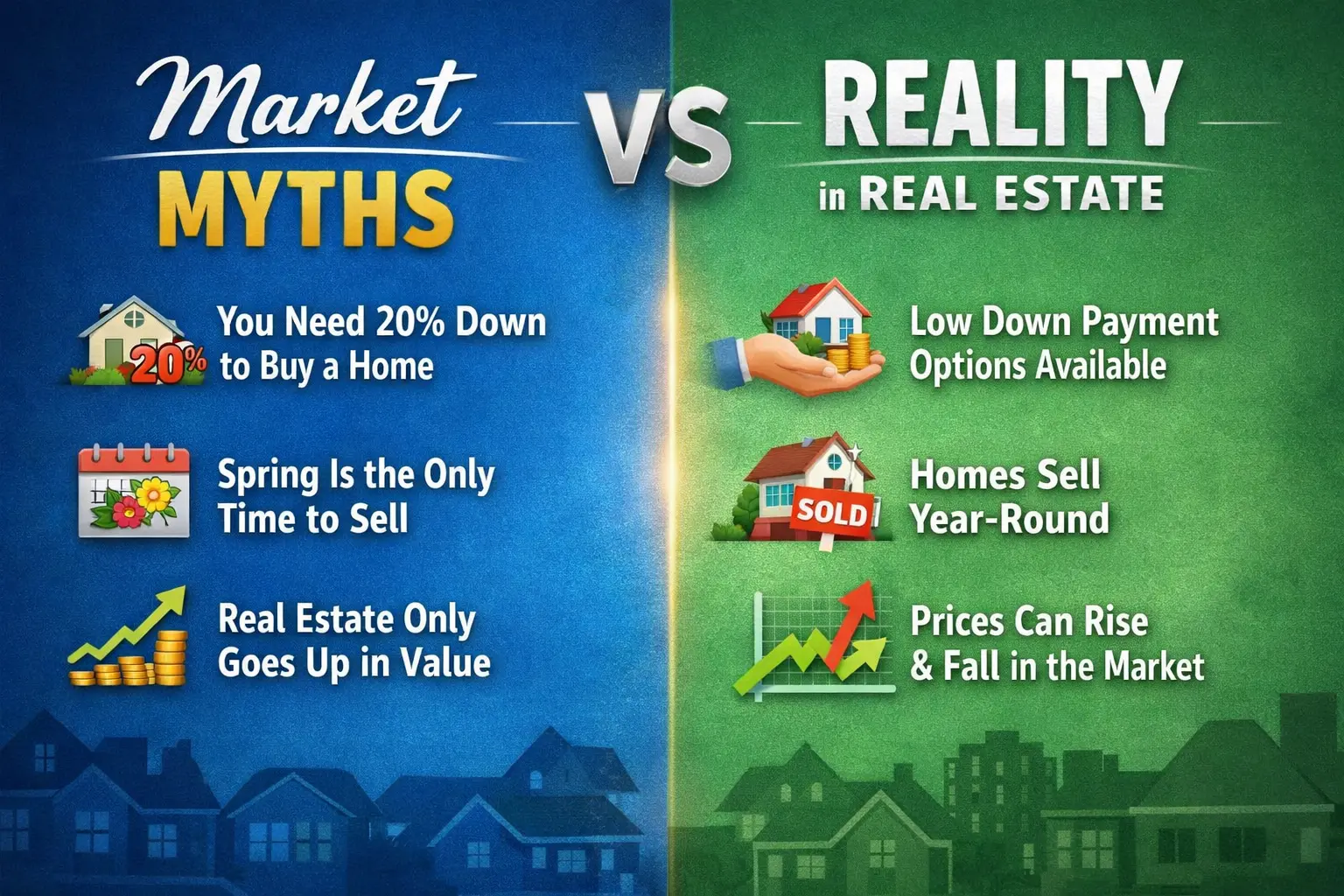
Real estate is full of long-standing beliefs that often sound true—but don’t always match today’s market reality. Understanding the difference between myths and facts helps buyers, sellers, and investors make smarter, more confident decisions.
Myth 1: You Need 20% Down to Buy a Home
Reality: Many Low Down Payment Options Exist
One of the biggest misconceptions is that buyers must save a 20% down payment to purchase a home. While putting 20% down can help avoid private mortgage insurance (PMI), it is not required in most cases.
The Reality:
- Conventional loans may allow down payments as low as 3–5%
- FHA loans can require as little as 3.5%
- VA and USDA loans may offer 0% down for eligible buyers
- First-time buyer programs and grants can reduce upfront costs
Waiting years to save 20% may actually cost buyers more if home prices and interest rates rise during that time.
Myth 2: Spring Is the Only Time to Sell a Home
Reality: Homes Sell Successfully All Year Round
Spring is often called the “best” season to sell, but that doesn’t mean other seasons are bad.
The Reality:
- Buyers shop year-round due to job changes, family needs, or life events
- Less competition in fall and winter can mean more serious buyers
- Winter buyers are often highly motivated and financially prepared
- Online listings allow buyers to search anytime, regardless of season
The best time to sell is when market conditions and your personal situation align, not just the calendar.
Myth 3: Real Estate Always Goes Up in Value
Reality: Markets Rise and Fall Over Time
While real estate tends to appreciate over the long term, prices do not move in a straight line.
The Reality:
- Home values can fluctuate based on interest rates, supply, demand, and the economy
- Local markets behave differently than national averages
- Short-term declines can happen even in strong regions
- Long-term ownership typically smooths out market volatility
Real estate is best viewed as a long-term investment, not a guaranteed short-term profit.
Also Read: Tier 2 and Tier 3 Cities The Next Real Estate Boom in India 2026
Myth 4: Pricing High Leaves Room to Negotiate
Reality: Overpricing Often Hurts a Sale
Many sellers believe listing high gives them flexibility. In reality, overpricing can do more harm than good.
The Reality:
- Overpriced homes sit longer on the market
- Longer time on market can signal “something is wrong”
- Buyers today compare homes online instantly
- Price reductions later may result in lower final offers
Homes priced correctly from the start typically sell faster and closer to asking price.
Myth 5: You Should Always Wait for Interest Rates to Drop
Reality: Timing the Market Is Risky
Trying to “time” the market based on interest rates alone can backfire.
The Reality:
- Lower rates often increase buyer competition
- Higher demand can push home prices up
- You can refinance later if rates drop
- Buying when competition is lower may offer better negotiating power
A home’s price, not just the rate, plays a major role in overall affordability.
Also Read: Real estate market cycles understanding boom and bust cycles in residential and commercial markets
Myth 6: You Don’t Need a Real Estate Agent
Reality: Expert Guidance Saves Time, Money, and Stress
With online listings available everywhere, some believe agents are unnecessary.
The Reality:
- Agents provide market pricing expertise
- They negotiate contracts, inspections, and contingencies
- They identify red flags and protect your legal interests
- They manage timelines and paperwork
A skilled agent often helps clients avoid costly mistakes and secure better outcomes.
Myth 7: Renovations Always Increase Home Value
Reality: Not All Upgrades Deliver a Return
Upgrading a home doesn’t guarantee higher profits.
The Reality:
- Some renovations return more value than others
- Over-customization can limit buyer appeal
- Cosmetic improvements often outperform major remodels
- Market expectations matter more than personal taste
Strategic improvements based on local market data offer the best ROI.
Conculsion
Real estate success isn’t about following myths—it’s about understanding current market realities and making informed decisions based on facts, data, and expert advice.
Whether you’re buying, selling, or investing, separating myth from reality allows you to:
- Reduce financial risk
- Identify real opportunities
- Move with confidence in any market condition