1. Introduction
The real estate sector is one of the most important components of an economy, contributing significantly to employment, investment, and overall economic growth. Property demand is influenced by several factors such as income levels, interest rates, availability of credit, location, and government policies. Among government policy tools, taxation and stamp duty play a crucial role in shaping property demand. These charges directly affect the cost of buying, owning, and selling property, thereby influencing buyer behavior and market activity.
2. Meaning of Tax and Stamp Duty in Real Estate
2.1 Property-Related Taxes
Property-related taxes are levies imposed by the government at different stages of property ownership and transaction. These include:
- Stamp duty on purchase
- Registration charges
- Capital gains tax on sale
- Property or municipal tax on ownership
- Rental income tax (for investors)
Each of these taxes adds to the overall cost of property and influences demand differently.
2.2 Stamp Duty
Stamp duty is a one-time tax paid to the government when a property is transferred from seller to buyer. It is usually calculated as a percentage of the property’s market value or agreement value, whichever is higher. Since stamp duty must be paid upfront and is generally not covered by home loans, it has a strong psychological and financial impact on buyers.
3. Mechanism Through Which Taxes and Stamp Duty Affect Demand
Property demand depends on affordability, which is determined by:
- Purchase price of the property
- Availability of financing
- Interest rates
- Transaction costs (taxes and stamp duty)
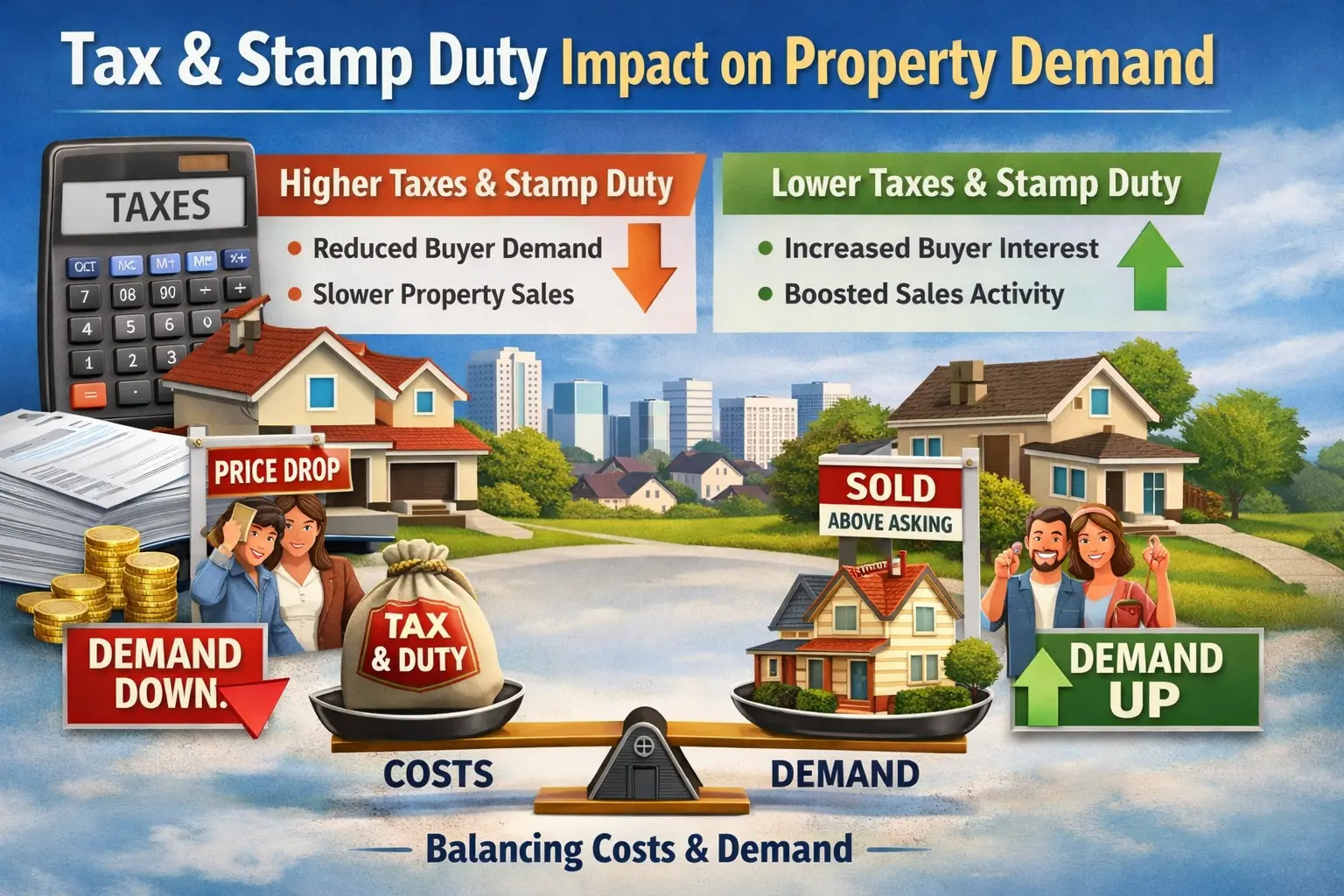
When taxes and stamp duty increase, the effective price of property rises, even if the base property price remains unchanged. This reduces demand. Conversely, when these charges are reduced, the effective price falls, encouraging more buyers to enter the market.
4. Impact of High Taxes and High Stamp Duty on Property Demand
4.1 Increased Cost of Acquisition
High stamp duty significantly increases the total cost of purchasing a property. For example, a 7–10% stamp duty can add a substantial amount to the buyer’s upfront financial burden. This discourages buyers, especially in high-value property markets.
4.2 Reduced Affordability
Higher taxes reduce purchasing power. Buyers may:
- Settle for smaller or lower-quality properties
- Shift from ownership to renting
- Postpone purchase decisions
First-time homebuyers are particularly affected because they rely heavily on savings and loans.
4.3 Decline in Market Transactions
As affordability declines, the number of property transactions decreases. Lower transaction volumes lead to reduced market liquidity and slower movement of inventory.
4.4 Negative Impact on Housing Prices
With weaker demand, sellers are often forced to:
- Reduce prices
- Offer discounts or incentives
- Absorb part of the stamp duty cost
This can result in stagnation or decline in property prices, especially in oversupplied markets.
4.5 Reduced Investment Demand
High taxes lower post-tax returns on property investments. Investors may move capital to alternative assets such as stocks or bonds, reducing speculative and long-term investment in real estate.
4.6 Rise in Informal Transactions
Excessive stamp duty can encourage under-reporting of property values and cash transactions, leading to:
- Tax evasion
- Distorted market data
- Loss of government revenue
5. Impact of Low Taxes and Reduced Stamp Duty on Property Demand
5.1 Improved Affordability
Lower stamp duty reduces the initial financial burden, making home ownership more accessible. Buyers can allocate funds toward:
- Higher down payments
- Better property choices
- Interior and renovation costs
5.2 Increase in Buyer Confidence
Tax reductions signal supportive government policy, improving market sentiment. Buyers feel more confident about making long-term investments in property.
5.3 Growth in Housing Demand
Lower transaction costs attract:
- First-time buyers
- Middle-income households
- End-users and investors
This leads to increased demand across residential segments.
5.4 Higher Transaction Volumes
Reduced taxes encourage faster buying decisions, increasing the number of property registrations and overall market activity.
5.5 Positive Impact on Property Prices
In high-demand locations, increased demand can push prices upward. This benefits:
- Developers
- Existing property owners
- Government through higher volume-based revenue
5.6 Boost to Construction and Allied Industries
Higher demand stimulates new construction projects, generating employment and boosting industries such as cement, steel, furniture, and home services.
6. Impact on Different Stakeholders
6.1 Homebuyers
High taxes reduce affordability and delay ownership
Lower taxes enable easier access to housing
6.2 Developers and Builders
High taxes result in slow sales and cash flow issues
Lower taxes increase sales velocity and project launches
6.3 Investors
High taxes reduce net yields and capital appreciation
Lower taxes improve returns and market participation
6.4 Government
High taxes generate higher revenue per transaction but reduce transaction volume
Lower taxes increase compliance, transparency, and total revenue through higher sales volume
7. Macroeconomic Impact
The real estate sector has strong linkages with the broader economy. Changes in tax and stamp duty rates can:
- Influence GDP growth
- Affect employment levels
- Impact banking and financial stability
- Shape urban development and housing supply
Well-balanced taxation policies help maintain market stability and long-term growth.
8. Conclusion
Taxes and stamp duty are powerful policy tools that directly affect property demand. High taxes and stamp duty increase acquisition costs, reduce affordability, slow transactions, and weaken market demand. In contrast, lower and rationalized taxes improve affordability, boost buyer confidence, increase demand, and stimulate economic activity. A balanced tax structure is essential to ensure sustainable growth in the real estate sector while maintaining government revenue and market transparency.
https://www.livehomes.in/live_insights