1. Pre-Pandemic Baseline
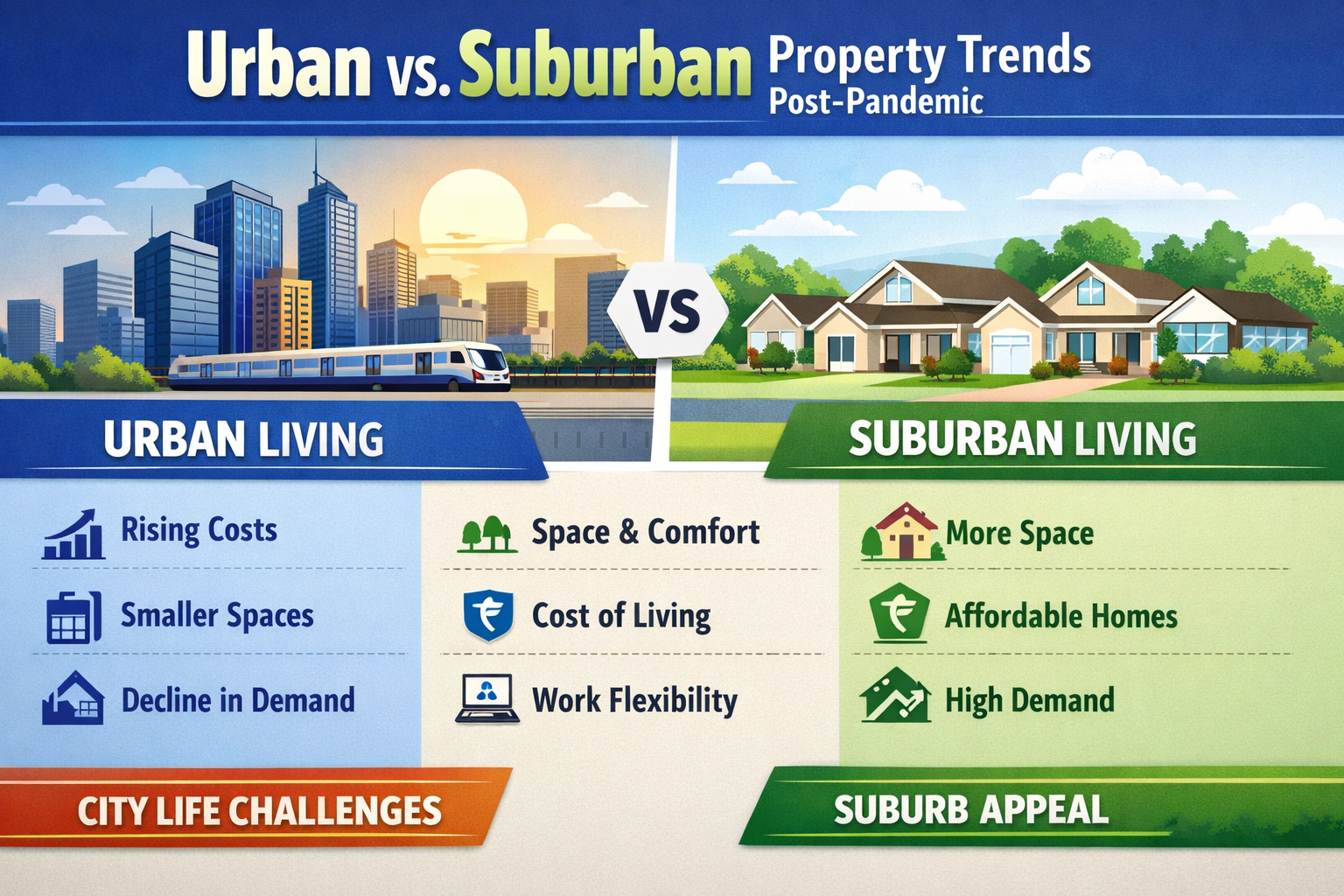
Before COVID-19, urban areas dominated housing demand. City apartments were attractive due to proximity to workplaces, public transport, cultural hubs, and entertainment. Suburban homes were mostly preferred by families or those seeking quieter environments, but cities generally carried a premium in price and demand.
2. Pandemic Shock
Remote Work
The pandemic made remote and hybrid work widespread. Commuting became optional, weakening one of the main advantages of urban apartments. People realized they could live farther from city centers without compromising work.
Space and Health Priorities
Lockdowns shifted priorities:
- More living space and home offices became essential.
- Private outdoor areas (yards, terraces) became highly desirable.
- Lower density areas felt safer in terms of health and comfort.
3. Surge in Suburban Demand
- Families and remote workers increasingly moved to suburbs for more space and quieter environments.
- Suburban home prices and rents rose quickly due to increased demand versus limited supply.
- Quality-of-life amenities like parks, schools, and community facilities made suburbs attractive to a broader demographic, including young buyers and retirees.
4. Urban Market Response
- Urban markets didn’t collapse; they adapted.
- Cities began to attract buyers again, especially young professionals seeking social, cultural, and career opportunities.
- Urban developments shifted toward:
- Mixed-use buildings
- Health-conscious designs
- Apartments with flexible interiors and access to outdoor spaces
5. Rental Market Dynamics
- Suburban rentals initially saw higher occupancy rates as urban areas experienced temporary outmigration.
- Urban rental markets rebounded as hybrid work encouraged part-time city living.
- Developers increasingly focused on suburban multifamily housing, reflecting sustained demand.
6. Pricing Trends
- Suburbs: Prices increased due to high demand, sometimes exceeding urban growth in certain regions.
- Urban areas: Prices stabilized or grew slowly initially but have rebounded in prime locations with amenities and connectivity.
7. Lifestyle & Housing Preferences
- Flexible and multifunctional homes are increasingly preferred, in both urban and suburban areas.
- Sustainability, energy efficiency, and smart-home features have become significant factors.
- Suburban areas with good transport links gained even more appeal.
8. Regional Nuances
- India: Demand shifted toward suburban and peri-urban areas but prime urban markets remain strong, especially for luxury or well-connected neighborhoods.
- Global: Developed markets (U.S., Europe) saw outer suburban and rural demand rise, sometimes faster than urban markets, reflecting the appeal of lower-density living.
9. Long-Term Outlook
The market is moving toward hybrid equilibrium:
- Suburban homes are favored for space, privacy, and compatibility with remote work.
- Urban apartments remain desirable for lifestyle, amenities, and connectivity.
- Mixed-use and flexible developments bridge urban-suburban divides.
Also Read: Real estate Investing I What factors should I consider while investing in rental properties...
10. Key Drivers
| Driver | Effect on Demand |
| Remote / hybrid work | Suburban demand |
| Desire for space & Outdoor areas | Suburban homes & Larger properties |
| Urban Amenities | Urban aprtment maintain appeal |
| Affordability pressures | Can Limit suburban growth |
| Flexible and sustaniable features | Bith updated and suburban markets adapt |
Conclusion
Post-pandemic property trends reflect a shift in priorities: space, health, and remote work compatibility favor suburban homes, while urban apartments retain value for connectivity, lifestyle, and career access. The market is diversifying, with urban and suburban sectors evolving to meet modern needs.
https://www.livehomes.in/live_insights