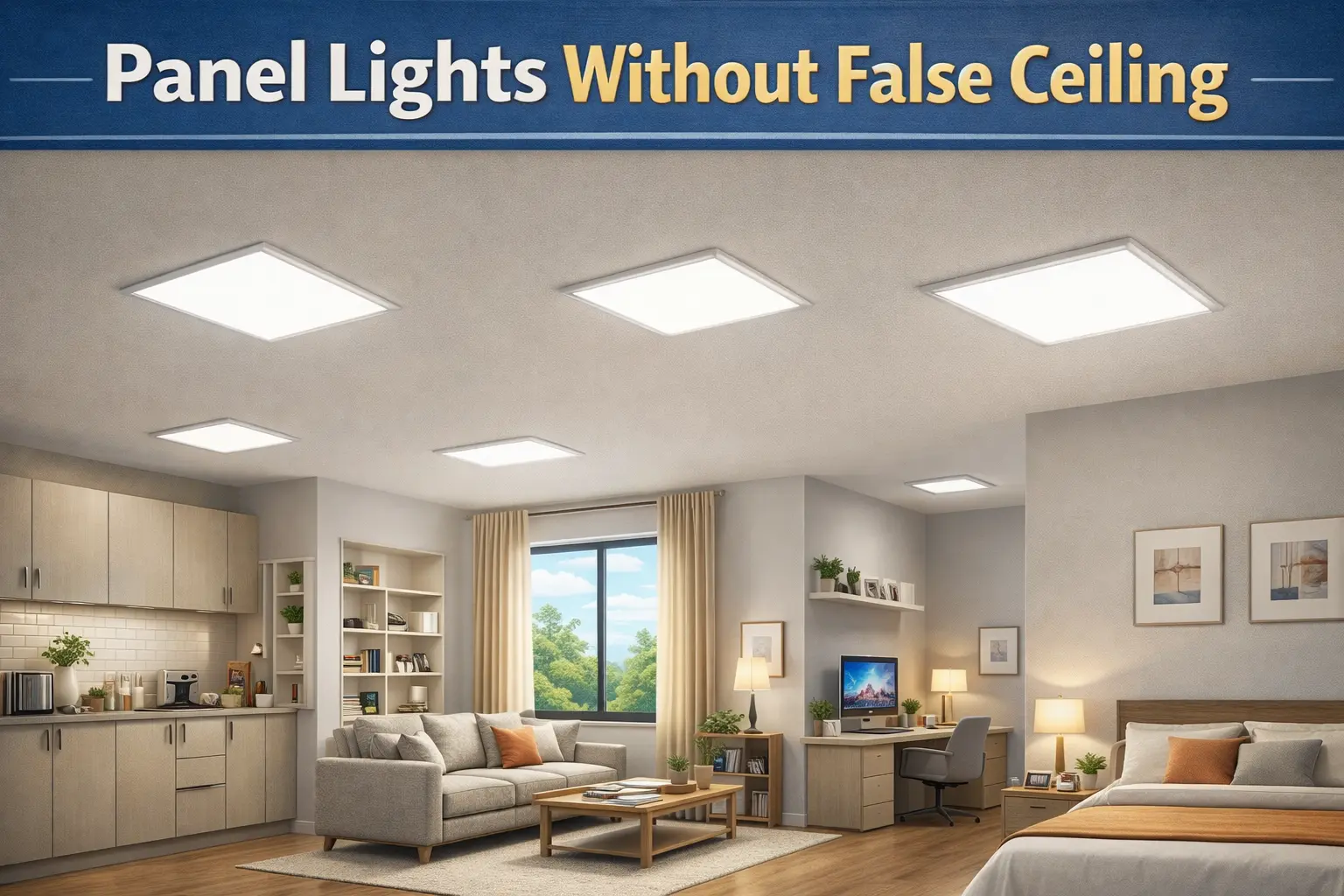
Panel lights are a modern lighting solution widely used in both residential and commercial spaces. Traditionally, these lights are installed in false ceilings (also known as dropped ceilings), which conceal light fixtures and provide a clean, streamlined look. However, panel lights can also be installed without a false ceiling, directly onto a solid ceiling. This allows for an efficient and stylish lighting solution without the need for additional ceiling work, and it’s a growing trend in contemporary interior design. This comprehensive guide explains everything about panel lights without false ceilings, including types, installation methods, benefits, and considerations.
1. What Are Panel Lights?
Panel lights are flat, thin, and rectangular or square light fixtures that provide uniform, bright lighting with minimal glare. These lights utilize LED technology, which is energy-efficient, long-lasting, and offers high performance compared to traditional lighting options like fluorescent lights or incandescent bulbs.
The key features of panel lights include:
- Slim design: They have a low profile, often just a few centimeters thick, which makes them perfect for a sleek and modern look.
- Even light distribution: Panel lights provide diffused light, reducing harsh shadows or bright spots in a room.
- Energy efficiency: LED panel lights consume significantly less energy than traditional light sources.
- Durability: The LEDs inside these panels have long lifespans (often 25,000 to 50,000 hours).
Panel lights without a false ceiling are typically surface-mounted or recessed directly into a solid ceiling, offering a clean and modern appearance without needing additional structural work like a dropped ceiling.
2. Types of Panel Lights Without False Ceilings
A. Surface-Mounted Panel Lights
- Surface-mounted panel lights are the simplest and most common type of panel light for installation without a false ceiling. These lights are designed to be mounted directly on the ceiling, so they don’t require any ceiling alterations.
- Design: They have a flat, rectangular or square shape and are often less than 2-3 cm in thickness. The panel is installed directly onto the ceiling using a mounting bracket or frame.
- Installation Process:
- Mounting the Frame: A mounting bracket is attached to the ceiling. This bracket holds the panel securely in place.
- Electrical Wiring: The panel is wired to the electrical supply, which may require running wires across the ceiling if the current electrical wiring is not nearby.
- Attaching the Panel: After the frame is installed, the panel itself is placed and attached to the frame, usually with clips or screws.
- Lighting Effect: These lights provide even, glare-free illumination and can light up a large area due to their wide beam angle.
Benefits:
- Quick and Easy Installation: Surface mounting is simple and requires no ceiling modification, making installation fast and cost-effective.
- Versatile Placement: Can be installed in any room with a smooth, solid ceiling.
- Low Maintenance: Once installed, these lights need little maintenance, with long-lasting LEDs that provide efficient lighting for years.
Applications:
- Ideal for residential rooms, offices, hallways, kitchens, and bathrooms. They are often used in places where aesthetics and functionality need to align seamlessly.
B. Recessed Panel Lights (Installed Without False Ceiling)
- Although recessed panel lights are more commonly installed in false ceilings, there are models designed specifically for installation in solid ceilings without the need for a false ceiling. These recessed panel lights are slightly different from surface-mounted models in terms of installation.
- Design: Recessed panel lights are designed to fit flush against the ceiling, making them look integrated and seamless. They create a clean, minimalist look because the body of the panel is hidden within the ceiling.
- Installation Process:
- Cutting the Ceiling: A hole must be cut in the ceiling where the light will be placed. This is typically a shallow cut, as recessed panels are thin.
- Wiring: The light must be connected to the existing electrical wiring. If wiring isn’t readily available, additional electrical work may be needed.
- Fitting the Light: Once the hole is cut, the recessed light is placed in the hole, and it sits flush with the ceiling surface, often with clips or springs to secure it in place.
- Lighting Effect: Recessed lights provide even, ambient lighting and can be used to create a more discreet lighting effect in the room.
Benefits:
- Seamless Look: These lights create a clean, integrated look that doesn’t disrupt the ceiling's design.
- Space-Saving: Since the light is embedded into the ceiling, it does not occupy additional space, making it suitable for rooms with lower ceiling heights.
- Even Distribution: Provides uniform light distribution without creating visible light spots.
Applications:
- Modern homes, offices, and commercial spaces where a minimalist design is desired. They work well in areas like living rooms, dining areas, corridors, and conference rooms.
Also Read: What Is a Coveless Ceiling Light and How Does It Work
C. Edge-Lit Panel Lights
Edge-lit panel lights use a different method of light diffusion. LEDs are placed at the edges of the panel, and light is distributed across the surface using light guides or optical lenses.
- Design: These lights are often thinner than other types of panel lights and have a sleek, modern appearance. They tend to be slightly more energy-efficient compared to backlit panel lights because the light is distributed more effectively.
- Installation Process: Similar to surface-mounted installation, these lights can be installed directly onto the ceiling using mounting brackets or frames.
- Lighting Effect: The light is evenly distributed, with soft, uniform brightness. Edge-lit panels typically produce brighter light with less heat.
Benefits:
- Slim Profile: Edge-lit panels are often thinner and lighter, making them easier to install and handle.
- Energy Efficient: These panels use less power due to their design, and they produce a more diffuse light across the room.
- Minimalistic Design: They create a clean, unobtrusive light source that is suitable for contemporary or industrial designs.
Applications:
- Common in offices, corridors, kitchens, and commercial buildings where uniform, glare-free lighting is important.
D. Backlit Panel Lights
In backlit panel lights, LEDs are placed behind the panel, and the light is diffused evenly across the surface of the panel using a light-diffusing sheet or frosted acrylic cover.
- Design: These lights typically have a thicker body than edge-lit panels, but they provide a softer, more ambient lighting effect.
- Installation Process: Similar to other panel lights, backlit panels are surface-mounted onto the ceiling or can be recessed, depending on the specific model.
- Lighting Effect: Backlit panel lights produce soft, even light with minimal glare. They provide a more ambient, less direct lighting effect compared to edge-lit models.
Benefits:
- Even Light Distribution: Backlit panel lights offer uniform lighting with no visible hot spots, making them perfect for general illumination in any room.
- Soothing and Relaxing: The light produced is often warmer and softer, ideal for creating a comfortable atmosphere.
- Energy Efficient: Since they use LEDs, backlit panels are energy-efficient, reducing electricity consumption.
Applications:
- Ideal for living rooms, bedrooms, lobbies, and reception areas where a more relaxing or ambient light is desired.
3. Benefits of Installing Panel Lights Without False Ceilings
A. Reduced Installation Costs
One of the most significant benefits of using panel lights without a false ceiling is the reduction in installation costs. Without the need for a false ceiling (which requires additional materials, labor, and ceiling modifications), the installation process becomes much faster and more cost-effective. The lights can be directly mounted or recessed into the ceiling, saving both time and money.
B. Energy Efficiency
Panel lights, especially those with LED technology, are highly energy-efficient. Unlike traditional incandescent or fluorescent lights, LEDs consume much less power for the same amount of light output. Additionally, LEDs produce minimal heat, which further enhances their efficiency and makes them safer for long-term use.
C. Aesthetic Flexibility
Panel lights offer a modern and clean aesthetic, making them suitable for contemporary designs. Whether you choose surface-mounted, recessed, backlit, or edge-lit options, these lights blend seamlessly into any room without needing the structural complexity of a false ceiling. They provide uniform lighting without the distracting shadows or bulky fixtures that traditional lighting systems might create.
D. Minimal Maintenance
LED panel lights have a long lifespan, often lasting between 25,000 to 50,000 hours, which means they require minimal maintenance. Since they do not have any filament that could burn out like incandescent lights, or a ballast that could wear down like fluorescent lights, they are extremely low-maintenance. Once installed, they provide years of reliable service.
E. Space-Saving
Since panel lights are often thin and compact, they do not take up much ceiling space. This is particularly
beneficial for rooms with low ceilings or spaces where maximizing vertical space is a priority. You can achieve effective lighting without sacrificing the ceiling height or floor area, which is particularly important in smaller rooms.
4. Key Considerations
While installing panel lights without a false ceiling offers numerous benefits, it is essential to keep a few considerations in mind:
A. Ceiling Type
Ensure that the ceiling is solid, smooth, and capable of supporting the weight of the panel. If the ceiling is too uneven or made of material that cannot hold the lights securely (such as thin drywall), additional reinforcement may be needed.
B. Wiring
If you're installing panel lights without a false ceiling, you may need to modify the electrical wiring to suit the new light fixture. This may involve running wires across the ceiling or installing additional junction boxes.
C. Light Placement
To ensure adequate lighting distribution, the placement of panel lights should be carefully planned. The lights should be positioned in a way that they provide uniform light without creating harsh shadows or bright spots in any particular area of the room.
D. Aesthetic Design
Although panel lights are sleek and modern, consider how they will fit into the overall aesthetic of your space. In some traditional or ornate rooms, these lights may not blend well with other elements unless they are part of a minimalist or contemporary design.
Also Read: Gypsum Board vs. Drywall: A Complete, Detailed Explanation
Conclusion
Panel lights without false ceilings are an excellent choice for modern interiors, offering efficiency, aesthetics, and ease of installation. Whether opting for surface-mounted, recessed, edge-lit, or backlit panels, they provide a range of solutions for different lighting needs and room types. With their energy efficiency, minimalist design, and long-lasting performance, panel lights are an ideal lighting solution for both residential and commercial spaces. They allow for a clean and modern aesthetic without the complexity of installing a false ceiling. By selecting the right type of panel light and installation method, you can create a lighting system that fits seamlessly into your space, enhancing both function and style.
https://www.livehomes.in/news_letter