What Are Coveless Ceiling Lights?
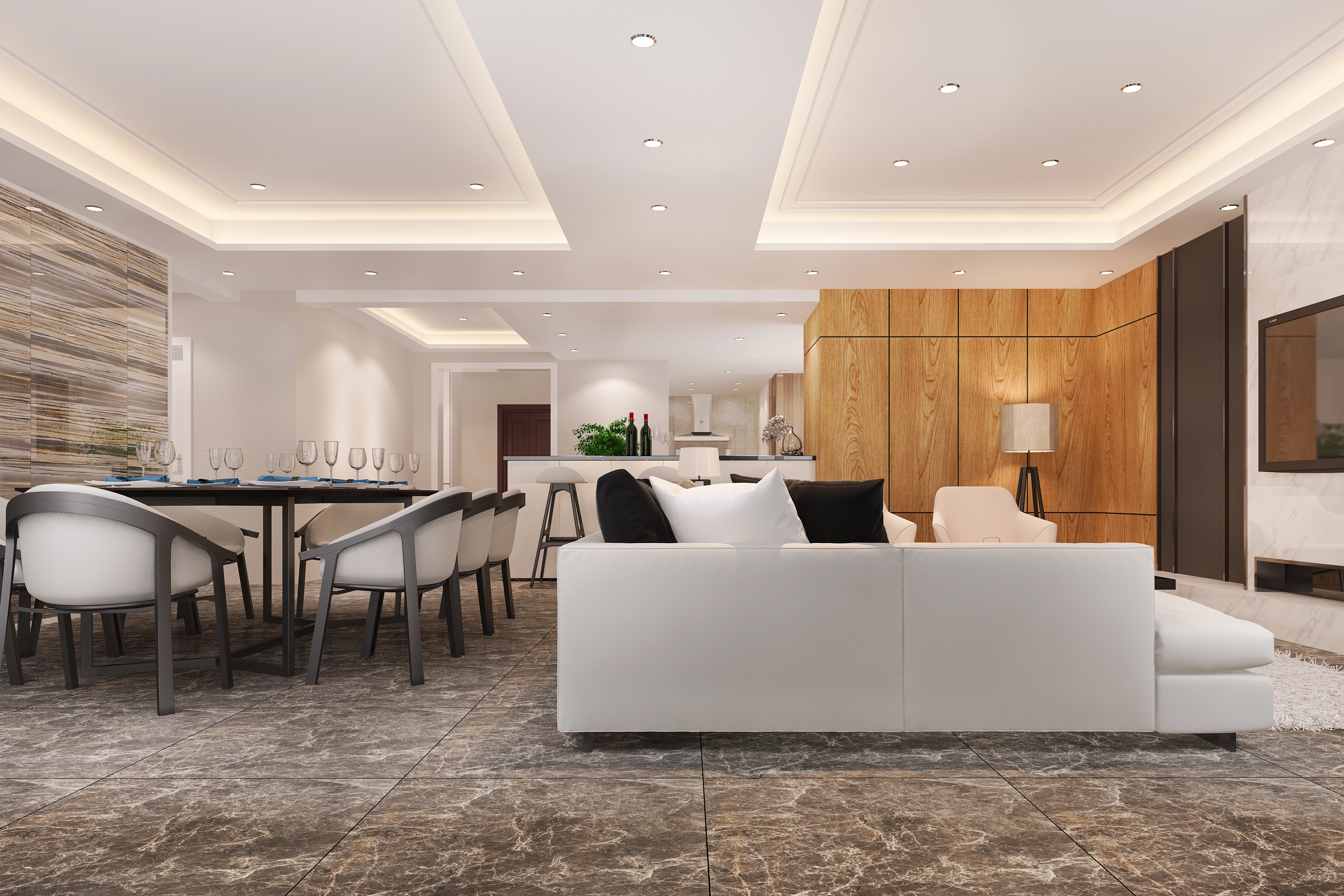
Coveless ceiling lights are indirect lighting systems that create a soft, floating glow on the ceiling without using a traditional cove. Unlike cove lighting—where lights are hidden inside a recessed pocket—coveless lighting uses surface systems, micro-gaps, or floating elements to achieve the same atmospheric effect with far less construction.
Key Characteristics
- No deep gypsum cavity or false ceiling needed
- Minimalist, modern look
- Uses LED strips, linear profiles, halo fixtures, or trimless gaps
- Creates smooth, diffused ambient illumination
- Perfect for both new builds and renovations
FULL TYPES OF COVELESS CEILING LIGHTS (COMPLETE LIST)
Below are all coveless lighting types, explained with depth and clarity.
1. Coveless Linear LED Profile Lighting
Slim aluminum channels with integrated LED strips mounted directly on surface or within a small groove.
How It Works
- Installed flush against ceiling or along walls
- Covered with an opal diffuser for uniform glow
- Can point upward (indirect), downward, or sideways
Common Designs
- Straight linear strips
- L-shaped and U-shaped outlines
- Square/rectangle room borders
- Random geometric line art on ceilings
Where It Works Best
Living rooms, bedrooms, corridors, offices.
2. Perimeter Glow LED Lighting (Shadow-Line Illumination)
LED strips run along the entire ceiling perimeter to create a soft “floating ceiling” effect.
How It Works
- Uses ultra-slim channels (5–10 mm gap)
- LEDs hidden inside the micro-gap
- Light spills upward to wash the ceiling edges
Design Variations
- Full perimeter glow
- Partial perimeter accents
- Two-wall or three-wall glow
- RGB perimeter mood lighting
Ideal For
Modern homes, luxury flats, hotel-style bedrooms.
3. Shadow-Gap or Trimless Coveless Lighting
A tiny, perfectly straight gap is created at the ceiling–wall junction using a trimless channel, and LEDs are fitted inside.
How It Works
- No visible frame
- A clean architectural joint creates a floating effect
- LEDs inside wash the ceiling and upper wall
Benefits
- Extremely premium appearance
- Totally hidden light source
- Smooth, diffused ceiling glow
Best In
High-end modern interiors, high ceilings, hallways, staircases.
Also Read: Why Laminates Are Becoming the Top Materials Choice in Modern Real Estates Projects
4. Coveless Floating Panel Lighting
A central ceiling “panel” is installed slightly below the real ceiling. LEDs hidden behind the perimeter of the panel glow outward.
How It Works
- The panel sits 1–4 inches lower than ceiling
- LED strips sit behind its edges
- Creates a hover or halo effect
Design Shapes
- Rectangles, squares
- Circles or ovals
- Hexagons
- Floating 3D wave panels
Suitable For
Feature ceilings, living rooms, reception areas, restaurants.
5. Halo Ring Coveless Lighting (Indirect Circular Light)
Circular LED fixtures that cast light inward or upward to produce an indirect glow.
How It Works
- Suspended or surface-mounted ring
- Light is focused toward ceiling
- Ceiling reflects light back softly
Design Variations
- Single halo ring
- Multiple halo rings at staggered heights
- Thin LED rings for ultra-modern look
Best For
Dining rooms, foyers, lounges, modern bedrooms.
6. Wall-to-Ceiling Coveless Indirect Lighting
These are wall-mounted linear lights that aim upward toward the ceiling, illuminating it without any cove.
How It Works
- Mounted close to ceiling
- Light projects upward, creating sky-like glow
- No ceiling modification needed
Why It’s Popular
- Perfect for renovation
- No false ceiling required
- Offers artistic wall-lighting effect
Best Use
Living rooms, gallery walls, feature corners.
7. Micro-Recessed Coveless Light Lines (Ultra-Shallow Channels)
These create very narrow lines of light recessed directly into the ceiling surface with minimum cutting.
How It Works
- Uses shallow 10–12 mm deep channels
- LED placed inside and plastered to be trimless
- Produces extremely clean, modern look
Design Styles
- Straight lines
- Cross patterns
- Maze-like designs
- Ceiling-to-wall continuation lines
Applications
Minimalist interiors, offices, contemporary homes.
Also Read: Ambient Lighting Without False Ceiling Complete In Depth Guide
8. Moulding-Back Indirect Lighting (Cove-Like Without Coving)
Indirect lighting created behind decorative mouldings, not within a recessed cavity.
How It Works
- LED strips hidden behind a moulding projection
- Light bounces off ceiling
- Gives cove-like effect but with easy installation
Design Variants
- Crown moulding glow
- Integrated LED cornices
- Flat-edge mouldings for a modern look
Where Used
Bedrooms, classic interiors, elegant living rooms.
9. Architectural Slot Lighting (Linear Gaps Without True Cove)
A long, narrow slit between two surfaces where LED light escapes indirectly.
How It Works
- Two surfaces meet with a designed gap
- LED hidden along one side
- Gap glows like a light fissure
Rooms That Benefit
Corridors, boutique stores, staircases.
ADVANTAGES OF COVELESS CEILING LIGHTS
1. No Heavy Construction
No need for expensive L-shaped coves or deep gypsum ceilings.
2. Ultra-Modern Look
Clean architectural lines, minimalism, hidden fixtures.
3. Diffused Ambient Light
No harsh shadows or bright hot-spots.
4. Energy Efficient
LEDs use low wattage but create high visual impact.
5. Highly Customizable
Shapes, colors, edges, patterns—fully design-flexible.
6. Works in Low Ceilings
Perfect for apartments where full cove construction isn’t possible.
DISADVANTAGES TO KNOW
- Requires precise installation
- Slim gaps must be perfectly even
- Poor-quality LED strips may show hotspots
- Needs dimming controls for best effect
- Some types need a clean, straight ceiling finish
BEST ROOMS FOR COVELESS LIGHTING
- Living rooms
- Bedrooms
- Hallways and corridors
- TV rooms / home theaters
- Dining areas
- Offices
- Hotel rooms
- Lobbies
- Retail stores
It adapts easily to both residential and commercial spaces.
https://www.livehomes.in/blogs