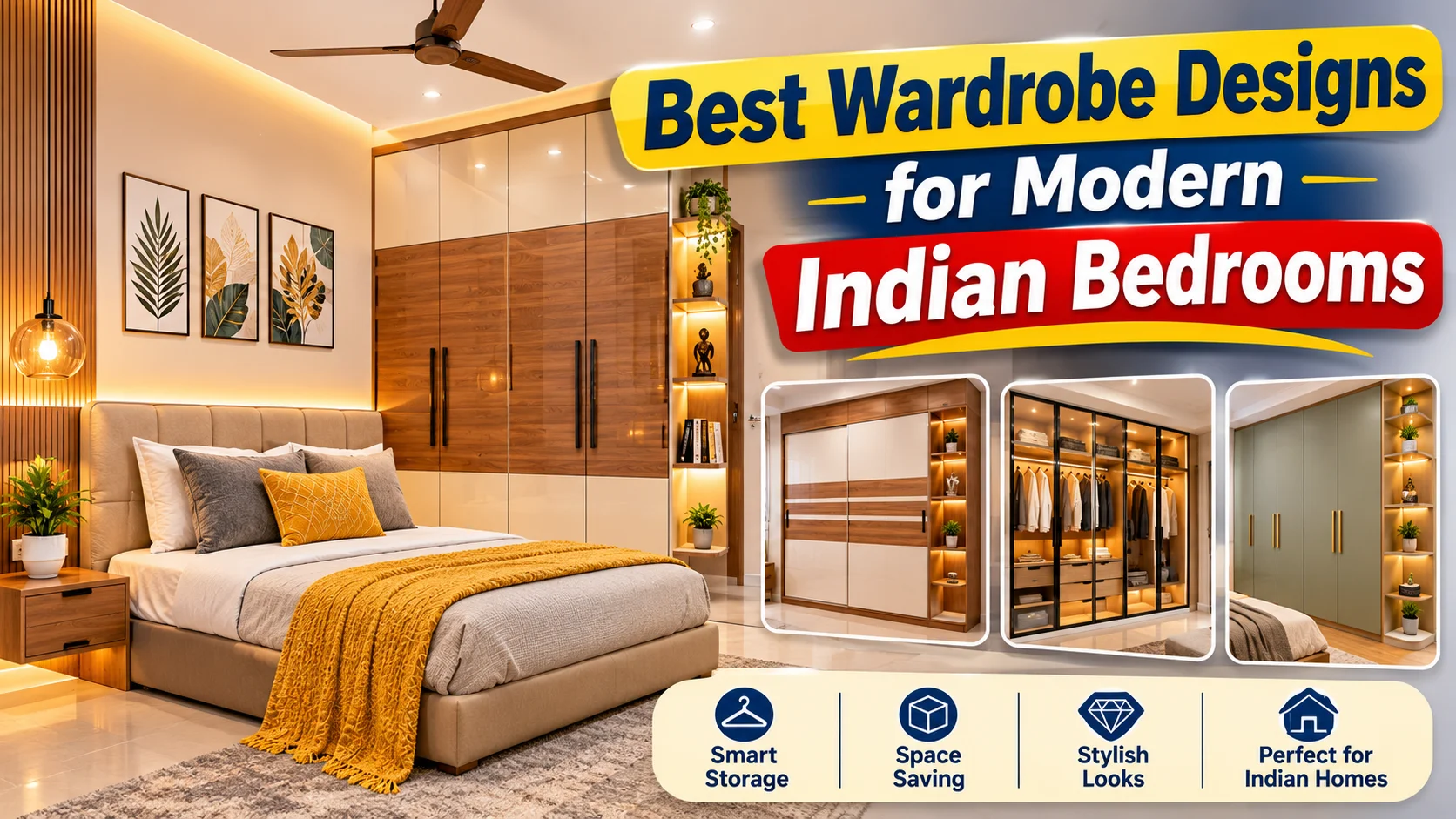
A well-designed wardrobe is one of the most important elements of a modern Indian bedroom. It is not simply a storage unit for clothes and accessories; it also contributes to the room's overall appearance, functionality, and comfort. With changing interior design trends, homeowners are looking for wardrobe designs that combine elegant aesthetics, smart storage, durable materials, and efficient space utilization. Modern Indian bedrooms come in different sizes and layouts. Some have compact spaces that require clever storage solutions, while others offer enough room for luxurious walk-in wardrobes. Choosing the right wardrobe depends on bedroom dimensions, family requirements, storage habits, interior themes, and budget. From sleek sliding-door wardrobes to traditional wooden wardrobes, floor-to-ceiling storage units, and customized modular wardrobes, there are several options available for today's homeowners.
In this detailed guide, we explore the best wardrobe designs for modern Indian bedrooms, including popular styles, materials, color combinations, interior layouts, storage ideas, estimated costs, and practical buying tips.
1. Why Is Choosing the Right Wardrobe Design Important?
A wardrobe plays an important role in maintaining an organized and comfortable bedroom. A poorly planned wardrobe can occupy unnecessary space, create storage difficulties, and affect the overall appearance of the room.
A properly designed wardrobe offers several advantages:
- Better space utilization: Makes use of available vertical and horizontal space.
- Organized storage: Provides separate compartments for clothes, accessories, footwear, and personal belongings.
- Improved bedroom appearance: Complements the bed, flooring, wall colors, and other furniture.
- Easy accessibility: Keeps frequently used items within easy reach.
- Long-term durability: Quality materials and fittings provide better performance over time.
- Personalized functionality: Customized layouts can accommodate individual family requirements.
For Indian households, wardrobe planning should also consider seasonal clothing, sarees, traditional outfits, office wear, luggage, and additional household storage.
2. Best Wardrobe Designs for Modern Indian Bedrooms
Choosing a wardrobe style is the first step towards creating a functional bedroom. Here are some popular wardrobe designs suitable for different Indian home layouts.
2.1 Sliding Door Wardrobe Design
Sliding wardrobes are among the most popular choices for contemporary Indian bedrooms, especially where floor space is limited. Unlike traditional wardrobes, sliding doors move horizontally along tracks instead of opening outward. This makes them suitable for bedrooms where the bed is positioned close to the wardrobe.
Key features:
- Space-saving door mechanism.
- Modern and minimal appearance.
- Available in glass, laminate, mirror, and wooden finishes.
- Suitable for compact and medium-sized bedrooms.
- Can be customized with multiple internal storage sections.
Best suited for: Small bedrooms, apartments, and modern master bedrooms. One practical consideration is the quality of the sliding track system. Strong tracks and smooth rollers are important for long-term use.
2.2 Hinged Door Wardrobe Design
Hinged wardrobes feature conventional doors attached using hinges. They remain a preferred choice for homeowners who want easy access to the entire storage compartment. Unlike sliding wardrobes, hinged doors can open completely, making it easier to organize and retrieve clothes.
Advantages:
- Easy access to all compartments.
- Simple maintenance and repairs.
- Flexible internal storage arrangements.
- Available in traditional and contemporary designs.
- Can accommodate mirrors on the inside or outside of doors.
Best suited for: Spacious bedrooms and homes with sufficient clearance in front of the wardrobe.
2.3 Floor-to-Ceiling Wardrobe Design
Floor-to-ceiling wardrobes are an excellent choice for homeowners who want maximum storage without adding multiple furniture units. These wardrobes extend from the floor to the ceiling, making use of vertical space that is often left unused.
Important design features:
- Top compartments for luggage and seasonal items.
- Middle sections for everyday clothing.
- Lower drawers for accessories and personal belongings.
- Tall sections for dresses, sarees, and long garments.
- Customized finishes matching the bedroom interiors.
This design is particularly useful in Indian apartments where efficient storage is important.
Best suited for master bedrooms, family bedrooms, and apartments with limited storage space.
2.4 Walk-In Wardrobe Design
A walk-in wardrobe offers a dedicated area for clothing, footwear, accessories, and dressing requirements. It is generally designed as a separate room or a partitioned section connected to the bedroom.
Features include:
- Separate sections for different clothing categories.
- Dedicated shoe racks.
- Jewelry and accessory organizers.
- Full-length mirrors.
- Dressing counters.
- Internal lighting.
- Open shelves and hanging units.
Walk-in wardrobes provide a premium appearance and can improve everyday convenience. However, they require sufficient floor area and proper ventilation. They are more suitable for spacious master bedrooms.
2.5 Mirror Wardrobe Design
Mirror wardrobes combine storage and dressing functionality in a single furniture unit. Mirrored shutters help reflect natural and artificial light, making compact bedrooms appear brighter and more spacious.
Benefits:
- Reduces the need for a separate full-length mirror.
- Creates a visually spacious appearance.
- Adds an elegant touch to bedroom interiors.
- Available in sliding and hinged configurations.
For households with children, consider safety-backed mirrors and suitable protective fittings.
2.6 Modular Wardrobe Design
Modular wardrobes are designed using individual storage modules that can be arranged according to the available space and household requirements. They provide greater flexibility compared with standard ready-made wardrobes.
Common modular components:
- Hanging sections.
- Adjustable shelves.
- Pull-out drawers.
- Trouser organizers.
- Saree storage compartments.
- Accessory trays.
- Shoe storage units.
- Loft cabinets.
Modular wardrobes are especially useful for homeowners who want a personalized storage arrangement.
2.7 L-Shaped Corner Wardrobe Design
L-shaped wardrobes utilize two adjoining walls to create additional storage. They are useful when a conventional straight wardrobe does not provide sufficient storage or when bedroom corners need better utilization.
Advantages:
- Utilizes unused corner space.
- Offers additional storage capacity.
- Can be combined with dressing units.
- Suitable for customized bedroom layouts.
Proper corner access and door movement should be planned to avoid difficult-to-reach storage areas.
2.8 Open Wardrobe Design
Open wardrobes are becoming popular in contemporary interiors because of their simple and accessible design. They feature exposed shelves, hanging rods, and drawers without conventional shutters.
Benefits:
- Easy access to everyday clothing.
- Modern and minimal appearance.
- Lower shutter-related hardware requirements.
- Flexible storage arrangements.
However, open wardrobes require regular cleaning because clothes and shelves are exposed to dust.
Best suited for minimalist bedrooms, dressing rooms, and homeowners who prefer organized open storage.
3. Best Wardrobe Materials for Indian Homes
The material selected for a wardrobe directly affects its durability, appearance, maintenance, and overall cost. Indian weather conditions, particularly humidity in coastal cities such as Chennai, should also be considered when selecting wardrobe materials.
Here are the most commonly used materials.
| Material | Main Characteristics | Suitable application |
| Plywood | Strong and versatile | Main wardrobe structure |
| MDF | Smooth surface and uniform finish | Decorative shutters |
| HDHMR | Higher density and moisture resistance than standard MDF | Selected wardrobe applications |
| Particle board | Economical and lightweight | Budget furniture |
| Soild wood | Natural appearances and premium finish | Luxury wardrobes |
| Laminate | Available in many colors and textures | Exteriors and interior finishing |
| Acrylic | Smooth. glossy appearance | Contemporary shutters |
Plywood
Plywood is widely used for wardrobe construction because of its strength and versatility. It is available in different grades and thicknesses. The appropriate grade should be selected based on the location and moisture exposure. For Indian homes, moisture-resistant or suitable calibrated plywood is worth considering, especially for wardrobe carcasses.
MDF
Medium-density fiberboard offers a smooth and uniform surface, making it suitable for painted and decorative wardrobe shutters. It is generally used where a consistent finish is important. However, standard MDF should be protected from moisture and direct water exposure.
HDHMR Board
High-Density High Moisture Resistant boards are used in selected modular furniture applications. They provide a dense surface and improved moisture resistance compared with standard MDF, depending on the product specification.
Solid Wood
Solid wood provides a natural and premium appearance. It can be used for traditional, contemporary, and luxury wardrobe designs. However, cost, maintenance, and seasonal movement should be considered before choosing it. Important buying tip: Do not select wardrobe materials based only on the surface finish. Ask the interior designer or manufacturer about the actual board grade, thickness, edge sealing, hardware quality, and warranty.
4. Best Wardrobe Colour Combinations for Modern Indian Bedrooms
Wardrobe colors influence the overall atmosphere of a bedroom. The right combination can make the room feel brighter, warmer, more luxurious, or visually spacious.
4.1 White and Beige
White and beige create a clean, peaceful, and spacious appearance.
This combination is suitable for small bedrooms and minimalist interiors.
4.2 Walnut Brown and Cream
Walnut brown adds warmth, while cream creates a balanced and elegant appearance.
It works well in traditional and contemporary Indian bedrooms.
4.3 Grey and Wooden Finish
Grey with natural wooden textures creates a sophisticated and modern appearance.
It is suitable for homeowners who prefer neutral and understated interiors.
4.4 Sage Green and White
Sage green provides a soft natural appearance and pairs beautifully with white walls and light wooden flooring.
It is becoming a popular choice for homeowners looking for something different from conventional neutral colors.
4.5 Navy Blue and Gold
Navy blue with subtle gold handles or detailing creates a premium bedroom appearance.
This combination works particularly well in spacious master bedrooms.
4.6 Pastel Pink and White
Pastel pink combined with white creates a soft and elegant appearance.
It is suitable for children's bedrooms, guest rooms and contemporary interiors.
5. Smart Wardrobe Interior Storage Ideas for Indian Families
A wardrobe should be designed according to how the family actually uses it. A beautiful exterior alone cannot provide a comfortable storage experience. Indian households often require different storage arrangements for sarees, salwar suits, office clothing, traditional wear, accessories and seasonal garments.
Important wardrobe storage sections
1. Hanging sections
Provide hanging rods for shirts, trousers, dresses, coats and other garments. Long-hanging sections are useful for sarees, gowns and dresses.
2. Saree storage compartments
Indian households often require dedicated saree storage. Wider shelves with adequate height help prevent unnecessary folding and creasing.
3. Drawer organisers
Drawers are suitable for innerwear, socks, accessories, watches and personal belongings.
4. Jewellery organisers
Small compartments help organise jewellery and prevent items from becoming tangled.
5. Shoe storage
A dedicated shoe rack keeps footwear organised and separate from clothing.
6. Loft storage
Top compartments can accommodate suitcases, blankets, seasonal clothes and other items that are not used regularly.
7. Pull-out accessories
Tie holders, belt organisers, trouser racks and accessory trays help improve accessibility.
8. Laundry section
A pull-out laundry basket can help separate used clothes from clean garments.
6. Best Wardrobe Designs for Different Bedroom Sizes
Not every bedroom requires the same wardrobe configuration. The available floor area and furniture arrangement should determine the design.
- Small Bedrooms
For compact bedrooms, sliding wardrobes are generally a practical choice.
Recommended features:
- Floor-to-ceiling storage.
- Light-coloured shutters.
- Mirrored panels.
- Minimal external handles.
- Built-in shelves.
- Multi-purpose storage.
Avoid oversized wardrobes that block natural light or restrict movement around the bed.
- Medium-Sized Bedrooms
Medium-sized bedrooms offer more flexibility.
Recommended features:
- Hinged or sliding wardrobes.
- Combination of drawers and shelves.
- Dressing mirror.
- Loft cabinets.
- Dedicated hanging sections.
- Contrasting shutter finishes.
An L-shaped arrangement may also work if the room layout allows it.
- Large Master Bedrooms
Large bedrooms can accommodate more elaborate wardrobe arrangements.
Recommended features:
- Walk-in wardrobes.
- Separate dressing counters.
- Full-length mirrors.
- Glass shutters.
- Premium wooden finishes.
- Internal LED lighting.
- Dedicated accessory and footwear storage.
The overall design should maintain a comfortable walking area.
7. Modern Wardrobe Design Trends in India for 2026
Interior design preferences are changing as homeowners look for practical storage solutions combined with attractive finishes.
Some popular wardrobe design directions in 2026 include:
- Handleless Wardrobes
Handleless wardrobes use push-to-open mechanisms, recessed profiles or integrated handles. They provide a clean and uninterrupted appearance.
- Fluted Wardrobe Shutters
Fluted patterns introduce texture and visual depth to otherwise plain wardrobe surfaces.
They are suitable for contemporary and luxury bedrooms.
- Glass Shutter Wardrobes
Tinted or frosted glass shutters create a premium appearance.
They are particularly effective when combined with internal lighting and organised storage.
- Two-Tone Wardrobes
Combining two complementary colours creates a balanced and attractive bedroom design.
Examples include white and walnut, beige and grey, or cream and sage green.
- Integrated Dressing Units
A dressing mirror, drawers and small storage shelves can be incorporated into the wardrobe itself.
This helps reduce the need for separate furniture.
- Smart Lighting
Motion-sensor LED lights and wardrobe strip lighting improve visibility inside storage compartments.
These features are useful for deep wardrobes and low-light bedrooms.
8. Wardrobe Lighting Ideas for Better Functionality
Lighting is often overlooked during wardrobe planning. However, proper lighting makes it easier to identify clothing and accessories.
Popular lighting options include:
- LED strip lights: Installed along internal shelves or wardrobe edges.
- Motion sensor lights: Automatically illuminate when wardrobe doors are opened.
- Vertical profile lighting: Provides an elegant appearance on wardrobe shutters.
- Dressing mirror lighting: Improves visibility while getting ready.
- Drawer lighting: Helps locate small accessories.
Choose suitable electrical fittings and ensure that wiring is safely concealed during installation.
9. Wardrobe Design Cost in India – 2026 Estimated Price Guide
Wardrobe costs depend on the material, dimensions, finish, shutter mechanism, internal accessories, labour and installation requirements. There is no single standard price because customised wardrobes differ considerably from one project to another. The following figures are indicative planning estimates, not verified market quotations.
| Wardrobe type | Estimated price |
| Basic open wardrobe | Rs 15,000-35,000 |
| Basic hinged wardrobe | Rs 25,000-55,000 |
| Sliding wardrobe | Rs 35,000-85,000 |
| Modular wardrobe | Rs 45,000-1,20,000 |
| Floor-to-ceiling wardrobe | Rs 50,000-1,50,000 |
| Premium glass wardrobe | Rs 70,000-2,00,000 |
| Walk-in wardrobe | Rs 1,00,000-3,50,000 + |
These are broad indicative estimates for typical projects. Actual quotations may be lower or higher depending on size, specifications and location.
Factors That Influence Wardrobe Costs
1. Wardrobe dimensions: Larger wardrobes require more material and labour.
2. Material selection: Plywood, MDF, HDHMR and solid wood have different costs.
3. Shutter mechanism: Sliding systems and premium hardware can increase the budget.
4. Surface finish: Acrylic, glass, veneer and decorative laminates have different price points.
5. Internal accessories: Pull-out organisers, jewellery trays and specialised racks add to the cost.
6. Installation: Transportation, fitting and finishing charges may vary depending on the project.
How to Reduce Wardrobe Costs Without Compromising Quality
- Choose laminate finishes instead of expensive decorative finishes.
- Use standard wardrobe dimensions wherever possible.
- Avoid unnecessary accessories.
- Select durable hinges and tracks rather than low-quality hardware.
- Plan storage requirements before fabrication.
- Compare quotations based on material specifications, not just the final price.
10. Common Wardrobe Design Mistakes Homeowners Should Avoid
Even an expensive wardrobe can become inconvenient if its layout is not properly planned.
Here are some common mistakes to avoid.
- Insufficient hanging space: A wardrobe with too many shelves and limited hanging sections may not suit families with office wear and long garments.
- Ignoring bedroom clearance: Doors should not obstruct the bed, side tables or walking space.
- Choosing poor-quality hardware: Low-quality hinges, channels and sliding tracks may create maintenance problems.
- Insufficient ventilation: Wardrobes should be planned to minimise moisture accumulation, particularly in humid environments.
- Ignoring loft accessibility: Frequently used items should not be placed in difficult-to-reach upper compartments.
- Not planning electrical points: Internal lighting and dressing mirror lighting should be considered before installation.
Selecting trends without considering maintenance: Glossy, mirrored and glass surfaces may require more frequent cleaning.
11. How to Choose the Best Wardrobe Design for Your Home
Before finalising your wardrobe, consider the following practical steps.
- Measure the bedroom: Check the available wall length, ceiling height and depth.
- Understand your storage needs: Identify the number of hanging sections, drawers and shelves required.
- Select the right door type: Choose sliding or hinged shutters based on available clearance.
- Choose suitable materials: Consider durability, humidity resistance and maintenance.
- Finalise the colour combination: Match the wardrobe with the bed, flooring and bedroom wall colours.
- Plan internal accessories: Include only the organisers that your family will actually use.
- Check hardware quality: Ask about hinges, channels, handles and sliding mechanisms.
- Request a 3D design: Review the wardrobe layout and finish before fabrication.
- Confirm the quotation: Check material thickness, finish, accessories, installation and warranty details.
For homeowners constructing or purchasing a new apartment, planning wardrobe dimensions during the interior design stage can help avoid unnecessary modifications later.
Conclusion
Choosing the best wardrobe design for a modern Indian bedroom requires more than selecting an attractive colour or fashionable shutter style. It involves understanding available space, storage requirements, material quality, durability and everyday convenience. Sliding wardrobes are practical for compact bedrooms, hinged wardrobes provide easy access, floor-to-ceiling wardrobes maximise vertical storage, and walk-in wardrobes create a premium dressing experience. Homeowners should also pay attention to internal storage arrangements, moisture protection, hardware quality and lighting before finalising the design. In cities like Chennai, selecting suitable materials and ensuring proper ventilation are particularly important for maintaining wardrobe durability. A thoughtfully designed wardrobe can improve bedroom organisation, enhance the overall interior appearance and make everyday living more comfortable. Whether you are designing a new apartment or renovating an existing home, investing time in wardrobe planning will help create a bedroom that is both stylish and functional.
Frequently Asked Questions
1. Which wardrobe design is best for modern Indian bedrooms?
Sliding wardrobes, modular wardrobes and floor-to-ceiling wardrobes are popular choices for modern Indian bedrooms. The best option depends on room size, storage requirements and interior design preferences.
2. Which wardrobe is best for a small bedroom?
A sliding-door wardrobe with floor-to-ceiling storage is a practical option for small bedrooms. Light colours and mirrored shutters can also create a visually spacious appearance.
3. Are sliding wardrobes better than hinged wardrobes?
Sliding wardrobes are useful when there is limited space in front of the wardrobe. Hinged wardrobes provide full access to the storage compartments. Both options have advantages depending on bedroom dimensions.
4. Which material is best for wardrobe construction in India?
Good-quality plywood is a popular option for wardrobe carcasses. HDHMR and MDF can also be used for suitable applications. Material selection should consider moisture exposure, product grade and manufacturer specifications.
5. What is the ideal depth of a bedroom wardrobe?
A depth of approximately 600 mm (2 feet) is commonly used for wardrobes with standard hanging sections. Smaller depths may work for shelves or specific storage arrangements, but should be planned carefully.
6. Which wardrobe colour is best for a modern bedroom?
White, beige, walnut brown, grey and sage green are popular choices. Light colours work well in compact bedrooms, while darker shades can create a premium appearance in larger rooms.
7. How much does a modular wardrobe cost in India in 2026?
A modular wardrobe may cost approximately Rs 45,000 to Rs 1,20,000 for a typical project, depending on its dimensions, materials, finishes and accessories. Premium customised designs can cost more.
8. Is a floor-to-ceiling wardrobe a good choice?
Yes. It provides additional storage by utilising vertical space. The upper compartments can be used for luggage, blankets and seasonal belongings.
9. Are mirrored wardrobes suitable for Indian homes?
Yes. Mirrored wardrobes provide dressing functionality and help reflect light. Safety-backed mirrors and suitable fittings are recommended, particularly in family bedrooms.
10. How can I organise sarees inside a wardrobe?
Use dedicated shelves with sufficient height and width. You can also include pull-out trays and separate sections for frequently used and special-occasion sarees.