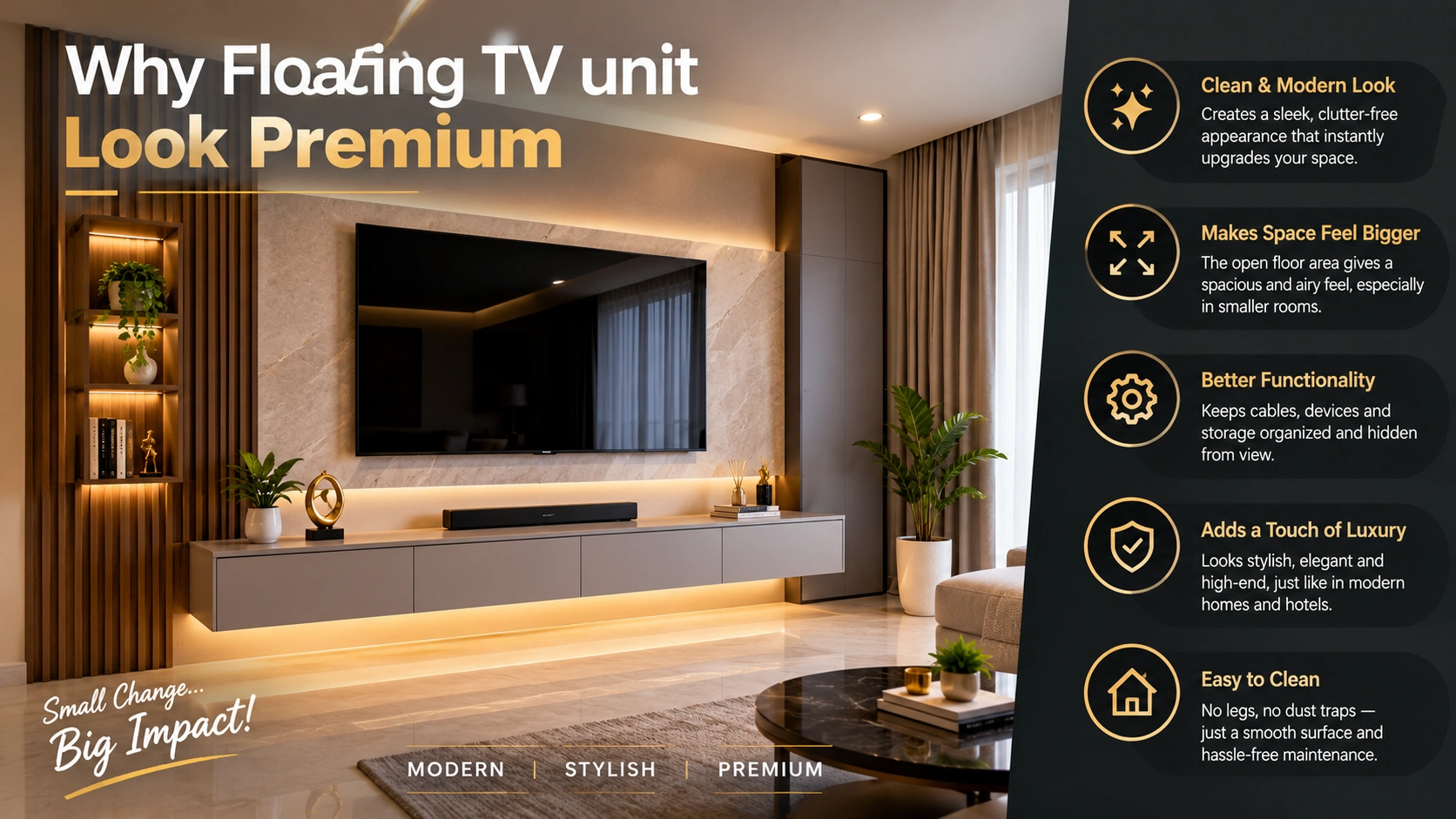
A TV unit is more than a place to keep your television. In modern homes, it has become an important part of the living room interior design. Among the latest interior trends, floating TV units are gaining popularity because they create a clean, sophisticated, and premium appearance without making the room feel crowded. Unlike traditional floor-standing TV cabinets, a floating TV unit is fixed to the wall and leaves visible floor space underneath. This simple design approach can make the living room appear more spacious, organized, and contemporary. In 2026, homeowners are increasingly combining floating TV unit designs with wooden finishes, fluted panels, LED lighting, concealed storage, and marble-look surfaces to create a luxurious entertainment wall.
What Is a Floating TV Unit?
A floating TV unit is a wall-mounted TV cabinet or console that does not directly touch the floor. It is securely fixed to the wall, creating an open gap between the bottom of the unit and the floor.
The design can include:
- Wall-mounted TV panel
- Floating storage cabinets
- Open shelves
- Closed drawers
- Wooden finishes
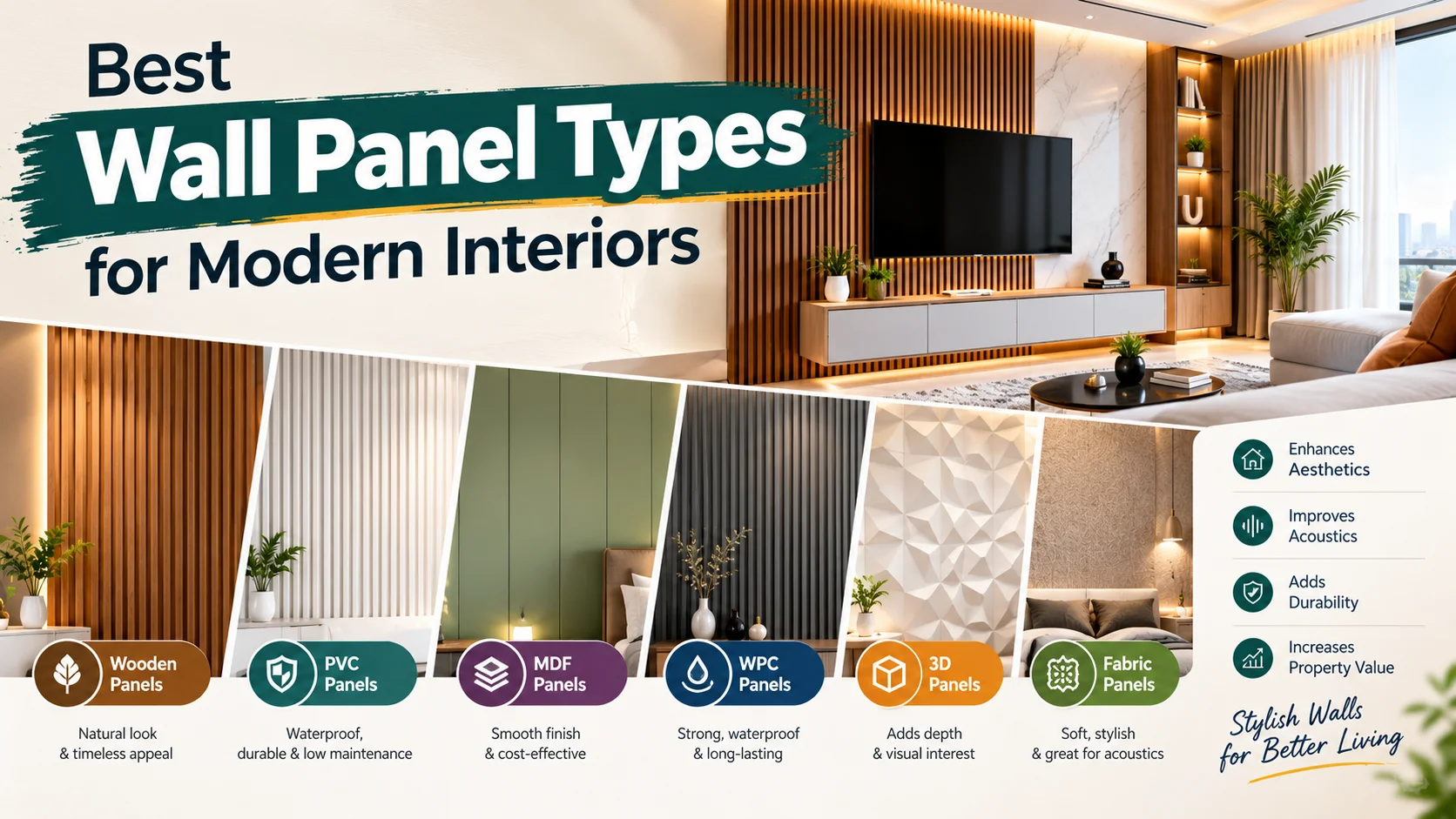
- Fluted panels
- LED strip lighting
- Decorative niches
- Cable management systems
- Marble or stone-finish panels
The result is a streamlined entertainment area that combines functionality and modern interior aesthetics.
Why Do Floating TV Units Look Premium?
The premium appearance of a floating TV unit comes from its clean proportions, minimal design, concealed storage, and integrated lighting.
Here are the major reasons why homeowners and interior designers prefer this style.
1. Creates a Clean and Minimalist Look
One of the biggest advantages of a floating TV unit is its minimalist appearance. Traditional TV cabinets can sometimes make the living room look heavy because they occupy a large amount of floor space. A wall-mounted unit keeps the furniture visually lighter. The uncluttered design gives the room a more refined appearance.
2. Makes the Living Room Look More Spacious
Because the cabinet does not touch the floor, the flooring remains visible underneath. This creates an illusion of additional floor space.
It can be particularly useful for:
- Small apartments
- Compact living rooms
- 1BHK homes
- 2BHK apartments
- Urban Chennai homes
The open space beneath the unit also makes cleaning easier.
3. Gives a Luxury Hotel-Inspired Appearance
Premium hotels and modern apartments often use wall-mounted furniture because it creates a clean architectural appearance.
You can recreate a similar look at home by combining:
TV panel + floating cabinet + warm LED lighting + premium finish
For example, a wooden floating cabinet with a textured wall panel and concealed warm lighting can create a sophisticated entertainment wall.
4. Conceals Wires and Cables
Visible cables can quickly reduce the visual appeal of an otherwise expensive interior. A well-designed floating TV unit can incorporate concealed cable channels behind the panel.
You can hide cables for:
- Television
- Set-top box
- Gaming console
- Soundbar
- Wi-Fi router
- Streaming devices
- Speakers
This creates a cleaner and more professional-looking TV wall.
5. Integrated LED Lighting Adds a Premium Effect
Lighting is one of the easiest ways to make a TV unit look more luxurious.
Warm LED strips can be installed:
- Behind the TV panel
- Under the floating cabinet
- Inside display niches
- Around wooden wall panels
- Behind fluted panels
The LED light creates a soft glow around the TV unit and enhances the texture of the wall.
Best lighting choice
For most living rooms, warm white lighting creates a comfortable and premium atmosphere. Avoid excessive bright lighting around the television because it can become visually distracting.
6. Floating Design Creates a “Light” Furniture Effect
A traditional cabinet visually connects the furniture to the floor. A floating unit breaks this connection. The gap underneath creates a floating or suspended effect, making the furniture appear lighter and more contemporary. This is one of the main visual characteristics that differentiates a premium floating TV unit from a conventional TV cabinet.
7. Better Integration With Modern Interiors
Floating TV units work well with several interior styles.
Modern Interior
Use:
- Matte finishes
- Neutral colors
- Straight lines
- Concealed storage
- Contemporary Interior
Combine:
- Wood textures
- Fluted panels
- Glass
- LED lighting
- Minimalist Interior
Choose:
- Simple wall panel
- One floating cabinet
- Hidden wires
- Limited decoration
Luxury Interior
Use:
- Marble-look panels
- Veneer
- Premium laminates
- Brass accents
- Layered lighting
Best Home Interior Designer In Chennai
Best Floating TV Unit Design Ideas for 2026
If you are planning a modern TV unit design, these ideas can help create a premium look.
1. Wooden Floating TV Unit
Wood remains one of the most popular choices for TV furniture.
A wooden floating cabinet can be paired with:
- Beige walls
- White walls
- Wooden flooring
- Neutral furniture
- Warm lighting
For a natural appearance, choose wood-grain laminate or veneer.
2. Fluted Panel Floating TV Unit
Fluted wall panels have become a popular feature in modern interiors.
A fluted panel behind the television adds:
- Texture
- Depth
- Vertical lines
- Visual interest
Pairing a fluted panel with a floating wooden cabinet can create a sophisticated living room feature wall.
3. Marble-Finish TV Wall
For a luxury appearance, consider a marble-look TV backdrop.
A marble-finish panel can be combined with a simple floating cabinet. This works particularly well in larger living rooms where the TV wall is intended to become a focal point.
4. Floating TV Unit With Open Shelves
Open shelves can be added beside or above the TV.
They can display:
- Books
- Small plants
- Artwork
- Decorative objects
- Family photographs
However, avoid overcrowding the shelves. Premium interiors generally rely on fewer, carefully selected decorative elements.
5. Floating TV Unit With Closed Storage
If your priority is functionality, choose drawers or closed cabinets.
Closed storage can hide:
- Remote controls
- Gaming accessories
- Cables
- Documents
- Small electronic devices
This keeps the living room looking organized.
Floating TV Unit vs. Traditional TV Unit
| Feature | Floating TV Unit | Traditional Unit |
| Floor Space | Saves visible floor space | Occupies floor area |
| Appearance | Modern and minimalist | Conventional |
| Cleaning | Easier underneath | More difficult around furniture |
| Cable management | Usually easier to conceal | Cables may be more visible |
| Storage | Moderate to high | Usually high |
| Small rooms | Highly suitable | Can feel bulky |
| Premium appearance | High with proper design | Depends on design |
| Installation | Requires wall fixing | Easier installation |
| Customization | Highly customizable | Highly customizable |
Best Materials for Floating TV Units
Choosing the right material is important for both appearance and durability.
Plywood
Plywood is commonly used for custom interior furniture because of its strength and stability.
It can be finished with:
- Laminate
- Veneer
- Acrylic
- Paint
- PU finish
MDF
MDF can provide a smooth surface and is often used for decorative panels and certain cabinet applications.
Veneer
Natural veneer provides a genuine wood appearance and can create a premium finish.
Laminate
Laminate is a practical choice for homeowners looking for a balance between appearance, durability, and maintenance.
Acrylic
Acrylic finishes can create a sleek, contemporary appearance, particularly in modern interiors.
How Much Does a Floating TV Unit Cost in Chennai in 2026?
The cost depends on the size, material, finish, storage, lighting, wall panelling, and installation complexity. A basic floating TV cabinet can cost less than a fully customized entertainment wall with premium finishes.
Indicative Chennai Cost Range
| Floating TV Unit Type | Approx. Cost in Chennai |
| Basic floating TV shelf/unit | Rs 8,000-15,000 |
| Simple laminate floating unit | Rs 15,000-25,000 |
| 6-ft floating TV unit with storage | Rs 22,000-35,000 |
| Premium plywood and laminate unit | Rs 30,000-45,000 |
| Floating unit + fluted wall panel | Rs 35,000-55,000 |
| TV Unit + LED + Storage | Rs 40,000-65,000 |
| Full-wall premium TV unit | Rs 50,000-80,000+ |
| Luxury customized TV wall | Rs 80,000-1.5L+ |
Note: These are indicative ranges, not fixed market prices. Actual pricing can vary significantly depending on the dimensions, material specification, hardware, finish, labor, and interior contractor.
Factors That Affect Floating TV Unit Cost
Size of the TV Wall
A larger TV wall requires more material and labor.
Material Selection
Plywood, MDF, veneer, laminate, acrylic, and specialized finishes have different price points.
Storage Requirements
Additional drawers, cabinets, and shelves increase the overall cost.
Wall Panelling
Fluted panels, marble-look panels, and decorative surfaces can increase the budget.
Lighting
Integrated LED strips and concealed electrical work add to the installation cost.
Hardware
Premium hinges, drawer channels, and lifting mechanisms can increase the furniture cost.
How to Choose the Right Floating TV Unit Size?
The TV unit should be proportionate to the television and the living room. For a premium appearance, avoid making the cabinet too small compared with the TV wall.
Consider:
- TV screen size
- Wall width
- Sofa position
- Viewing distance
- Ceiling height
- Storage requirements
- Electrical points
A professional interior designer can help determine the appropriate dimensions based on the room layout.
Ideal TV Height for a Floating TV Unit
TV height should be planned based on the eye level of people sitting on the sofa rather than simply mounting the television as high as possible. A television that is too high can make viewing uncomfortable.
Before fixing the TV panel and floating cabinet, determine:
- Sofa seating height
- TV screen size
- Viewing distance
- TV center height
- Soundbar position
- Electrical and cable points
Planning these details before installation can prevent expensive modifications later.
Common Mistakes to Avoid
1. Making the TV Unit Too Large
An oversized TV unit can dominate the entire living room.
2. Using Too Many Colors
Too many finishes can make the TV wall look visually busy.
3. Ignoring Cable Management
Plan electrical points and cable routes before installation.
4. Excessive Decoration
A premium TV unit usually benefits from simplicity.
5. Poor Wall Fixing
Because the cabinet is suspended from the wall, proper anchoring and load-bearing assessment are essential.
6. Installing the TV Too High
Aesthetics should not come at the expense of comfortable viewing.
7. Overusing LED Lighting
Too much lighting can make the TV wall look flashy rather than premium.
Is a Floating TV Unit Suitable for Small Living Rooms?
Yes. Floating TV units are particularly suitable for compact living rooms. The open space underneath the cabinet helps preserve visible floor area, while wall-mounted storage reduces the bulky appearance associated with large floor-standing furniture.
For a small room, consider:
- Compact cabinet
- Light-colored finishes
- Minimal wall panelling
- Concealed storage
- Limited decoration
- Soft LED lighting
Floating TV Unit Maintenance Tips
- Maintaining the unit properly can help preserve its appearance.
- Dust the cabinet regularly.
- Use a soft cloth for cleaning.
- Avoid excessive moisture on wooden surfaces.
- Do not overload floating cabinets.
- Check hardware periodically.
- Keep ventilation around electronic equipment.
- Ensure cables remain organized.
- Follow the manufacturer's cleaning instructions for specialized finishes.
Conclusion
The popularity of floating TV unit designs in 2026 reflects a broader shift towards clean and functional home interiors. Instead of using bulky furniture, homeowners are choosing wall-mounted designs that combine storage with contemporary aesthetics. Whether you prefer a wooden floating TV unit, fluted panel TV wall, marble-finish TV unit, or minimalist wall-mounted cabinet, the right combination of materials, lighting, and proportions can transform an ordinary living room into a stylish space. For Chennai homeowners, the final floating TV unit cost should be planned according to the room size, material, storage requirements, finish, and installation work rather than choosing a design based only on its appearance.
FAQs
1. Is a floating TV unit better than a traditional TV unit?
A floating TV unit is generally better for homeowners who prefer a modern, minimalist appearance and want to keep visible floor space open. A traditional TV unit may be preferable when maximum floor-level storage is the priority.
2. Why does a floating TV unit look expensive?
Its clean lines, wall-mounted construction, concealed wiring, integrated lighting, and minimal appearance can create a premium visual effect.
3. How much does a floating TV unit cost in Chennai in 2026?
An indicative range can start around Rs 15,000–Rs 30,000 for a basic unit and exceed Rs 1.5 lakh for a large, highly customized premium TV wall. Material, size, finish, storage, and installation affect the final price.
4. Which material is best for a floating TV unit?
Plywood with a good-quality laminate or veneer is a popular choice for customized furniture. MDF, acrylic, and other finishes can also be considered depending on the design and application.
5. Is a floating TV unit good for a small living room?
Yes. The open floor area underneath can make a compact room appear less crowded and more spacious.
6. Can LED lights be added to a floating TV unit?
Yes. LED strips can be integrated behind the TV panel, below the cabinet, or inside niches to create a soft ambient glow.
7. How do I hide TV wires in a floating TV unit?
Cable conduits, concealed electrical points, and planned wiring routes behind the TV panel can be used to hide cables.
8. Can a floating TV unit hold a heavy television?
Yes, when it is correctly designed and securely anchored to a suitable wall structure. The wall type, fixing system, and cabinet load should be assessed before installation.
9. Are floating TV units difficult to clean?
Generally, they are easier to clean underneath because there is no cabinet directly sitting on the floor.
10. What is the latest trend in floating TV unit design for 2026?
Popular combinations include fluted wall panels, warm LED lighting, wooden textures, neutral colors, concealed storage, and marble-look finishes.
11. How wide should a floating TV unit be?
There is no single ideal width. It should be proportionate to the television and available wall space. A designer should consider the TV size, wall width, storage requirements, and overall room proportions.
12. Does a floating TV unit increase home value?
A well-designed TV unit can improve the visual appeal and functionality of a home, but it should not be considered a direct or guaranteed increase in property value. Its primary benefit is improved interior aesthetics and usability.