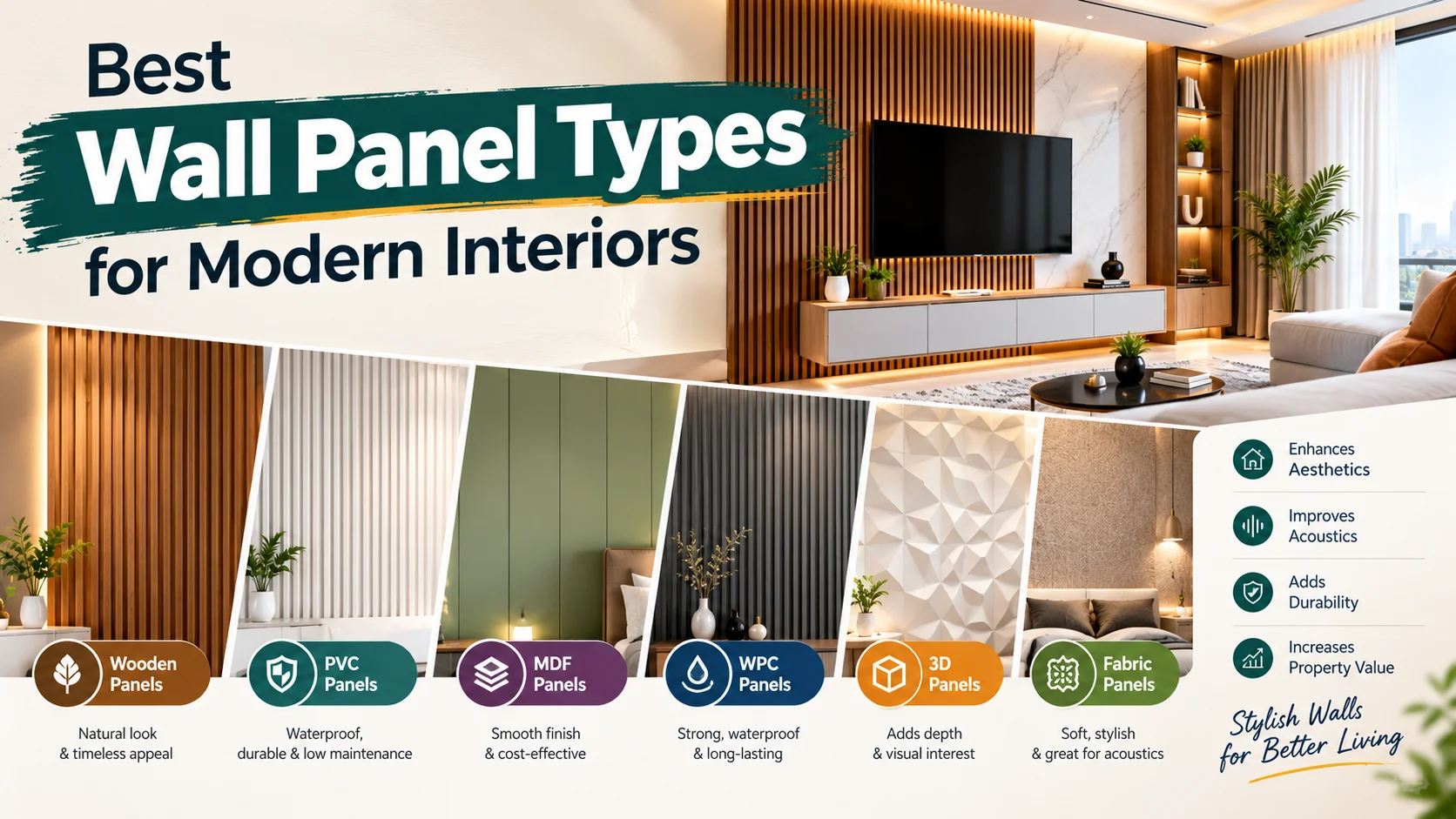
Modern interior design is no longer limited to choosing the right paint colour or furniture. Wall finishes have become an important part of creating a stylish, comfortable, and visually appealing home. Among the many interior design options available today, wall panels are a popular choice for adding texture, depth, elegance, and character to residential spaces. From luxurious wooden panels in living rooms to moisture-resistant panels in kitchens and decorative fluted designs in bedrooms, wall panels offer a variety of solutions for different interior styles. They can transform a plain wall into an attractive focal point without requiring extensive decorative work. Choosing the right wall panel depends on several factors, including the room's purpose, budget, maintenance requirements, moisture exposure, and overall interior theme. Homeowners should also consider installation costs, material quality, and long-term durability before making a decision. In this guide, we explore the best wall panel types for modern interiors, their features, advantages, limitations, applications, and tips for selecting the right option for your home.
What Are Wall Panels?
Wall panels are decorative or functional coverings installed over interior walls to improve their appearance, protect selected surfaces, or introduce texture and architectural detail. They are available in different materials, thicknesses, colours, patterns, and finishes. Unlike ordinary wall paint, wall panels create a three-dimensional appearance or a distinct surface finish. Some panels imitate natural wood or stone, while others feature geometric patterns, grooves, fabric textures, or smooth contemporary surfaces. Wall panels can be used in living rooms, bedrooms, dining areas, entrance foyers, home offices, and selected commercial interiors. Depending on the material and installation method, panels may be fixed using adhesive, screws, clips, or a supporting framework. The installation system should be appropriate for the wall condition, panel weight, and room environment.
Best Wall Panel Types for Modern Interiors
1. Wooden Wall Panels
Wooden wall panels are a timeless option for homeowners who prefer warm, natural, and sophisticated interiors. They introduce visual richness and can complement contemporary, traditional, Scandinavian, and luxury interior styles. These panels may be made from solid wood, wood veneer over a suitable substrate, or engineered wood products designed for interior applications.
Key features:
- Natural grain patterns and warm colours.
- Available in vertical, horizontal, and geometric layouts.
- Suitable for feature walls and selected decorative surfaces.
- Can complement wooden flooring, furniture, and cabinetry.
Best places to use wooden wall panels:
Living rooms, bedroom headboards, dining spaces, entrance foyers, and home offices.
Advantages:
Wooden panels add warmth, create a premium appearance, and work well with neutral colours, soft lighting, and natural materials. Depending on the product, some surfaces can also be refinished or repaired.
Limitations:
Solid wood and certain wood-based products may expand, contract, warp, or deteriorate when exposed to excessive moisture. They may also require more care than synthetic alternatives. Proper sealing, ventilation, and installation are important.
Design tip: Use wood-finish panels behind a television unit or bed to create a coordinated feature wall. Choose a finish that complements the furniture rather than making every wooden surface look identical.
2. MDF Wall Panels
Medium-density fibreboard (MDF) panels are manufactured from wood fibres bonded with resin under controlled heat and pressure. They are widely used for decorative interior applications because they can be shaped into different profiles and finished in a variety of colours. MDF is often used to create rectangular moulding designs, geometric wall patterns, and painted decorative panels.
Key features:
- Smooth surface suitable for painting.
- Available in different thicknesses and decorative profiles.
- Can create classic, contemporary, or minimalist designs.
- Often used for custom interior detailing.
Best places to use MDF panels:
Living rooms, bedrooms, study rooms, and dry indoor feature walls.
Advantages:
MDF is versatile and can be used to achieve a neat, coordinated finish. It is particularly suitable for homeowners who want customised patterns or painted wall designs.
Limitations:
Standard MDF is vulnerable to moisture and may swell if it becomes wet. Moisture-resistant grades are available, but they should not automatically be treated as waterproof. MDF is also not suitable for direct exposure to rain or persistent dampness.
Design tip: Consider painted MDF moulding panels for a refined bedroom or living room wall. Use a suitable primer, paint system, and professional installation for a durable finish.
Also Read: Fluted Panel Price Per Sq Ft in India 2026: Cost, Types, Installation & Buying Guide
3. PVC Wall Panels
Polyvinyl chloride (PVC) wall panels are lightweight synthetic panels used for decorative and practical interior applications. They are available in plain colours, wood-look finishes, marble-inspired patterns, and other designs. Their resistance to ordinary surface moisture makes them useful in some areas where conventional wood-based panels may be less suitable.
Key features:
- Lightweight construction.
- Available in many colours and printed patterns.
- Easy-to-clean surfaces on many products.
- Generally low routine maintenance.
Best places to use PVC panels:
Selected bathroom walls, utility areas, and other interior surfaces where the specific product is approved for the intended moisture exposure.
Advantages:
PVC panels are often easy to wipe clean and can provide a decorative finish without the weight of stone or solid wood. Some systems can be installed relatively quickly.
Limitations:
Quality varies significantly. Some products may scratch, discolour, or appear less natural than real wood or stone. PVC panels can also be damaged by excessive heat and may present fire and smoke hazards depending on their composition and rating.
Design tip: Choose a good-quality, appropriately certified panel and verify its suitability for the exact location. Do not install ordinary decorative PVC panels close to gas stoves or other high-heat sources.
4. WPC Wall Panels
Wood-plastic composite (WPC) panels combine wood-based material with thermoplastic components. They are commonly used for decorative slatted, fluted, and wood-look surfaces. WPC is available in various colours and profiles, including finishes that resemble natural timber.
Key features:
- Available in contemporary textures and profiles.
- Can offer improved resistance to moisture compared with some untreated wood products.
- Suitable for creating linear and fluted patterns.
- Offered in different grades and formulations.
Best places to use WPC panels:
Living room feature walls, bedroom accent walls, entrance areas, and other approved interior applications.
Advantages:
WPC panels can provide the visual warmth of a wood-inspired finish with relatively low routine maintenance. Depending on the product, they may be less susceptible to certain moisture-related problems than conventional wood panels.
Limitations:
WPC is not automatically waterproof, termite-proof, or fire-resistant. Performance depends on its composition, manufacturing quality, installation method, and environmental conditions.
Design tip: Use vertical WPC slats behind a television unit or in an entrance foyer to add visual height and a modern architectural appearance.
5. Fluted Wall Panels
Fluted panels feature repeated narrow grooves or raised lines across the surface. They have become a popular decorative choice in contemporary homes because they create depth, shadows, and a refined architectural effect. Fluted panels are not a single material category. They may be manufactured from MDF, WPC, PVC, wood, or other materials.
Key features:
- Repeated linear grooves.
- Available in vertical and horizontal arrangements.
- Suitable for modern and minimalist interiors.
- Can be paired with concealed or indirect lighting.
Best places to use fluted panels:
TV feature walls, bedroom headboards, dining areas, foyer walls, and selected furniture backdrops.
Advantages:
Fluted panels make plain walls more visually interesting without requiring complicated patterns. Vertical grooves can also create the impression of greater height.
Limitations:
Dust can accumulate in grooves, so regular cleaning may be necessary. The panel material must be selected according to moisture exposure, fire requirements, and the room's intended use.
Design tip: Combine a warm wood-look fluted panel with a plain painted wall to create contrast without overwhelming a small room.
6. 3D Decorative Wall Panels
Three-dimensional wall panels feature raised patterns, geometric forms, waves, or sculptural designs. They are intended to create visual depth and make a wall stand out. They are available in materials such as gypsum, MDF, PVC, and other moulded or composite products.
Key features:
- Raised patterns and textured surfaces.
- Available in geometric, wave, and abstract designs.
- Can be painted in coordinated interior colours.
- Creates a strong focal point.
Best places to use 3D panels:
Living room feature walls, reception areas, dining spaces, and selected bedroom walls.
Advantages:
3D panels introduce texture and can make a simple interior appear more customised. They can also complement contemporary lighting and carefully chosen furniture.
Limitations:
Highly detailed patterns may collect dust and can make a small room appear visually busy. Some materials are fragile or unsuitable for damp environments.
Design tip: Use 3D panels on one main wall instead of covering every wall in the room. Soft, angled lighting can emphasise the pattern and create attractive shadows.
7. Gypsum Wall Panels
Gypsum-based panels and decorative gypsum mouldings are used to create smooth, seamless-looking surfaces and architectural details. Depending on the system, they can be installed as wall cladding or as decorative relief elements.
Key features:
- Smooth or moulded finishes.
- Can be painted to match the interior.
- Suitable for decorative geometric and classic designs.
- Can integrate with selected architectural details.
Best places to use gypsum panels:
Living rooms, bedrooms, formal dining spaces, and dry indoor feature walls.
Advantages:
Gypsum offers a refined appearance and can be coordinated with ceilings, cornices, and other interior features. Some gypsum systems also offer useful fire-performance characteristics when tested and installed as specified.
Limitations:
Ordinary gypsum products may be damaged by water or persistent dampness. They can chip or crack under impact, and installation may require skilled finishing.
Design tip: Choose simple gypsum mouldings for elegant interiors, or use sculpted gypsum features on a single wall for a more decorative result. Confirm the product's moisture and fire ratings for the intended application.
8. Stone and Stone-Look Wall Panels
Stone wall panels create a natural, textured, or luxurious appearance. Options include natural stone cladding, thin stone products, engineered decorative surfaces, and lightweight panels designed to imitate stone.
Key features:
- Natural or stone-inspired textures.
- Available in different colours and surface patterns.
- Can create a premium visual effect.
- Complements contemporary and rustic interior styles.
Best places to use stone panels:
Living room feature walls, entrance foyers, selected dining areas, and decorative walls where the supporting structure and installation system are suitable.
Advantages:
Stone finishes can create a distinctive focal point and work well with wood, metal, and warm lighting. Natural stone can be durable when correctly selected, installed, and maintained.
Limitations:
Natural stone may be heavy and costly. Some varieties require sealing, while joints and textured surfaces may need additional cleaning. Stone-look products vary in durability and authenticity.
Design tip: Use stone-look panels behind a television or in an entrance area, and balance the textured finish with plain walls and simple furniture.
9. Fabric and Upholstered Wall Panels
Fabric wall panels use textile-covered surfaces, often over foam, fibreboard, or another supporting base. They are chosen for their soft appearance and comfort-focused design.
Key features:
- Soft, cushioned appearance.
- Available in many fabrics and colours.
- Can introduce texture and visual warmth.
- Some assemblies can help reduce sound reflections.
Best places to use fabric panels:
Bedroom headboards, reading corners, selected home theatre areas, and decorative walls in dry spaces.
Advantages:
Fabric panels create a comfortable, inviting appearance and may improve room acoustics when designed as part of an appropriate acoustic system.
Limitations:
Fabric can collect dust, absorb stains, and require specialist cleaning. Foam, backing materials, and fabrics must meet relevant fire-safety requirements for their application.
Design tip: Consider upholstered panels behind a bed for a softer finish. Select easy-to-maintain fabric and ensure the wall is dry before installation.
Best Interior Designer in Chennai
10. Laminated Wall Panels
Laminated panels use a decorative surface layer bonded to a suitable substrate. The finish may imitate wood, stone, fabric, or solid colours. They are often selected for coordinated interiors where wall surfaces need to match wardrobes, cabinets, or television units.
Key features:
- Available in matte, textured, and glossy finishes.
- Wide range of decorative patterns.
- Can coordinate with furniture and cabinetry.
- Relatively simple surface cleaning when properly installed.
Best places to use laminated panels:
Living room TV units, bedroom feature walls, study spaces, and selected dry indoor surfaces.
Advantages:
Laminated panels offer a consistent appearance and a wide choice of finishes. They can be useful for achieving a coordinated design across several elements of a room.
Limitations:
The substrate and edge finishing affect durability. Poorly sealed joints may allow moisture to reach the core, causing swelling or delamination. Laminated panels are not automatically suitable for wet areas.
Design tip: Match the wall panel finish with one or two elements of the furniture rather than matching every surface exactly.
Wall Panel Types Comparison
The best material depends on your design preference, budget, maintenance needs, and the environment in which the panel will be installed.
| Wall Panel | Apperances | Maintenance | Suitable applications |
| Wooden panels | Natural and premium | Moderate depends on finish | Living rooms, befrooms |
| MDF panels | Smooth and customisable | Low to moderate in dry areas | Decorative mouldings, feature walls |
| WPC panels | Wood-inspired and modern | Usually low | TV walls, accents wall |
| PVC panels | Clean and versatile | Usually low | Approved moisture-prone interior areas |
| Fluted panels | Linear and contemporary | Dusting required | Feature walls |
| 3D panels | Textured and scultural | Depends on pattern and material | Feature walls |
| Gypsum panels | Smooth and architectural | Low in dry conditions | Formals living spaces |
| Stone Panels | Natural and luxurious | Depends on stone and finish | Feature walls, entrance areas |
| Fabric panels | Soft and comfortable | Moderate to High | Headborads, reading spaces |
| Laminated panels | Consistent and decorative | Usually low | TV unit, bedrooms, study areas |
Best Wall Panels for Different Rooms
Wall Panels for Living Rooms
The living room is one of the most suitable places to introduce a decorative wall panel because it is often the main shared space in a home.
Popular choices include:
- Fluted WPC or wood-look panels behind the television.
- Wooden veneer panels for a warm, premium appearance.
- Stone-look panels for a bold focal wall.
- MDF mouldings for a sophisticated painted finish.
- 3D panels for a distinctive contemporary design.
Choose a panel that complements the sofa, flooring, lighting, and television unit. In compact living rooms, a restrained design can be more effective than a heavily patterned wall.
Wall Panels for Bedrooms
- Bedroom panels should create a relaxing atmosphere and coordinate with the bed, wardrobes, curtains, and lighting.
- Suitable options include wooden panels, upholstered headboard panels, fluted designs, and painted MDF mouldings.
- A panel behind the bed can act as a headboard backdrop and help visually organise the room. If the design includes bedside lighting or electrical fittings, plan the wiring and mounting details before installation.
Wall Panels for Kitchens
- Kitchen walls require careful material selection because they may be exposed to steam, heat, grease, and frequent cleaning.
- Use only products specifically approved for the intended kitchen location. Easy-to-clean, moisture-resistant finishes may be suitable for some areas, but ordinary decorative wall panels should not be placed near open flames or high-heat appliances.
- Behind cooking appliances, choose a surface designed for the heat, grease, cleaning products, and installation conditions involved. A conventional tile or another suitable kitchen-rated finish may be a better choice than decorative timber or plastic panels.
Wall Panels for Bathrooms
- Bathroom panel selection should account for direct water exposure, humidity, ventilation, joint sealing, and the condition of the wall behind the panel.
- Some PVC or purpose-designed waterproof wall cladding systems are suitable for certain bathroom applications. However, not all PVC, WPC, or laminated panels are waterproof as a complete installed system.
- Before purchasing, check the manufacturer's instructions for wet-area suitability, sealing details, and installation requirements. Do not use a decorative panel to conceal an existing leak or dampness problem.
Wall Panels for Home Offices
A home office benefits from a wall finish that looks professional without creating too much visual distraction.
Wood-look panels, simple fluted finishes, painted MDF mouldings, and selected acoustic panels can work well. If reducing echo or improving speech clarity is important, choose a product with tested acoustic performance rather than relying on decorative texture alone.
Advantages of Installing Wall Panels
Wall panels offer several practical and design-related benefits when the correct material is chosen.
1. Improved interior appearance: Panels add texture, colour, depth, and architectural interest to otherwise plain walls.
2. Flexible design choices: Homeowners can choose from natural wood, stone-inspired surfaces, linear profiles, geometric patterns, and smooth painted finishes.
3. Feature-wall creation: A panelled wall can become the focal point of a living room, bedroom, or entrance area.
4. Coordination with furniture: Panels can complement television units, wardrobes, headboards, and other interior elements.
5. Potential surface protection: Some panels protect the underlying wall from minor scuffs and everyday contact, depending on their construction and installation.
6. Selective acoustic benefits: Specially designed acoustic panels can reduce sound reflections when installed as part of an appropriate system. Decorative panels alone should not be assumed to provide soundproofing.
7. Concealment of selected services: Certain panel systems can accommodate planned wiring or provide a service cavity. Electrical access, ventilation, and maintenance requirements must still be considered.
How to Choose the Right Wall Panel for Your Home
Selecting a panel involves more than choosing a colour or pattern. Use the following factors to narrow down your options.
1. Identify the Room's Purpose
Decide whether the panel will be installed in a living room, bedroom, kitchen, bathroom, or work area. The location determines the material's required resistance to moisture, heat, impact, and cleaning.
2. Set a Realistic Budget
Calculate the total installed cost rather than comparing only the price of the panel. Include supporting frames, adhesives, trims, edge finishing, electrical modifications, labour, wastage, and any wall preparation.
3. Match the Interior Theme
Wood-look finishes often suit warm contemporary interiors, while smooth painted panels work well in minimalist or classic designs. Stone textures create a more dramatic appearance, and upholstered panels add softness.
4. Consider Room Size and Lighting
Large patterns and dark finishes can dominate compact rooms. Lighter colours, restrained patterns, and vertical lines may help a small room feel more open. Always check a sample under the room's actual lighting before finalising the finish.
5. Check Durability and Maintenance
Ask how the material will perform under normal use, whether it can be cleaned with household products, and how easily damaged sections can be repaired or replaced.
6. Verify Moisture and Fire Performance
Check product documentation for the intended application, especially in kitchens, bathrooms, and areas near electrical equipment or heat sources. Do not assume that a product is waterproof or fire-resistant simply because it is made from plastic, composite material, or gypsum.
7. Choose a Suitable Installer
Professional installation helps ensure correct alignment, secure fixing, neat joints, and suitable edge finishing. The installer should inspect the wall and address any dampness, loose plaster, or uneven surfaces before fitting the panels.
Wall Panel Installation: What Homeowners Should Know
A successful wall panel installation begins with proper planning and wall preparation.
- Inspect the wall: Check for cracks, damp patches, loose paint, and uneven surfaces. Resolve underlying problems before covering the wall.
- Measure accurately: Determine the wall dimensions and plan panel widths, joints, corners, and cut-outs.
- Select the fixing method: Follow the panel manufacturer's instructions for adhesive, screws, clips, or supporting frameworks.
- Plan electrical points: Account for switches, sockets, television cables, lighting, and maintenance access before installing the panels.
- Install and align the panels: Check vertical and horizontal alignment throughout the installation.
- Finish the edges: Use appropriate trims, sealants, or joint treatments as specified for the system.
- Clean and inspect: Remove installation residue using approved products and check for loose sections, visible gaps, or damaged finishes.
The exact method varies according to the panel material and system. Heavy stone products, wet-area cladding, and complex feature walls may require specialist installation.
Common Mistakes to Avoid When Choosing Wall Panels
Selecting a panel based only on its appearance or lowest price.
- Installing standard wood-based panels in damp areas.
- Assuming that every PVC or WPC product is waterproof or fire-resistant.
- Covering damp walls without correcting the underlying problem.
- Choosing a busy pattern that overwhelms a small room.
- Ignoring dust accumulation in deeply grooved designs.
- Failing to plan sockets, wiring, lighting, and access panels.
- Overlooking the cost of installation, trims, and wall preparation.
- Using a decorative panel where a tested acoustic, fire-rated, or wet-area system is required.
Wall Panel Design Trends for Modern Homes
Modern interiors increasingly combine simple forms with carefully selected textures. Some design approaches worth considering include:
- Vertical fluted panels: These create a clean linear effect and pair well with contemporary furniture.
- Warm wood-inspired finishes: Natural-looking colours can make modern rooms feel more welcoming.
- Minimalist painted mouldings: Subtle rectangular patterns add detail without overwhelming the space.
- Stone-inspired feature walls: Textured finishes create contrast in living rooms and entrance areas.
- Upholstered bedroom panels: Soft finishes can create a comfortable headboard backdrop.
- Mixed-material designs: Combining wood-look panels with paint, metal trims, or selected stone finishes can create visual contrast. Limit the number of competing finishes to maintain a balanced appearance.
The most suitable trend is one that fits your home's layout, maintenance needs, and personal style rather than one that simply looks fashionable.
Conclusion
The best wall panel types for modern interiors depend on the room, design preference, budget, and performance requirements. Wooden panels provide warmth, MDF offers design flexibility, PVC and WPC provide a range of synthetic finishes, fluted panels add linear texture, and stone or upholstered panels create distinctive feature walls. Before making a final decision, compare material quality, installed cost, maintenance, moisture resistance, and fire-safety information. Choose a design that complements the furniture and lighting, and ensure the wall is properly prepared before installation. With careful material selection and professional installation, wall panels can help create a more coordinated, functional, and visually appealing home.
Frequently Asked Questions
1. Which wall panel is best for modern interiors?
Fluted panels, wooden panels, WPC panels, MDF mouldings, and stone-look panels are popular options. The best choice depends on the room, preferred style, budget, and maintenance requirements.
2. Which wall panel is best for a living room?
Wooden panels, fluted panels, laminated finishes, and stone-look panels are suitable options for living room feature walls. Choose a finish that complements the television unit, furniture, flooring, and lighting.
3. Are wall panels better than wall paint?
Wall panels provide texture and a more distinctive decorative finish, while paint is generally simpler to refresh and can be more economical. The better option depends on your budget, design goals, and maintenance preferences.
4. Are PVC wall panels suitable for Indian homes?
Yes, selected PVC wall panels can be suitable for Indian homes when the product is appropriate for the location. Check its quality, heat limitations, fire-performance information, and manufacturer's installation instructions.
5. Which wall panels are suitable for bathrooms?
Purpose-designed wet-area cladding systems may be suitable for certain bathroom walls. Check the complete system's water resistance, joint sealing, and installation requirements. Ordinary decorative panels should not be assumed to be waterproof.
6. Are WPC wall panels waterproof?
Not necessarily. WPC products vary in composition and performance. Some offer good moisture resistance, but the panel joints, substrate, fixing system, and installation conditions also affect the performance of the finished wall.
7. Do wall panels require regular maintenance?
Most wall panels require routine cleaning, but maintenance varies by material. Smooth panels may need only wiping, while fluted, 3D, stone, and fabric finishes may require more specialised care.
8. Can wall panels make a small room look bigger?
They can influence how a room is perceived. Light colours, simple patterns, and vertical lines may create a more open or taller appearance, although the effect depends on the room's proportions and lighting.
9. Can wall panels be installed over existing walls?
Many systems can be installed over suitable existing walls, provided the surface is stable, dry, and appropriate for the selected fixing method. Loose plaster, dampness, and structural defects should be addressed first.
10. Do wall panels help with soundproofing?
Ordinary decorative wall panels generally do not provide significant soundproofing. Specially designed acoustic panels can reduce sound reflections, while sound isolation requires a more comprehensive wall construction or treatment.