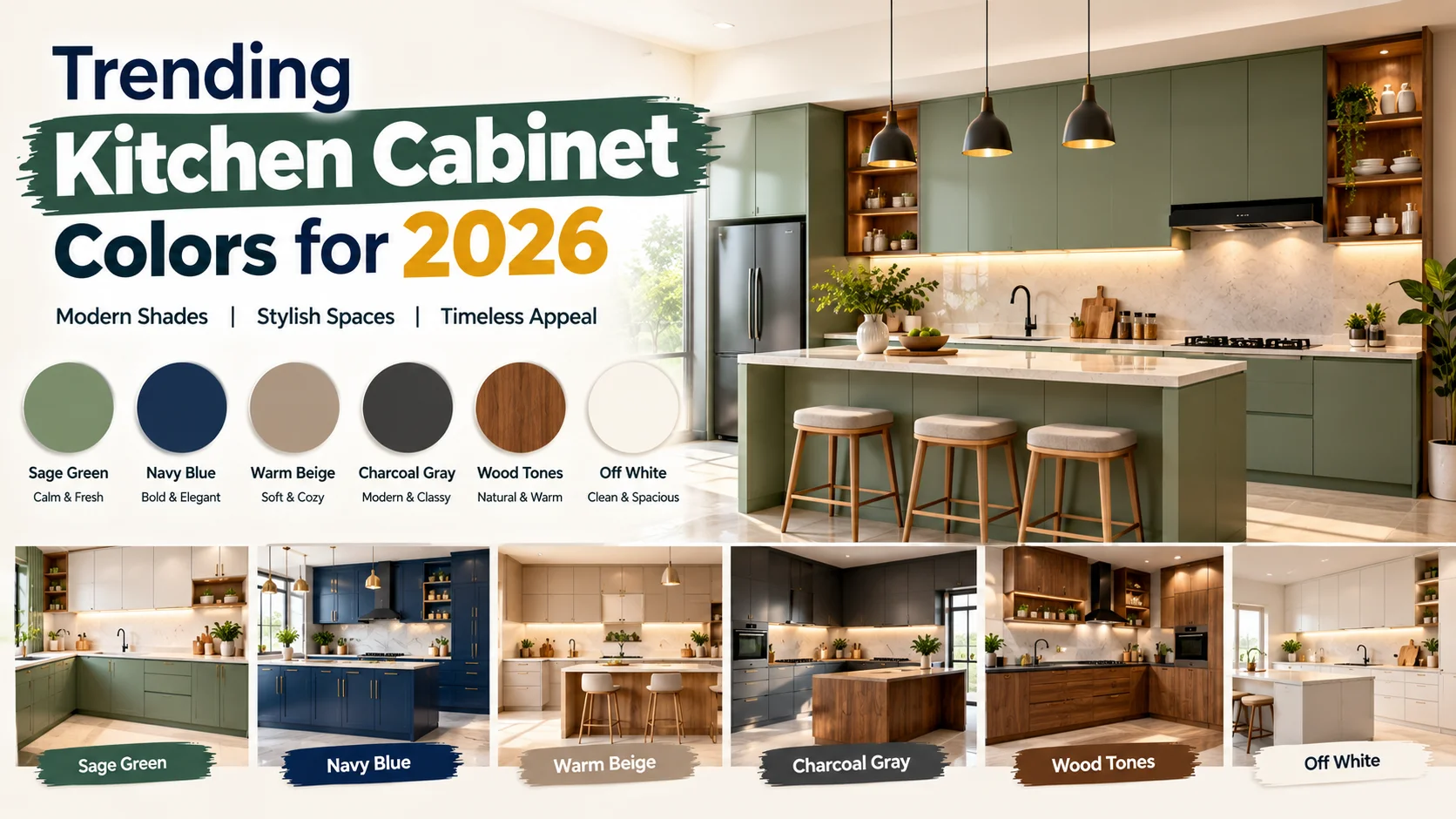
Kitchen cabinet colors are one of the most important elements of modern kitchen interior design. The right color combination can make a kitchen look brighter, more spacious, elegant, and comfortable for everyday use. In 2026, kitchen design is moving towards warm neutrals, earthy greens, natural wood textures, rich brown shades, and personalized two-tone combinations. These trends reflect a growing preference for interiors that balance style, functionality, and long-term appeal. According to current kitchen design coverage, warm neutrals, nature-inspired greens, stained wood finishes, and contrasting cabinet combinations are among the major color directions for 2026. Homeowners are also exploring deeper shades for selected cabinet sections rather than relying exclusively on traditional white cabinetry. For Indian homes, choosing kitchen cabinet colors requires additional consideration of cooking habits, lighting, countertop materials, ventilation, cleaning requirements, and available space. A color that looks attractive in a showroom must also work well in the actual kitchen environment. This comprehensive guide explains the trending kitchen cabinet colors for 2026, suitable combinations for different kitchen sizes, cabinet finishes, material selection, maintenance, budgeting considerations, and expert tips for planning a modern kitchen.
1. What Are the Trending Kitchen Cabinet Colors for 2026?
The kitchen cabinet color trends for 2026 focus on warmth, natural textures, subtle contrast, and individual expression. Rather than selecting colors only because they are fashionable, homeowners are choosing palettes that complement their lifestyle and the overall design of their homes.
The following colors are worth considering for a contemporary kitchen:
- Warm White and Ivory
Warm white and ivory remain versatile choices for homeowners who prefer a bright and timeless kitchen. Their creamy undertones create a softer appearance than stark white and coordinate well with different countertop materials. These shades are particularly suitable for small apartments, minimalist kitchens, and open-plan homes.
Recommended combinations:
- Warm white cabinets with beige quartz.
- Ivory cabinets with light oak shelves.
- Cream cabinets with grey granite.
- Off-white cabinets with brushed brass handles.
Warm white is an excellent choice if you want a neutral kitchen that can accommodate future changes in wall colors, furniture, or accessories.
- Sage Green and Muted Olive
Green kitchen cabinets introduce a natural appearance without making the room excessively colorful. Sage green has muted grey undertones, while olive green offers a deeper and earthier character. Both shades work well with wooden accents, neutral countertops, and warm lighting. They can also be combined with cream or white upper cabinets to create a balanced two-tone design.
Recommended combinations:
- Sage green with warm white.
- Olive green with beige stone.
- Sage green with natural oak.
- Olive green with walnut and brass hardware.
These colors are suitable for contemporary apartments, nature-inspired interiors, and homeowners who prefer earthy color palettes.
- Mushroom, Taupe, and Warm Greige
Mushroom, taupe, putty, and greige are sophisticated neutral colors that offer more depth than plain white. Mushroom shades generally combine brown and grey undertones, while greige combines grey and beige. Taupe can range from warm brown-grey to cooler muted shades. These colors are useful when you want a modern kitchen that feels comfortable rather than overly stark.
Recommended combinations:
- Mushroom cabinets with cream countertops.
- Taupe cabinets with walnut shelves.
- Greige cabinets with white quartz.
- Putty-colored cabinets with brushed steel hardware.
Warm neutral cabinetry is especially suitable for apartment kitchens where flexibility and long-term appeal are important.
- Natural Oak and Walnut
Natural wood finishes continue to be an attractive option for kitchen cabinets. Light oak creates an airy appearance, while walnut adds richness and visual depth. Wood-grain finishes can be used throughout the kitchen or combined with painted cabinets for a more customized design.
Recommended combinations:
- Light oak with ivory.
- Walnut with beige stone.
- Oak cabinets with sage green.
- Walnut cabinets with cream and charcoal accents.
Natural wood is particularly suitable for homeowners who prefer warm, organic, and contemporary interiors.
- Espresso and Deep Brown
Deep brown shades, including espresso and chestnut, offer a rich alternative to cooler grey cabinetry. They can create an elegant kitchen when paired with lighter countertops and carefully selected lighting. These shades are particularly useful in larger kitchens, premium interiors, and designs featuring natural wood. For a balanced appearance, combine espresso cabinets with cream countertops, warm white walls, or lighter wood accents.
- Soft Blue and Navy Blue
Soft blue creates a relaxed, fresh appearance, while navy blue provides stronger contrast. Powder blue and blue-grey are suitable for compact and medium-sized kitchens. Navy works well on lower cabinets, kitchen islands, or selected sections of cabinetry.
Recommended combinations:
- Powder blue with white quartz.
- Blue-grey with oak shelves.
- Navy blue with ivory upper cabinets.
- Navy blue with brushed brass handles.
- Burgundy, Plum, and Deep Teal
For homeowners who want a distinctive kitchen, richer colors such as burgundy, plum, and deep teal can introduce personality. These shades are best used thoughtfully. A colored kitchen island, pantry cabinet, or lower cabinet section can create a focal point without overwhelming the room. Pair deeper colors with neutral countertops, warm lighting, and simple hardware.
Best Modulaur Kitchen Interior Designer in Chennai
2. Best Kitchen Cabinet Color Combinations for 2026
Choosing an individual color is only the first step. The final appearance depends on how the cabinets work with countertops, backsplash tiles, flooring, hardware, and lighting.
The following combinations provide practical starting points.
- White and Sage Green
This combination creates a bright kitchen with a natural accent. White upper cabinets keep the space visually light, while sage green lower cabinets add depth. It is suitable for small and medium-sized apartments.
- Cream and Natural Wood
Cream cabinetry combined with light oak or walnut creates a warm, welcoming appearance. This palette works well with beige flooring, stone countertops, and wooden dining furniture. It is a useful choice for open-plan homes.
- Greige and Walnut
Greige cabinets offer a neutral foundation, while walnut introduces contrast and texture. This combination suits modern and premium interiors without relying on highly saturated colors.
- Beige and Olive Green
Beige and olive create an earthy, coordinated appearance. The combination works especially well with warm lighting, textured backsplash tiles, and brass-toned hardware.
- Navy Blue and White
Navy lower cabinets combined with white upper cabinets create a crisp, contemporary look. Light countertops help balance the deeper blue shade.
- Charcoal and Light Oak
Charcoal cabinetry creates a dramatic effect, while light oak introduces warmth. Use adequate lighting to prevent the kitchen from feeling too dark.
- Burgundy and Cream
Burgundy cabinets paired with cream countertops create a distinctive and elegant appearance. This combination is best suited to statement kitchens or selected cabinet sections.
3. How to Choose Cabinet Colors According to Kitchen Size
Kitchen size is one of the most important factors when selecting cabinet colors.
- Small Kitchen Cabinet Colors
Small kitchens often benefit from colors that reflect available light and create a visually open appearance.
Suitable shades include:
- Warm white.
- Ivory.
- Pale beige.
- Light greige.
- Soft sage green.
- Powder blue.
Choose light-colored upper cabinets and consider using a slightly deeper shade on the lower cabinets. Avoid excessive contrast between the cabinets, backsplash, and countertop if you want a seamless appearance. Under-cabinet lighting can improve visibility and make the workspace more comfortable.
- Medium-Sized Kitchen Cabinet Colors
Medium-sized kitchens offer greater flexibility. You can use neutral colors throughout the kitchen or introduce green, blue, or wood-grain finishes. Suitable combinations include sage green and cream, greige and walnut, and white and olive green. A two-tone layout can help define different sections of the kitchen while maintaining visual balance.
- Large Kitchen Cabinet Colors
Larger kitchens can accommodate deeper colors more easily, particularly when natural lighting is sufficient. Suitable shades include navy blue, charcoal, espresso brown, forest green, and walnut. A kitchen island in a contrasting color can become a focal point. For example, cream perimeter cabinets with a deep green island create contrast without making the entire kitchen look dark. Remember that lighting, ceiling height, and the amount of cabinetry also affect the final result.
4. Best Kitchen Cabinet Colors for Indian Homes
Indian kitchens experience frequent cooking, oil splashes, steam, spice stains, and regular cleaning. Therefore, cabinet color and material should be selected together.
For Compact City Apartments
Warm white, cream, light beige, and pale greige are useful options for kitchens with limited natural light. Pair them with a suitable granite or quartz countertop and a simple backsplash.
For Modern Modular Kitchens
Sage green, muted olive, greige, and natural oak work well in contemporary modular kitchens. These colors can be combined with concealed handles, soft-close drawers, and well-planned storage.
For Premium Kitchen Interiors
Walnut, espresso, deep green, navy, and warm taupe can create a refined appearance. Use quality hardware, balanced lighting, and coordinated countertop materials to complete the design.
For Traditional Indian Homes
Warm wood finishes, cream cabinets, muted olive, and beige are versatile choices that can complement traditional furniture and warm-toned flooring.
For Rental Properties
Neutral colors such as ivory, beige, and light wood are practical because they coordinate with a wide range of interiors and personal preferences. Choose durable finishes that can be cleaned without requiring specialized maintenance.
5. Kitchen Cabinet Finishes: Matte, Glossy, Acrylic, and Laminate
Cabinet color determines the appearance, but the surface finish influences reflections, texture, maintenance, and the way the color looks under lighting.
- Matte Finish
Matte cabinets have a low-reflection surface that creates a subtle, contemporary appearance. They work well with sage green, greige, charcoal, and earthy shades. Advantages include a restrained appearance and reduced glare. However, some matte surfaces show grease and fingerprints, so check the manufacturer's cleaning instructions.
- High-Gloss Finish
High-gloss cabinets reflect more light and create a polished appearance. They are commonly chosen for white, cream, and other light-colored kitchen designs. Depending on the material, fingerprints, scratches, and reflections may be more noticeable. Use the recommended cleaning method rather than abrasive scrubbers.
- Acrylic Finish
Acrylic shutters provide a smooth surface and are available in glossy and selected matte options. They are suitable for homeowners who prefer a sleek modular kitchen appearance. Glossy acrylic can show fingerprints, while the surface may scratch if cleaned with abrasive materials.
- Laminate Finish
Laminates are available in a wide range of solid colors, textures, wood grains, and sheen levels. They offer flexibility for different budgets and design preferences. Their durability depends on the laminate quality, substrate, edge sealing, installation, and care.
- PU Painted Finish
Polyurethane finishes can provide a smooth, seamless appearance and allow a wide choice of custom colors. They are useful for homeowners seeking a specific shade or a more customized cabinet design. Costs, repair requirements, and durability vary by product and workmanship.
- Wood Veneer Finish
Wood veneer provides a natural wood appearance and can create a refined interior. It generally requires more careful maintenance than many standard laminate finishes. Check the finish protection and moisture suitability before selecting it for a kitchen. Important: Cabinet color, cabinet board, and surface finish are three separate decisions. A beautiful finish cannot compensate for unsuitable board material or poorly sealed edges.
6. How to Select Kitchen Cabinet Materials for Indian Conditions
Choosing the right cabinet material is essential because kitchen units are exposed to water, heat, humidity, and repeated use. A modular kitchen generally consists of the cabinet carcass, shutters, shelves, hardware, countertop, and finishing materials.
- Plywood
Plywood is widely used for kitchen cabinetry. The appropriate grade depends on the location and expected moisture exposure. For areas near the sink or other wet zones, ask about suitable boiling-water-proof plywood and verify the product specifications.
- HDHMR and Other Engineered Boards
High-density, moisture-resistant engineered boards can be suitable for selected cabinet applications, especially when a smooth surface is required. Their suitability depends on the manufacturer's specifications and the level of water exposure. Do not assume that every moisture-resistant board is waterproof.
- MDF and Particleboard
These materials may be used in certain furniture applications, but their suitability for kitchens depends on their grade, finish, edge protection, and location. Unsealed standard MDF and particleboard should not be exposed to repeated water contact. Ask your kitchen supplier to specify the board type for every cabinet section.
- Edge Sealing and Installation
Water can enter through exposed or poorly sealed edges, joints, and plumbing openings. Quality edge banding, appropriate sealants, correct installation, and attention to plumbing leaks are important for cabinet longevity. For Indian kitchens, it is particularly important to assess the area below the sink and the cabinet sections next to the cooking zone.
7. How Cabinet Colors Work with Countertops and Backsplash Tiles
A coordinated countertop and backsplash can improve the appearance of kitchen cabinets.
White Quartz Countertops
- White quartz can complement sage green, navy, walnut, cream, and greige cabinetry.
- Choose the shade and pattern according to the cabinet undertones.
Granite Countertops
- Granite is available in a range of colors and patterns. Grey or black granite can work with white, cream, natural wood, and selected green shades.
- Check the actual slab before finalizing your cabinet color because natural stone patterns vary.
Beige Countertops
- Beige countertops coordinate well with taupe, olive green, walnut, and warm white cabinets.
- They are particularly suitable for earthy interior themes.
Marble-Look Surfaces
- Marble-look surfaces can create a refined appearance with neutral cabinets, navy, green, or walnut finishes.
- Consider the surface's heat resistance, maintenance instructions, and suitability for your intended use.
Backsplash Tiles
- White subway-style tiles, neutral large-format tiles, subtle stone patterns, and textured finishes can complement a range of cabinet colors.
- If the cabinets have a strong color or pronounced wood grain, a simpler backsplash often creates a more balanced appearance.
8. Choosing Cabinet Handles and Hardware
Cabinet handles and hardware influence the overall design even when the cabinet color remains unchanged.
- Brushed brass: Complements sage green, olive, cream, navy, and walnut.
- Matte black: Works well with natural wood, white, greige, and charcoal.
- Stainless steel: Provides a clean appearance with white, blue-grey, and contemporary neutral cabinets.
- Handleless cabinets: Create a streamlined look and are suitable for minimalist modular kitchens.
When selecting hardware, consider comfort, ease of cleaning, corrosion resistance, and the quality of hinges and drawer channels. Soft-close hinges and drawers can improve everyday convenience, although their performance depends on the hardware quality and installation.
9. Kitchen Cabinet Lighting and Color Selection
Lighting can significantly change how cabinet colors appear. Natural daylight may reveal different undertones than warm or cool artificial lighting. For example, beige may look warmer under warm-white lighting, while some grey shades may appear cooler under certain LEDs.
Consider three types of kitchen lighting:
- Ambient lighting: Provides general illumination throughout the kitchen.
- Task lighting: Illuminates preparation areas, commonly through under-cabinet lights.
- Accent lighting: Highlights selected shelves, cabinets, or decorative elements.
Before finalizing your cabinet color, view a physical sample under the lighting planned for the finished kitchen. A well-lit kitchen can accommodate deeper colors more successfully, while a compact kitchen with limited daylight may benefit from a lighter palette.
10. Kitchen Cabinet Color Ideas for Different Interior Styles
- Minimalist Kitchen
Choose warm white, ivory, greige, or pale beige. Use simple cabinet fronts, restrained hardware, and limited color contrast.
-Scandinavian-Inspired Kitchen
Combine light oak with cream, white, or pale greige. Natural textures and uncluttered surfaces help create a relaxed appearance.
- Contemporary Kitchen
Use sage green, blue-grey, charcoal, or a balanced two-tone combination. Pair the cabinets with modern hardware and practical storage.
- Premium Modern Kitchen
Consider walnut, deep olive, navy, or warm taupe with quality hardware and carefully coordinated countertops.
- Nature-Inspired Kitchen
Combine sage green, olive, wood grain, and neutral stone surfaces. Avoid introducing too many competing textures.
- Bold Statement Kitchen
Use burgundy, deep teal, or plum on selected cabinet sections or a kitchen island. Balance the statement color with neutral surrounding surfaces.
11. Kitchen Cabinet Maintenance Tips
Regular maintenance helps preserve the appearance of cabinet colors and finishes.
- Wipe oil splashes and food stains promptly.
- Use a soft cloth and a cleaner recommended for the cabinet finish.
- Avoid abrasive scrubbers unless the manufacturer specifically permits them.
- Dry water splashes around sink cabinets and inspect plumbing connections for leaks.
- Keep cabinet edges and joints in good condition.
- Use suitable ventilation to manage steam and cooking moisture.
- Avoid exposing cabinet surfaces to excessive heat from cooking appliances.
- Follow the maintenance instructions supplied with the selected material.
The color itself does not determine durability. The surface finish, board quality, installation, and cleaning routine all affect how the cabinets look over time.
12. Kitchen Cabinet Budget Planning
Kitchen cabinet costs vary according to kitchen size, layout, board material, finish, hardware, storage accessories, countertop selection, and installation requirements. Instead of comparing quotations only by the total price, ask each supplier to provide a detailed breakdown.
Your kitchen budget may include:
- Cabinet carcass material and thickness.
- Shutter material and finish.
- Hinges, drawer channels, and handles.
- Internal storage baskets and organizers.
- Countertop and backsplash.
- Sink and tap fittings.
- Lighting and electrical work.
- Installation, transportation, and finishing.
- Applicable taxes and warranty coverage.
Request a written quotation that identifies the material and finish for each cabinet section. Clarify whether the price includes the countertop, accessories, installation, and any necessary plumbing or electrical modifications. Do not choose a cheaper quote without checking whether the material specifications and scope of work are equivalent.
13. Step-by-Step Guide to Selecting Kitchen Cabinet Colors
Follow these steps before ordering a new modular kitchen.
Step 1: Measure the kitchen. Identify the available wall space, ceiling height, window positions, and cabinet layout.
Step 2: Assess natural lighting. Determine whether the kitchen receives abundant daylight or needs additional illumination.
Step 3: Choose a main color. Decide whether you prefer a neutral, earthy, wood-inspired, or bold palette.
Step 4: Select a secondary color. If you want a two-tone design, choose a complementary shade for lower cabinets, upper cabinets, or an island.
Step 5: Match the countertop. Compare the cabinet sample with the actual granite, quartz, or other countertop material.
Step 6: Select the finish. Choose between laminate, acrylic, PU, veneer, or other suitable finishes according to your design and maintenance preferences.
Step 7: Verify the cabinet board. Ask for the exact material grade and moisture suitability for each area.
Step 8: Coordinate the hardware and lighting. Finalize handles, hinges, backsplash, and lighting together.
Step 9: Review the quotation. Confirm materials, dimensions, accessories, installation scope, and warranty in writing.
Step 10: Approve the final samples. Review the complete palette under the lighting conditions of your actual kitchen before production begins.
Conclusion
Trending kitchen cabinet colors for 2026 offer homeowners an opportunity to create kitchens that are stylish, comfortable, and practical. Warm white, cream, mushroom, greige, sage green, olive green, natural oak, walnut, navy, and deeper statement colors each offer different design possibilities. For small Indian apartments, warm white and light neutral combinations can create a bright appearance. For contemporary homes, sage green with natural wood offers an earthy, balanced look. For premium interiors, walnut, espresso, and deep green can create a richer visual effect. However, a successful kitchen design depends on more than color selection. Cabinet materials, surface finishes, countertop coordination, ventilation, lighting, hardware, and installation quality all contribute to the final result.
FAQs
1. What are the trending kitchen cabinet colors for 2026?
Warm white, cream, mushroom, taupe, greige, sage green, olive green, natural oak, walnut, espresso, and selected shades of blue and burgundy are among the key color directions for 2026.
2. Which kitchen cabinet color is best for a small kitchen?
Warm white, ivory, pale beige, and light greige are suitable choices for small kitchens because they can help reflect available light. Soft green and powder blue can also work when balanced with lighter surfaces.
3. Are white kitchen cabinets still popular in 2026?
Yes. White and ivory remain versatile choices. Warm white can create a softer appearance than stark white, particularly when paired with wood accents and neutral countertops.
4. Is sage green suitable for Indian modular kitchens?
Yes. Sage green pairs well with cream countertops, natural wood, and neutral tiles. The cabinet material and finish should be selected according to moisture exposure and cleaning requirements.
5. Which kitchen cabinet colors create a premium appearance?
Walnut, espresso, olive green, navy, and sophisticated neutral shades can create a premium look when combined with coordinated countertops, quality hardware, and suitable lighting.
6. Which is better for kitchen cabinets: matte or glossy?
Matte finishes create a softer, lower-reflection appearance, while glossy finishes reflect more light. The better choice depends on the material, maintenance needs, kitchen lighting, and personal preference.
7. What are the best two-tone kitchen cabinet combinations?
Warm white and sage green, cream and natural wood, white and navy blue, beige and olive green, and greige and walnut are attractive combinations to consider.
8. Which kitchen cabinet finish is suitable for Indian cooking?
Quality laminates are often considered a practical option because they are available in varied colors and textures and can be relatively easy to maintain. Acrylic and PU finishes are also options, but their cleaning requirements and durability differ.
9. Which material is suitable for kitchen cabinets near the sink?
Select a cabinet board designed for the expected moisture exposure, with properly sealed edges and joints. Suitable BWP plywood or other specifically rated materials may be considered according to the installation and manufacturer's specifications.
10. Do dark kitchen cabinets make a kitchen look smaller?
They can make a kitchen feel enclosed when used extensively in a poorly lit space. Light countertops, good lighting, and selective use of dark shades can improve visual balance.