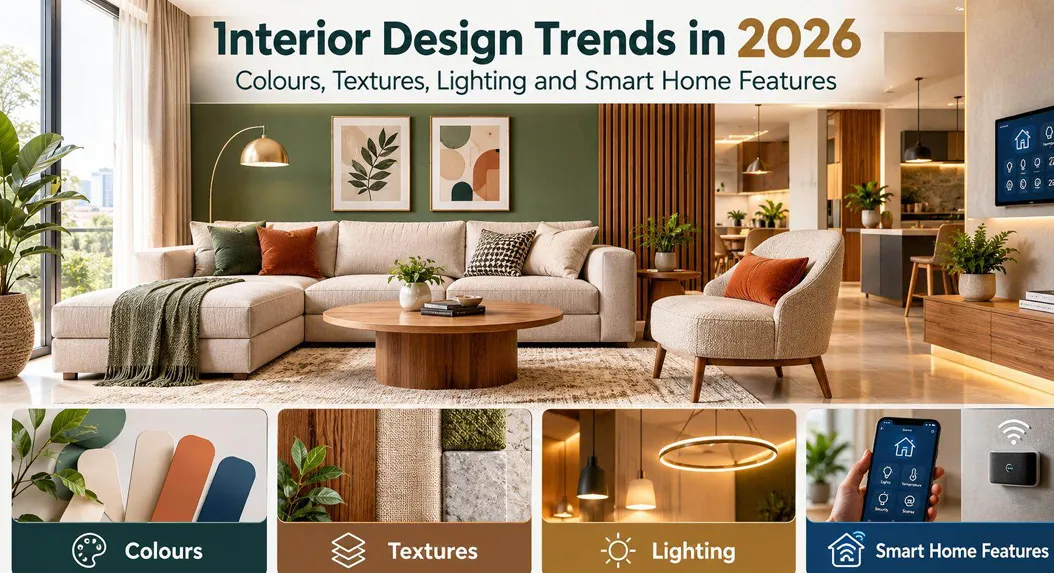
Interior design in 2026 is all about creating homes that combine style, comfort, functionality, and technology. Homeowners are increasingly looking for interiors that reflect their personalities while making everyday living more convenient. From warm color palettes and natural textures to smart lighting and space-saving furniture, modern interior design focuses on creating practical and attractive living spaces. Whether you own a flat, builder-floor apartment, or independent house, choosing the right interior design can improve the appearance and usability of your property. In this blog, we explore the latest interior design trends in 2026, including trending colors, wall finishes, lighting ideas, smart home technology, and budget-friendly solutions for Indian homes.
1. Warm and Natural Colors for Modern Interiors
Color selection plays an important role in creating a comfortable and visually appealing home. In 2026, warm and nature-inspired shades are useful choices for homeowners who want a modern interior that remains attractive over time.
Popular interior colors in 2026
- Warm beige and cream: These colors create a bright, welcoming atmosphere and work well in living rooms, bedrooms, and dining areas. They complement wooden furniture, neutral curtains, and contemporary décor.
- Sage green and olive green: Nature-inspired green shades introduce a refreshing appearance. They work well with cream walls, natural wood finishes, and indoor plants.
- Terracotta and earthy brown: These colors add warmth and character to modern interiors. They can be introduced through accent walls, cushions, decorative objects, and furniture.
- Muted blue: Soft blue and blue-grey shades are suitable for bedrooms, study rooms, and relaxation spaces because they create a calm visual effect.
- Charcoal and deep brown: Darker shades can create contrast when used for selected cabinets, feature walls, furniture, or decorative elements.
When choosing colors, consider the room size, natural lighting, flooring, and furniture finishes. In compact apartments, lighter shades can help create a more open appearance, while carefully selected darker colors add depth and contrast.
Also Read: Most Popular Kitchen Cabinet Color for 2026
2. Natural Materials and Textured Wall Designs
Natural-looking materials and textured finishes are important elements of contemporary interior design. Rather than relying entirely on plain painted walls, homeowners can introduce visual interest through wood finishes, fluted panels, decorative plaster, and textured fabrics.
Fluted wall panels
Fluted panels feature vertical grooves that create depth and a modern appearance. They are commonly used behind television units, bed headboards, entrance consoles, and dining areas. These panels can make a simple wall more attractive without requiring extensive decoration. However, using them on every wall may make a small room look crowded.
Natural wood finishes
Wood finishes bring warmth to living rooms, kitchens, and bedrooms. They can be used for wardrobes, television units, wall shelves, dining tables, and bed back panels. Light wood shades create a bright contemporary appearance, while walnut and darker finishes offer a more formal look. Wood-finish laminates can be a practical alternative to natural wood, depending on the application and budget.
Textured wall finishes
Textured paint, limewash-inspired finishes, and subtle plaster effects can create an elegant feature wall. They are suitable for living rooms, bedrooms, and selected entrance areas. Before choosing a finish, check its cleaning requirements, durability, and suitability for the wall surface.
Natural fabrics and decorative materials
Cotton curtains, linen-look fabrics, woven rugs, and textured cushion covers can soften the appearance of a room. Combining these materials with wood, glass, and metal creates a balanced interior.
3. Layered Lighting for Modern Homes
Lighting is no longer limited to a single ceiling fixture. Modern interior design uses multiple light sources to improve visibility, highlight architectural features, and create different moods throughout the day.
Types of interior lighting
- Ambient lighting: Provides general illumination through ceiling fixtures, recessed lights, or suitable cove lighting.
- Task lighting: Supports specific activities, such as cooking, reading, studying, and applying makeup.
- Accent lighting: Highlights artwork, decorative walls, shelves, and selected furniture features.
Room-wise lighting ideas
In the living room, combine ceiling lights with floor lamps, wall lights, or concealed LED strips. In bedrooms, bedside lamps and indirect headboard lighting can create a relaxing atmosphere. Kitchens benefit from task lighting above worktops, while bathrooms need suitable mirror lighting for everyday activities. Warm-white lighting around 2700K to 3000K is a common choice for cosy living spaces. The ideal color temperature depends on the room's purpose, finishes, and personal preference. False ceilings are not essential for modern lighting. Surface-mounted fixtures, wall sconces, and decorative lamps can also create an attractive appearance, particularly in apartments with limited ceiling height.
4. Smart Home Features and Interior Automation
Smart home technology is becoming an important consideration when planning modern interiors. These features can improve convenience, simplify routine activities, and provide greater control over selected household systems.
Popular smart home features
- Smart lighting: Smart switches and compatible bulbs allow homeowners to control brightness, schedule lights, and create different lighting settings.
- Digital door locks: Depending on the model, these locks may support PIN codes, fingerprints, access cards, or mobile applications.
- Video door phones: These devices help residents identify visitors and communicate with them through compatible indoor screens or mobile devices.
- Automated curtains: Motorized curtains can open or close according to schedules or compatible controls.
- Smart air-conditioning controls: Compatible controllers allow users to adjust temperatures and operating schedules more conveniently.
- Safety sensors: Suitable water-leak sensors, smoke alarms, and security sensors can provide alerts when attention is required.
Before installing smart devices, check compatibility, electrical requirements, internet connectivity, maintenance costs, and security features. It is also useful to ensure that essential functions remain accessible if the internet connection fails. Homeowners do not need to automate every feature. A few useful devices can provide sufficient convenience without significantly increasing the interior budget.
5. Curved Furniture and Contemporary Shapes
Curved furniture is a popular design direction for creating softer, more relaxed interiors. Rounded sofas, circular coffee tables, curved headboards, and arched mirrors can add character to modern homes. A curved coffee table can complement a straight sofa, while an arched mirror can create an attractive entrance area. Rounded furniture can also balance the straight lines of wardrobes, cabinets, and television units. However, furniture should always be selected according to the available floor space. In compact apartments, oversized curved sofas may reduce walking space. Measuring the room before purchasing furniture helps maintain a practical layout.
6. Space-Saving Furniture for Small Apartments
In urban homes, efficient space planning is just as important as appearance. Multifunctional furniture and organized storage help homeowners make better use of limited space.
Useful space-saving ideas
- Storage beds provide additional space for bedding and seasonal belongings.
- Foldable desks create work areas that can be closed when not in use.
- Sofa beds provide occasional sleeping space for guests.
- Sliding partitions help separate areas without permanently dividing a room.
- Built-in wardrobes make efficient use of wall height.
- Extendable dining tables provide extra seating when required.
- Wall-mounted shelves reduce the need for bulky furniture.
For small flats, choose furniture that fits the room without blocking doors, windows, or pathways. The objective is to improve storage and functionality while maintaining a comfortable living environment.
7. Sustainable and Climate-Friendly Interior Design
Sustainable interior design focuses on selecting durable materials, reducing unnecessary waste, and using energy and natural resources more efficiently.
Sustainable interior ideas for 2026
- Energy-efficient lighting: LED lighting can help reduce electricity consumption compared with many older lighting technologies.
- Durable furniture: Good-quality furniture that can be repaired or refinished may reduce the need for frequent replacement.
- Low-emission materials: Where possible, choose paints, adhesives, and engineered wood products with credible low-emission certifications or supporting documentation.
- Natural daylight: Plan furniture and window treatments to make effective use of daylight while managing glare and excessive heat.
- Efficient ventilation: Avoid blocking windows and ventilation routes with bulky furniture.
- Water-efficient fittings: Suitable taps and shower fittings can help reduce water use.
For homes in Chennai, climate-conscious choices are particularly important. Consider moisture-resistant finishes where necessary, suitable kitchen and bathroom ventilation, curtains that manage direct sunlight, and materials that are easy to maintain in humid conditions. Natural materials are not automatically sustainable in every situation. Durability, sourcing, maintenance, and suitability for the local climate should also influence purchasing decisions.
Best Interior Designer in Chennai
8. Personalized Interiors and Handcrafted Décor
Modern homes are increasingly designed around the preferences and lifestyles of the people living in them. Personalized interiors can include artwork, family photographs, handcrafted decorative pieces, and furniture that has personal significance. Handmade pottery, woven accessories, decorative cushions, and selected vintage pieces can make a home feel distinctive without requiring a complete renovation. To maintain a neat appearance, avoid displaying too many decorative objects in one place. Group accessories thoughtfully, leave some surfaces clear, and use closed storage for everyday belongings. A well-planned interior should reflect individual taste while remaining easy to clean, organize, and maintain.
9. Modern Modular Kitchen Design Trends in 2026
Kitchen interiors in 2026 focus on efficient storage, coordinated finishes, practical lighting and durable materials. The best kitchen design combines visual appeal with the needs of everyday cooking.
Popular modular kitchen trends
- Warm-toned cabinets: Beige, cream, muted green and wood finishes create a contemporary appearance.
- Organised drawers: Cutlery organisers, pull-out baskets and dedicated storage units improve accessibility.
- Under-cabinet lighting: These lights improve visibility across kitchen worktops.
- Durable countertops: Countertop materials should be selected according to heat tolerance, stain resistance, maintenance and budget.
- Easy-clean backsplashes: Suitable backsplash surfaces help simplify cleaning around cooking areas.
- Integrated appliances: Built-in appliances can create a coordinated appearance when the kitchen layout provides appropriate ventilation and servicing access.
- Space-efficient layouts: L-shaped and other compact kitchen layouts can work well when designed around available space and cooking habits.
For Indian kitchens, ventilation, chimney performance, oil splashes, moisture and easy access to frequently used utensils should be considered during planning.
10. Bedroom Interior Design Trends in 2026
Bedroom interiors should prioritise comfort, storage and relaxation. A modern bedroom does not require extensive decoration when the layout, lighting and materials are selected carefully. Popular bedroom ideas include upholstered headboards, coordinated wardrobes, warm bedside lighting, neutral bedding and natural wood finishes. Built-in wardrobes can maximise storage, while sliding shutters may help in rooms where space for opening conventional wardrobe doors is limited. Bedside shelves can also reduce the need for bulky side tables. Curtains should provide the required privacy and light control. A simple colour palette combined with different fabric textures can create a comfortable and visually balanced bedroom.
11. Modern Living Room Interior Design Ideas
The living room is often used for family activities, relaxation and entertaining guests. Its interior design should therefore combine comfortable seating, practical storage and flexible lighting.
Living room design ideas
- Choose a television unit with suitable closed storage for cables and everyday items.
- Select a sofa that fits the room and leaves enough walking space.
- Use textured panels or a subtle feature wall to create a focal point.
- Combine general lighting with floor lamps or wall lights.
- Use appropriately sized rugs, cushions and curtains to introduce texture.
- Add indoor plants where lighting and maintenance conditions are suitable.
- Keep frequently used surfaces organised to prevent clutter.
In compact apartments, appropriately sized furniture and a clear floor layout can make a greater difference than expensive decorative finishes.
12. Bathroom Interior Design Trends in 2026
Modern bathroom interiors combine easy maintenance, practical storage and coordinated finishes. Popular choices include neutral tiles, stone-inspired surfaces, floating vanity units, illuminated mirrors, shower niches and suitable glass partitions. Waterproofing, drainage, plumbing access and ventilation should be prioritised before decorative upgrades. Select slip-resistant flooring appropriate for wet areas and ensure that electrical fittings are suitable for bathroom conditions. Choose sanitary fittings according to water efficiency, durability, cleaning requirements and budget. The best bathroom design is one that remains safe and functional while maintaining an attractive appearance.
13. Biophilic Design: Bringing Nature Indoors
Biophilic design incorporates natural elements into interior spaces. It can include indoor plants, natural materials, daylight, outdoor views and layouts that support ventilation. Homeowners can introduce this approach through wooden furniture, botanical artwork, balcony plants and comfortable seating near windows. For apartments, choose plants according to available sunlight and maintenance requirements. Ensure that balcony planters have appropriate drainage and do not obstruct access or create water leakage issues. Even a small collection of well-maintained plants can introduce greenery without making a room feel crowded.
14. Quiet Luxury and Premium-Looking Interiors
Quiet luxury focuses on quality, proportion and understated elegance rather than excessive decoration. It is a useful approach for homeowners who want a sophisticated interior without investing in expensive finishes everywhere. Use coordinated colours, durable cabinet finishes, comfortable furniture and well-planned lighting. Select good-quality handles, hinges and drawer channels, and pay attention to the finishing of carpentry and painting work. A premium appearance does not depend entirely on imported materials or natural marble. Consistent finishes, neat installation and a well-organised layout can also make a home look polished.
15. How to Plan an Interior Design Project on a Budget
Planning an interior project carefully can help prevent unnecessary expenses and material wastage.
- Step 1: Identify your needs. Decide whether you require a complete home interior, a modular kitchen, bedroom wardrobes, improved lighting or selected decorative upgrades.
- Step 2: Set a budget. Establish a spending limit and keep a contingency for unexpected work.
- Step 3: Prioritise essential work. Plan electrical points, plumbing, waterproofing and major carpentry before decorative finishes.
- Step 4: Choose a consistent design theme. Finalise wall colours, flooring tones, wood finishes and cabinet colours before buying furniture.
- Step 5: Compare materials. Check samples, warranties, cleaning requirements, durability and installation costs.
- Step 6: Introduce trends selectively. Use cushions, curtains, artwork, lamps and selected feature walls to update the appearance without replacing every permanent feature.
- Step 7: Inspect the completed work. Check cabinet alignment, drawer operation, paint quality, lighting, electrical fittings and plumbing before accepting the project.
The most appropriate spending priorities depend on the property's condition and the homeowner's needs. Essential repairs and functional improvements should generally come before decorative upgrades.
16. How Interior Design Can Influence Property Appeal
Interior design can influence how buyers perceive a property during a viewing. Well-planned kitchens, functional wardrobes, coordinated colours, good lighting and practical storage may make an apartment more attractive to prospective buyers.
For flats for sale and builder-floor apartments, buyers may appreciate durable flooring, well-maintained bathrooms, useful electrical provisions and efficient space planning.
However, interior spending does not guarantee an equivalent increase in resale value. Before making expensive upgrades, consider the property location, construction quality, target buyers and the likely usefulness of each improvement.
Conclusion
Interior design trends in 2026 focus on creating homes that are attractive, comfortable, functional and adaptable. Warm colours, natural textures, layered lighting, smart home features and space-saving furniture can improve everyday living when selected thoughtfully. For homeowners planning a new flat or builder-floor apartment, the best approach is to begin with layout, storage, lighting and durable materials before investing in decorative features. Choosing designs that suit the local climate, personal preferences and available budget can help create a home that remains practical and appealing for years.
Frequently Asked Questions (FAQs)
1. What are the biggest interior design trends in 2026?
Major trends include warm colour palettes, natural materials, textured walls, layered lighting, smart home technology, multifunctional furniture and personalised décor.
2. Which colours are best for modern home interiors in 2026?
Warm beige, cream, sage green, olive, terracotta, muted blue and earthy brown are useful options. The best combination depends on natural light, room size, flooring and furniture.
3. How can I make my home look modern on a low budget?
Repaint selected walls, update curtains and cushion covers, improve lighting, organise storage and replace a few outdated accessories. Retaining functional furniture can help control costs.
4. What is the best interior design style for a small apartment?
A warm contemporary or minimalist style can work well because it emphasises efficient storage, appropriately sized furniture, coordinated colours and clear movement between rooms.
5. Are smart home features worth the investment?
Smart home features can be useful when they solve everyday problems. Smart lighting, compatible air-conditioning controls, digital locks and video door phones are examples worth considering.
6. What materials are suitable for modern apartment interiors?
Suitable materials may include quality laminates for cabinetry, porcelain tiles for many flooring applications, appropriate engineered surfaces for countertops and moisture-resistant materials in areas that require them. Selection should depend on the application and product specifications.
7. How can I make my home interior more sustainable?
Choose durable furniture, energy-efficient lighting, suitable low-emission materials, water-efficient fittings and layouts that make better use of daylight and ventilation.
8. What are the latest modular kitchen trends in 2026?
Popular ideas include warm cabinet colours, organised drawers, concealed storage, under-cabinet lighting, durable countertops and integrated appliances.
9. Are false ceilings necessary for modern interiors?
No. False ceilings can support concealed lighting, but surface-mounted fixtures, wall lights and decorative lamps can also create attractive interiors.
10. How can I choose an interior design that stays attractive for years?
Prioritise a functional layout, durable materials, comfortable furniture, sufficient storage and coordinated main colours. Introduce changing trends through accessories that are easy to replace.
11. What should I consider before designing a new apartment?
Review the floor plan, room dimensions, electrical points, plumbing, ventilation, natural light, storage requirements and furniture placement. For under-construction properties, confirm the approved layout and permitted modifications before finalising the design.
12. How much does interior design cost in India in 2026?
Interior design costs vary according to property size, location, material quality, carpentry, kitchen specifications, furniture, lighting and project scope. Request an itemised quotation that identifies the materials, installation charges, inclusions and exclusions.