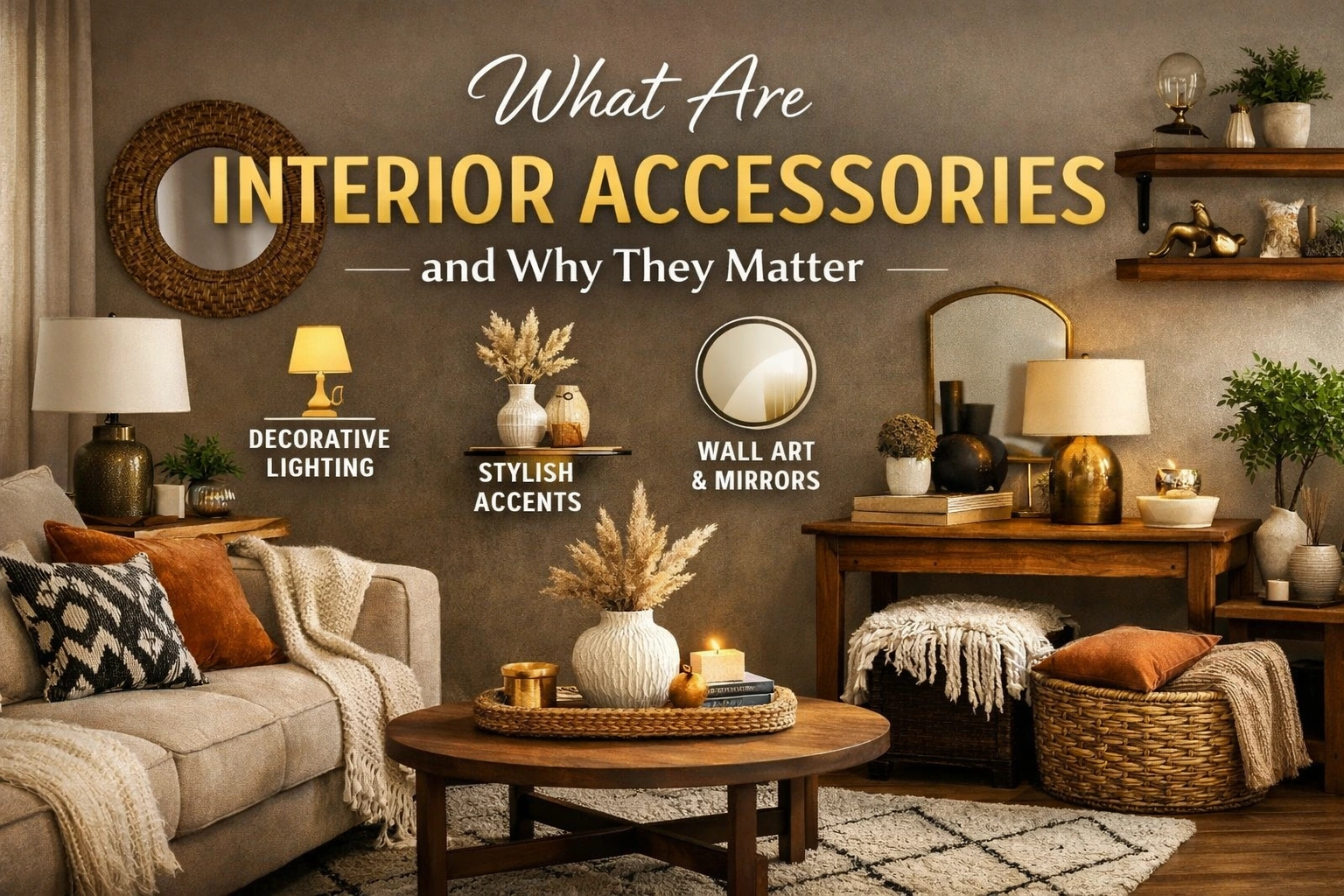
Interior accessories are the elements that complete and personalize interior spaces. They are the finishing touches that give a room its mood, character, and sense of identity. While architectural elements and furniture establish the structure and function of a space, interior accessories bring it to life. Without accessories, interiors often feel empty, cold, or unfinished. With the right accessories, the same space becomes warm, expressive, and functional.
What Are Interior Accessories?
Interior accessories are movable decorative and functional items used within a space to enhance its aesthetic appeal, comfort, and usability. They are not permanent fixtures and can be easily updated, rearranged, or replaced.
These accessories play a vital role in interior design because they:
- Add visual interest
- Reflect personality and lifestyle
- Improve comfort and practicality
- Create balance and harmony
Interior accessories allow people to adapt their homes to trends, seasons, or personal changes without major renovations.
Main Categories of Interior Accessories
1. Lighting Accessories
Lighting accessories shape the atmosphere of a room.
Examples include:
- Table lamps
- Floor lamps
- Pendant lights
- Candles and lanterns
Importance:
- Creates mood and warmth
- Enhances functionality
- Highlights architectural and decorative features
2. Textile Accessories
Textiles soften interiors and improve comfort.
Examples include:
- Cushions and pillows
- Curtains and drapes
- Rugs and carpets
- Throws and blankets
Importance:
- Add texture and color
- Improve acoustics
- Increase warmth and coziness
3. Wall Accessories
Wall accessories define vertical space and visual focus.
Examples include:
- Paintings and artwork
- Mirrors
- Wall clocks
- Shelving and wall décor
Importance:
- Adds personality and storytelling
- Creates focal points
- Makes spaces feel larger and brighter (mirrors)
4. Decorative Accents
These are ornamental elements that bring detail and refinement.
Examples include:
- Vases and bowls
- Sculptures and figurines
- Decorative trays
- Books and collectibles
Importance:
- Adds elegance and character
- Helps express personal taste
- Enhances visual depth
5. Natural Accessories
Nature-inspired elements introduce life into interiors.
Examples include:
- Indoor plants
- Dried flowers
- Wooden décor
- Stone and clay accents
Importance:
- Improves mood and well-being
- Creates a calming environment
- Adds organic texture and freshness
6. Functional Accessories
Functional accessories combine beauty with practicality.
- Examples include:
- Storage baskets
- Organizers
- Decorative boxes
- Side tables and trays
Importance:
- Reduces clutter
- Improves organization
- Maintains aesthetic appeal
Also Read: 10 Interior Design Trends That Will Dominate 2026
Why Interior Accessories Matter
1. They Personalize a Space
Accessories reflect:
- Personal style
- Culture and memories
- Lifestyle and preferences
They transform a generic interior into a space that feels unique and lived-in.
2. They Create Visual Balance and Harmony
Accessories help balance:
- Colors
- Shapes
- Proportions
- Textures
For example:
- Soft fabrics balance hard surfaces
- Tall accessories balance low furniture
- Repetition creates cohesion
3. They Improve Comfort and Functionality
Accessories make interiors comfortable and usable:
- Rugs provide warmth
- Cushions improve seating comfort
- Lamps provide task lighting
4. They Add Color, Texture, and Depth
Interior accessories prevent rooms from feeling flat by introducing:
- Layers of texture
- Contrast in materials
- Accents of color
5. They Allow Easy and Affordable Updates
One of the greatest advantages of accessories is flexibility:
- Seasonal decor changes
- Trend updates without renovation
- Low-cost refreshes
6. They Influence Mood and Atmosphere
Colors, lighting, and materials directly affect emotions:
- Warm lighting creates relaxation
- Soft textiles promote comfort
- Plants enhance mental well-being
7. They Define Focal Points
A statement artwork, lamp, or decorative arrangement draws attention and organizes the visual flow of a room.
How to Use Interior Accessories Effectively
Choose a Clear Color Palette
Stick to a cohesive color scheme and use accessories as accents.
Mix Textures and Materials
Combine:
- Wood
- Metal
- Fabric
- Glass
- Ceramic
This creates depth and interest.
Avoid Over-Decorating
Too many accessories can clutter a space. Allow items to breathe.
Use Scale and Proportion
Choose accessories that match the size of the room and furniture.
Reflect the Room’s Purpose
Calming accessories for bedrooms, energetic ones for social spaces.
Common Mistakes to Avoid
Overcrowding surfaces
- Using accessories that are too small or too large
- Ignoring lighting layers
- Matching everything exactly
- Neglecting functionality
Conclusion
Interior accessories are essential elements of interior design. They shape atmosphere, express identity, enhance comfort, and provide flexibility. By thoughtfully selecting and arranging interior accessories, any space—regardless of size or budget—can become stylish, functional, and deeply personal.
Frequently Asked Questions (FAQs)
1. What is the difference between furniture and interior accessories?
Furniture provides structure and function, while accessories enhance style, comfort, and personality.
2. Are interior accessories necessary?
Yes. Without accessories, interiors feel incomplete and impersonal.
3. Can accessories change the look of a room?
Absolutely. Accessories can completely transform a space without structural changes.
4. How often should accessories be updated?
As often as desired—seasonally or when trends and preferences change.
5. Are accessories expensive?
They range from affordable to luxury, making them accessible for all budgets.
6. Can minimal interiors still use accessories?
Yes. Minimalist design uses fewer accessories, but each one is intentional and impactful.