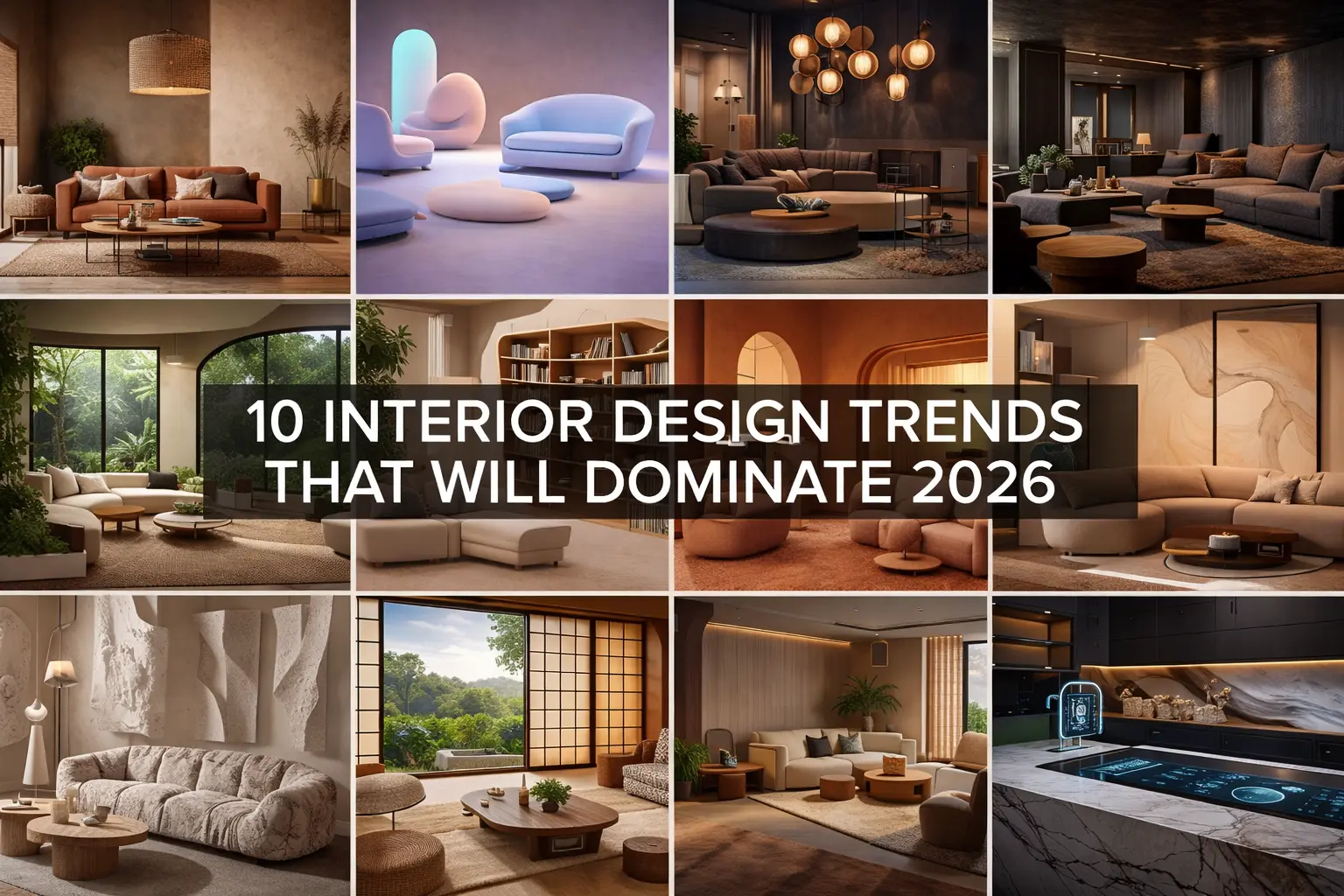
Interior design in 2026 is shaped by how people live, work, heal, and connect inside their homes. The focus shifts from pure aesthetics to experience-driven, sustainable, and intelligent spaces. Homes are no longer static—they are adaptive, emotional, and deeply personal.
1. Biophilic Design: A Deeper Connection with Nature
Biophilic design in 2026 goes far beyond adding a few indoor plants. It becomes a core architectural and interior planning philosophy.
Key Features:
- Indoor gardens, green walls, and vertical planting systems
- Large windows, skylights, and open layouts to maximize daylight
- Use of raw, untreated natural materials like stone, wood, clay, jute, and rattan
- Earth-inspired textures and organic patterns
- Visual connection to outdoor landscapes
Why It Dominates:
- Reduces stress and anxiety
- Improves air quality and sleep cycles
- Enhances productivity and emotional well-being
Application Tip:
Even small homes can adopt biophilic design through indoor planters, natural fabrics, and nature-inspired color palettes.
2. Warm Minimalism (Soft, Livable Minimalism)
Minimalism evolves from cold and stark to warm, tactile, and emotionally comforting.
Design Characteristics:
- Soft neutral tones like beige, sand, ivory, mushroom, and warm greys
- Minimal clutter but rich textures
- Furniture with soft edges and comfortable proportions
- Focus on quality over quantity
Why It Works in 2026:
- Encourages calm living in a fast-paced world
- Reduces visual stress
- Makes spaces feel open yet cozy
Key Insight:
Warm minimalism is not about empty spaces—it’s about intentional living.
Also Read: Elements Of Interior Design
3. Curved & Organic Forms Take Over
Straight lines and sharp angles are replaced by fluid, organic shapes inspired by nature.
Where Curves Appear:
- Sofas, armchairs, beds, and dining tables
- Arched doorways, niches, and mirrors
- Rounded kitchen islands and vanity units
Benefits:
- Creates visual flow and harmony
- Makes spaces feel softer and more welcoming
- Enhances movement and energy within a room
Design Psychology:
Curves are subconsciously associated with comfort, safety, and relaxation.
4. Smart Homes with Invisible Technology
Technology becomes seamless and nearly invisible in interior spaces.
Smart Features in 2026:
- Voice and app-controlled lighting, curtains, and climate
- Smart mirrors and glass panels
- Integrated sound systems and hidden wiring
- AI-based energy optimization
Why It Matters:
- Improves comfort and efficiency
- Reduces energy consumption
- Keeps interiors clean and clutter-free
Design Rule:
If technology is visible, it should look elegant—or disappear completely.
5. Sustainability as a Design Standard (Not a Trend)
Sustainable interiors are no longer optional—they are expected.
Popular Sustainable Choices:
- Reclaimed wood and recycled metals
- Low-VOC and natural paints
- Handcrafted and locally sourced furniture
- Long-lasting, durable materials
Impact:
- Healthier indoor environments
- Lower carbon footprint
- Ethical consumption
2026 Mindset:
Designing sustainably is both a moral responsibility and a style statement.
6. Statement Lighting as Functional Art
Lighting becomes a central design element, not an afterthought.
Lighting Trends:
- Sculptural pendant lights and chandeliers
- Layered lighting systems (ambient, task, accent)
- Warm LED tones with dimming controls
- Handcrafted or artisanal fixtures
Why Lighting Matters:
- Sets mood and atmosphere
- Defines zones within open-plan homes
- Highlights textures and architectural details
Pro Tip:
One bold lighting fixture can completely transform a room.
7. Flexible & Multi-Functional Living Spaces
Homes adapt to hybrid work, wellness, and social needs.
Smart Space Solutions:
- Modular sofas and foldable furniture
- Sliding partitions and movable walls
- Murphy beds and convertible desks
- Built-in storage to reduce clutter
Why This Trend Grows:
- Urban homes are getting smaller
- Lifestyles demand flexibility
- One room often serves multiple purposes
Result:
Homes that evolve with changing needs.
8. Bold Textures & Layered Surfaces
Texture becomes a dominant design language in 2026.
Trending Textures:
- Limewash, microcement, and plaster walls
- Fluted wood and ribbed panels
- Handmade tiles and tactile fabrics
- Matte finishes over glossy ones
Why Texture Is Key:
- Adds depth without clutter
- Enhances sensory experience
- Creates luxury without excess
Design Rule:
Texture replaces loud colors as the main design statement.
9. Personalized, Art-Driven Interiors
Homes shift away from showroom looks to story-driven spaces.
Personalization Elements:
- Custom furniture pieces
- Art from local artists
- Family heirlooms and vintage finds
- Unique decor with emotional value
Why It Matters:
- Makes interiors timeless
- Reflects identity and lifestyle
- Creates emotional attachment to space
2026 Belief:
A beautiful home should feel personal, not copied.
10. Wellness-Centered Interior Design
Homes become sanctuaries for mental and physical well-being.
Wellness Features:
- Calm, muted color schemes
- Noise-reducing materials and acoustic panels
- Spa-inspired bathrooms
- Meditation corners and relaxation zones
- Circadian lighting that supports sleep cycles
Why Wellness Design Is Essential:
- Rising stress levels
- Increased time spent indoors
- Growing awareness of mental health
Outcome:
Homes that heal, not exhaust.
Frequently Asked Questions
1. Are these trends suitable for Indian homes?
Yes. Many trends like biophilic design, warm minimalism, and natural materials align perfectly with Indian climates and lifestyles.
2. Can these trends be applied on a budget?
Absolutely. Focus on textures, lighting, color palettes, and layout changes rather than expensive furniture.
3. Will these trends last beyond 2026?
Yes. These are long-term lifestyle-driven trends, not short-lived fads.
4. Which trend adds the most value to a home?
Sustainability, smart technology, and wellness-focused design significantly increase property value.
5. Can traditional and modern styles be mixed?
Yes. 2026 design celebrates eclectic and personalized combinations.