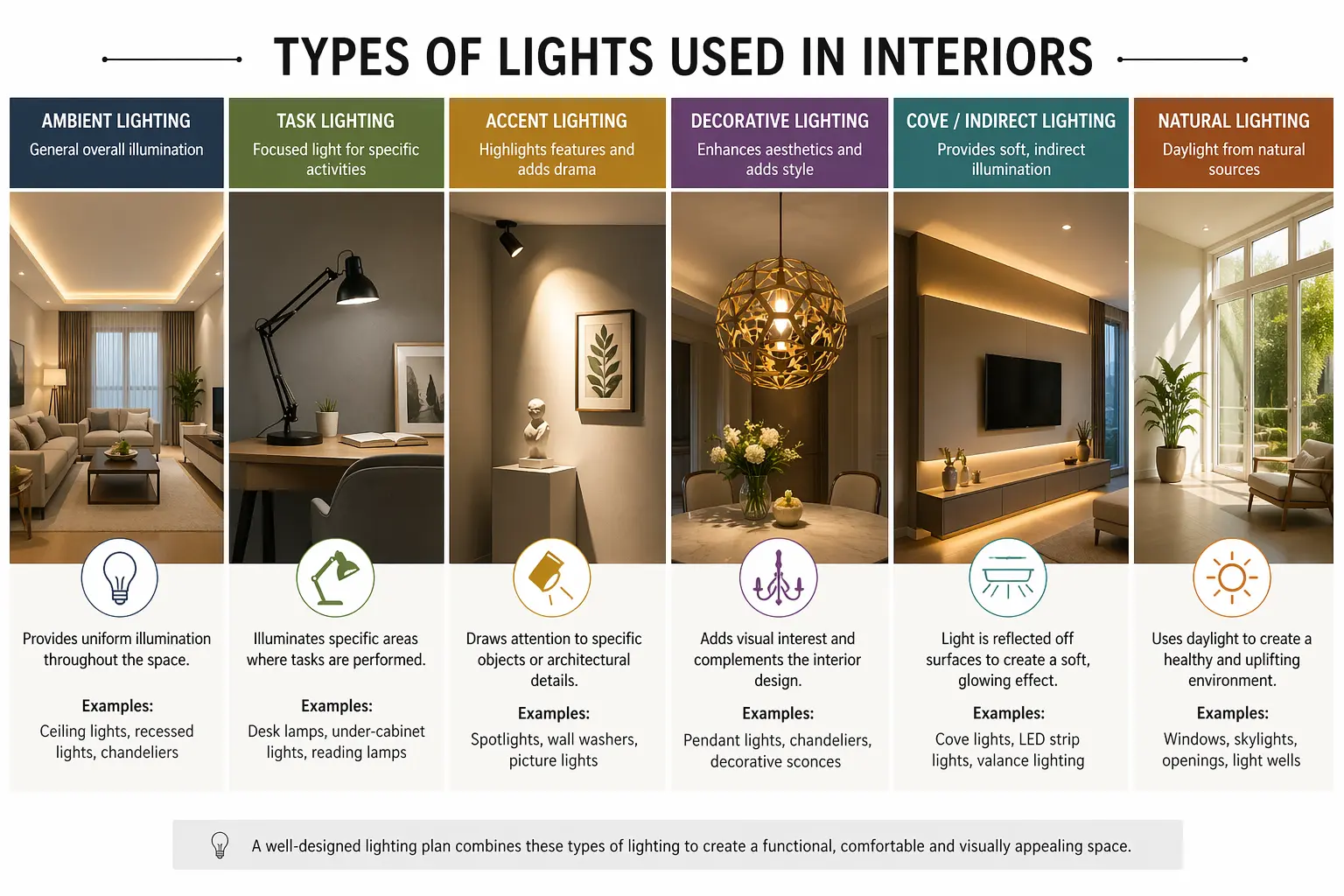
Lighting is a crucial element of interior design. It influences visibility, mood, comfort, aesthetics, and functionality. A good interior lighting design does not rely on one light source but combines multiple types of lighting to achieve balance.Interior lighting is mainly divided into five primary types, with some additional modern variations.
1. AMBIENT LIGHTING (GENERAL LIGHTING)
Definition
Ambient lighting is the primary source of light in a room. It provides overall illumination so that people can move around safely and comfortably.
Characteristics
- Uniform and soft illumination
- Covers the entire room
- Usually the first layer of lighting
Common Fixtures
- Ceiling-mounted lights
- Recessed downlights
- Chandeliers
- Cove lighting
- LED panel lights
Applications
- Living rooms
- Bedrooms
- Corridors
- Dining areas
Advantages
- Creates basic visibility
- Prevents dark corners
- Establishes the room’s brightness level
Example
A ceiling light in a living room that evenly lights the entire space.
2. TASK LIGHTING
Definition
Task lighting provides focused and direct light to help perform specific activities such as reading, cooking, studying, or grooming.
Characteristics
- Brighter than ambient lighting
- Directional
- Reduces eye strain
Common Fixtures
- Desk lamps
- Reading lamps
- Under-cabinet kitchen lights
- Mirror lights in bathrooms
Applications
- Study rooms
- Kitchens
- Home offices
- Bathrooms
Advantages
- Improves accuracy and productivity
- Enhances comfort during work
- Saves energy by lighting only required areas
Example
A table lamp placed beside a study desk for reading.
Also Read: 10 Interior Design Trends That Will Dominate 2026
3. ACCENT LIGHTING
Definition
Accent lighting is used to highlight decorative elements or architectural features in an interior space.
Characteristics
- Creates contrast
- Focused and directional
- Brighter than ambient lighting
Common Fixtures
- Spotlights
- Track lights
- Wall washers
- Picture lights
- LED strip lights
Applications
- Artwork
- Feature walls
- Sculptures
- Indoor plants
Advantages
- Adds drama and depth
- Enhances visual interest
- Makes interiors look elegant
Example
Spotlights focused on a painting to draw attention to it.
4. DECORATIVE LIGHTING
Definition
Decorative lighting serves both functional and aesthetic purposes. The fixture itself acts as a design element.
Characteristics
- Stylish and visually appealing
- Complements interior themes
- May also provide ambient or accent light
Common Fixtures
- Designer chandeliers
- Pendant lights
- Floor lamps
- Table lamps
- Wall sconces
Applications
- Living rooms
- Dining spaces
- Bedrooms
- Entryways
Advantages
- Enhances interior décor
- Adds character and luxury
- Acts as a focal point
Example
A chandelier above a dining table.
5. NATURAL LIGHTING (DAYLIGHTING)
Definition
Natural lighting uses sunlight entering through openings in the building.
Sources
- Windows
- Skylights
- Glass doors
- Courtyards
Characteristics
- Dynamic throughout the day
- Depends on orientation and climate
Applications
- Living areas
- Bedrooms
- Workspaces
Advantages
- Saves energy
- Improves health and mood
- Makes spaces feel larger and fresher
Example
Sunlight entering through large windows in a living room
ADDITIONAL TYPES OF INTERIOR LIGHTING
6. COVE LIGHTING
- Concealed lighting installed in ceilings or wall recesses
- Produces soft, indirect light
- Used for luxury interiors and mood lighting
7. RECESSED LIGHTING
- Installed inside ceilings or walls
- Clean, modern appearance
- Ideal for low ceilings
8. SMART LIGHTING
- App or voice-controlled lighting
- Adjustable brightness and colors
- Energy-efficient and customizable
Visit: Best Interior Lighting Designer in Chennai
LIGHT COLOR TEMPERATURE IN INTERIORS
What Is Light Color Temperature?
Light color temperature describes the color appearance of light emitted by a source. It is measured in Kelvin (K).
- Lower Kelvin values produce warm (yellowish) light
- Higher Kelvin values produce cool (bluish) light
Color temperature plays a major role in mood, comfort, productivity, and visual clarity in interior spaces.
1. WARM LIGHT (2700K – 3000K)
Characteristics
- Yellowish or soft white tone
- Closely resembles candlelight or sunset
- Creates a calm and cozy atmosphere
Psychological Effect
- Relaxing
- Comforting
- Inviting
Best Used In
- Bedrooms
- Living rooms
- Dining rooms
- Hotels and lounges
Advantages
- Reduces stress
- Enhances comfort
- Ideal for rest and relaxation
2. NEUTRAL LIGHT (3500K – 4000K)
Characteristics
- Balanced white light
- Neither too yellow nor too blue
- Natural-looking illumination
Psychological Effect
- Calm yet alert
- Comfortable for long use
Best Used In
- Dining areas
- Living rooms
- Offices
- Study rooms
Advantages
- Good color rendering
- Suitable for mixed-use spaces
- Reduces eye fatigue
Examples
- Ceiling lights
- Panel lights
- Recessed lights
3. COOL LIGHT (5000K – 6500K)
Characteristics
- Bluish-white light
- Very bright and sharp
- Similar to daylight at noon
Psychological Effect
- Energizing
- Increases focus and alertness
Best Used In
- Kitchens
- Bathrooms
- Study rooms
- Workspaces
Advantages
- Improves concentration
- Enhances visibility
- Ideal for task-oriented areas
Examples
- Tube lights
- LED panels
- Task lamps
CONCLUSION
Interior lighting is a combination of function, comfort, and design. By correctly using different types of lighting, interiors become safe, efficient, visually pleasing, and emotionally uplifting.
FREQUENTLY ASKED QUESTIONS
Q1. Why is layered lighting important?
Layered lighting (ambient + task + accent) creates a functional, comfortable, and visually appealing space.
Q2. Which lighting is best for studying?
Task lighting with cool or neutral white light is ideal for focus and clarity.
Q3. Are LED lights suitable for interiors?
Yes. LEDs are energy-efficient, long-lasting, low heat, and versatile.
Q4. What lighting makes a room look bigger?
Natural light, recessed lights, wall washers, and light-colored walls help create a spacious feel.
Q5. Can one type of lighting be enough?
No. A single lighting type cannot meet all functional and aesthetic needs.
Q6. What is the most economical lighting option?
LED lighting is the most economical and sustainable option.