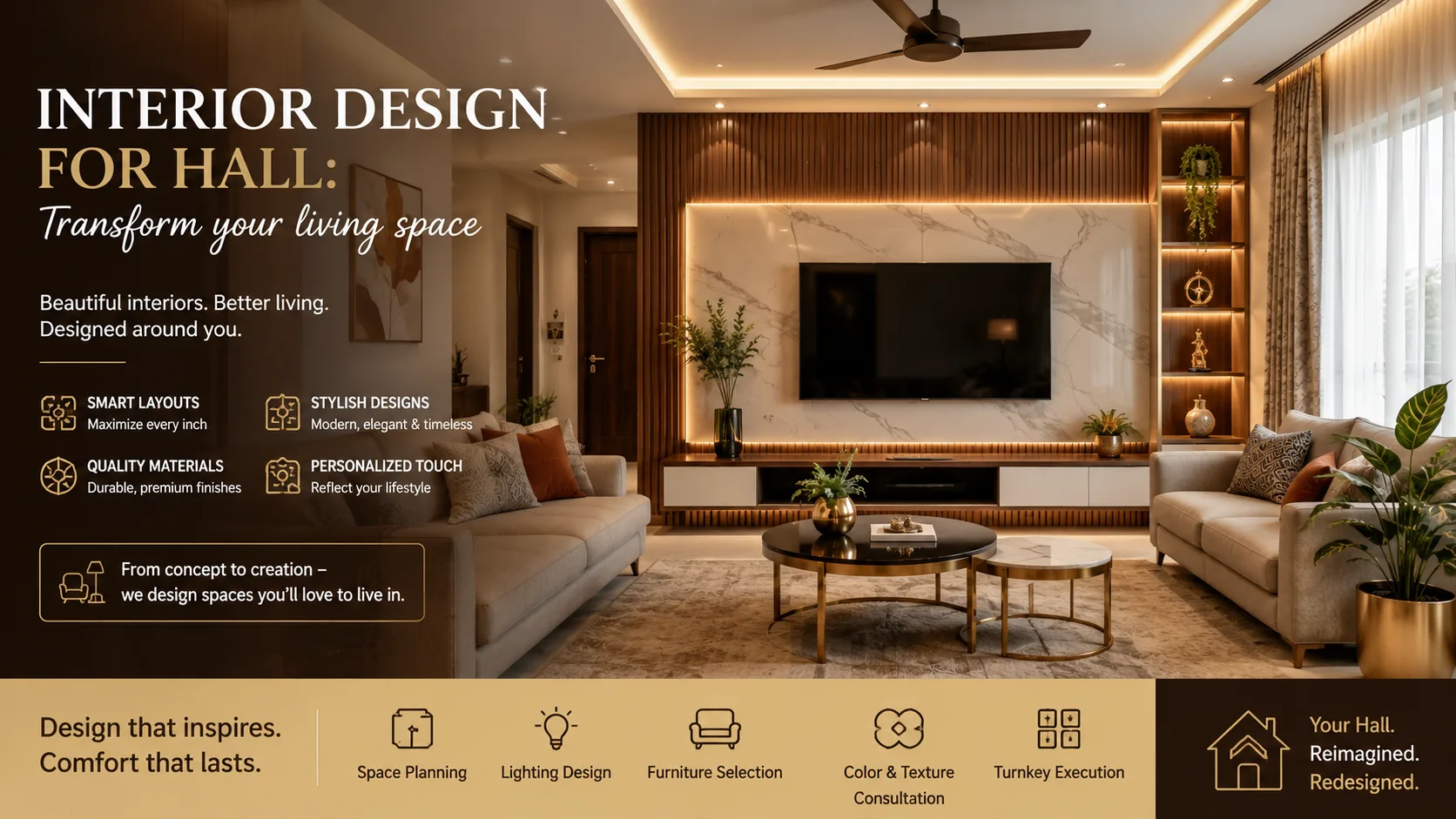
The hall (also called the living room or drawing room) is the most important area of a home. It is the first space guests see, the main family gathering zone, and often the center of daily activities like relaxing, watching TV, reading, or entertaining. A well-designed hall should be comfortable, visually appealing, functional, and reflective of your personality.
1. Understanding the Purpose of the Hall
Before starting the design, clearly define how the hall will be used.
Common Uses
- Hosting guests and social gatherings
- Family relaxation and TV viewing
- Reading or working casually
- Children’s play area (in some homes)
Why This Matters
The purpose determines:
- Furniture type and size
- Seating arrangement
- Lighting intensity
- Storage needs
Example:
A guest-focused hall may prioritize formal seating and décor, while a family hall focuses on comfort and durability.
2. Planning the Layout
A good layout ensures smooth movement, balance, and comfort.
Key Layout Principles
- Maintain clear walkways (minimum 3 feet)
- Avoid blocking doors and windows
- Arrange seating to encourage conversation
- Keep TV at comfortable viewing distance
- Balance heavy furniture visually across the room
Layout Types
- Central seating: Sofa and chairs around a coffee table
- L-shaped layout: Ideal for corner spaces and open plans
- Floating furniture: Suitable for large halls
- Wall-based layout: Best for compact halls
3. Choosing the Right Interior Design Style
Your design style defines the overall look and feel of the hall.
Popular Styles Explained
- Modern: Clean lines, neutral colors, sleek finishes
- Minimalist: Simple forms, clutter-free, calm atmosphere
- Traditional: Rich colors, wooden furniture, classic décor
- Scandinavian: Light tones, natural materials, cozy vibe
- Industrial: Raw textures, metal accents, bold character
Tip: Choose one main style and keep accessories consistent with it.
4. Color Scheme & Wall Design
Color impacts mood, brightness, and perceived size.
Wall Colors
- Light colors: White, cream, pastel – make rooms feel bigger
- Medium tones: Beige, taupe, soft grey – balanced and warm
- Dark shades: Navy, charcoal – luxurious in large halls
Wall Enhancements
- Accent wall with paint, wallpaper, or wood panels
- Textured finishes for depth
- Wall mouldings or panels for elegance
Also Read:
5. Furniture Selection
Furniture must combine comfort, proportion, and durability.
Essential Furniture
- Sofa or sectional
- Coffee table
- Side tables
- TV unit or media console
- Accent chairs or ottomans
Furniture Tips
- Choose furniture proportional to room size
- Avoid bulky pieces in small halls
- Upholstery should be durable and easy to clean
- Rounded furniture works well in compact spaces
6. Lighting Design
Lighting can completely transform the hall’s atmosphere.
Types of Lighting
- Ambient lighting: Ceiling lights, chandeliers, recessed lights
- Task lighting: Floor lamps, reading lights
- Accent lighting: Wall sconces, LED strips, spotlights
Best Practice: Use warm lighting for a cozy and welcoming feel.
Also Read: Types of Lights Used in Interiors
7. Flooring & Rugs
Flooring provides the base for the entire design.
Flooring Options
- Marble or vitrified tiles – elegant and durable
- Wooden or laminate flooring – warm and stylish
- Vinyl flooring – budget-friendly and versatile
Rugs
- Define seating areas
- Add texture and comfort
- Introduce color and patterns
8. Curtains & Window Treatments
Curtains soften the space and control light.
- Sheer curtains for brightness
- Blackout curtains for privacy
- Layered curtains for flexibility
Curtain length should ideally touch the floor for a premium look.
9. Décor & Accessories
This is where the hall becomes personal.
Décor Elements
- Wall art or photo gallery
- Mirrors to enhance space and light
- Cushions and throws for color
- Indoor plants for freshness
- Decorative lighting or sculptures
Rule: Avoid over-decorating—balance is key.
10. Storage Solutions
Smart storage keeps the hall clutter-free.
Storage Ideas
- TV units with drawers
- Floating shelves
- Storage ottomans
- Built-in cabinets
Hidden storage maintains a clean and organized appearance.
11. Common Mistakes to Avoid
- Overcrowding furniture
- Poor lighting planning
- Ignoring proportions
- Too many colors or patterns
- Choosing décor without a theme
Conclusion
A well-designed hall is a balance of beauty, comfort, and functionality. With proper planning, the right colors, suitable furniture, layered lighting, and thoughtful décor, your living space can feel inviting, stylish, and timeless. Whether your hall is small or large, good design makes every square foot count.
Frequently Asked Questions
1. What is the best interior design for a small hall?
Minimalist or modern styles with light colors, compact furniture, mirrors, and smart storage work best.
2. How can I make my hall look elegant?
Use neutral colors, layered lighting, matching curtains, a statement rug, and minimal décor.
3. How many seating options should a hall have?
It depends on size, but a sofa with 1–2 accent chairs or ottomans is ideal for most homes.
4. Is a false ceiling good for a living hall?
Yes. It improves lighting design, hides wiring, and enhances aesthetics.
5. Which lighting is best for the hall?
Warm white ambient lighting combined with accent lights creates a welcoming environment.
6. How do I decorate my hall on a budget?
Rearrange furniture, add cushions and plants, update lighting, and use wall art or mirrors for impact.