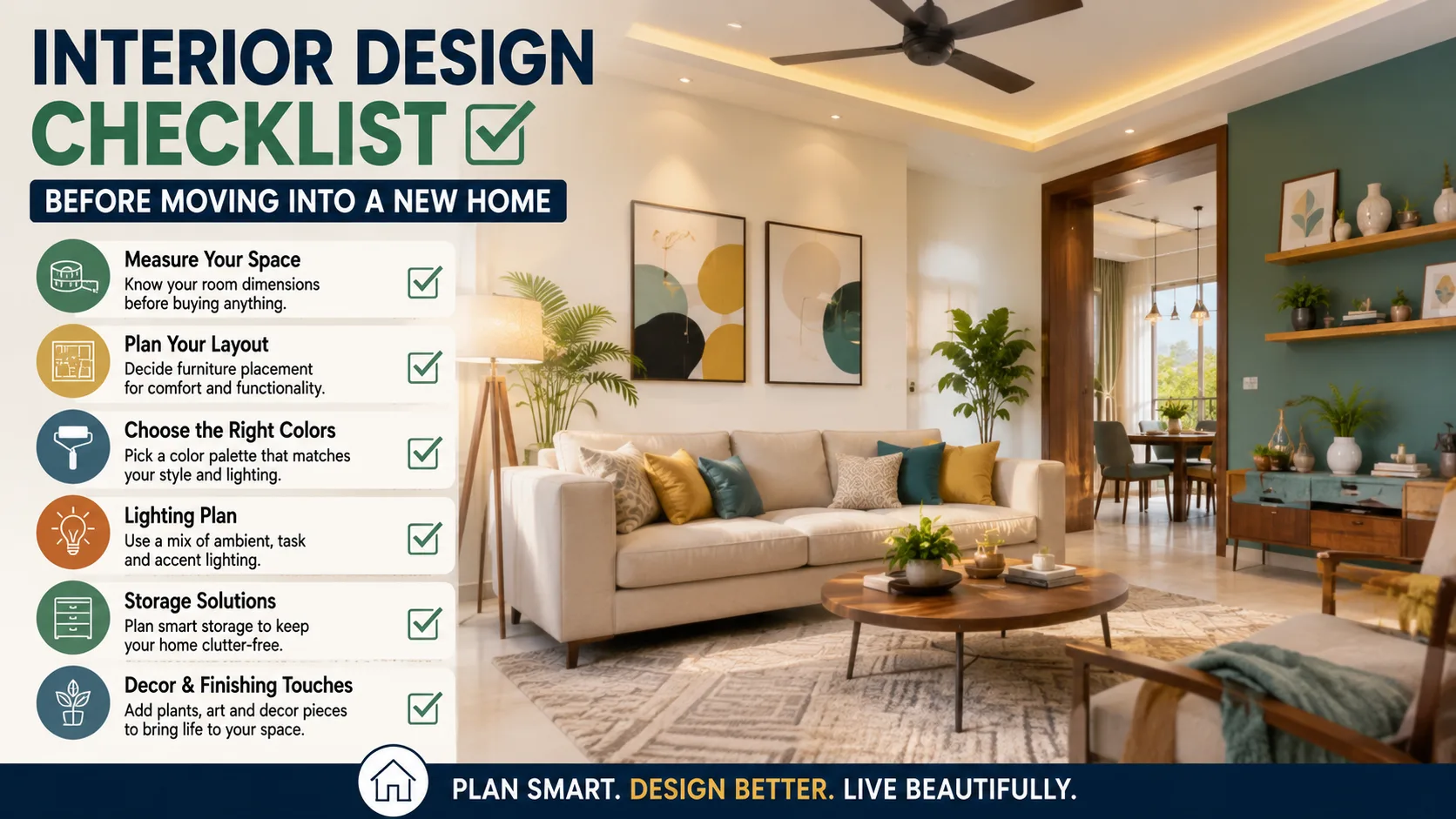
Moving into a new home is exciting, but completing the right interior design tasks before shifting your furniture can save you time, money, and unnecessary renovations later. Whether you've purchased a new apartment, villa, or independent house, planning the interiors in advance helps create a functional, beautiful, and comfortable living space.
Why Plan Your Home Interiors Before Moving In?
Many homeowners start interior work after moving in, which often leads to:
- Dust and construction mess around furniture
- Increased labor costs
- Damage to flooring and walls
- Inconvenience during daily life
- Delayed installation of wardrobes and modular kitchens
Planning beforehand ensures a smoother move-in experience while allowing every space to be designed according to your lifestyle.
Complete Interior Design Checklist Before Moving Into a New Home
1. Finalize Your Interior Design Budget
Start by deciding how much you're willing to spend.
Divide your budget into categories such as:
- Modular kitchen
- Wardrobes
- TV unit
- False ceiling
- Lighting
- Painting
- Furniture
- Curtains
- Home décor
- Appliances
- Smart home devices
Keep an additional 10–15% as a contingency fund for unexpected expenses.
2. Measure Every Room Accurately
Never rely solely on the builder's floor plan.
Measure:
- Room length and width
- Ceiling height
- Window dimensions
- Door openings
- Balcony size
- Utility area
- Electrical points
These measurements help designers create perfectly fitted furniture.
3. Plan Furniture Layout First
Before buying furniture, determine where everything will be placed.
Consider:
- Sofa positioning
- Dining table location
- Bed placement
- Study corner
- Work-from-home setup
- Shoe rack
- Storage units
Ensure enough walking space for comfortable movement.
4. Choose an Interior Design Style
Selecting a design theme helps maintain consistency throughout the home.
Popular styles include:
Modern
- Clean lines
- Neutral colors
- Minimal accessories
Contemporary
- Sleek furniture
- Glass and metal finishes
- Open layouts
Scandinavian
- Light wood
- White interiors
- Functional furniture
Minimalist
- Less clutter
- Simple décor
- Smart storage
Traditional
- Wooden furniture
- Rich textures
- Decorative elements
Luxury
- Marble finishes
- Premium lighting
- Designer furniture
5. Plan the Modular Kitchen
The kitchen should be completed before moving in.
Checklist:
- Layout design
- Chimney
- Hob
- Sink placement
- Dishwasher provision
- Water purifier point
- Microwave space
- Refrigerator space
- Tall pantry unit
- Soft-close drawers
Ensure sufficient countertop space for daily cooking.
Also Read: Modern Modular Kitchen Design Ideas in 2026
6. Design Functional Wardrobes
Wardrobes should match your storage needs.
Include:
- Hanging section
- Folded clothes shelves
- Shoe storage
- Accessories drawer
- Locker
- Saree storage
- Suit storage
- Mirror
- Loft storage
Sliding wardrobes work well in compact apartments.
7. Check Electrical Planning
One of the biggest mistakes homeowners make is ignoring electrical planning.
Review:
- Switchboard positions
- Extra plug points
- USB charging sockets
- TV wiring
- Wi-Fi router location
- AC points
- Washing machine outlet
- Geyser connection
- Refrigerator socket
Adding electrical points later can damage finished walls.
8. Plan Lighting for Every Room
Good lighting enhances both aesthetics and functionality.
Use a combination of:
Ambient Lighting
General room lighting.
Task Lighting
For kitchens, study tables, and workspaces.
Accent Lighting
Highlights artwork, shelves, or décor.
Decorative Lighting
Pendant lights, chandeliers, and wall sconces.
Opt for warm white lighting in bedrooms and living rooms, while cool white lighting works well in kitchens and workspaces.
9. Decide on False Ceiling Design
A false ceiling improves aesthetics and hides electrical wiring.
Benefits:
- Better lighting effects
- Improved insulation
- Concealed AC ducts
- Elegant appearance
Avoid overly complex ceiling designs in compact homes.
10. Choose the Right Wall Finishes
Options include:
- Premium paint
- Wallpaper
- Textured paint
- Wooden panels
- Stone cladding
- Decorative laminates
Accent walls can make the living room or bedroom more visually appealing.
11. Plan Storage Solutions
Every home needs smart storage.
Consider:
- Loft cabinets
- Under-bed storage
- Pull-out drawers
- Pantry organizers
- Utility cabinets
- Entryway storage
- Bathroom cabinets
Hidden storage helps maintain a clutter-free home.
12. Select Flooring Protection
If your builder provides vitrified tiles or marble flooring:
- Cover the floor during interior work
- Avoid dragging heavy furniture
- Use furniture pads
- Apply protective coatings if required
This helps prevent scratches and damage.
13. Select Curtains and Blinds
Window treatments enhance privacy and comfort.
Choose:
- Blackout curtains for bedrooms
- Sheer curtains for living rooms
- Roller blinds for offices
- Roman blinds for modern interiors
- Wooden blinds for premium aesthetics
Coordinate curtain colors with wall finishes.
14. Design Bathroom Accessories
Install before moving in:
- Mirror
- Vanity
- Shower partition
- Towel rod
- Soap dispenser
- Corner shelves
- Exhaust fan
- Storage cabinet
These additions improve convenience and organization.
15. Plan Smart Home Features
Modern homes increasingly include automation.
Popular features:
- Smart lights
- Smart door lock
- Video doorbell
- Motion sensors
- Smart switches
- Voice assistants
- Smart curtains
- Smart thermostat (where applicable)
- Security cameras
Plan wiring early to avoid future modifications.
16. Organize the Utility Area
Often overlooked, the utility area should include:
- Washing machine point
- Dryer provision
- Cleaning supply storage
- Drying rack
- Utility sink
- Water purifier drainage
A well-designed utility space improves daily efficiency.
17. Install Essential Safety Features
Safety should be a priority.
Install:
- Smoke detector
- Fire extinguisher
- Gas leak detector
- Child safety locks
- Anti-skid bathroom mats
- Window safety grills (if needed)
- Emergency lighting
18. Choose a Cohesive Color Palette
Maintain consistency throughout your home.
Popular combinations:
- White + Grey
- Beige + Brown
- Cream + Wood Finish
- Sage Green + White
- Navy Blue + Gold
- Earth Tones + Natural Wood
Use accent colors through décor instead of repainting entire walls.
19. Buy Appliances That Fit Your Design
Measure available spaces before purchasing:
- Refrigerator
- Washing machine
- Dishwasher
- Microwave
- Oven
- Chimney
- Air conditioner
- Television
This ensures seamless integration with cabinetry and avoids installation issues.
20. Add Decorative Elements Last
Complete major interior work before decorating.
Choose:
- Indoor plants
- Area rugs
- Wall art
- Decorative mirrors
- Cushions
- Table lamps
- Vases
- Photo frames
- Sculptures
- Coffee table décor
Avoid overcrowding your rooms with decorative items.
Common Mistakes to Avoid Before Moving Into a New Home
- Starting interiors after shifting furniture
- Ignoring storage planning
- Choosing style over functionality
- Forgetting additional electrical points
- Buying furniture before taking measurements
- Poor lighting design
- Overspending on decorative items
- Not planning appliance placement
- Ignoring ventilation and natural lighting
- Hiring contractors without checking previous work
Pro Tips for First-Time Homeowners
- Complete all civil and carpentry work before painting.
- Purchase furniture according to room dimensions.
- Prioritize quality materials over trendy designs.
- Invest in durable modular furniture for long-term use.
- Create a room-by-room checklist to avoid missing important details.
- Test all electrical, plumbing, and appliance connections before move-in day.
- Keep warranty documents and manuals organized for future reference.
Room-by-Room Interior Design Checklist
Room / Essential Checklist
Living Room
- Sofa, TV unit, lighting, curtains, décor, storage
Kitchen
- Modular cabinets, chimney, hob, sink, pantry, lighting
Master Bedroom
- Wardrobe, bed, side tables, curtains, lighting
Children's Room
- Study table, wardrobe, storage, safety features
Bathroom
- Mirror, vanity, shower partition, accessories
Utility Area
- Washing machine, storage, drying rack
Balcony
- Seating, plants, outdoor lighting
Conclusion
A well-planned interior design process before moving into your new home can save significant time, reduce renovation costs, and improve everyday comfort. By finalizing layouts, storage, lighting, electrical planning, furniture, and décor in advance, you can enjoy a smooth transition into a home that is both functional and visually appealing. Instead of making last-minute changes after moving in, use this checklist as a step-by-step guide to ensure every room is thoughtfully designed and ready for comfortable living from day one.
Frequently Asked Questions
1. When should I start planning my home interiors?
Ideally, begin planning 2–3 months before your possession date. This gives enough time for design discussions, material selection, and installation.
2. What should be completed before moving into a new home?
Finish modular kitchen installation, wardrobes, painting, lighting, electrical work, plumbing fixtures, and major furniture placement before shifting your belongings.
3. Should I install wardrobes before moving in?
Yes. Installing wardrobes beforehand avoids dust, noise, and disruption after you've moved in and ensures immediate storage for your belongings.
4. How much should I budget for home interiors?
A practical guideline is to allocate around 10–20% of your home's value, depending on the level of customization, materials, and furnishings you choose.
5. Which room should I prioritize for interior work?
Start with the kitchen and bedrooms, followed by the living room, bathrooms, utility area, and balcony, as these spaces have the greatest impact on daily comfort.
6. Is a false ceiling necessary?
No. A false ceiling is optional, but it enhances lighting, hides wiring, and adds a polished look. In homes with lower ceiling heights, a simple design is often the best choice.
7. How do I choose the right interior design style?
Consider your lifestyle, maintenance preferences, available space, and budget. Choose a style that balances aesthetics with long-term functionality.
8. What are the most common mistakes homeowners make?
Common mistakes include poor electrical planning, inadequate storage, buying furniture without measurements, overlooking lighting design, and delaying interior work until after moving in.
9. Are smart home features worth adding before move-in?
Yes. Installing smart lighting, security systems, and smart locks during the interior phase is easier and often more cost-effective than retrofitting them later.
10. Why is storage planning so important?
Thoughtful storage solutions help reduce clutter, improve organization, and maximize usable space, making your home more efficient and easier to maintain over the long term.