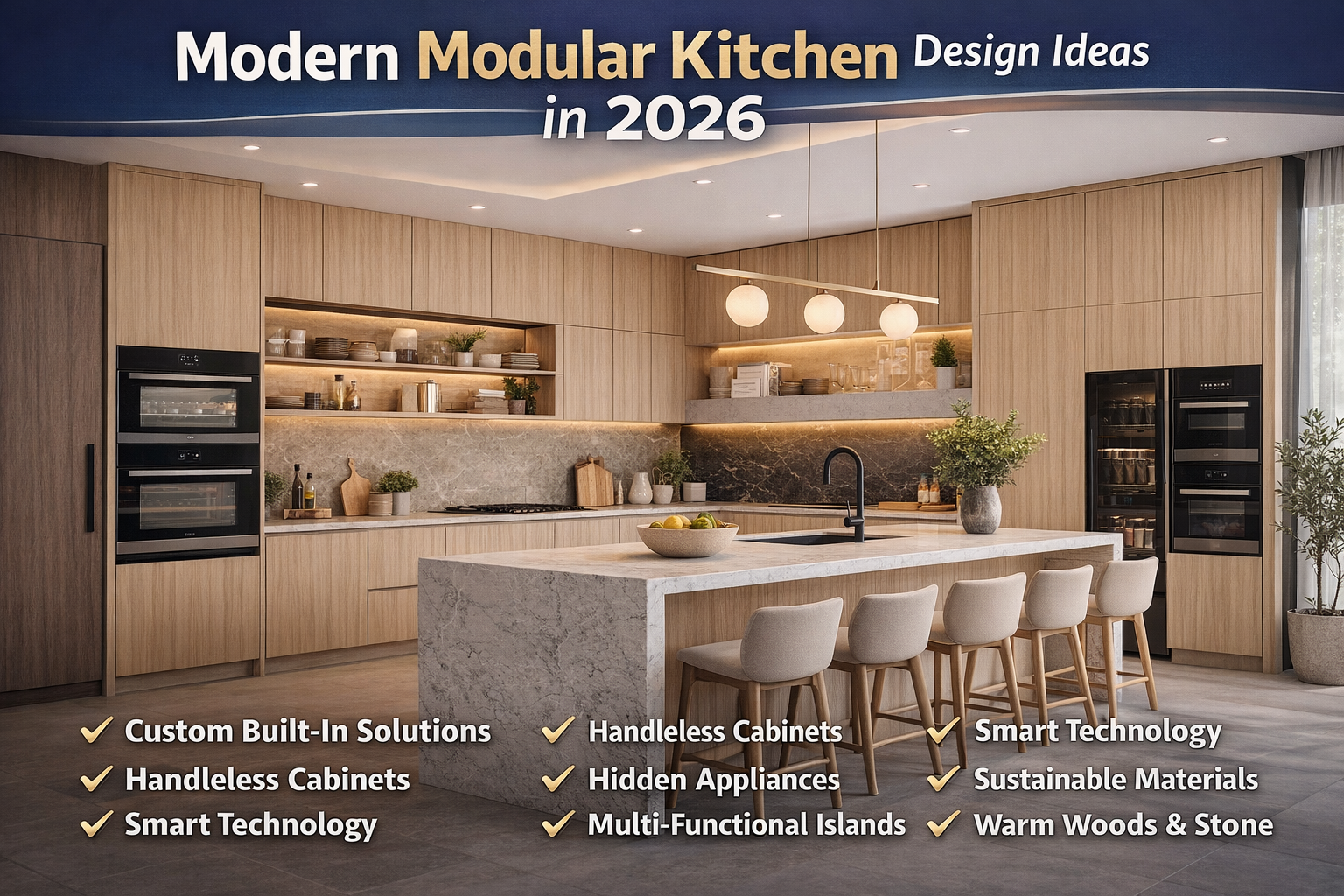
In 2026, modular kitchens are designed as high-performance lifestyle spaces. They combine aesthetics, technology, sustainability, ergonomics, and long-term value. The kitchen is no longer just for cooking—it is a multi-purpose hub for dining, working, entertaining, and storage.
1. Kitchen Planning & Workflow (Foundation of Design)
The Work Triangle Concept (Updated for 2026)
The traditional sink–stove–refrigerator triangle is still relevant but now expanded:
- Prep zone
- Cooking zone
- Cleaning zone
- Storage zone
- Appliance zone
Each zone is planned to reduce movement, improve safety, and increase efficiency.
2. Modular Kitchen Layouts (Space Engineering)
A. L-Shaped Kitchen
- Uses two adjacent walls
- Ideal for apartments and compact homes
- Allows open circulation
- Easy to add a small island or breakfast counter
Best for: 1–3 users, limited space
B. U-Shaped Kitchen
- Three-wall layout
- Maximum counter and storage space
- Highly efficient for frequent cooking
Best for: Large families, heavy cooking
C. Parallel (Galley) Kitchen
- Two parallel counters
- Separate wet and dry zones
- Extremely efficient layout
Best for: Narrow kitchens
D. Island Kitchen
- Central island unit
- Often includes hob, sink, or seating
- Acts as social and functional center
Best for: Open-plan luxury homes
Visit: Best Modular Kitchen Interior Designer In Chennai
3. Cabinet Construction (Most Critical Element)
Cabinet Box Materials
- Marine plywood: Moisture-proof, strongest option
- HDHMR boards: Dense, termite resistant
- Aluminum cabinets: Rust-proof, modern, premium
Cabinet Door Finishes
- Matte laminate (anti-scratch)
- Acrylic satin (luxury look)
- PU paint (custom colors)
- Wood veneer (natural finish)
4. Handle-Less & Seamless Design
Types of Handle-Less Systems:
- Push-to-open
- Gola profile channels
- J-pull handles
Advantages:
- Modern appearance
- Easy cleaning
- Minimalist design
5. Storage Systems (Hidden Intelligence)
Advanced Storage Solutions:
- Tandem drawers with organizers
- Tall pantry pull-out units
- Corner magic units / carousels
- Bottle pull-outs
- Cutlery organizers
- Vertical tray storage
Every inch is planned for maximum usability.
6. Countertops & Surfaces
Countertop Materials:
- Quartz: Non-porous, stain-resistant
- Sintered stone: Heat, scratch & UV resistant
- Granite: Natural stone, durable
Countertop Height (Ergonomics):
- Standard: 850–900 mm
- Customized based on user height
7. Backsplash Design
2026 Trends:
- Full-height slab backsplash
- Same material as countertop
- Large format tiles with minimal grout
- Easy-clean glass panels
8. Smart Kitchen Technology (Core Trend)
Smart Appliances:
- AI-enabled ovens
- Auto-clean chimneys
- Smart refrigerators
- Sensor-based faucets
- App-controlled dishwashers
Smart Benefits:
- Energy savings
- Less manual work
- Improved hygiene
9. Lighting Design (Layered Lighting)
Types of Lighting:
- Task lighting (under cabinets)
- Ambient lighting (ceiling/cove)
- Accent lighting (open shelves)
Warm LED lighting (3000K–4000K) is preferred.
10. Color Trends in 2026
Dominant Color Palette:
- Warm beige & greige
- Natural oak & walnut
- Olive green & muted blue
- Matte black accents
Pure white kitchens are declining due to maintenance issues.
Also Read: 8 Home Color Combinations That Never Go Out Of Style
11. Sustainability & Eco Design
Eco-Friendly Choices:
- Low-VOC adhesives
- Energy-efficient appliances
- Water-saving fixtures
- Recyclable materials
12. Ergonomics & Comfort
Ergonomic Planning Includes:
- Soft-close drawers
- Adjustable shelves
- Proper counter height
- Pull-down wall units
- Anti-fatigue flooring
13. Open vs Closed Kitchens
Open Kitchens:
- Spacious feel
- Social interaction
- Requires good ventilation
Closed Kitchens:
- Better odor control
- Ideal for heavy cooking
- Hybrid glass partitions are popular in 2026.
14. Cost Breakdown (2026)
Approximate Costs:
- Basic modular kitchen: Rs 2.5–4 lakh
- Mid-range kitchen: Rs 5–8 lakh
- Luxury smart kitchen: Rs 10–15 lakh
Costs vary by materials, accessories, and appliances.
15. Maintenance & Lifespan
Maintenance Tips:
- Regular cleaning of chimney filters
- Avoid harsh chemicals
- Use microfiber cloths
- Service appliances yearly
Lifespan: 15–20 years
16. Common Mistakes to Avoid
- Poor ventilation planning
- Ignoring storage needs
- Choosing glossy finishes for heavy cooking
- Improper lighting
- No power socket planning
CONCLUSION
A modern modular kitchen in 2026 is a carefully engineered system, not just furniture. It combines design, technology, sustainability, and real-estate value, making it one of the most important investments in a home.
FAQs
Is a modular kitchen better than a carpenter-made one?
Yes. Modular kitchens offer precision, durability, warranty, and modern functionality.
Is a modular kitchen waterproof?
Marine plywood and aluminum kitchens are moisture-resistant but not fully waterproof.
Can modular kitchens be dismantled?
Yes. Modular kitchens can be relocated with minimal damage.
Are modular kitchens suitable for rentals?
Yes, especially basic modular designs.
Which layout is best for Indian homes?
L-shaped and parallel kitchens are most practical.
How long does installation take?
3–6 weeks depending on complexity.