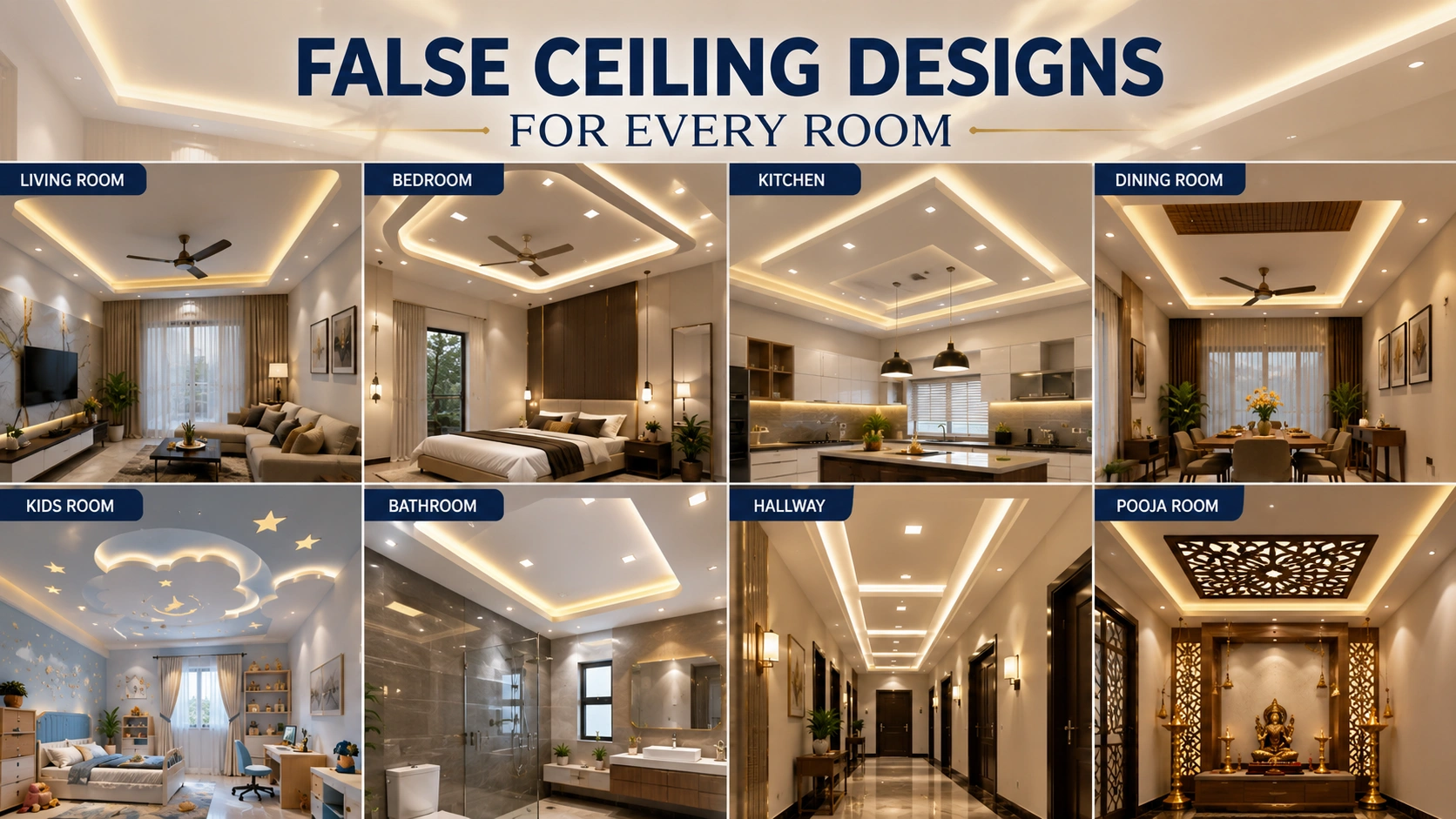
A well-designed false ceiling can completely change the look and feel of a home. It can make a room appear more elegant, improve lighting, hide electrical wiring and AC ducts, and create a more finished interior appearance. But the right false ceiling design depends on the room, ceiling height, lighting requirement, ventilation, and budget. From the living room and bedroom to the kitchen, bathroom and balcony, each space needs a different approach. A design that looks beautiful in a spacious living room may not work well in a small bedroom or low-height kitchen.
What Is a False Ceiling?
A false ceiling, also called a drop ceiling or suspended ceiling, is an additional ceiling installed below the original structural slab.
It creates a concealed space where you can accommodate:
- Electrical wiring
- LED lights
- AC ducts
- Pipes in selected areas
- Internet and CCTV wiring
- Decorative lighting
- Speakers and other services
The ceiling can be designed in different shapes, levels, and patterns depending on the room.
Why Choose a False Ceiling for Your Home?
False ceilings are not only about decoration. They can offer both aesthetic and functional benefits.
1. Improves the Interior Look
A simple room can look more premium with a properly planned ceiling. Cove lighting, recessed lights and layered ceiling designs can create a sophisticated appearance.
2. Conceals Wiring
Electrical wires, lighting connections, and other services can be hidden above the false ceiling, giving the room a cleaner appearance.
3. Helps With Lighting
False ceilings provide space for:
- Spotlights
- Recessed lights
- LED strips
- Cove lights
- Pendant lights
- Track lights
4. Can Improve Thermal Comfort
Depending on the material and construction, the additional ceiling layer can provide some separation between the occupied room and the hot roof slab. However, it should not be treated as a replacement for proper insulation.
5. Creates Different Design Levels
A multi-level ceiling can visually divide different areas without using physical walls.
Designs for the Living Room
The living room is usually the first place where homeowners consider a decorative false ceiling.
1. Simple Border False Ceiling
A rectangular or square border is created around the edges of the ceiling.
LED strip lighting can be installed inside the border to create a soft glow.
Best for:
Small and medium-sized living rooms.
2. Cove Lighting Ceiling
Cove lighting hides the light source inside a recessed section.
The result is a soft, indirect illumination rather than harsh direct lighting.
Best for:
Modern and contemporary interiors.
3. Multi-Level False Ceiling
Different ceiling levels are combined to create depth.
For example, the central portion can be slightly raised while the surrounding area is lowered.
Best for:
Large living rooms with sufficient ceiling height.
4. Wooden-Accent False Ceiling
Wooden or wood-finish panels can be combined with gypsum or other ceiling materials.
This gives the room a warmer appearance.
5. Minimalist False Ceiling
For a modern apartment, a simple ceiling with recessed lights can look better than an overly decorative design.
Interior tip: Don't fill the entire ceiling with patterns. A clean design with carefully positioned lighting often looks more premium.
Designs for the Bedroom
The bedroom should generally have a calmer ceiling design than the living room.
1. Simple Cove Ceiling
A perimeter cove with warm LED lighting creates a relaxing atmosphere.
2. Floating False Ceiling
A central ceiling panel can be designed to appear as though it is floating.
LED lighting around the edges enhances this effect.
3. Bed-Centered Ceiling Design
The ceiling can be designed around the bed position, creating a visual focal point.
4. Wooden Strip Ceiling
Wood-finish strips can be incorporated into the ceiling for a premium bedroom interior.
5. Minimal Single-Level Ceiling
For smaller bedrooms, a simple perimeter design with a few recessed lights can prevent the room from looking crowded.
Best lighting choice: Warm or neutral lighting is generally more comfortable for bedrooms than very bright cool-white lighting.
Designs for the Master Bedroom
The master bedroom usually has more flexibility in terms of design.
Popular options include:
- Layered gypsum ceiling
- Cove lighting
- Floating panel design
- Wooden accent ceiling
- Bed-back wall and ceiling combination
- Perimeter LED lighting
- Central decorative panel
A good master bedroom ceiling should complement the bed, wardrobe, wall colors, and overall interior theme rather than becoming a separate decorative element.
Designs for the Kids' Bedroom
Kids' rooms allow more creativity.
You can consider:
- Cloud-inspired ceiling
- Star-pattern lighting
- Circular ceiling panels
- Colorful geometric designs
- Simple floating ceiling
- Soft cove lighting
However, avoid excessive hanging elements or complicated designs that make maintenance difficult.
Designs for the Dining Room
The dining area can use the ceiling to visually highlight the dining table.
Popular Designs
Dining-table-focused ceiling:
Create a rectangular or circular ceiling feature directly above the dining table.
Pendant-light ceiling:
A recessed ceiling panel can provide a suitable location for pendant lights.
Linear ceiling:
Long rectangular designs work particularly well with contemporary dining furniture.
Cove lighting:
Soft indirect lighting can provide an elegant dining atmosphere.
Designs for the Kitchen
Kitchen ceilings require more practical planning because of heat, moisture, grease, and cleaning requirements.
Good Kitchen Ceiling Options
- Simple gypsum ceiling
- PVC ceiling
- Metal ceiling
- Moisture-resistant board systems
- Minimal recessed lighting
- Simple perimeter designs
Avoid extremely complicated designs in kitchens because grease and dust can make cleaning more difficult.
Kitchen Lighting
Use a combination of:
- General ceiling lighting
- Under-cabinet lighting
- Task lighting
- Pendant lighting where appropriate
The false ceiling should support the lighting plan rather than simply being decorative.
Designs for the Bathroom
Bathrooms need moisture-resistant solutions.
Popular options include:
- PVC panels
- Aluminum/metal ceiling systems
- Moisture-resistant ceiling boards
- Simple recessed designs
Important Consideration
Do not select a ceiling material purely because it looks attractive. Bathroom humidity can affect unsuitable materials.
Also provide proper access to concealed plumbing and electrical components wherever required.
Designs for the Pooja Room
A pooja room generally benefits from a simple and peaceful ceiling.
Popular choices include:
- Wooden ceiling accents
- Circular ceiling patterns
- Backlit panels
- Traditional geometric designs
- Warm cove lighting
- Bell or floral-inspired detailing
Warm lighting can create a softer ambience.
Designs for the Home Office
A home office needs functional lighting rather than excessive decoration.
Good options include:
- Minimal gypsum ceiling
- Linear recessed lighting
- Track lights
- Simple perimeter ceiling
- Acoustic ceiling solutions where needed
Avoid placing strong lights directly behind the computer screen because they can create glare.
Designs for the Passage and Corridor
Corridors don't require elaborate ceiling designs.
You can use:
- Linear LED lights
- Small recessed spotlights
- Simple rectangular patterns
- Continuous cove lighting
- Wooden strips
A long corridor can benefit from linear lighting that visually guides the eye through the space.
Designs for the Balcony
Balcony ceilings require careful consideration because they may be exposed to humidity, wind, dust, and temperature changes.
Possible options include:
- Exterior-grade ceiling systems
- PVC panels
- Aluminum panels
- Simple moisture-resistant solutions
Avoid using interior-grade materials without checking whether they are suitable for the balcony's exposure conditions.
Best False Ceiling Materials
Choosing the right material is as important as choosing the design.
| Material | Best Use | Main Advantages | Key Consideration |
| Gypsum board | Living room, bedroom | Smooth finish | Needs proper moisture protection |
| POP | Decorative interiors | Flexible design | More site finishing/workmanship |
| PVC | Bathroom, utility areas | Moisture resistance | Design options can be more limited. |
| Metal | Kitchen/commercial areas | Durable | Different visual character |
| Wood/wood finish | Accent areas | Premium appearance | Cost and maintenance |
| Mineral/acoustic systems | Office or acoustic needs | Sound Control | More functional appearance |
Gypsum vs. POP False Ceiling
This is one of the most common questions homeowners ask.
Gypsum False Ceiling
Gypsum boards are factory-manufactured boards installed over a framework.
Advantages:
- Smooth finish
- Faster installation
- Good for modern designs
- Suitable for recessed lighting
- Clean contemporary appearance
POP False Ceiling
POP, or Plaster of Paris, is applied and shaped at the site.
Advantages:
- Flexible decorative detailing
- Suitable for customized shapes
- Can create intricate designs
Which Is Better?
For a modern residential apartment, gypsum is often preferred for simple, clean designs. POP can be useful when the design requires more detailed decorative work. The final quality depends heavily on installation and finishing workmanship.
False Ceiling Lighting Ideas
The ceiling design and lighting should be planned together.
1. Recessed Spotlights
These provide focused illumination and create a clean appearance.
2. Cove Lighting
Cove lights produce indirect illumination and are especially popular in bedrooms and living rooms.
3. LED Strip Lighting
LED strips can highlight ceiling borders, niches, and floating panels.
4. Pendant Lights
Pendant lights work particularly well above dining tables and kitchen counters.
5. Track Lighting
Track lights provide flexibility because individual fixtures can be directed toward specific areas.
6. Layered Lighting
A combination of ambient, task, and accent lighting can make the room more functional.
How Much Does a False Ceiling Cost?
The cost of a false ceiling depends on several factors:
- Material
- Ceiling design
- Room size
- Ceiling height
- Number of levels
- Lighting requirements
- Framework
- Labor
- Paint/finishing
- Electrical work
- City and contractor rates
A simple ceiling will generally cost less than a multi-level design with extensive lighting and decorative elements.
For an accurate false ceiling cost per sq ft, get a room-wise quotation instead of relying only on a headline rate.
What Should a False Ceiling Quotation Include?
Ask whether the quotation includes:
- Board/material
- Framework
- Labor
- Joint treatment
- Putty
- Primer
- Paint
- Electrical wiring
- Light fixtures
- LED strips
- Cut-outs
- Access panels
- GST, if applicable
This prevents unexpected additions to the final bill.
How to Choose the Right False Ceiling Design
Before finalizing a design, consider these seven factors.
1. Room Size
A highly layered ceiling can make a small room look visually smaller.
2. Ceiling Height
False ceilings reduce the usable vertical height, so the available slab-to-floor height matters.
3. Natural Light
If a room already receives limited natural light, avoid making the ceiling unnecessarily heavy.
4. Electrical Requirements
Plan the positions of lights, fans, AC points, sensors, and other electrical requirements before closing the ceiling.
5. Maintenance
Always think about how lights, wiring, and AC-related components will be accessed later.
6. Moisture
Bathrooms, kitchens, and balconies need appropriate materials and detailing.
7. Interior Style
The ceiling should complement:
- Flooring
- Wall color
- Furniture
- Curtains
- Wardrobes
- Lighting
- Doors
False Ceiling Maintenance Tips
A false ceiling can remain attractive for years if it is maintained properly.
- Clean visible surfaces periodically.
- Avoid excessive water while cleaning gypsum surfaces.
- Check for water leakage or damp patches.
- Inspect concealed areas when necessary.
- Replace damaged LED strips or drivers.
- Repair cracks or stains early.
- Keep access panels available for important concealed services.
- Use appropriate cleaning methods for PVC and metal ceilings.
If you notice a sudden ceiling stain, first identify the source of moisture instead of simply repainting the affected area.
Conclusion
The best false ceiling design is not necessarily the most expensive or complicated one. A successful ceiling combines design, lighting, functionality, ceiling height, material selection, and maintenance access.
- For a modern home, simple gypsum ceilings with well-planned recessed and cove lighting can create a premium appearance without unnecessarily making the ceiling complicated. Wet areas such as bathrooms and certain balconies need materials specifically suited to moisture exposure.
- Before starting the work, finalize the ceiling design together with the electrical, lighting, and AC plans. This can help reduce modifications and unnecessary expenses later.
Short FAQs on False Ceiling Designs
1. Which false ceiling is best for a living room?
Gypsum false ceilings with cove lighting, recessed lights, or a simple layered design are popular choices for living rooms.
2. Is gypsum better than POP for false ceilings?
Both can work well. Gypsum is commonly preferred for clean modern designs, while POP offers greater flexibility for intricate decorative detailing.
3. Which false ceiling is best for a bedroom?
A simple cove, floating or perimeter false ceiling with warm lighting works well for most bedrooms.
4. Can I install a false ceiling in a small room?
Yes. Choose a minimal design and avoid excessive layers so the room does not feel visually compressed.
5. Is a false ceiling suitable for bathrooms?
Yes, but the material and installation must be suitable for humid conditions. PVC, metal, and appropriate moisture-resistant ceiling systems are common options.
6. Does a false ceiling reduce room height?
Yes. It is installed below the original slab, so the finished ceiling height will be lower.
7. Which ceiling design is best for a kitchen?
A simple, easy-to-maintain ceiling with suitable moisture/heat resistance and well-planned task lighting is generally preferable.
8. How long does a false ceiling last?
Its lifespan depends on the material, installation quality, moisture exposure, and maintenance. Water leakage and poor workmanship can significantly reduce its service life.
9. Is a false ceiling good for home interiors?
Yes. It can improve aesthetics, conceal services, and provide more flexibility for lighting, provided it is properly designed and installed.
10. What is the biggest mistake when installing a false ceiling?
Ignoring ceiling height, electrical planning, moisture protection and future maintenance access are among the most common mistakes.