Choosing the right flooring is one of the most important decisions when building or buying a new home. Flooring affects the appearance, comfort, durability, maintenance, and overall construction cost of a house. In 2026, homeowners can choose from several options, including vitrified tiles, ceramic tiles, porcelain tiles, granite, marble, wooden flooring, laminate, vinyl, and natural stone. Each material has different advantages depending on the room, budget, and lifestyle.
What Is Flooring?
Flooring is the finished surface installed over the structural floor of a building. It provides a durable walking surface while also contributing significantly to the home's interior design.
The right flooring should ideally balance:
- Durability
- Budget
- Appearance
- Maintenance
- Water resistance
- Slip resistance
- Comfort
- Installation requirements
- Long-term replacement costs
A flooring material that looks attractive may not necessarily be suitable for every room. For example, wooden flooring can create a premium bedroom interior, while vitrified tiles may be more practical for a busy living room.
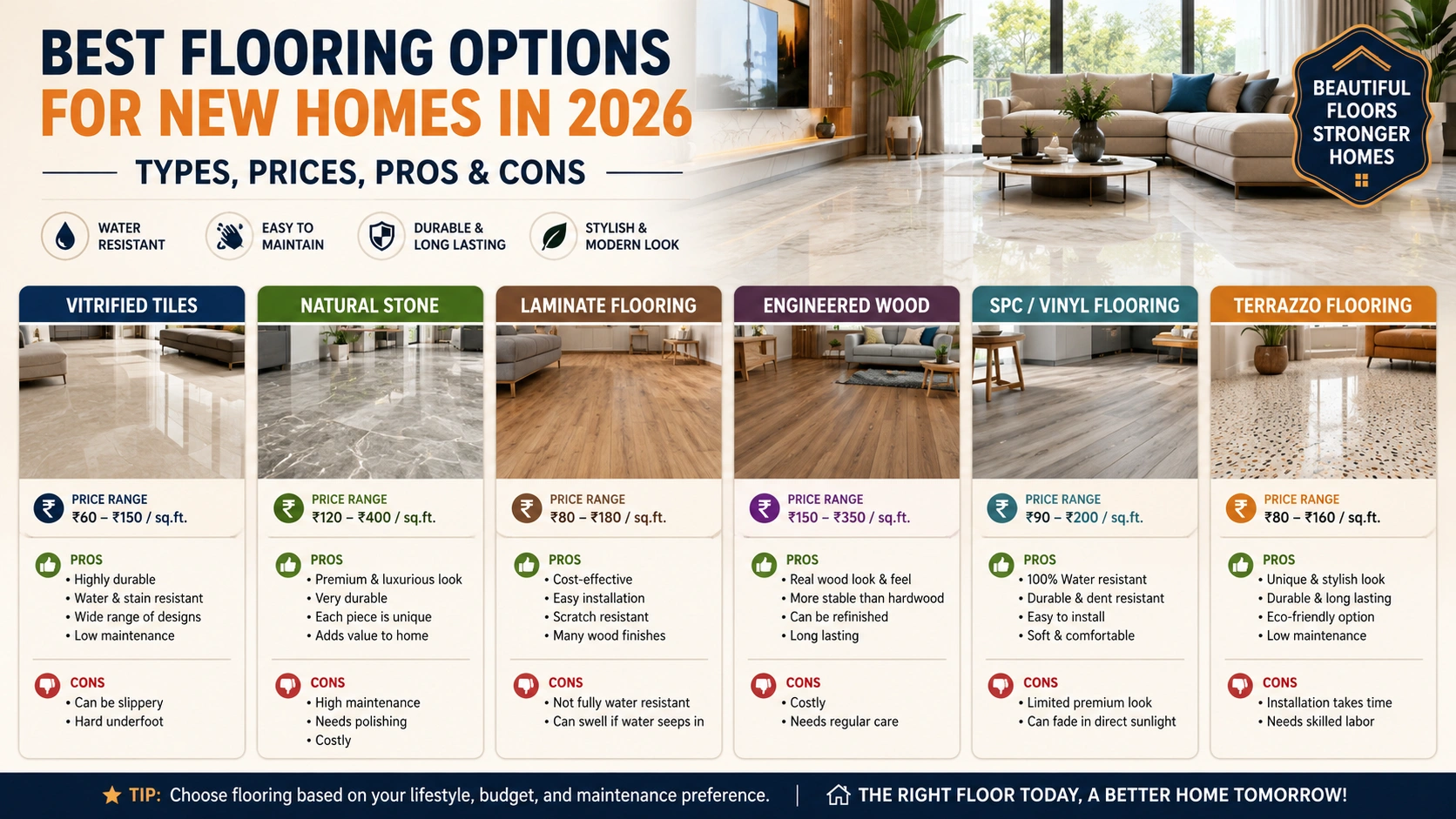
Best Flooring Options for New Homes in 2026
Here are some of the most popular flooring choices for modern homes.
| Flooring Type | Approx. Price/sqft | Durability | Maintenance | Best For |
| Vitrified Tiles | Rs 60-180 | High | Low | Living room, bedrooms |
| Cramic titles | Rs 40-120 | Medium-High | Low | Kitchen, bedrooms |
| Procelain Title | Rs 70-200 | Very High | Low | Premium interiors |
| Granite | Rs 100-300+ | Veru High | Medium | Hailways, living area |
| Marble | Rs 150-500+ | High | Medium-high | Luxury interiors |
| Vinyl Flooring | Rs 50-180 | Medium-High | Very Low | Bedrooms, offices |
| Laminate | Rs 80-250+ | Medium | Low | Bedrooms, living area |
| Wooden Flooring | Rs 200-600+ | High* | Medium | Bedrooms, premium spaces |
| Kota stone | Rs 50-120 | Very High | Low-Medium | Budget homes, outdoor area |
| Terracotta | Rs 60-180 | Medium | Medium | Traditional/rustic homes |
Note: Prices are indicative material-price ranges and can vary substantially by brand, quality, thickness, finish, design, location, wastage, transportation, and installation charges. Premium products can cost considerably more.
1. Vitrified Tiles
Vitrified tiles remain one of the most popular flooring choices for new homes because they offer a combination of strength, low maintenance, and modern appearance. They are available in many designs, including marble-look, stone-look, concrete-look, and wood-look finishes.
Advantages
- Durable and hard-wearing
- Easy to clean
- Low water absorption
- Available in numerous designs
- Suitable for large-format installations
- Generally more affordable than natural stone
- Works well with modern interiors
Disadvantages
- Can feel hard underfoot
- Some polished surfaces can become slippery when wet.
- Broken tiles can be difficult to match later.
- Requires proper installation for large-format tiles
Best For
- Living room
- Dining room
- Bedrooms
- Passage areas
- Kitchen
- Balconies, depending on the selected finish
Best choice for: Homeowners looking for a practical flooring solution with a premium appearance at a comparatively manageable cost.
Also Read: What Are Vitrified Tiles
2. Ceramic Tiles
Ceramic tiles are another widely used flooring material. They are manufactured in different colors, patterns, textures, and sizes. They are particularly useful when homeowners want an economical flooring solution with plenty of design choices.
Pros
- Affordable
- Easy to clean
- Wide variety of designs
- Easy to replace individual tiles
- Suitable for several areas of the home
Cons
- Generally less dense than porcelain
- Can chip or crack under heavy impact
- Quality varies significantly between products.
- Some glossy surfaces may be slippery.
Best For
- Bedrooms
- Kitchens
- Utility areas
- Low-to-moderate traffic spaces
3. Porcelain Tiles
Porcelain tiles are a denser and generally more water-resistant type of ceramic tile. They are available in sophisticated finishes that can replicate natural stone and wood.
Advantages
- High durability
- Low water absorption
- Premium appearance
- Resistant to stains
- Suitable for high-traffic areas
- Available in large formats
Disadvantages
- Usually more expensive than standard ceramic tiles
- Cutting and installation can require greater expertise.
- Hard surfaces can feel less comfortable than resilient flooring.
Best For
- Living rooms
- Luxury apartments
- Kitchens
- High-traffic areas
- Contemporary interiors
4. Granite Flooring
Granite is a natural stone known for its strength and long service life. It can be a strong choice for homeowners who prefer a natural material.
Pros
- Extremely durable
- Scratch-resistant
- Long-lasting
- Natural appearance
- Suitable for high-traffic areas
- Can add a premium look
Cons
- Higher initial cost
- Requires skilled installation
- Natural color and pattern variations
- Polished granite can become slippery when wet.
- Heavy material can increase handling and installation requirements.
Best For
- Living rooms
- Staircases
- Entrance areas
- Corridors
- High-traffic spaces
5. Marble Flooring
Marble is associated with luxury and is often selected for premium homes. Its natural veins and patterns make each installation visually distinctive.
Advantages
- Luxurious appearance
- Unique natural patterns
- Can increase the visual appeal of interiors
- Available in different colors and patterns
- Can be polished to restore its appearance
Disadvantages
- Expensive compared with many tile options
- Can stain if not properly maintained
- Requires periodic care
- Can scratch or etch
- Professional installation is recommended.
Best For
- Living rooms
- Foyers
- Staircases
- Luxury interiors
Important: Marble should not be selected only for its appearance. Consider the maintenance requirements and the type of finish before making a decision.
6. Wooden Flooring
Wooden flooring can create a warm and sophisticated atmosphere. It is particularly popular for bedrooms and premium interiors. There are different types of wood-based flooring, including engineered wood and solid wood.
Pros
- Warm and comfortable underfoot
- Elegant appearance
- Creates a premium interior
- Available in different shades
- Can work well with contemporary and classic designs
Cons
- More expensive than standard tiles
- Can require greater maintenance
- Moisture can damage some wood flooring.
- Scratches and dents can occur.
- Not ideal for areas with frequent water exposure
Best For
- Master bedrooms
- Children's bedrooms
- Home offices
- Premium living spaces
Also Read: Top Wooden Floor Tiles for Living Rooms in 2025
7. Laminate Flooring
Laminate flooring is designed to provide the appearance of wood or other materials without the cost associated with some natural flooring options.
Advantages
- Wood-like appearance
- Comparatively easy installation
- Available in many designs
- Comfortable compared with hard tile surfaces
- Suitable for bedrooms and dry areas
Disadvantages
- Water resistance depends on the product.
- Can be damaged by prolonged moisture
- May not have the lifespan of high-quality natural materials
- Damaged sections may require replacement.
Best For
- Bedrooms
- Home offices
- Study rooms
- Dry indoor areas
8. Vinyl Flooring
Vinyl flooring has become increasingly popular because it is available in modern designs and can provide a comfortable, relatively low-maintenance surface.
Pros
- Easy to clean
- Comfortable underfoot
- Available in wood and stone designs
- Generally economical
- Suitable for quick renovation projects
- Low maintenance
Cons
- Quality varies considerably.
- Can be damaged by sharp objects
- Some low-quality products may fade or wear faster.
- Subfloor preparation is important.
Best For
- Bedrooms
- Home offices
- Children's rooms
- Rental properties
- Selected living spaces
9. Kota Stone Flooring
Kota stone is a natural stone commonly used in Indian homes. It offers a relatively economical option for homeowners looking for a durable natural floor.
Advantages
- Durable
- Affordable compared with premium marble
- Natural appearance
- Suitable for high-traffic areas
- Can work well with traditional designs
Disadvantages
- Limited color range
- Requires finishing and polishing
- Appearance may be less luxurious than marble or premium tiles.
- Installation quality significantly affects the final look.
Best For
- Budget homes
- Corridors
- Outdoor areas
- Utility spaces
- Traditional-style interiors
10. Terracotta Flooring
Terracotta flooring is suitable for homeowners who prefer a rustic or traditional appearance.
Pros
- Natural appearance
- Warm visual character
- Suitable for traditional homes
- Can create a distinctive interior
Cons
- Requires maintenance
- Porosity can lead to staining.
- Not the first choice for modern luxury interiors
- Proper sealing may be necessary.
Flooring Options Based on Budget
Your budget is one of the biggest factors when choosing flooring.
Budget Flooring
For cost-conscious homeowners, consider:
- Ceramic tiles
- Standard vitrified tiles
- Kota stone
- Basic vinyl
Mid-Range Flooring
For a balance between appearance and performance:
- Premium vitrified tiles
- Porcelain tiles
- Better-quality vinyl
- Laminate flooring
Premium Flooring
For luxury interiors:
- Natural marble
- Premium granite
- Engineered wood
- High-end porcelain slabs
- Premium wooden flooring
Best Flooring for Every Room
Different rooms have different flooring requirements.
Living Room
The living room experiences regular foot traffic, so durability and appearance are both important.
Recommended:
- Vitrified tiles
- Porcelain tiles
- Granite
- Marble
For a contemporary home, large-format vitrified or porcelain tiles can provide a clean, spacious appearance.
Bedroom
Bedrooms benefit from flooring that feels comfortable and visually warm.
Recommended:
- Wooden flooring
- Laminate
- Vinyl
- Vitrified tiles
If comfort is the priority, wood-based or resilient flooring can be considered.
Kitchen
Kitchen flooring needs to handle spills, stains, and frequent cleaning.
Recommended:
- Vitrified tiles
- Porcelain tiles
- Matte-finish ceramic tiles
- Granite
Choose a surface with suitable slip resistance rather than selecting flooring purely for its glossy appearance.
Bathroom
Bathrooms require flooring with strong water resistance and appropriate slip resistance.
Recommended:
- Anti-skid porcelain tiles
- Anti-skid ceramic tiles
- Textured tiles
Avoid highly polished surfaces in wet areas where they may become slippery.
Balcony
Balcony flooring is exposed to weather, water, and dust.
Recommended:
- Outdoor porcelain tiles
- Textured ceramic tiles
- Kota stone
- Suitable natural stone
Choose outdoor-rated products and ensure proper drainage.
Staircase
Staircase flooring needs durability and a surface that provides appropriate grip.
Recommended:
- Granite
- Marble with suitable finish
- Vitrified tiles designed for stairs
- Natural stone
Glossy vs. Matte Flooring: Which Is Better?
- Glossy Flooring
Advantages:
- Reflects more light
- Creates a polished appearance
- Can make interiors appear visually brighter
- Easy to wipe clean
Disadvantages:
- Can show footprints and stains
- May be slippery when wet
- Scratches can be more noticeable.
- Matte Flooring
Advantages:
- Better suited to many high-traffic spaces
- Hides minor marks better
- Often provides better visual grip
- Creates a contemporary appearance
Disadvantages:
- Some textured surfaces can require more cleaning.
- May not provide the same reflective appearance as polished flooring
For bathrooms and other wet areas, prioritize appropriate slip resistance over appearance.
Large-Format Tiles vs. Small Tiles
Large-format tiles can make a room appear more spacious because they create fewer visible grout lines.
- Large Tiles
- Suitable for:
- Living rooms
- Dining areas
- Large bedrooms
- Open-plan interiors
- Small Tiles
Suitable for:
- Bathrooms
- Compact spaces
- Decorative areas
- Spaces requiring more flexibility around corners and slopes
Large tiles require a properly prepared and sufficiently level substrate, as installation imperfections can be more noticeable.
How to Choose the Best Flooring for a New Home
Before purchasing flooring, consider these factors.
1. Set Your Budget
Determine the maximum amount you want to spend per square foot and calculate the complete installed cost.
2. Consider the Room
Do not use the same flooring specification everywhere simply for convenience. A bathroom has different requirements from a bedroom.
3. Check Durability
High-traffic areas require stronger flooring than lightly used rooms.
4. Check Water Resistance
Kitchens, bathrooms, and balconies need flooring that can handle moisture appropriately.
5. Consider Maintenance
If you want minimal daily maintenance, vitrified, porcelain, and suitable vinyl products can be practical options.
6. Match the Interior Design
Consider your wall colors, furniture, doors, cabinets, and lighting before selecting the floor.
7. Check Slip Resistance
Especially important for bathrooms, kitchens, balconies, and outdoor areas.
8. Buy From a Reliable Supplier
Check product specifications, batch details, warranty, and replacement availability.
9. Keep Extra Tiles
Store a few unused tiles after installation. If a tile gets damaged several years later, finding the exact same design may be difficult.
Common Flooring Mistakes Homeowners Should Avoid
- Choosing Only Based on Price
The cheapest flooring may have higher maintenance or replacement costs later.
- Ignoring Installation Quality
Even a high-quality tile can look poor if the surface preparation and installation are inadequate.
- Using Glossy Tiles Everywhere
A glossy finish may not be appropriate for wet areas.
- Forgetting Wastage
Always include cutting and breakage in the flooring budget.
- Not Checking Tile Shade
Tiles from different production batches can sometimes have shade variations. Check cartons before installation.
- Selecting a Design Without Considering Maintenance
Highly textured or very light-colored floors may require more frequent cleaning depending on where they are installed.
Best Flooring Choice in 2026
There is no single flooring material that is best for every home. Your ideal choice depends on budget, location, room usage, design preference, and maintenance expectations.
Best Overall
Vitrified tiles—a balanced combination of durability, design, and maintenance.
Best for Luxury
Marble – premium natural appearance.
Best for High Traffic
Granite or high-quality porcelain—strong and durable options.
Best for Bedrooms
Wooden, laminate, or vinyl flooring – a warmer and more comfortable feel.
Best for Bathrooms
Anti-skid porcelain or ceramic tiles—practical for wet environments.
Best Budget Option
Ceramic or standard vitrified tiles – a broad selection at comparatively accessible prices.
Best for Modern Interiors
Large-format porcelain/vitrified tiles—clean appearance with fewer grout lines.
Conclusion
Flooring should be selected as a long-term home investment rather than simply an interior decoration choice. For most new homes, vitrified and porcelain tiles provide an excellent balance of durability, design flexibility, and maintenance. Marble and granite are suitable for homeowners seeking natural stone, while wooden, laminate, and vinyl flooring can add warmth and comfort to bedrooms and other dry areas. The best strategy is to choose flooring room by room, compare the complete installed cost, and prioritize durability and safety alongside appearance.
Frequently Asked Questions
1. Which flooring is best for a new home in 2026?
Vitrified and porcelain tiles are among the most practical choices for new homes because they offer durability, design variety, and relatively easy maintenance.
2. Which flooring is the most affordable?
Ceramic tiles and standard vitrified tiles are generally among the more affordable options, although actual prices vary by quality, brand, size, and location.
3. Is vitrified tile better than marble?
It depends on your priorities. Vitrified tiles generally offer easier maintenance and consistent designs, while marble provides a distinctive natural appearance and a more luxurious look.
4. Which flooring is best for bedrooms?
Wooden flooring, laminate, vinyl, and vitrified tiles can all work well. Wood-based flooring provides a warmer appearance, while tiles are easier to maintain.
5. Which flooring is best for bathrooms?
Anti-skid ceramic or porcelain tiles are generally suitable. Select a product specifically appropriate for wet areas and prioritize slip resistance.
6. Is granite good for home flooring?
Yes. Granite is highly durable and works particularly well in high-traffic areas such as living rooms, entrances, corridors, and staircases.
7. Is wooden flooring suitable for Indian homes?
It can be suitable, particularly in bedrooms and dry indoor areas, provided the selected product is appropriate for the home's moisture conditions and is installed and maintained correctly.
8. How much extra flooring should I buy?
A typical planning allowance is around 5–10% extra, but the exact amount depends on tile size, room shape, and installation pattern.
9. Which flooring requires the least maintenance?
Vitrified tiles, porcelain tiles, and many quality vinyl products are relatively easy to maintain with regular cleaning.
10. Is glossy flooring good for the whole house?
Not necessarily. Glossy surfaces can work well in selected dry areas, but wet areas require flooring with appropriate slip resistance.