What is a Mood Board?
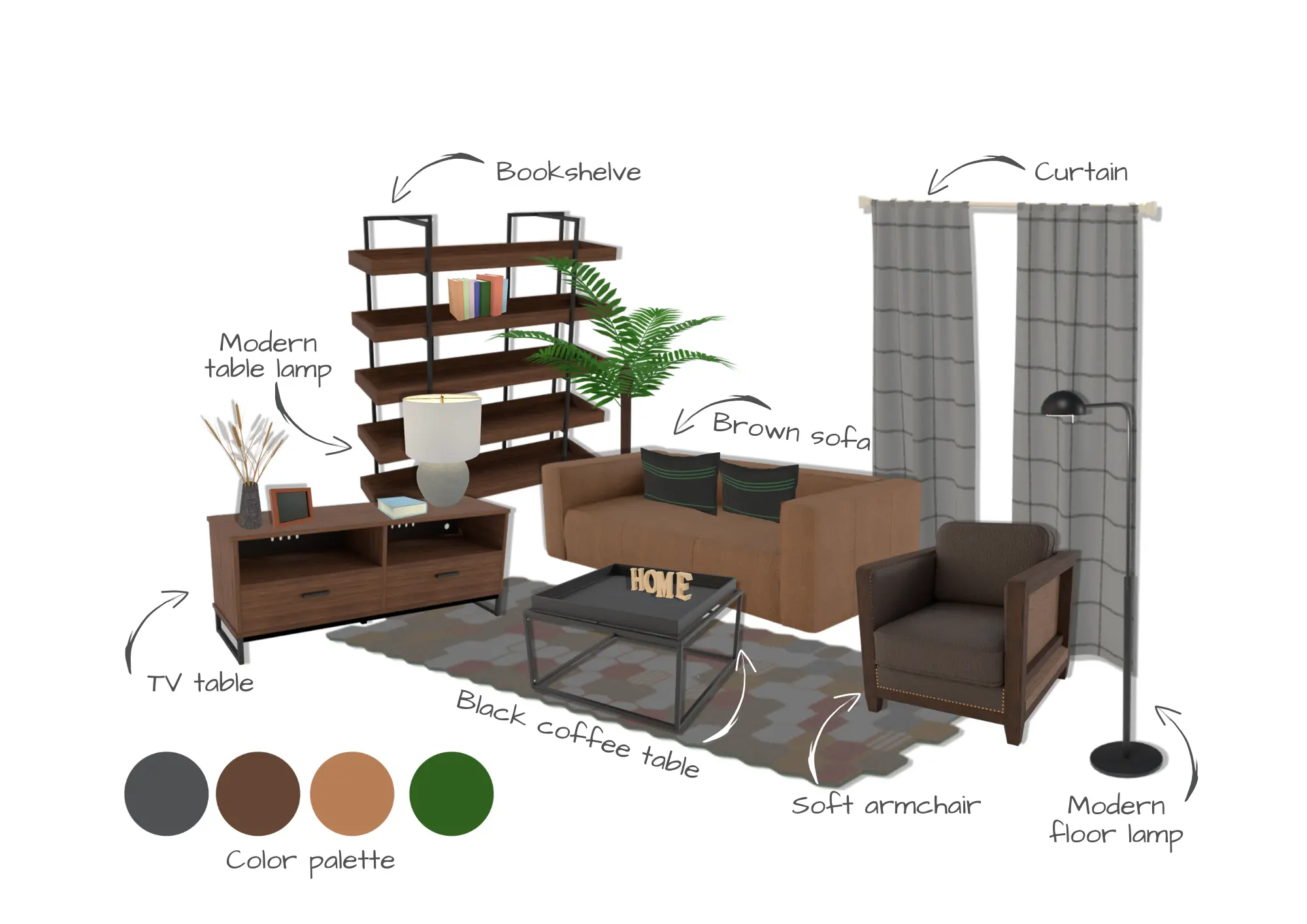
A mood board is a visual collage or inspiration board that represents the style, theme, and emotional tone of a design project — whether it's an interior, branding, or fashion concept. It’s the foundation of any creative project because it helps visualize what the final design will “feel” like before anything is actually built or bought.
It’s a tool to translate abstract ideas into visuals — using images, textures, color palettes, materials, furniture styles, lighting examples, and decor accents.
Designers use mood boards to:
- Set a clear design direction
- Communicate ideas to clients or teams
- Ensure all design elements (colors, furniture, materials) align with the same aesthetic vision
Mood Board Concepts (Types & Approaches)
There are three main types of mood boards depending on purpose and depth:
1. Concept Mood Board
This focuses on the overall theme or feeling — for example:
- “Minimal Japandi Living Room”
- “Luxury Neo-Classical Bedroom”
- “Boho Beach House in Pastels”
Elements included:
- Concept images (from Pinterest, Behance, or magazines)
- Textures (linen, marble, jute, wood)
- Key words describing the mood (e.g., calm, natural, cozy)\
- Color swatches
- Lighting style inspiration
Purpose: To express the overall vibe and design personality.
2. Furniture Mood Board
This focuses specifically on furniture selection and placement style.
It brings together sofa styles, tables, chairs, shelves, beds, and decor pieces that fit the concept.
Elements included:
- Pictures of furniture pieces (sofa, armchair, console table, bed, etc.)
- Materials (wood, metal, velvet, leather, cane)
- Furniture finish samples (matte, gloss, lacquered)
- Proportion & style consistency (e.g., Mid-century modern, Scandinavian, industrial)
Purpose: To ensure consistency in furniture design, matching scale, proportion, and material tone.
Example:
If the concept is “Modern Minimalist”, the furniture mood board might include:
- Low-profile neutral sofas
- Sleek black coffee tables
- Floating shelves
- Accent chairs in beige or muted tones
Design Rule:
All furniture should look like they belong in the same house. Mood boards help achieve that.
3. Color Mood Board (Palette Board)
This focuses on the color psychology and harmony of the design.
Colors are not just decorative — they set the emotional tone of a space.
Elements included:
- Main wall color
- Accent colors
- Neutral base
- Fabric and paint swatches
- Sample materials like wood or stone finishes
Example Concepts:
| Theme | Palette | Mood |
| Scandinavian | White, beige, grey, light oak | Calm, Natural, Minimal |
| Modern Luxe | Charcoal, gold, Cream | Sophisticated, rich |
| Coastal | Sky blue, white, sand | Airy, refreshing |
| Bohemian | Terracotta, olive green, mustard | Warm, earthy |
Design Rule:
Color mood boards help in visualizing harmony and contrast — so when walls, furniture, and fabrics come together, they create balance.
Also Read: Essential 7 Interior Design Principles Everyone Should Understand
Mood Board Creation Process (Step-by-Step)
Step 1. Define the Concept
Ask questions like:
- What emotion should this space evoke? (Calm, cozy, luxurious, energizing?)
- Who will use the space?
- What’s the function — home, office, café?
Step 2. Gather Visual Inspiration
Collect from:
- Instagram (interior design accounts)
- Magazines (Elle Décor, Architectural Digest)
- Furniture websites
Include:
- Room photos
- Material close-ups
- Lighting examples
- Decor styles
Step 3. Select the Color Palette
Use 3–5 dominant colors:
- 1 base tone (walls/floor)
- 1–2 accent colors (furniture, art)
- 1 contrast (details or trims)
Use tools like Coolors.co or Adobe Color Wheel.
Step 4. Add Furniture & Material Samples
Show sofa style, table texture, rug pattern, curtains, etc.
Label materials (e.g., “Teak wood finish”, “Velvet upholstery”).
Step 5. Arrange Layout
You can use digital tools:
- Canva (easy drag and drop)
- Milanote
- Figma
- Photoshop
Group visuals in sections: color → furniture → lighting → decor.
Step 6. Present and Refine
Show to client or team → get feedback → refine palette or furniture tone → finalize.
Also Read: Elements Of Interior Design
Real-Life Example: Living Room Mood Board
Theme: “Warm Modern Minimalism”
Mood: Calm, inviting, stylish
Color Mood Board:
- Base: Warm white walls
- Accent: Tan, beige, muted clay
- Contrast: Matte black metal details
Furniture Mood Board:
- L-shaped beige fabric sofa
- Wooden coffee table (walnut finish)
- Minimal black floor lamp
- Abstract art in brown-beige tones
Texture Board:
- Linen fabric
- Soft jute rug
- Matte ceramics
Result: The room feels modern yet cozy, simple yet rich in texture.
Why Mood Boards Are Important in Interior Design
- Visual Communication – Translates your design ideas into images clients can understand.
- Design Consistency – Keeps furniture, materials, and colors aligned.
- Decision Clarity – Helps select between multiple design directions.
- Emotional Connection – Clients can “feel” the mood before the design is built.
- Time & Cost Efficiency – Avoids buying mismatched items later.
Bonus: Tips for Effective Mood Boards
- Stick to a limited palette (too many images = confusion)
- Keep visual hierarchy (big items = base concept, small ones = accents)
- Use real textures if possible (fabric, wood, tile samples)
- Add labels like “sofa fabric”, “wall color”, “floor tile”
- Keep one hero image that represents the entire vibe
https://www.livehomes.in/blogs