Lighting is one of the most important elements in a home. The right light can change how a room looks, feels, and functions. While choosing lighting, homeowners often compare warm light vs. cool light because both create completely different atmospheres. Warm light gives a soft, comfortable, and welcoming appearance, while cool light produces a brighter, cleaner, and more energetic environment. Choosing between them depends on the room, purpose, furniture, wall colors, and the mood you want to create.
What Is Warm Light?
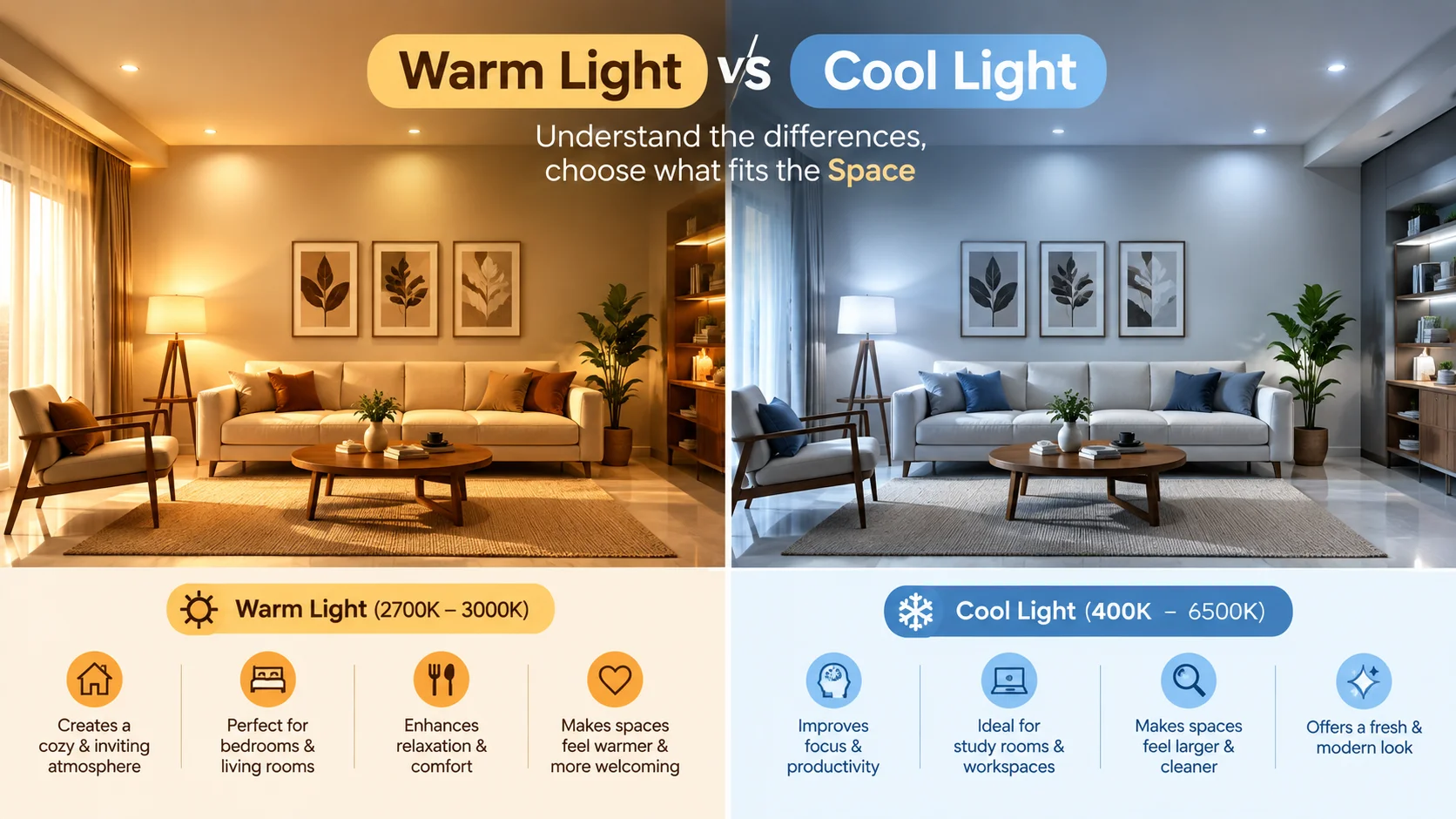
Warm light is lighting with a lower color temperature, generally around 2700K to 3000K. It produces a yellowish or slightly golden appearance similar to traditional incandescent bulbs. Warm lighting creates a relaxed and cozy atmosphere, making it popular for bedrooms, living rooms, dining areas, and other spaces where comfort is important.
Benefits of Warm Light
- Creates a cozy and relaxing atmosphere
- Makes living spaces feel more welcoming
- Works well with wooden furniture and warm interiors
- Suitable for bedrooms and relaxation areas
- Gives a soft appearance to walls and furniture
- Can create an elegant ambience in dining and lounge areas
- Works well with decorative and accent lighting
What Is Cool Light?
Cool light generally falls around 4000K to 6500K, depending on the bulb or lighting system. It appears whiter or slightly bluish compared with warm lighting. Cool light is commonly used in spaces where visibility, concentration, and a clean appearance are important.
Benefits of Cool Light
- Provides a bright and clear appearance
- Helps improve visibility for detailed activities
- Suitable for work and study areas
- Creates a clean and modern look
- Works well in kitchens and utility areas
- Makes spaces appear brighter
- Useful for areas requiring functional lighting
Warm Light vs Cool Light: Key Differences
| Feature | Warm Light | Cool Light |
| Color Temperature | Around 2700K-3000K | Around 4000K-6500K |
| Appearance | Yellow/golden | White to bluish-white |
| Mood | Relaxing and cozy | Bright and energetic |
| Best suited for | Bedrooms, living rooms, dining | Kitchens, study rooms, work areas |
| Interior effect | Warm and comfortable | Clean and modern |
| Suitable for relaxation | Excellent | Less suitable |
| Suitable for detailed work | Moderate | Better |
| Decorative ambience | Excellent | Moderate to high |
Warm Light vs Cool Light: Which Is Better?
There is no single lighting color that is best for every home. The right choice depends on how you use the room. If you want a comfortable and relaxing environment, warm light can be a suitable choice. If the room is mainly used for studying, working, cooking, or other detailed tasks, a neutral or cool-white light may be more practical. For many homes, using a combination of color temperatures is more effective than using only one type throughout the property.
Best Lighting for Every Room
1. Living Room
The living room is usually a multifunctional space used for relaxing, entertaining guests, and spending time with family.
Recommended: Warm white around 2700K–3000K Warm lighting can make sofas, wooden furniture, wall décor, and other interior elements appear comfortable and inviting.
For a layered lighting setup, you can combine:
- Ceiling lights
- Cove lighting
- Wall lights
- Floor lamps
- Spotlights
- Accent lighting
A slightly warmer light is particularly useful when the living room is designed as a relaxing family space.
2. Bedroom
The bedroom should generally have a calm and comfortable atmosphere. Recommended: Warm light around 2700K–3000K Warm lighting works well for bedside lamps, ceiling fixtures, and decorative lighting. You can also use separate switches for different lighting zones so that you do not need to turn on bright ceiling lights every time.
3. Kitchen
The kitchen requires good visibility because food preparation, cleaning, and cooking involve detailed tasks. Recommended: Neutral to cool-white lighting around 3500K–5000K Under-cabinet lights can be especially useful because they illuminate the countertop without relying entirely on the main ceiling light.
Consider lighting for:
- Kitchen counters
- Sink area
- Hob/cooking area
- Storage sections
- Breakfast counter
The goal should be bright, even illumination without creating uncomfortable glare.
4. Dining Room
The dining area can benefit from lighting that creates an inviting atmosphere. Recommended: Warm light around 2700K–3000K A pendant light above the dining table can become both a functional light source and an interior feature. Warm lighting can also complement wooden dining tables, decorative walls, and warm-toned interiors.
5. Study Room
Study areas need lighting that supports reading, writing, and computer-based work. Recommended: Neutral white around 3500K–5000K A desk lamp can provide focused illumination while the ceiling light provides general room lighting. Avoid placing a bright light directly behind a computer screen or creating strong reflections on the screen.
6. Home Office
For a home office, the lighting should provide clear visibility while maintaining visual comfort. Recommended: Around 3500K–5000K. Use a combination of ambient and task lighting. Natural daylight can also be used effectively during the daytime, provided direct glare is controlled.
7. Bathroom
Bathrooms require clear illumination, especially around the mirror and wash area. Recommended: Neutral to cool white around 3500K–5000K Mirror lighting should provide even illumination across the face. Avoid positioning a single strong light directly above the mirror because it can create harsh shadows. Always select fixtures appropriate for the bathroom's moisture conditions.
8. Balcony
Balcony lighting depends on whether the space is primarily used for relaxation, plants, or entertaining. Recommended: Warm light around 2700K–3000K Warm wall lights, outdoor-rated fixtures, or subtle accent lighting can create a pleasant evening atmosphere.
9. Pooja Room
A pooja room generally benefits from softer, warmer illumination. Recommended: Warm light around 2700K–3000K Warm lighting can complement wooden elements, traditional décor, and brass finishes. Accent lighting can also be used to highlight the main prayer area.
10. Walkways and Corridors
Corridors need enough light for safe movement without being excessively bright. Recommended: Around 3000K–4000K Wall lights, recessed ceiling lights, and sensor-based lighting can work well in these spaces.
Best Interior Designer in Chennai
What Is Color Temperature in Lighting?
Color temperature is measured in Kelvin (K) and describes the visual color appearance of a light source. It does not simply mean how physically hot or cold the bulb is.
Generally:
- 2700K–3000K: Warm white
- 3000K–3500K: Soft/neutral warm white
- 3500K–4000K: Neutral white
- 4000K–5000K: Cool/bright white
- 5000K–6500K: Daylight-type appearance
The exact appearance can vary between manufacturers, so checking the bulb specification and viewing the actual light where possible is useful.
Warm Light vs Cool Light for Interior Design
Lighting should complement the overall interior design rather than being selected separately.
Warm Light Works Well With:
- Wooden furniture
- Beige interiors
- Cream walls
- Brown finishes
- Gold accents
- Traditional décor
- Luxury-style interiors
Cool or Neutral Light Works Well With:
- White walls
- Grey interiors
- Modern furniture
- Minimalist designs
- Metallic finishes
- Workspaces
- Contemporary kitchens
However, this is not a strict rule. Good lighting design often combines different lighting temperatures within the same home.
Can You Use Warm and Cool Lights in the Same Home?
Yes. In fact, using different lighting temperatures for different rooms can create a more functional lighting plan.
For example:
- Living room: Warm
- Bedroom: Warm
- Dining: Warm
- Kitchen: Neutral/cool
- Study: Neutral
- Home office: Neutral/cool
- Bathroom: Neutral/cool
- Balcony: Warm
This approach allows each space to have lighting suited to its purpose.
Warm Light vs. Cool Light for False Ceiling
False ceilings often use multiple lighting layers rather than one central fixture.
A common combination includes:
- Cove lighting
- Recessed spotlights
- Downlights
- Pendant lights
- Decorative fixtures
Warm cove lighting can create a soft ambience in living rooms and bedrooms, while neutral lighting can provide functional illumination in kitchens and work areas.
How to Choose the Right Light for Your Home
Before buying lights, consider these factors:
1. Purpose of the Room
Ask what activities normally happen in the room. Relaxation spaces can use warmer lighting, while work-oriented spaces may need neutral or cooler lighting.
2. Wall Color
Light colors reflect more light, while darker surfaces absorb more light. The same bulb can therefore look different in different interiors.
3. Furniture and Finishes
Wood, marble, tiles, metallic finishes, and fabrics can all interact differently with lighting.
4. Natural Light
Rooms receiving plenty of daylight may not require extremely bright artificial lighting during the daytime.
5. Glare
A very bright light can be uncomfortable even if the room is well illuminated. Use diffusers, indirect lighting, or appropriately positioned fixtures where necessary.
6. Layered Lighting
Instead of depending on one large ceiling light, consider three layers:
- Ambient lighting: General illumination for the room.
- Task lighting: Focused light for activities such as reading, cooking, or working.
- Accent lighting: Decorative lighting used to highlight artwork, walls, shelves, or architectural features.
Warm Light vs Cool Light: Common Mistakes to Avoid
- Using the Same Color Temperature Everywhere
Every room has a different purpose. A single lighting temperature throughout the house may not provide the best atmosphere or functionality.
- Installing Excessively Bright Lights
More brightness does not automatically mean better lighting. Excessive brightness can create glare and discomfort.
- Ignoring Color Rendering
When purchasing LED lights, also consider the Color Rendering Index (CRI). A higher CRI generally means colors appear more accurately under the light source.
- Choosing Only Based on Appearance
A light may look attractive in a showroom but appear different after installation because wall colors, ceiling height, and furniture affect the overall result.
- Forgetting Task Lighting
A beautiful ceiling light may not provide sufficient illumination for a kitchen counter, study desk, or dressing mirror.
Also Read: Bedroom Lighting Guide: How to Light a Bedroom
Conclusion
The choice between warm light and cool light should be based on the function, design, and atmosphere of each space. Warm light is generally suitable for living rooms, bedrooms, dining areas, balconies, and relaxation spaces, while neutral or cool-white lighting can be useful for kitchens, study rooms, home offices, and areas where clear visibility is important. For a modern home, the most practical approach is often to combine lighting temperatures and use ambient, task, and accent lighting according to the requirements of each room. A well-planned lighting design can improve not only the appearance of a home but also its functionality and overall comfort.
FAQs
1. What is the main difference between warm light and cool light?
Warm light has a yellowish or golden appearance, usually around 2700K–3000K. Cool light appears whiter or bluish and generally falls around 4000K–6500K.
2. Is warm light better for bedrooms?
Warm light is commonly preferred for bedrooms because it creates a softer and more relaxing atmosphere.
3. Is cool light better for kitchens?
Neutral to cool-white lighting can be useful in kitchens because it provides clear visibility for cooking, cleaning, and food preparation.
4. Which light is best for a living room?
Warm white lighting around 2700K–3000K is a popular choice for living rooms because it creates a comfortable and welcoming ambience.
5. Which light is best for studying?
Neutral white lighting around 3500K–5000K can provide clear illumination for reading and studying, especially when combined with suitable task lighting.
6. Can warm and cool lights be used together?
Yes. Different rooms can use different color temperatures based on their function. Within a room, however, mixing temperatures should be planned carefully so the lighting does not look visually inconsistent.
7. Does cool light make a room look bigger?
Cool or neutral lighting can make a room feel brighter and cleaner, but perceived room size also depends on wall color, furniture, mirrors, natural light, and the distribution of fixtures.
8. What color temperature is best for a home?
There is no single ideal temperature for every room. Warm white is commonly suitable for relaxation areas, while neutral or cooler lighting can be more appropriate for work and task-oriented spaces.
9. Is warm light suitable for modern interiors?
Yes. Warm lighting can work extremely well in modern interiors, particularly when used with wooden finishes, neutral colors, decorative walls, and layered lighting.
10. What should I check before buying LED lights?
Check the color temperature, brightness/lumens, CRI, energy efficiency, beam angle, fixture size, and suitability for the installation location before purchasing LED lighting.