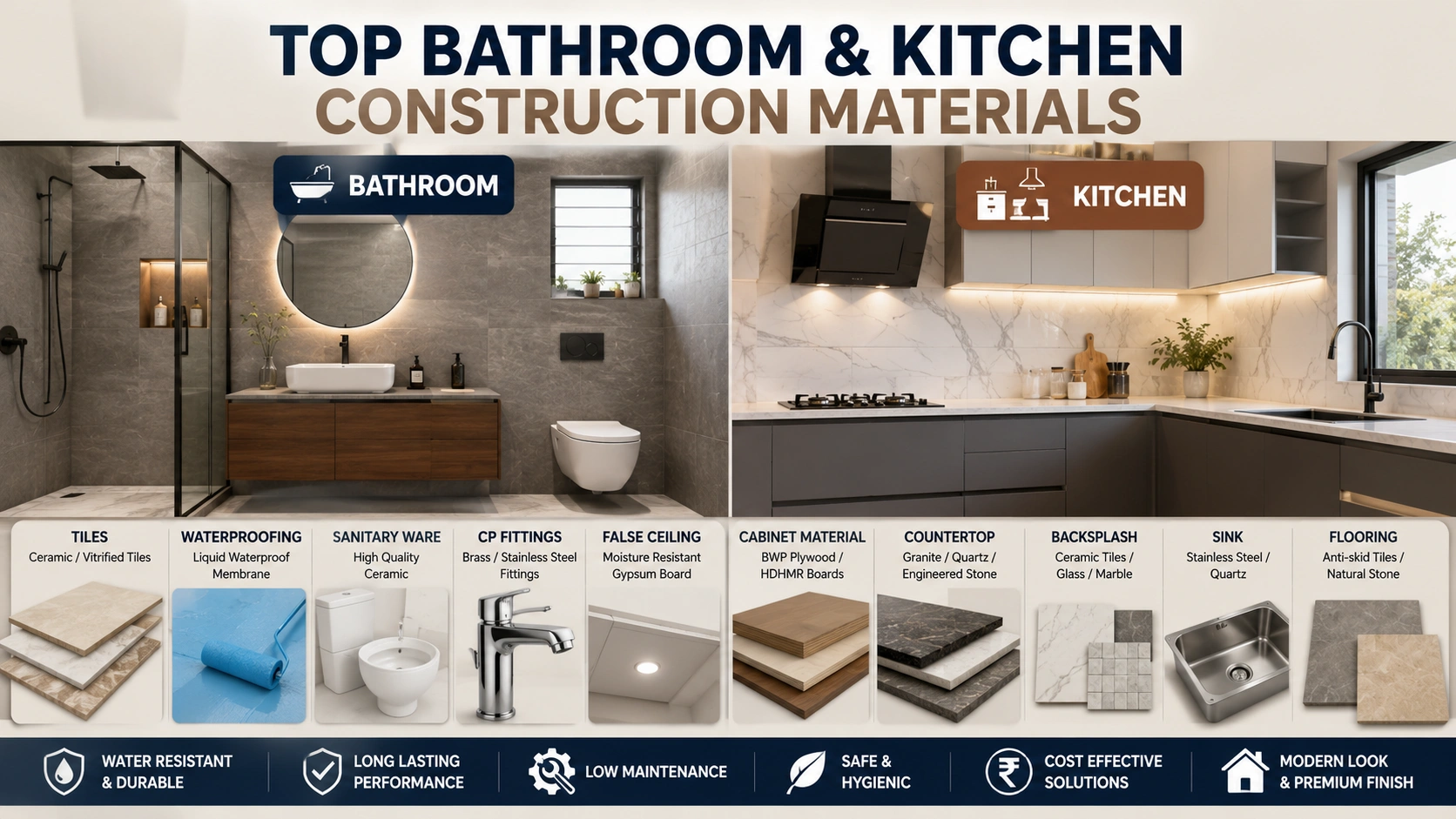
Choosing the best bathroom and kitchen construction materials is one of the most important decisions when building or renovating a home. These two spaces experience frequent exposure to water, moisture, heat, stains, chemicals, and heavy daily usage. Using the right materials can improve durability, hygiene, safety, and overall maintenance costs. From bathroom tiles and waterproofing materials to kitchen countertops, cabinets, plumbing pipes, and flooring, every material should be selected according to its purpose, quality, and budget.
Best Bathroom Construction Materials
A bathroom requires materials that can withstand continuous moisture and water exposure. The major materials include flooring tiles, wall tiles, waterproofing products, plumbing pipes, sanitaryware, countertops, and fittings.
1. Bathroom Flooring Tiles
Bathroom flooring should provide water resistance, durability, and good slip resistance.
Popular options include:
- Vitrified tiles
- Porcelain tiles
- Ceramic tiles
- Anti-skid tiles
- Natural stone
For wet areas, an anti-skid surface is particularly important because a highly polished floor can become slippery when wet.
2. Bathroom Wall Tiles
Ceramic and porcelain tiles are widely used for bathroom walls because they are relatively easy to clean and available in numerous colours, textures and patterns.
When choosing bathroom wall tiles, consider:
- Water absorption
- Surface finish
- Ease of cleaning
- Tile thickness and quality
- Installation quality
- Design and color
Large-format tiles can also reduce the number of visible grout joints, although installation requires a skilled tiler.
3. Bathroom Waterproofing Materials
Bathroom waterproofing should never be treated as an optional expense. Poor waterproofing can lead to damp patches, peeling paint, mold growth, ceiling damage and water seepage into adjacent rooms.
Common waterproofing solutions include:
- Cementitious waterproofing coatings
- Liquid-applied waterproofing
- Waterproofing membranes
- Polymer-modified waterproofing products
- Proper sealing around pipes and floor drains
The waterproofing system should be selected according to the construction method and manufacturer's specifications.
4. CPVC Pipes for Bathroom Plumbing
CPVC pipes are commonly used for hot and cold-water supply systems. They are lightweight and resistant to corrosion.
When selecting plumbing materials, pay attention to:
- Pipe quality
- Correct diameter
- Jointing method
- Pressure rating
- Brand and certification
- Professional installation
5. UPVC Pipes for Drainage
UPVC pipes are commonly used in drainage applications. They are lightweight, corrosion-resistant, and relatively easy to install.
Correct drainage slope and properly sealed joints are just as important as pipe quality.
6. Sanitaryware
Sanitaryware includes:
- Western toilets
- Wash basins
- Wall-hung toilets
- Countertop basins
- Urinals
- Bathtubs
Choose sanitaryware based on quality, water efficiency, dimensions, ease of cleaning and bathroom space.
7. Bathroom Countertop Materials
For vanity countertops, commonly considered materials include:
- Granite
- Quartz
- Solid-surface materials
- Marble
Granite is a popular practical choice, while quartz provides a more consistent appearance and is available in many contemporary designs.
Best Kitchen Construction Materials
The kitchen requires materials that can handle heat, moisture, oil, stains, and frequent cleaning. The major components include countertops, cabinets, flooring, backsplash, sink, plumbing, and hardware.
1. Kitchen Countertop Materials
The countertop is one of the most frequently used parts of a kitchen.
Granite
Granite is one of the most widely used kitchen countertop materials in India.
Advantages:
- Durable
- Good heat resistance
- Available in many patterns
- Relatively easy to maintain
- Suitable for heavy daily use
Quartz
Quartz is another popular option for modern kitchens.
Advantages:
- Consistent appearance
- Wide range of colors
- Easy to clean
- Good resistance to everyday stains
- Suitable for contemporary interiors
However, countertop materials should always be selected based on the manufacturer's care and heat-exposure recommendations.
Marble
Marble offers a premium natural appearance but generally requires more maintenance because it can be more susceptible to staining and scratching than some alternatives.
2. Kitchen Cabinet Materials
Kitchen cabinets are constantly exposed to moisture, steam, heat, and cleaning products. Therefore, moisture-resistant materials are important.
Popular options include:
- BWP Plywood
Boiling waterproof plywood is commonly considered for kitchen cabinets where moisture resistance is a priority.
- BWR Plywood
Boiling-water-resistant plywood can also be used in areas where some moisture exposure is expected.
- WPC Boards
Wood Plastic Composite boards offer a moisture-resistant alternative and can be considered for specific cabinet applications.
- MDF and HDF
MDF/HDF can be used for certain kitchen components and finishes, but the suitability depends on the specific grade, location, and exposure to moisture.
Tip: Don't choose cabinet material based only on the board name. Check its grade, thickness, manufacturer specifications, edge protection, and installation quality.
3. Kitchen Flooring Materials
Kitchen flooring should be:
- Durable
- Easy to clean
- Stain-resistant
- Moisture resistant
- Safe to walk on
- Suitable for heavy traffic
Popular choices include:
- Vitrified tiles: A practical option for many Indian homes.
- Porcelain tiles: Durable and available in a variety of finishes.
- Natural stone: Offers a premium appearance but may require more maintenance.
For kitchens, avoid choosing a very slippery polished surface without considering everyday safety.
4. Kitchen Backsplash Materials
The backsplash protects the wall behind the cooking area from oil, food splashes, and moisture.
Common backsplash materials include:
- Ceramic tiles
- Porcelain tiles
- Vitrified tiles
- Glass
- Natural stone
- Quartz slabs
Ceramic and porcelain tiles are popular because they are available in many designs and are relatively easy to clean.
5. Kitchen Sink Materials
Stainless steel is one of the most commonly used sink materials because it is durable, hygienic, and easy to maintain.
Other options include
- Quartz composite
- Granite composite
- Ceramic
- Cast iron with enamel finish
When choosing a sink, consider the bowl size, thickness, installation type, drainage, and compatibility with the countertop.
6. Kitchen Plumbing Materials
A good kitchen plumbing system should include appropriate pipes, valves, traps, and drainage connections.
Commonly used materials include:
- CPVC pipes for water supply
- UPVC pipes for drainage
- Stainless-steel or suitable flexible connections
- Quality valves and fittings
Leaks underneath the kitchen sink can damage cabinets, flooring, and electrical components, so plumbing connections should be checked carefully.
Best Modular Kitchen interior Designer in Chennai
Bathroom vs. Kitchen Construction Materials
| Material/Feature | Bathroom | Kitchen |
| Floor titles | Anti-skid titles | Vitrified/procelain titles |
| Wall titles | Ceramic/procelain | Ceramic/procelain backsplash |
| Waterproofing | Essential | Important around wet areas |
| Countertop | PVC/WPC where required | BWP/BWR plywood/WPC |
| Water Supply | CPVC or suitable system | CPVC or suitable system |
| Drainage | UPVC or suitable drainage system | UPVC or suitable drainage system |
| Main concern | Water & moisture | Heat, stains & moisture |
| Maintenances | Low-maintenance surface | Easy-to-clean surfaces |
How to Choose the Best Bathroom Materials
Before purchasing bathroom materials, consider these factors:
- Water Resistance
Choose materials designed for wet environments, especially around shower areas and floors.
- Slip Resistance
Bathroom floors should provide sufficient grip under wet conditions.
- Durability
Select materials that can withstand regular cleaning, moisture, and everyday usage.
- Easy Maintenance
Smooth, easy-to-clean surfaces can reduce long-term maintenance work.
- Quality of Installation
Even high-quality materials can fail if waterproofing, tile laying, or plumbing installation is poor.
How to Choose the Best Kitchen Materials
For kitchen construction, consider:
- Heat Resistance
Countertops and materials around cooking areas should be suitable for expected heat exposure.
- Moisture Resistance
Cabinet materials should be appropriate for areas exposed to water and steam.
- Stain Resistance
Choose surfaces that can withstand oil, food, and regular cleaning.
- Hardware Quality
Hinges, drawer channels, and handles experience repeated use. Good-quality hardware can improve the lifespan of kitchen cabinets.
- Ventilation
A well-ventilated kitchen can help reduce heat, humidity, odors, and moisture buildup.
Common Mistakes to Avoid
1. Choosing Materials Only Based on Price
The cheapest material may not always provide the best long-term value. Compare quality, durability, warranty, maintenance, and installation cost.
2. Ignoring Waterproofing
Cutting costs on bathroom waterproofing can result in expensive repairs later.
3. Using Highly Polished Bathroom Flooring
A glossy floor may look attractive but can become slippery when wet.
4. Selecting the Wrong Cabinet Material
Using a material that is unsuitable for moisture-prone areas can shorten cabinet life.
5. Ignoring Grout Quality
Poor-quality or improperly installed grout can contribute to staining and water-related problems.
6. Poor Plumbing Installation
Even premium pipes cannot prevent problems if joints, slopes, and connections are incorrectly installed.
7. Not Planning Electrical and Plumbing Points
Kitchen appliances, exhaust fans, water purifiers, washing machines, and bathroom fittings should be considered before construction finishes.
Best Materials Based on Budget
| Budget | Bathroom | Kitchen |
| Budget | Ceramic/anti-skid titles, standard sanitaryware | Vitrified tiles, suitable plywood/WPC |
| Mid-range | Porcelain/vitrified titles, quality fittings | Granite countertop, BWP/BWR plywood |
| Premium | Large-format procelain, premium sanitaryware | Quartz/granite, premium hardware and finishes |
Actual costs vary considerably based on brand, quality, size, location, labor, and design.
How to Reduce Bathroom & Kitchen Construction Costs
You don't necessarily need premium materials for every component. A better approach is to spend more on areas that are difficult or expensive to replace later.
Prioritise:
- Waterproofing
- Plumbing
- Electrical safety
- Flooring
- Cabinet core materials
- Countertop
- Hardware
- Decorative finishes
For example, investing in good waterproofing and plumbing can be more important than spending heavily on expensive decorative tiles.
Conclusion
- The best bathroom and kitchen construction materials are not necessarily the most expensive ones. The right choice depends on water resistance, durability, safety, maintenance, heat resistance, budget, and installation quality.
- For bathrooms, focus on waterproofing, anti-skid flooring, quality plumbing and easy-to-clean surfaces. For kitchens, prioritise durable countertops, moisture-resistant cabinets, practical flooring, quality hardware and reliable plumbing.
- Choosing materials carefully during construction can improve the home's comfort, durability, appearance, and long-term maintenance value.
FAQs
1. Which material is best for bathroom flooring?
Anti-skid porcelain, vitrified, or other suitable slip-resistant tiles are popular choices.
2. Which is better for a kitchen countertop: granite or quartz?
Both are good options. Granite is popular for durability and natural appearance, while quartz offers a consistent finish and easy maintenance.
3. Is waterproofing necessary for bathroom construction?
Yes. Proper waterproofing helps protect the building from water seepage and moisture-related damage.
4. Which plywood is best for kitchen cabinets?
BWP or BWR plywood is commonly considered for moisture-prone kitchen applications, subject to the manufacturer's specifications.
5. Which tile is best for kitchen flooring?
Vitrified or porcelain tiles are popular because they are durable and relatively easy to clean.
6. What is the best material for a kitchen sink?
Stainless steel is a widely used option because it is durable, hygienic, and easy to maintain.
7. How can I make my bathroom more durable?
Use proper waterproofing, quality plumbing, slip-resistant flooring and good-quality fittings.
8. What should I prioritize when building a kitchen?
Focus on countertop durability, moisture-resistant cabinets, plumbing, electrical planning, ventilation, and quality hardware.