Open-concept living has become one of the most popular interior design trends of the last decade—and for good reason. It creates a bright, airy, social environment that encourages connection and maximizes space. But despite its appeal, many people struggle with how to decorate and arrange furniture in an open layout without the rooms feeling chaotic or undefined.
This guide breaks down everything you need to know to make your open-concept home functional, beautifully cohesive, and comfortable.
1. What Is Open-Concept Living?
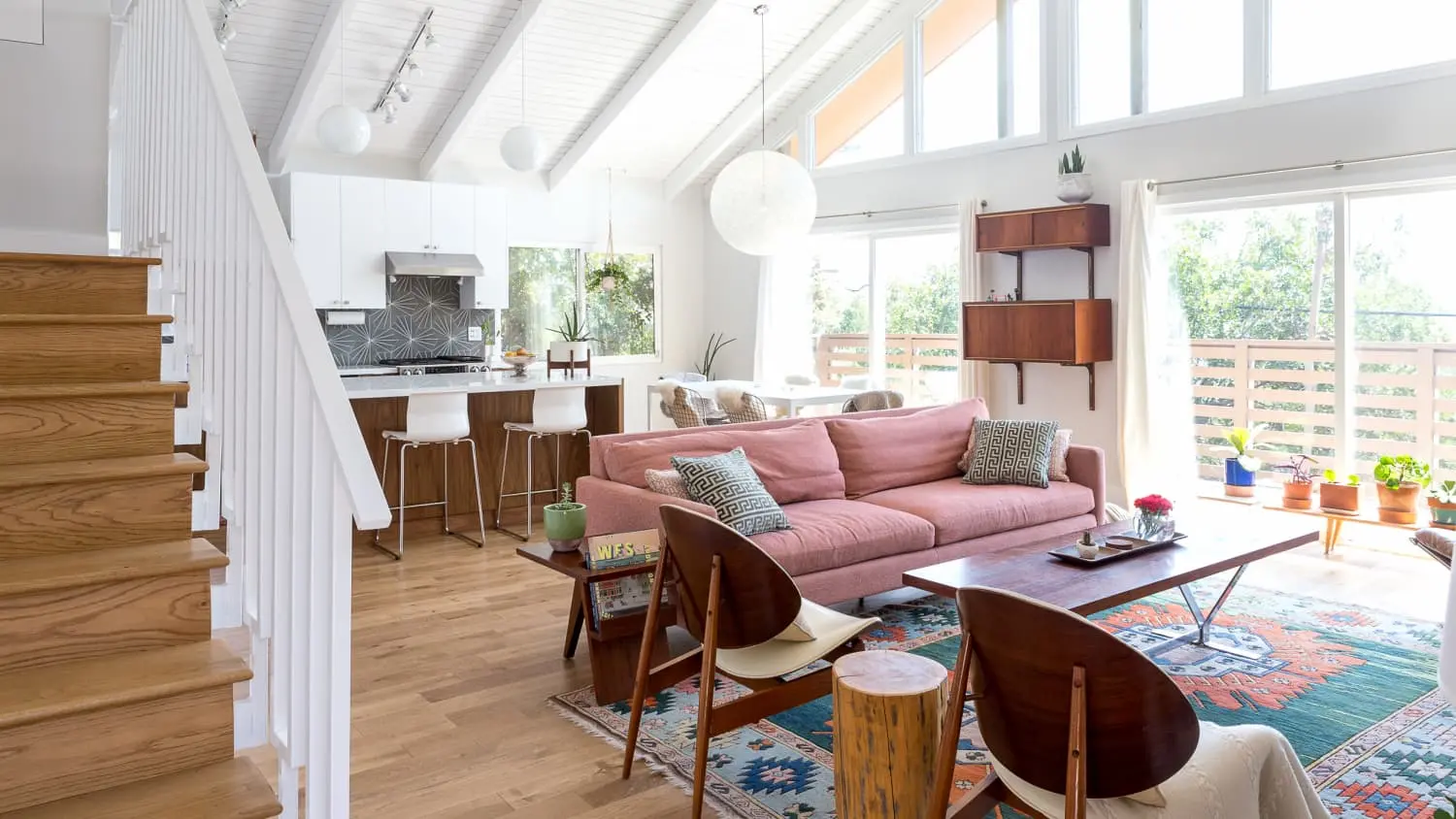
Open-concept living refers to a design where two or more traditionally separate rooms—usually the living room, dining room, and kitchen—are combined into one large, open space without full walls dividing them.
Benefits
- Better natural light distribution
- Improved flow between zones
- Ideal for entertaining
- Makes small homes feel larger
- Keeps families connected
Common Challenges
- Furniture placement can feel confusing
- Spaces may lack definition
- Noise travels easily
- Harder to hide clutter
- Design cohesion matters more
2. Start With a Purpose: Define Each Zone
Even though there are no full walls, each area should still feel like a specific zone.
How to define zones without walls:
- Area rugs differentiate living, dining, and kitchen spaces
- Furniture placement acts as boundaries (e.g., sofa back facing the dining area)
- Lighting changes between zones
- Ceiling treatments like beams or paint accents
- Changes in flooring direction or material
Pro Tip: Layout each zone based on activities—lounging, dining, cooking, working—so every space has a clear function.
3. Use Furniture to Create Natural Boundaries
In an open layout, furniture becomes your "walls."
Smart furniture placement tips:
- Place a sofa with its back toward another zone to create separation.
- Use a console table behind the sofa for added storage and visual boundary.
- A kitchen island can act as a bridge between kitchen and living room.
- Use open shelving to divide spaces without blocking light.
- A dining bench or sideboard can subtly define the dining area.
Also Read: How to Choose the Right False Ceiling Material for Your Space: A Detailed Guide
4. Choose a Cohesive Color Palette
Cohesion is critical in open-concept spaces because your eyes move across the entire room without interruption.
How to keep colors consistent:
- Stick to 2–3 main colors used throughout all zones.
- Add accent colors sparingly for personality.
- Use complementary materials (wood tones, metal finishes).
- Keep large furniture in neutral tones for flexibility.
Tip: Your color palette should flow naturally—for example:
- White walls
- Soft grey sofa
- Natural wood dining table
- Black accent lighting
5. Lighting Is a Layout Tool
Lighting does more than brighten a room—it separates zones visually.
Types of lighting to use:
- Pendant lights over the dining table
- Recessed lights for general illumination
- Pendant or track lighting for the kitchen island
- Floor and table lamps to define the living area
Pro Tip: Choose fixtures in complementary styles so the room looks coordinated but still varied.
6. Maintain Visual Balance
With open layouts, symmetry becomes more important to avoid visual clutter.
Ways to maintain balance:
- Choose furniture that’s proportional to the room size.
- Keep tall pieces like bookcases or cabinets evenly distributed.
- Don’t overcrowd one zone while leaving another empty.
- Use pairs: two chairs, two lamps, or two side tables to anchor the space.
Also Read: Ambient Lighting Without False Ceiling Complete In-Depth Guide
7. Consider Traffic Flow
Open-concept rooms should make movement effortless.
Tips for smooth flow:
- Leave at least 3 feet (90 cm) of walkway space.
- Arrange furniture so people don’t have to weave through the room.
- Avoid blocking entryways or main paths with large furniture.
- Place rugs so edges don’t become trip hazards.
8. Add Texture for Warmth and Depth
Open spaces can sometimes feel cold or empty. Textures solve that problem.
Texture ideas:
- Plush rugs
- Throw pillows and blankets
- Natural wood furniture
- Woven baskets
- Linen curtains
- Stone or brick accent walls
9. Use Multipurpose or Modular Furniture
Flexibility is essential because each zone interacts with the others.
Helpful furniture types:
- Modular sofas
- Extendable dining tables
- Mobile kitchen islands
- Storage ottomans
- Foldable or stackable chairs
- These pieces adapt easily for parties, family gatherings, or relaxing nights.
10. Keep It Organized and Clutter-Free
Because everything is visible, clutter stands out more.
Organization strategies:
- Add storage baskets or bins
- Use furniture with hidden storage
- Keep kitchen counters minimal
- Choose a storage-focused TV console
- Use wall-mounted shelves to save floor space
Pro Tip: The cleaner the space, the more luxurious and intentional it will feel.
11. Incorporate Personal Style
Even with cohesion and structure, your space should still reflect your identity.
Ways to add personality:
- Artwork
- Plants
- Unique light fixtures
- Decorative vases or sculptures
- Personal collections displayed on open shelving
Open-concept living is incredibly rewarding when designed correctly. By creating defined zones, maintaining a cohesive color palette, managing flow, and using strategic furniture placement, you can make your open layout both functional and beautiful
https://www.livehomes.in/blogs