The kitchen is one of the most important spaces in a modern home. With changing interior design trends, homeowners are increasingly looking for kitchens that offer better storage, easy maintenance, attractive designs, and efficient use of space. When planning a kitchen interior, two popular choices are modular kitchens and semi-modular kitchens. While both can provide a stylish and functional cooking space, their construction, installation, flexibility, and cost can be different.
What Is a Modular Kitchen?
A modular kitchen is a modern kitchen system made up of pre-designed and factory-manufactured cabinet units. These individual units are manufactured according to the measurements of the kitchen and assembled at the site. A modular kitchen can include base cabinets, wall cabinets, drawers, tall storage units, corner units, and specialized kitchen accessories.
Unlike traditional kitchens, a modular kitchen allows homeowners to plan almost every part of the storage system according to their requirements.
Main Features of a Modular Kitchen
- Factory-made cabinet modules
- Customized kitchen layout
- Multiple storage options
- Modern finishes and colors
- Soft-close drawers and hinges
- Tall storage and pantry units
- Corner storage solutions
- Easy access to kitchen accessories
- Clean and organized appearance
A modular kitchen is particularly suitable for new apartments, independent houses, and complete kitchen renovations.
What Is a Semi-Modular Kitchen?
A semi-modular kitchen is a combination of existing civil work and modular cabinets.
For example, an apartment may already have a granite kitchen platform, sink, and tiled backsplash provided by the builder. Instead of removing everything, the homeowner can retain the existing structure and install modular cabinets around it. This makes semi-modular kitchens a popular option for homeowners who want to upgrade their kitchen without completely rebuilding it.
Main Features of a Semi-Modular Kitchen
- The existing kitchen platform can be retained
- Modular cabinets can be installed
- Less demolition may be required
- Existing plumbing can often be reused
- Storage can be upgraded
- Suitable for renovation projects
- Can help control renovation costs
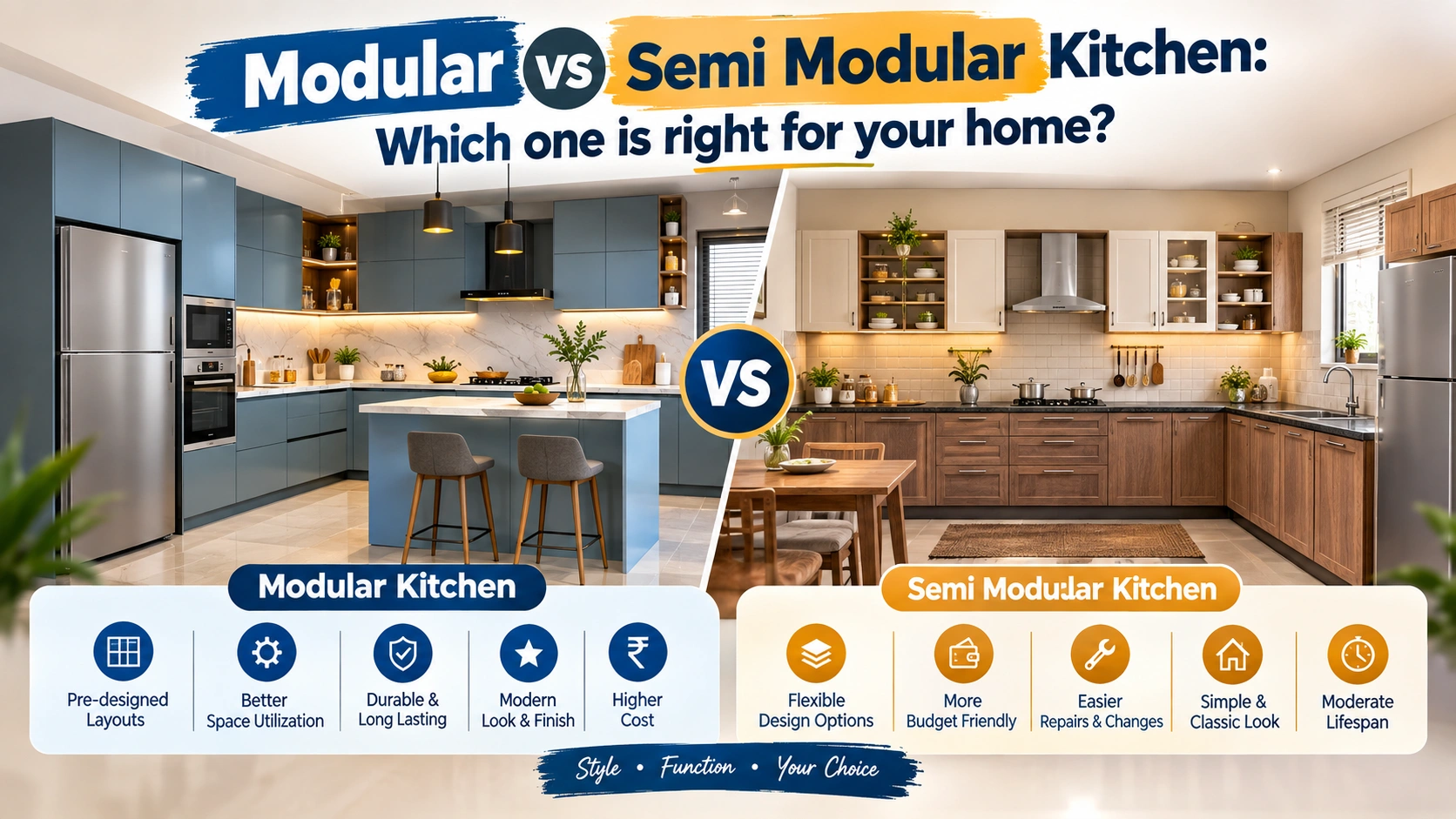
Modular vs. Semi-Modular Kitchen: Key Differences
| Features | Modular Kitchen | Semi-Modular Kitchen |
| Construction | Mostly factory-made modules | Existing structure and modular units |
| Countertop | Usually planned with the kitchen | Existing countertops can often be retained. |
| Design flexibility | High | Moderate to high |
| Storage | Excellent | Good |
| Civil work | May be required | Usually less |
| Renovation | Suitable | Highly suitable |
| New Home | Excellent choice | Suitable |
| Installation | Professional installation | Installation around existing structure |
| Customization | High | Depends on existing structure |
| Budget | Medium to premium | Can be more economical |
| Appearance | Highly coordinated | Depends on existing and new components |
| Best for | New kitchens and complete renovation | Existing kitchen upgrades |
Modular Kitchen vs. Semi-Modular Kitchen Cost in 2026
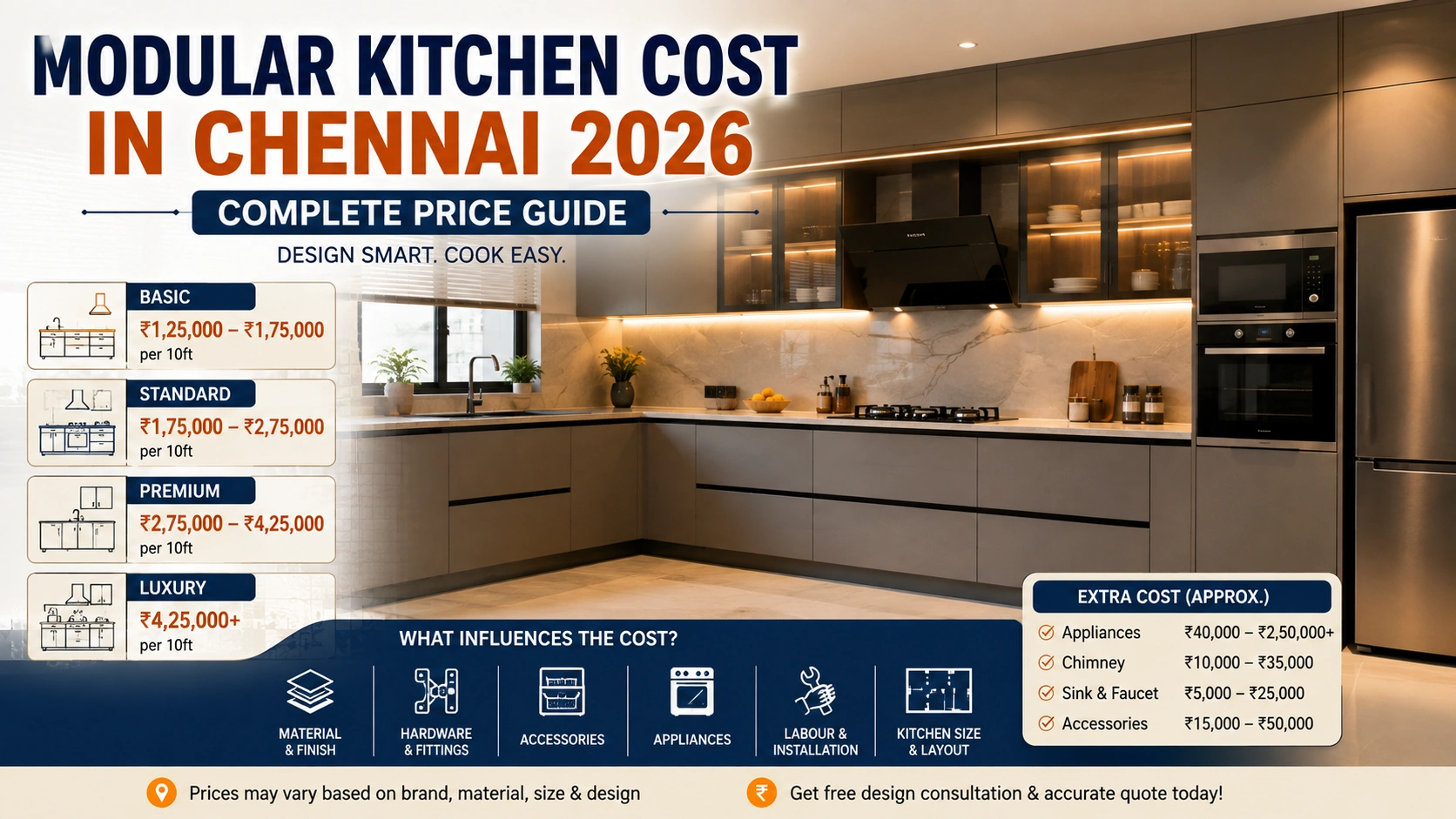
Kitchen cost depends on several factors, including kitchen size, layout, materials, countertop, shutter finish, hardware, accessories, and installation. As a broad market indication, a basic modular kitchen can start around Rs 1.5 lakh, while a standard kitchen may cost approximately Rs 3 lakh to Rs 6 lakh. Premium kitchens with high-end finishes and accessories can go beyond this range. A semi-modular kitchen may cost less when the existing countertop, platform, sink, and plumbing are retained.
Indicative Cost Comparison
| Kitchen | Approximate Cost |
| Basic Modular Kitchen | Rs 1.5-3L |
| Standard Modular Kitchen | Rs 3-6L |
| Premium Modular Kitchen | Rs 6L onwards |
| Basic Semi-Modular Kitchen | Rs 1-2.5L |
| Standard Semi-Modular Kitchen | Rs 2.5-4L + |
Note: These are indicative ranges. The actual quotation can vary based on the size of the kitchen, materials, hardware, finish, accessories, labor, and location.
What Factors Affect Kitchen Interior Cost?
Simply comparing the cost of modular and semi-modular kitchens is not enough. Several components influence the final budget.
1. Kitchen Size
A larger kitchen requires more cabinets, storage units, and countertop area, increasing the overall cost.
2. Kitchen Layout
An L-shaped kitchen may require a different budget from a U-shaped or island kitchen because the quantity and type of cabinets vary.
3. Cabinet Material
Common materials include:
- Plywood
- BWP plywood
- BWR plywood
- HDHMR
- MDF
- Particle board
For moisture-prone areas, homeowners should pay particular attention to the board's moisture resistance.
4. Shutter Finish
The appearance and cost of the kitchen can change considerably depending on the shutter finish.
Popular choices include:
- Laminate
- Acrylic
- PU finish
- Membrane
- Veneer
- Glass
5. Hardware
Hardware includes hinges, drawer channels, and other moving components. Premium hardware can improve the smoothness, durability, and usability of kitchen storage but can also increase the project cost.
6. Kitchen Accessories
Accessories such as
- Bottle pull-outs
- Cutlery trays
- Tandem drawers
- Magic corners
- Pantry units
- Corner baskets
can improve storage efficiency.
Also Read: Types of Modular Kitchen
Advantages of a Modular Kitchen
- Better Space Utilization
One of the biggest benefits of modular kitchen design is efficient use of available space. Cabinets can be planned around corners, walls, and vertical areas.
- More Organized Storage
Modern modular kitchens can include dedicated storage for vessels, groceries, cutlery, bottles, and appliances.
- Modern Appearance
A modular kitchen creates a coordinated appearance because the cabinets, shutters, hardware, and finishes are designed as one system.
- Easy Maintenance
Individual modules and hardware can generally be accessed separately for repairs or replacement.
- Design Flexibility
Homeowners can choose different colors, finishes, cabinet configurations, and accessories according to their requirements.
- Suitable for Modern Homes
Modular kitchens work particularly well with contemporary apartment and villa interiors.
Disadvantages of a Modular Kitchen
- Higher Initial Cost
A fully customized kitchen with premium materials and hardware can become expensive.
- Professional Installation Is Important
Poor measurements or installation can result in gaps, misaligned shutters, or difficulty operating drawers.
- Accessories Can Increase the Budget
Adding too many premium accessories may substantially increase the final quotation.
- Irregular Spaces Can Be Challenging
Very unusual walls, corners, or structural limitations may require additional customization.
Advantages of a Semi-Modular Kitchen
- Cost Saving Potential
If your existing platform, countertop, and plumbing are in good condition, you may not need to replace them.
- Less Demolition
A semi-modular approach can reduce the amount of civil work required during renovation.
- Ideal for Existing Homes
It can be a practical solution when the basic kitchen structure is already available.
- Storage Upgrade
You can replace old cabinets with modern modular storage without rebuilding the entire kitchen.
- Flexible Renovation
You can upgrade the kitchen in stages depending on your budget.
Disadvantages of a Semi-Modular Kitchen
- Existing Structure Can Limit Design
The dimensions of the existing countertop and platform may restrict cabinet configurations.
- Matching Existing and New Elements
Combining old tiles, countertops, and new cabinets may make it harder to achieve a completely uniform appearance.
- Plumbing Restrictions
If the existing plumbing cannot be relocated easily, the sink and cabinet arrangement may have to follow the existing layout.
- Existing Problems May Remain
If the old platform has cracks, water leakage, or other structural problems, installing new cabinets alone will not solve them.
Which Is Better for a New Home?
For a newly constructed house or new apartment, a modular kitchen is generally a strong option.
Because the kitchen is being designed from the beginning, you can plan:
- Cabinet dimensions
- Electrical points
- Plumbing
- Countertop
- Appliances
- Storage
- Lighting
- Chimney position
- Refrigerator location
This allows the entire kitchen to function as one integrated design.
Which Is Better for an Existing Home?
For an existing home, a semi-modular kitchen can be a practical choice if the current platform and plumbing are in good condition. Instead of demolishing the entire kitchen, homeowners can upgrade the cabinets, shutters, drawers, and storage accessories. This can make the renovation more manageable and potentially reduce unnecessary expenditure.
Best Kitchen Layouts for Modern Homes
- L-Shaped Kitchen
An L-shaped kitchen uses two connected walls and works well in many apartments.
Best for: Small and medium-sized kitchens.
- U-Shaped Kitchen
A U-shaped kitchen provides cabinets and work areas on three sides.
Best for: Larger kitchens requiring extensive storage.
- Parallel Kitchen
Also known as a galley kitchen, this layout has two parallel working areas.
Best for: Long and narrow kitchen spaces.
- Straight Kitchen
All cabinets are positioned along one wall.
Best for: Compact apartments and studio-style homes.
- Island Kitchen
An island adds an additional working and storage area in the center.
Best for: Large kitchens with sufficient circulation space.
7 Things to Check Before Ordering a Modular Kitchen
Before finalizing your kitchen interior, check the following:
- Exact cabinet dimensions
- Board material and thickness
- Shutter finish
- Hardware specifications
- Countertop material
- Kitchen accessories included in the quotation
- Installation, warranty, and after-sales service
Don't compare kitchen quotations based only on the total price. Two quotations with the same price may contain completely different materials and hardware.
Modular vs. Semi-Modular Kitchen: Which One Should You Choose?
The right option depends on your situation.
Choose a modular kitchen if:
- You are building a new home
- You want a completely new kitchen
- You need maximum storage
- You want extensive customization
- You prefer a modern, coordinated appearance
- You want multiple kitchen accessories
- Your budget allows a complete kitchen installation
Choose a Semi-Modular Kitchen If:
- You already have a kitchen platform
- The existing countertop is in good condition
- You want to minimize demolition
- You are renovating an old kitchen
- You want to reuse existing plumbing
- You want to control renovation expenses
Conclusion
Both modular and semi-modular kitchens can create a beautiful and functional kitchen. The better choice depends on the condition of your existing kitchen and the level of customization you need.
- A modular kitchen is ideal for new homes and complete kitchen renovations, where everything can be planned from scratch.
- A semi-modular kitchen is suitable for existing homes, especially when the countertop, platform, and plumbing are still usable.
Rather than choosing a kitchen based only on its price, compare the materials, storage design, hardware, finish, installation quality, warranty, and long-term maintenance requirements.
FAQs
1. What is the difference between modular and semi-modular kitchens?
A modular kitchen generally consists of factory-made cabinet modules designed as a complete kitchen system. A semi-modular kitchen combines modular cabinets with existing civil kitchen components.
2. Is a modular kitchen better than a semi-modular kitchen?
Not always. A modular kitchen offers greater overall design flexibility, while a semi-modular kitchen can be more practical for renovating an existing kitchen.
3. Which kitchen is cheaper?
A semi-modular kitchen can be cheaper when existing countertops, platforms, and plumbing can be reused. However, the final cost depends on materials, size, hardware, and accessories.
4. Is a modular kitchen suitable for apartments?
Yes. Modular kitchens are particularly suitable for apartments because cabinets can be designed according to the available space.
5. Can I install a modular kitchen over an existing platform?
Yes, depending on the platform's dimensions, condition, and design. This is one reason semi-modular kitchens are commonly used in existing homes.
6. Which kitchen is easier to maintain?
Both can be easy to maintain when good-quality materials and hardware are used. Modular systems can offer an advantage because individual components can generally be accessed for repair or replacement.
7. Which material is best for kitchen cabinets?
There is no single material that is best for every part of the kitchen. Moisture-resistant plywood can be considered for wet areas, while other materials may be suitable depending on the application and budget.
8. How much does a modular kitchen cost in 2026?
A basic modular kitchen may start at around Rs 1.5 lakh, while standard kitchens can cost approximately Rs 3–Rs 6 lakh. Premium kitchens can cost considerably more depending on the materials, finishes, and accessories.
9. Can a semi-modular kitchen look modern?
Yes. With contemporary shutters, colors, handles, lighting, and storage accessories, a semi-modular kitchen can achieve a modern interior appearance.
10. Which kitchen is best for a small house?
For a small house, the best option depends on the existing structure. A well-planned modular or semi-modular kitchen with an L-shaped, straight, or parallel layout can make efficient use of limited space.