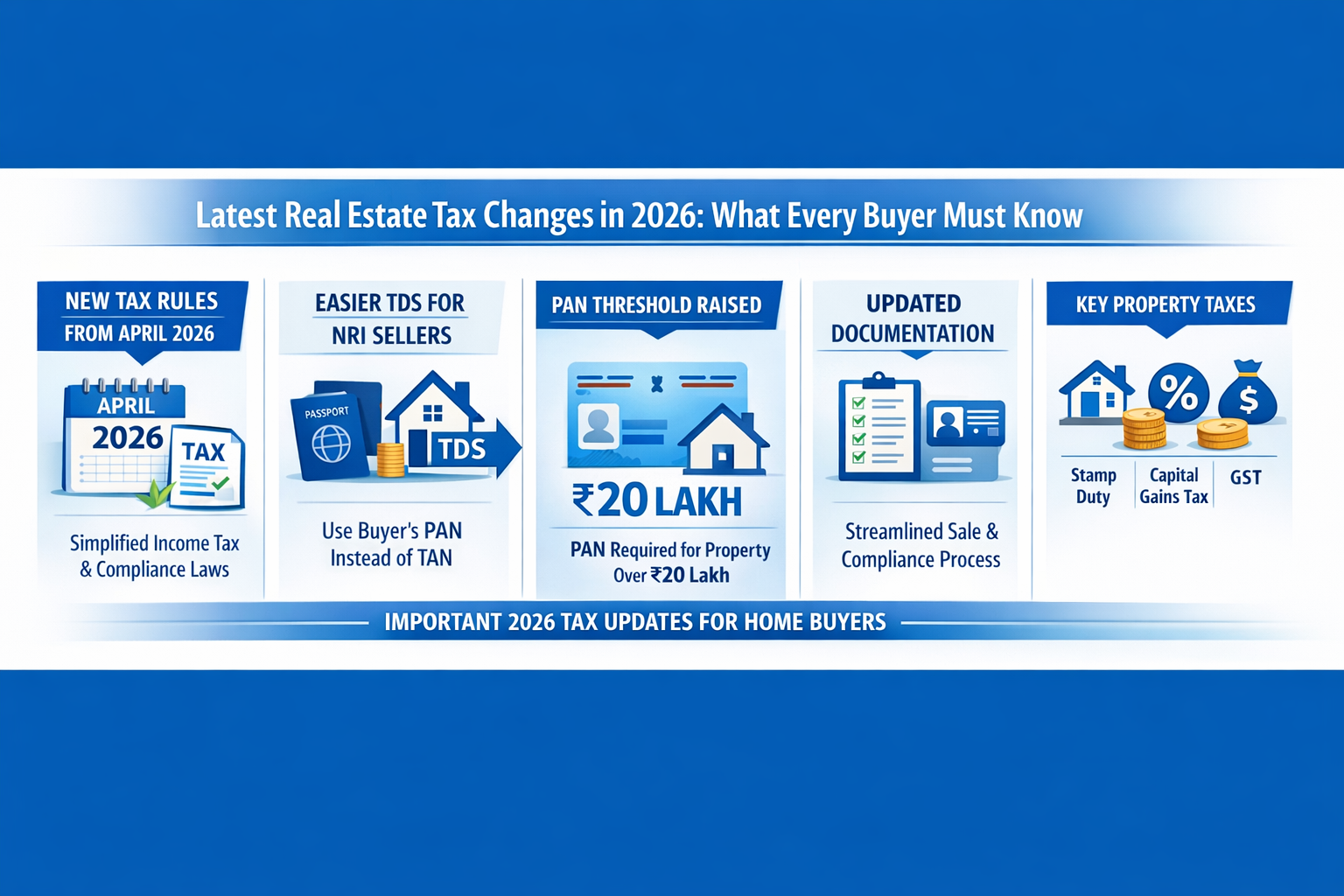
Real estate taxation in 2026 reflects a global shift toward higher transparency, stricter compliance, digital tracking, and long-term ownership incentives. Governments have updated tax structures to control speculation, increase revenue, and align property taxation with real market values. These changes directly affect how much a buyer pays upfront, annually, and at resale.
1. Taxes Paid at the Time of Buying Property (Purchase Stage)
1.1 Stamp Duty / Transfer Tax
What it is:
A one-time tax paid to legally transfer property ownership.
2026 Changes:
- Rates are increasingly linked to actual market value, not just government guideline rates.
- Progressive slabs are widely used:
- Lower value → lower rate
- Higher value → higher rate
- Additional surcharges apply to:
- Second homes
- Investment properties
- Luxury or high-value properties
Effect on Buyers:
- Total purchase cost has increased even if property prices remain unchanged.
- Buyers must arrange extra cash, as these taxes are usually not financed by home loans.
- Under-reporting purchase value is risky due to automated valuation checks.
Also Read: Property Registration in Tamil Nadu RERA, Guideline Value, Stamp Duty
1.2 Registration Fees
What changed in 2026:
- Registration charges are more closely tied to property value.
- Digital registration systems automatically share data with tax authorities.
Buyer impact:
- Errors or mismatches in declared value can delay registration.
- Registration costs must be included in upfront budgeting.
2. Annual Property Tax (Tax on Ownership)
2.1 Property Valuation Method
Before:
Valuations were revised infrequently and often underestimated.
In 2026:
- Properties are valued closer to current market prices.
- Reassessments happen more frequently.
- Location, size, usage, and amenities affect valuation.
2.2 Tax Rate Application
- Rates may vary by:
- Residential vs commercial use
- Owner-occupied vs rented
- Vacant vs occupied property
- Some exemptions have been reduced or removed.
Buyer impact:
- New buyers usually face higher annual tax bills than previous owners.
- Long-term ownership cost has increased.
- Non-payment penalties are stricter due to automated reminders.
3. Home Loan and Mortgage Tax Benefits
3.1 Interest Deduction Rules
2026 Enforcement Changes:
- Deductions are allowed only if:
- Loan is from an approved lender
- Interest is actually paid
- Income is properly declared
- Banks now directly report loan data to tax authorities.
Buyer impact:
- Any inconsistency can result in:
- Loss of deduction
- Tax reassessment
- Buyers must retain all loan statements and certificates.
3.2 Principal Repayment Benefits
- Limits remain, but stricter verification applies.
- Selling property before a minimum holding period may require reversal of benefits claimed.
4. Capital Gains Tax Rules That Affect Buyers
Although paid at sale, buyers must plan at purchase.
4.1 Purchase Price Tracking
- Purchase value is digitally locked.
- Improvement costs must be supported by valid invoices.
4.2 Holding Period Rules
- Short-term ownership → higher tax rate
- Long-term ownership → lower tax rate or benefits
Buyer impact:
- Short-term flipping is less tax-efficient in 2026.
- Accurate documentation reduces future tax liability.
5. Rental Income Taxation
5.1 Reporting Requirements
- Rental income is tracked through:
- Bank deposits
- Digital rental agreements
- Non-reporting is easily detected.
5.2 Deduction Structure
- Flat deductions are limited in some regions.
- Actual expenses must be:
- Necessary
- Documented
- Reasonable
Buyer impact:
- Net rental income may be lower than expected.
- Tax planning is essential to maintain returns.
6. Second Homes and Investment Properties
6.1 Higher Entry Taxes
- Additional stamp duty or surcharge may apply.
- Some regions charge vacancy or idle property taxes.
6.2 Restricted Loss Adjustments
- Losses from one property may not fully offset income from another.
Buyer impact:
- Holding multiple properties is costlier.
- Investment decisions must focus on long-term yield, not short-term appreciation.
7. Foreign and Cross-Border Property Tax Rules
7.1 Withholding and Compliance
- Taxes may be deducted at source during transaction.
- Deadlines for filing and payment are strict.
7.2 Additional Charges
- Surcharges or approvals may apply to non-residents.
Buyer impact:
- Delays or penalties if compliance is missed.
- Professional assistance is often necessary.
8. Affordable Housing and Green Property Incentives
2026 Reality
- Buyer-side incentives are:
- Reduced
- Income-linked
- Time-bound
- Sustainability benefits are shifting toward builders.
Buyer impact:
- Buyers must confirm eligibility before purchase.
- Non-tax benefits (resale value, lower utilities) still matter.
9. Digital Tax Enforcement in 2026
What Changed
- Property records, bank data, and tax filings are interconnected.
- Notices are auto-generated for mismatches.
Buyer responsibility:
- Maintain full transparency.
- Keep records permanently.
Conclusion
The 2026 real estate tax framework demands that buyers think beyond the purchase price. Taxes now affect every stage of ownership, from acquisition to resale. Buyers who understand transaction taxes, annual property taxes, loan deductions, rental taxation, and future capital gains can make informed, financially sustainable decisions. In 2026, knowledge and compliance are as important as affordability.
Frequently Asked Questions (FAQs)
Q1. Why is buying property more expensive in 2026 even if prices are stable?
Because transaction taxes, reassessed property values, and compliance costs have increased.
Q2. Can buyers still save tax using home loans?
Yes, but only with accurate reporting and complete documentation.
Q3. Are investment properties less attractive in 2026?
Short-term investment is less attractive; long-term, tax-planned investment remains viable.
Q4. Is under-reporting property value risky now?
Yes. Digital systems make detection easier and penalties harsher.
Q5. Do annual property taxes keep increasing?
They may increase with reassessments, especially after purchase.
Q6. Is tax planning mandatory before buying property in 2026?
Effectively, yes. Poor tax planning can significantly increase ownership cost.