Buying a villa in Chennai is considered a premium real estate investment due to the city’s IT growth, metro expansion, and rising demand for independent living. However, villa registration rules in Chennai are strict, and even a small mistake can result in legal disputes, loan rejection, or resale problems.
1. What Is Villa Registration & Why Is It Mandatory?
Villa registration is the legal process of transferring ownership of land and building from the seller to the buyer. Once registered, the sale deed becomes a legal document accepted by courts, banks, and government authorities.
Why registration is mandatory:
- Establishes legal ownership
- Protects against fraud or duplicate sales
- Required for bank loans
- Mandatory for resale, inheritance, and mutation
- Required for electricity, water, and property tax transfer
An unregistered villa has NO legal validity, even if full payment is made.
2. Types of Villas in Chennai & Their Legal Impact
Understanding the type of villa is critical because documentation and registration rules differ.
A. Independent Villa (Individual Plot)
- Separate land (patta land)
- Buyer owns 100% land + building
- Least legal risk
- Easier resale and loan approval
B. Gated Community Villa
- Common amenities (roads, clubhouse, parks)
- Buyer owns:
- Villa structure
- UDS (Undivided Share of Land)
- Requires:
- CMDA/DTCP approval
- Association documents
C. Duplex / Builder Villa
- Multiple villas on one survey number
- Ownership based on UDS
- Requires extra verification of the land-sharing agreement
3. Legal Documents Required for Villa Registration in Chennai
A. Title & Land Documents
These confirm the seller’s ownership.
- Sale Deed (previous owner)
- Parent Documents (minimum 30–40 years)
- Patta (in seller’s name)
- Chitta & Adangal (for land classification)
- EC – Encumbrance Certificate (30 years)
Also Read: What is Title Deed of Property: Meaning Types of Deeds and Difference Between Title and Deed
B. Government Approvals
These confirm the legality of construction.
- CMDA- or DTCP-Approved Layout
- Approved Building Plan
- Completion Certificate (CC)
- Occupancy Certificate (OC)
C. Financial & Tax Documents
- Latest Property Tax Receipt
- Water & Electricity Bills
- No Due Certificate (if applicable)
D. Identity Documents
- PAN Card (mandatory)
- Aadhaar / Passport
- Address proof
- Passport & POA (for NRIs)
4. Villa Registration Charges in Chennai Tamil Nadu
Registration costs are calculated on the higher ofthe guidelinee value or sale value.
Component / Charges
Stamp Duty
- 7%
Registration Fee
- 4%
Total
- 11%
Example:
- Villa value: Rs 1 crore
- Registration cost: Rs 11 lakhs
Underreporting value is illegal and attracts penalties.
5. Step-by-Step Villa Registration Process in Chennai
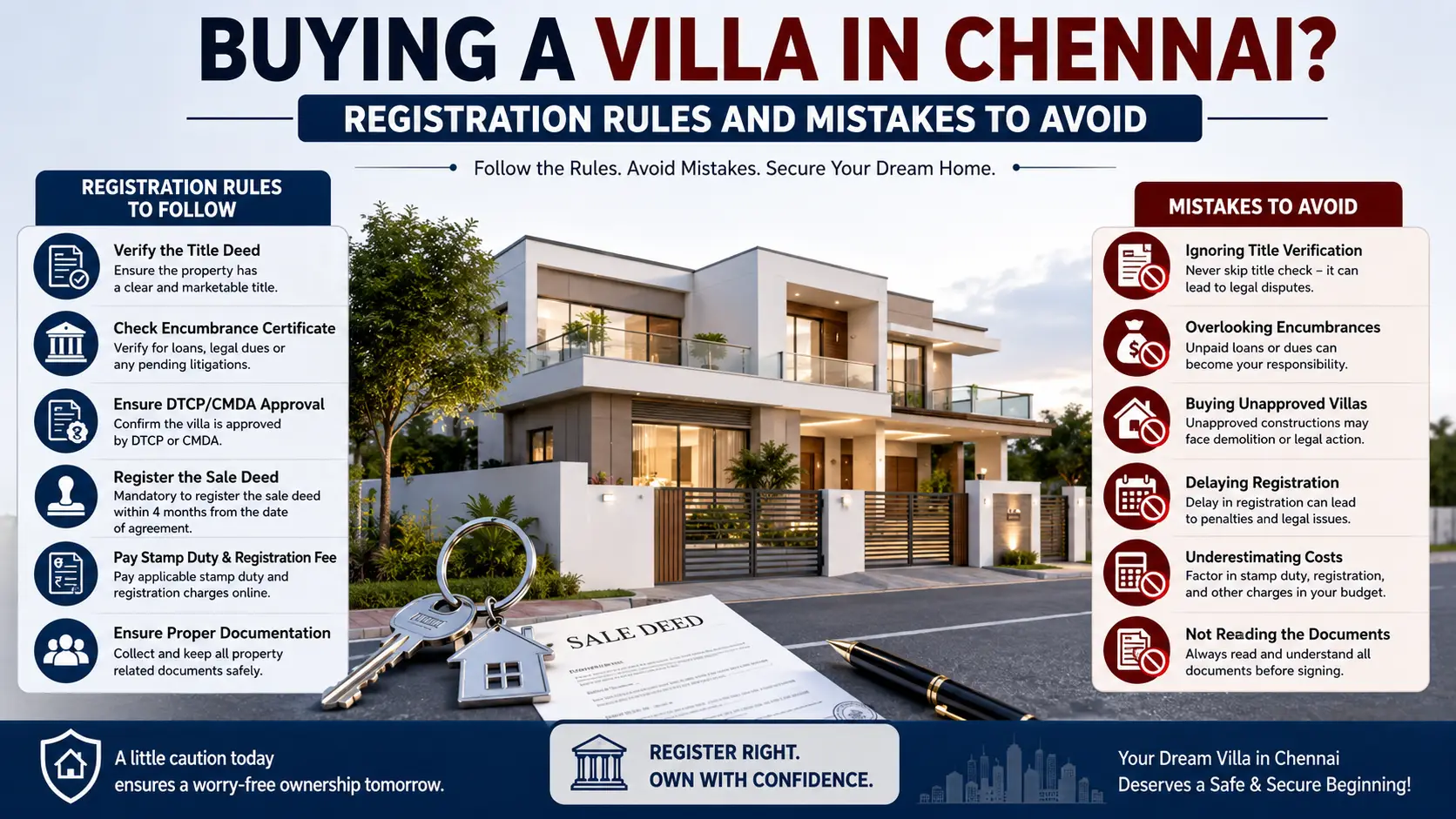
Step 1: Legal Due Diligence (MOST IMPORTANT)
Hire a property lawyer to verify:
- Clear title
- No litigation
- Land conversion (DTCP/CMDA)
- No government acquisition
Never skip this step.
Step 2: Sale Agreement
- Signed between buyer & seller
- Mentions price, payment schedule, possession date
- Usually registered for legal safety
Step 3: Guideline Value Verification
- Government-fixed value based on location
- Registration calculated on higher value
Step 4: Drafting Sale Deed
Sale deed must include:
- Survey number
- Extent of land
- UDS details
- Boundaries
- Payment details
- Possession clause
Step 5: Online Appointment Booking
- Slot booked at Sub-Registrar Office
- Jurisdiction depends on villa location
Step 6: Registration Day
- Buyer, seller & 2 witnesses present
- Biometric verification
- Sale deed signed
- Fees paid
Step 7: Sale Deed Issued
- Digitally stored
- Certified copy available in few days
6. Important Approvals You MUST Check
CMDA / DTCP Approval
- Mandatory for legality
- Without this:
- No bank loan
- Risk of demolition
- Poor resale value
Completion Certificate (CC)
- Confirms construction follows approved plan
Occupancy Certificate (OC)
- Mandatory for:
- Electricity
- Water connection
- Legal occupation
7. Role of Tamil Nadu Registration Department
This department:
- Registers sale deeds
- Maintains EC records
- Digitizes property ownership
- Prevents duplicate registration
All villa registrations in Chennai are governed by this authority.
8. Common Mistakes to Avoid When Buying a Villa in Chennai
Buying Unapproved Villas
- Illegal construction risk
- No bank funding
Ignoring Parent Documents
- Old ownership disputes may arise
Trusting Builder Promises
- Only written & registered documents matter
Not Checking EC
- Property may have loans or court cases
Skipping Occupancy Certificate
- Leads to utility issues and resale trouble
Avoiding Lawyer Fees
- Can cost lakhs later
9. Tax Implications After Buying a Villa
Property Tax
- Paid to Chennai Corporation or municipality
Income Tax Benefits
- Section 24 – Interest deduction
- Section 80C – Principal repayment
Capital Gains (on Sale)
- Short-term (<2 years)
- Long-term (>2 years) with indexation
10. Villa Registration Timeline in Chennai
Stage / Time
Legal Verification
- 1–2 weeks
Agreement to Sale
- 2–4 weeks
Registration Day
- 3–4 hours
Document Delivery
- 3–7 days
Conclusion
Buying a villa in Chennai is safe and profitable only if done legally. Always:
- Verify approvals
- Register properly
- Use a property lawyer
- Avoid shortcuts
FAQs – Buying a Villa in Chennai
1. Is villa registration compulsory?
Yes. Without registration, ownership is invalid.
2. Can I buy a villa without CMDA approval?
You can, but it is legally risky and not recommended.
3. Can NRIs buy villas in Chennai?
Yes, residential property is allowed.
4. Is joint registration allowed?
Yes, with spouse or family members.
5. What is UDS and why is it important?
UDS defines your share in land—critical for resale.
6. Can registration be cancelled?
Only through court order.
7. Is power of attorney valid for registration?
Yes, if properly registered.
8. How long should EC be checked?
Minimum 30 years.
9. Can I register a villa below the guideline value?
No. Registration is based on higher value.
10. Biggest risk while buying a villa?
Buying unapproved or disputed land.