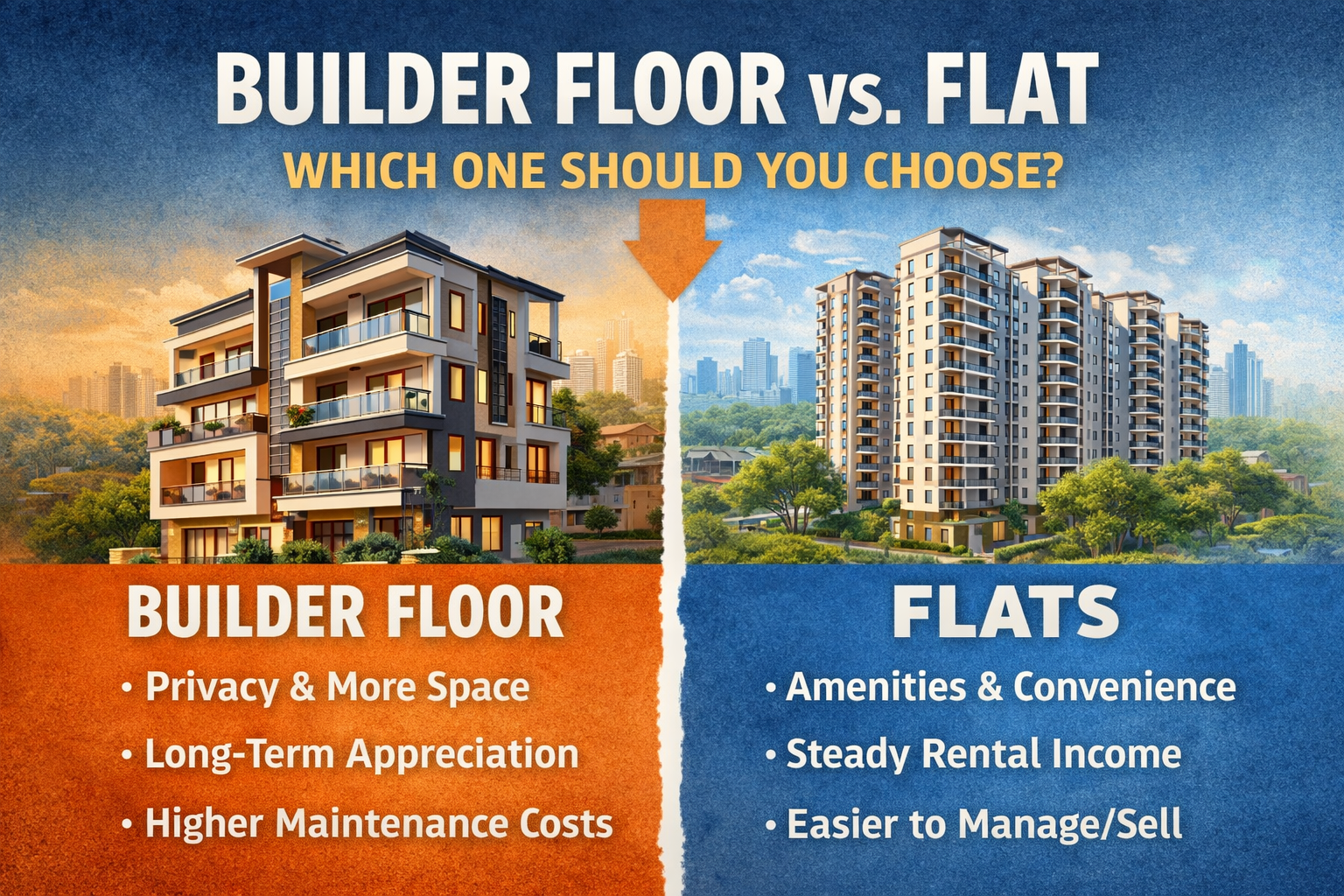
Buying a home is one of the biggest financial and emotional decisions in life. The choice between a builder floor and a flat affects not just your budget but also your daily lifestyle, privacy, long-term costs, investment returns, resale value, and peace of mind.Many buyers focus only on price, but the real difference lies in how you live, how much effort ownership requires, and how the property performs over time. There is no one-size-fits-all answer. The right option depends on whether you are buying the property to live in, rent out, or build long-term wealth.
Understanding Builder Floors in Detail
A builder floor is an independent floor in a low-rise building, usually constructed on a plotted piece of land. These buildings generally have two to four floors, with each floor owned by a different person.
Key Characteristics of Builder Floors
Builder floors offer a lifestyle that feels closer to living in an independent house. You usually have:
- Fewer neighbors
- More privacy
- Less noise
- Greater control over your living space
One of the most important aspects of builder floors is that you own a larger share of the land, which plays a major role in long-term appreciation.
Builder floors are common in plotted colonies and premium residential areas where land availability is limited.
Understanding Flats in Detail
A flat is a residential unit in a multi-story apartment building, often part of a gated society. Flats are designed for community living and convenience.
Key Characteristics of Flats
Flats are structured to make daily life easier. They usually come with:
- Gated security
- Lifts and power backup
- Parking facilities
- Maintenance staff
- Shared amenities such as parks, gyms, and clubhouses
Flats are managed by housing societies or professional facility management teams, which reduces the owner’s involvement in daily maintenance.
Lifestyle Comparison: How Daily Living Differs
Living in a Builder Floor
Builder floors offer a quiet, independent, and spacious lifestyle. Since there are fewer families in the building, residents enjoy:
- Greater privacy
- Less disturbance
- More freedom in usage of space
Builder floors are especially preferred by:
- Joint families
- People working from home
- Buyers who value exclusivity
- End users planning long-term residence
However, there is less social interaction compared to apartment living.
Living in a Flat
Flats provide a community-oriented lifestyle. You interact with neighbors regularly, children have playmates, and common facilities are easily accessible.
Flats are ideal for:
- Nuclear families
- Working professionals
- Elderly residents who value security
- People who want a hassle-free lifestyle
The downside is reduced privacy and higher noise levels due to population density.
Maintenance and Ownership Responsibility
Builder Floor Maintenance
Maintenance in builder floors is self-managed. Owners are responsible for:
- Structural repairs
- Plumbing and electrical issues
- Exterior upkeep
- Coordinating shared expenses with other floor owners
This provides flexibility but also requires involvement and planning. Maintenance costs can be lower if handled efficiently but may spike during major repairs.
Flat Maintenance
Flats have organized maintenance systems. Monthly maintenance charges cover:
- Security
- Cleaning
- Lifts and power backup
- Common area repairs
Owners do not need to manage daily issues themselves, making flats ideal for people with busy lifestyles.
Cost Structure and Financial Planning
Builder Floors
Builder floors usually have a higher purchase price due to:
- Larger carpet area
- Higher land value
- Premium locations
However, monthly expenses are often lower since there are fewer shared amenities.
Flats
Flats generally have a lower entry cost, making them more affordable for first-time buyers. The trade-off comes in the form of:
- Monthly maintenance charges
- Amenity costs
- Periodic society expenses
Investment Potential and Returns
Builder Floors as an Investment
Builder floors are excellent for long-term capital appreciation. Since land value appreciates faster than constructed space, builder floors tend to generate higher wealth over time.
They are particularly suitable for:
- Long-term investors
- Buyers planning to hold for 7–10 years
- Investors looking for redevelopment potential
Rental income is moderate and may involve longer vacancy periods.
Flats as an Investment
Flats are better for rental income and liquidity. They are:
- Easier to rent
- Easier to sell
- In demand among tenants
Flats are ideal for investors who want steady monthly cash flow and flexibility to exit the investment quickly.
Resale and Liquidity
Flats are generally easier to sell due to:
- Wider buyer base
- Affordable price brackets
- High demand in urban areas
Builder floors may take longer to sell, but when sold in prime locations, they often deliver higher absolute profits.
Risk and Legal Considerations
Builder Floors
Builder floors require strict legal verification, including:
- Clear land title
- Approved building plans
- Completion certificates
Buying from a reputed builder and conducting due diligence is essential.
Flats
Flats in reputed projects are considered safer, as approvals and documentation are standardized. Legal risks are generally lower.
Which One Should You Choose?
You should choose a builder floor if:
- Privacy is your top priority
- You plan to live long-term
- You want higher capital appreciation
- You are comfortable managing maintenance
You should choose a flat if:
- You want convenience and security
- You prefer community living
- You need rental income
- You want easy resale and liquidity
Final Conclusion
There is no universally better option.
- Builder floors are ideal for buyers seeking independence, space, and long-term wealth creation.
- Flats are ideal for buyers who value convenience, safety, rental income, and hassle-free ownership.
Your final decision should align with your lifestyle preferences, financial goals, and future plans.
Frequently Asked Questions (FAQs)
Are builder floors better than flats?
Builder floors are better for privacy and appreciation, while flats are better for convenience and rental income.
Which option is better for first-time buyers?
Flats are usually better due to ease of maintenance and lower risk.
Do builder floors appreciate more than flats?
Yes, in most premium locations, builder floors show stronger long-term appreciation.
Which is easier to rent out?
Flats are easier to rent due to amenities and tenant preference.
Are builder floors suitable for elderly people?
Flats are usually more suitable due to lifts, security, and emergency support.
Can builder floors be redeveloped?
Yes, redevelopment potential is one of the biggest advantages of builder floors.
Which option requires less involvement?
Flats require minimal involvement due to society-managed maintenance.