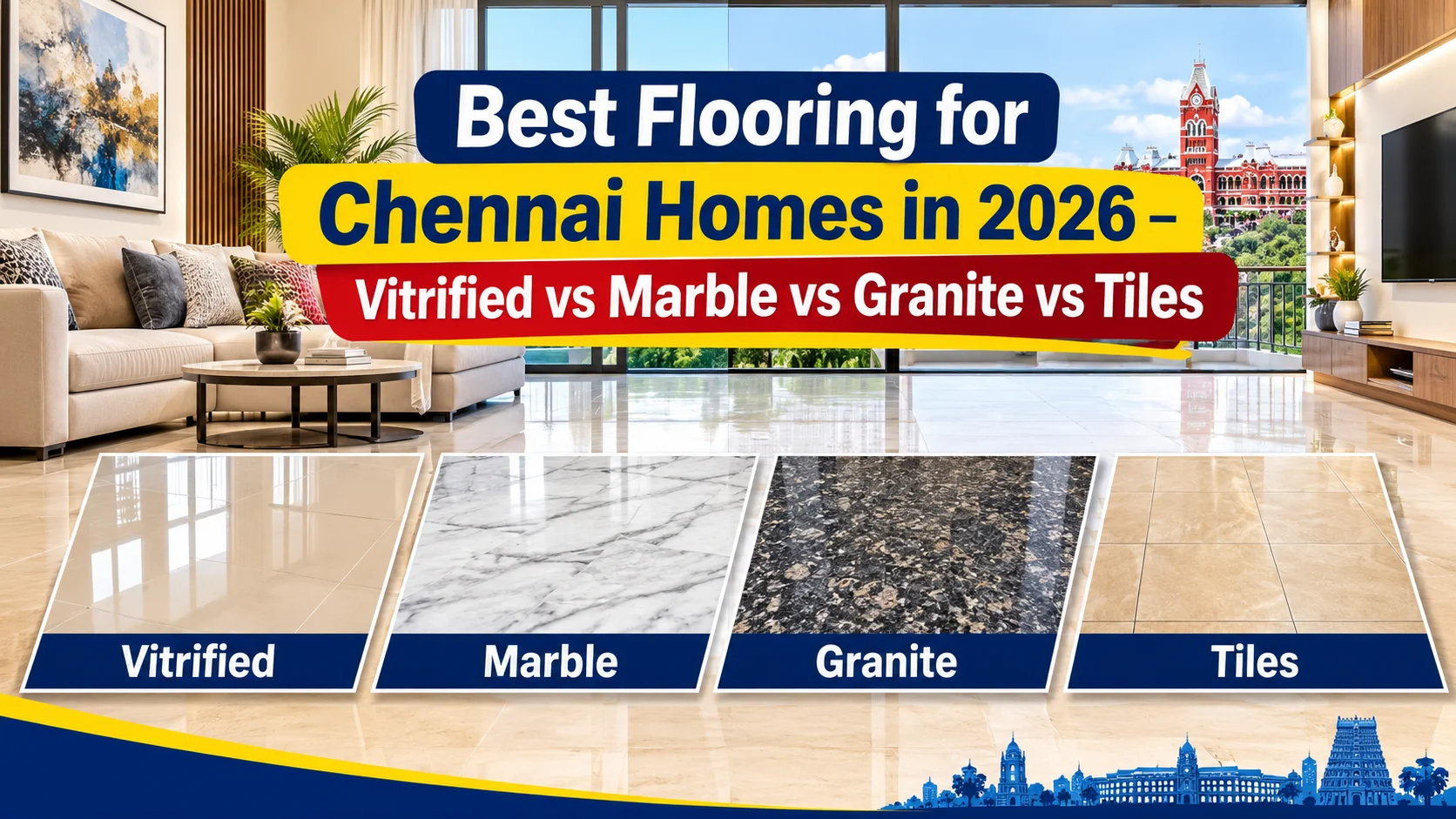
Choosing the right flooring is one of the most important decisions when constructing, renovating, or purchasing a new home. Flooring plays a major role in determining the appearance, comfort, durability, and maintenance requirements of a residential property. A suitable flooring material can improve the overall interior design while providing long-term convenience for homeowners. In Chennai, flooring selection requires additional consideration because of the city's hot weather, seasonal humidity, coastal conditions in certain locations, and everyday household requirements. Homeowners should select flooring materials that can withstand regular usage, are easy to maintain, and complement the overall interior design. Today, several flooring materials are available for residential properties, including vitrified tiles, marble, granite, ceramic tiles, and porcelain tiles. Each material has different characteristics, advantages, disadvantages, and price ranges. But which flooring is best for Chennai homes in 2026? Is vitrified flooring better than marble? Is granite worth the investment? Which tiles are suitable for 2BHK and 3BHK apartments? This comprehensive guide explains everything homeowners should understand before selecting flooring, including material types, advantages, disadvantages, approximate prices, room-wise recommendations, installation methods, maintenance, and buying considerations.
1. Why Is Choosing the Right Flooring Important for Chennai Homes?
Flooring is a long-term investment because it is not something homeowners frequently replace. Replacing flooring after completing the interior design can involve additional construction work, labor expenses, and inconvenience. Therefore, selecting the correct flooring during the construction or renovation stage can help reduce future expenses.
Here are the important factors Chennai homeowners should consider.
1.1 Climate and Temperature
Chennai experiences warm weather for much of the year. Flooring materials such as marble and granite often feel cool underfoot, making them popular choices for homes in warmer regions. Vitrified and ceramic tiles are also commonly used because they provide hard, easy-to-clean surfaces. However, indoor temperature depends on several factors, including ventilation, sunlight exposure, roof insulation, and building orientation. Flooring material alone cannot control indoor temperature.
1.2 Durability and Strength
Residential flooring experiences regular foot traffic, furniture movement, cleaning activities, and occasional accidental impacts. For a family home, flooring should withstand everyday usage without requiring frequent repairs.
For example:
- Living rooms need flooring that can handle regular movement.
- Bedrooms require visually appealing and easy-to-maintain surfaces.
- Kitchens need flooring that can withstand spills and frequent cleaning.
- Bathrooms require suitable water-resistant and slip-resistant surfaces.
1.3 Water Resistance and Moisture Protection
Bathrooms, kitchens, balconies, and utility areas experience regular water exposure. Choosing flooring with suitable water absorption characteristics is important to maintain its performance. However, water-resistant flooring does not replace proper waterproofing, drainage arrangements, and joint treatment.
1.4 Easy Maintenance
Flooring maintenance is another important consideration for homeowners. Some materials require regular polishing and sealing, whereas others can be maintained through routine sweeping and mopping. Families with busy schedules may prefer materials that require less maintenance.
1.5 Interior Appearance
Flooring contributes significantly to the overall appearance of a home. The right flooring color, texture, and finish can complement wall paint, furniture, lighting, kitchen cabinets, and decorative elements. Selecting suitable flooring can help create a consistent interior design throughout the property.
2. Different Types of Flooring Available for Chennai Homes in 2026
Before selecting flooring, homeowners should understand the characteristics of different materials and their suitability for residential use.
2.1 Vitrified Tiles
Vitrified tiles are among the most commonly selected flooring materials for modern apartments and independent houses. They are manufactured using a combination of clay, silica, quartz, and feldspar, which are processed at high temperatures to create a dense tile with low water absorption. These tiles are available in multiple designs, colors, sizes, and finishes. Homeowners can choose from plain, marble-look, wooden-look, stone-look, and decorative patterns.
Types of vitrified tiles
1. Double-Charged Vitrified Tiles
Double-charged tiles are manufactured using an additional layer of colored material during production. They are designed for durability and are commonly selected for areas that experience regular foot traffic.
2. Full-Body Vitrified Tiles
Full-body vitrified tiles have color and pattern extending through much of the tile body. This can make minor surface wear less noticeable compared with tiles that have only a decorative surface layer.
3. Glazed Vitrified Tiles (GVT)
Glazed vitrified tiles have a decorative glazed surface. They are available in different patterns, colors, and textures, making them suitable for contemporary residential interiors.
4. Polished Glazed Vitrified Tiles (PGVT)
PGVT tiles have a polished and glossy appearance. They are commonly used in living rooms and dining areas where homeowners prefer a bright and reflective flooring finish.
5. Soluble Salt Vitrified Tiles
These are decorative vitrified tiles produced using soluble-salt printing techniques. They represent an older category of vitrified tile products.
Advantages of vitrified flooring
- Generally offers low water absorption.
- Available in several colors and designs.
- Easy to clean and maintain.
- Suitable for living rooms and bedrooms.
- Available in affordable and premium varieties.
- Provides a modern and uniform appearance.
- Suitable for many residential applications.
Disadvantages of vitrified flooring
- Glossy varieties may become slippery when wet.
- Heavy impacts can cause cracks or chips.
- Damaged tiles may be difficult to match later.
- Large-format tiles require experienced installers.
- Poor installation may result in uneven surfaces or hollow sounds.
Approximate vitrified tile price in Chennai in 2026
| Type | Estimated material price |
| Basic vitrified tiles | Rs 40-65 / sq ft |
| Double-charged vitrifed tiles | Rs 45-90 / sq ft |
| Glazed vitrifed tiles | Rs 60-130 / sq ft |
| Premium PGVT | Rs 90-180 / sq ft |
| Large-format premium tiles | Rs 120-250+/sq ft |
Prices are indicative and vary according to manufacturer, quality, dimensions, finish, and supplier. Best applications: living rooms, bedrooms, dining areas, internal corridors, and selected kitchen areas.
2.2 Marble Flooring
Marble is a natural stone formed through geological processes involving heat and pressure. It is widely recognized for its elegant appearance, natural patterns, and premium finish. Unlike manufactured tiles, marble slabs have naturally occurring veins and color variations. This makes marble flooring attractive for homeowners who prefer distinctive and luxurious interiors.
Popular types of marble
- Indian white marble
- Makrana marble
- Rajasthan marble
- Green marble
- Beige marble
- Italian marble
- Statuario marble
- Botticino marble
Each variety has different characteristics, patterns, color variations, and prices.
Advantages of marble flooring
- Creates a premium and luxurious appearance.
- Natural patterns provide a distinctive finish.
- Often feels cool underfoot.
- Can be polished to restore its shine.
- Suitable for spacious living rooms.
- Offers a timeless interior appearance.
Disadvantages of marble flooring
- Can be more expensive than standard vitrified tiles.
- Requires professional installation.
- Certain varieties are vulnerable to acidic substances.
- Can absorb stains if not sealed properly.
- Periodic polishing may be required.
- Natural variations can create differences between slabs.
Approximate marble flooring price in Chennai in 2026
| Marble Type | Estimated material price |
| Basic Indian marble | Rs 90-160 sq ft |
| Premium Indian marble | Rs 150-300 sq ft |
| Makrana marble | Rs 150-400+ sq ft |
| Imported marble | Rs 250-600 sq ft |
| Premium Italian marble | Rs 400-1,000 + sq ft |
Actual prices depend on origin, slab thickness, grade, color, quality, and availability.
Best applications: luxury living rooms, entrance areas, dining spaces, premium independent houses, and feature flooring areas.
Marble maintenance tip: Avoid acidic cleaning liquids such as vinegar and strong acidic bathroom cleaners. Use suitable stone-cleaning products and follow the supplier's sealing and maintenance recommendations.
2.3 Granite Flooring
Granite is a naturally occurring igneous rock widely used in residential and commercial construction. It is valued for its strength, hardness, and natural appearance. Granite flooring is particularly useful in areas where durability and resistance to everyday wear are important. It is available in several colors, including black, grey, white, brown, red, and green.
Popular granite varieties
- Black Galaxy Granite
- Absolute Black Granite
- Kashmir White Granite
- Steel Grey Granite
- Tan Brown Granite
- Colonial White Granite
- Indian Red Granite
Advantages of granite flooring
- Strong and durable natural stone.
- Suitable for frequently used areas.
- Generally resistant to everyday scratches and wear.
- Available in several natural colors.
- Can be polished for a glossy appearance.
- Suitable for staircases and entrances.
- Can be used in selected kitchen applications.
Disadvantages of granite flooring
- Heavy material requiring suitable handling and installation.
- Premium varieties can be expensive.
- Polished surfaces may become slippery when wet.
- Some varieties require periodic sealing.
- Replacement may be difficult if the original stone is unavailable.
- Improper installation can result in uneven joints.
Approximate granite flooring price in Chennai in 2026
| Granite Type | Estimated material price |
| Basic Inidan granite | Rs 60-110 sq ft |
| Standard granite | Rs 100-180 sq ft |
| Premium granite | Rs 150-300 sq ft |
| Special and imported granite | Rs 250-500 + sq ft |
Actual prices vary according to colour, quarry, thickness, slab quality, finish and supplier.
Best applications: Entrance areas, staircases, living rooms, kitchen floors, high-traffic corridors and selected outdoor spaces. For areas exposed to water, homeowners should consider suitable textured or non-polished finishes.
2.4 Ceramic Tiles
Ceramic tiles are manufactured using clay and other natural minerals. They are shaped and fired at high temperatures to produce hard surfaces suitable for residential applications. They are widely used because of their affordability, design flexibility and relatively straightforward installation.
Popular types of ceramic tiles
- Glazed ceramic tiles
- Unglazed ceramic tiles
- Matte ceramic tiles
- Glossy ceramic tiles
- Textured ceramic tiles
- Decorative ceramic tiles
Advantages of ceramic flooring
- Generally affordable compared with premium natural stones.
- Available in different patterns and colours.
- Easy to clean and maintain.
- Suitable for many residential applications.
- Individual damaged tiles can be replaced.
- Available in different surface finishes.
Disadvantages of ceramic flooring
- Some varieties are less resistant to heavy impacts.
- Low-quality products may chip or crack more easily.
- Certain glazed finishes can be slippery when wet.
- Quality and water absorption differ between products.
- Some varieties may not be suitable for heavy-traffic areas.
Approximate ceramic tile price in Chennai in 2026
| Ceramic Type | Estimated material price |
| Basic Indian granite | Rs 60-110 sq ft |
| Standard granite | Rs 100-180 sq ft |
| Premium granite | Rs 150-300 sq ft |
| Special and imported | Rs 250-500 + sq ft |
Best applications: Budget-friendly homes, bedrooms, selected kitchens, utility areas and bathroom walls. For flooring, always select products specifically designed for floor use.
2.5 Porcelain Tiles
Porcelain tiles are a type of ceramic tile manufactured using carefully selected materials and production methods to achieve very low water absorption. They are suitable for homeowners looking for a combination of durability, contemporary design and low maintenance.
Advantages of porcelain tiles
- Very low water absorption in qualifying products.
- Available in stone, concrete and wooden-look designs.
- Different matte and polished finishes.
- Suitable for indoor and outdoor applications when correctly specified.
- Available in large-format sizes.
- Generally easy to maintain.
Disadvantages of porcelain tiles
- Premium varieties can be expensive.
- Dense tiles require suitable cutting equipment.
- Large slabs require skilled installation.
- Polished versions may become slippery in wet conditions.
Porcelain and vitrified terminology can overlap in the Indian tile market. Homeowners should compare the manufacturer's technical specifications rather than relying only on marketing descriptions.
Best applications: Modern apartments, premium living rooms, bedrooms, balconies and selected outdoor spaces.
3. Vitrified vs Marble vs Granite vs Ceramic vs Porcelain: Complete Comparison
Selecting the right flooring becomes easier when homeowners compare the important characteristics of different materials.
| Features | Vitrified | Marble | Granite | Ceramic | Porcelain |
| Material | Manufactured tile | Natural stone | Natural stone | Manufactured tile | Dense cermaic tile |
| Appearance | Modern designs | Premium natural veins | Natural patterns | Decorative designs | Stone and modern finishes |
| Durability | High | Good with care | Very high | Varies by product | High |
| Water absoption | Very low in qualifying in products | Varies | Generally low | Varies | Very low |
| Maintenance | Low | Higher | Low to moderate | Low | Low |
| Installation | Moderate | Skilled installation | Skilled installation | Modrate | Skilled installation |
The actual performance depends on the specific product, surface finish, technical specifications and installation quality.
4. Different Flooring Finishes and Their Uses
Choosing the material is only one part of the decision. The surface finish also influences appearance, cleaning requirements and safety.
Glossy Finish
Glossy flooring reflects light and creates a bright appearance.
Advantages:
- Reflects natural and artificial lighting.
- Creates a polished appearance.
- Suitable for many living-room interiors.
- Available in decorative designs.
Disadvantages:
- Water and footprints may be more visible.
- Can become slippery when wet.
- May require frequent cleaning to maintain its appearance.
Matte Finish
Matte flooring has a non-glossy appearance.
Advantages:
- Creates a contemporary appearance.
- Reduces strong light reflections.
- Suitable for bedrooms and selected kitchen areas.
- Can be a practical choice for modern interiors.
Disadvantages:
- Some textured surfaces may require more cleaning.
- Certain designs may show dirt more visibly.
- Textured or Anti-Skid Finish
- Textured flooring is designed to provide additional surface grip.
Advantages:
- Useful in frequently wet areas.
- Suitable for bathrooms, balconies and outdoor spaces.
- Available in different patterns and surface finishes.
- Always check the actual slip-resistance rating and suitability for the intended area.
Satin Finish
Satin flooring offers a moderate sheen between glossy and matte surfaces.
It can provide an elegant appearance without the strong reflection of polished tiles.
5. Best Flooring for Different Rooms in Chennai Homes
Different rooms have different requirements. Therefore, selecting flooring according to the purpose of each space is a better approach than choosing one material for the entire property.
5.1 Best Flooring for Living Rooms
The living room is one of the most visible areas of a house. It is used for family activities, entertaining guests and everyday relaxation.
Recommended flooring:
- Large-format vitrified tiles.
- Marble flooring.
- Premium porcelain tiles.
- Polished granite.
Light beige, cream, ivory and light grey colours can create a spacious visual appearance. For smaller apartments, using consistent flooring between living and dining areas can create a continuous interior design.
5.2 Best Flooring for Bedrooms
Bedroom flooring should complement the furniture, wall colours and overall interior design.
Recommended flooring:
- Matte vitrified tiles.
- Wooden-look tiles.
- Porcelain tiles.
- Suitable ceramic floor tiles.
Wooden-look vitrified tiles are a popular option because they create a warm appearance without requiring natural timber flooring.
5.3 Best Flooring for Kitchens
Kitchen flooring must withstand food spills, water splashes, oil stains and frequent cleaning.
Recommended flooring:
- Matte vitrified tiles.
- Suitable textured porcelain tiles.
- Appropriate ceramic floor tiles.
- Properly finished granite.
Avoid highly polished surfaces if the kitchen is frequently exposed to water or oil. Also consider cleaning requirements, grout joints and resistance to everyday wear.
5.4 Best Flooring for Bathrooms
Bathroom flooring requires special attention because water, soap and shampoo can make surfaces slippery.
Recommended flooring:
- Anti-skid ceramic tiles.
- Textured porcelain tiles.
- Suitable small-format floor tiles.
Important bathroom flooring requirements include:
- Adequate slip resistance.
- Proper waterproofing beneath the flooring.
- Correct slope towards the floor drain.
- Properly sealed joints.
- Easy-to-clean surfaces.
Do not select bathroom floor tiles based only on appearance.
5.5 Best Flooring for Balconies
Balconies experience sunlight, rainwater and dust exposure.
Recommended flooring:
- Outdoor-grade porcelain tiles.
- Textured ceramic tiles.
- Weather-suitable anti-skid tiles.
The flooring should have appropriate outdoor performance, drainage arrangements and slip resistance.
5.6 Best Flooring for Staircases
Staircase flooring must be durable and safe because people use it repeatedly throughout the day.
Recommended flooring:
- Granite.
- Suitable natural stone.
- Textured porcelain tiles.
- Appropriate stair-rated tiles.
Pay attention to edge finishing and slip resistance, particularly along the front edge of each step.
6. Flooring Cost in Chennai in 2026 – Material and Installation Charges
One of the most important questions for homeowners is how much flooring will cost. The total flooring budget depends on material quality, brand, tile dimensions, installation method, labour charges and the condition of the existing floor.
6.1 Approximate Flooring Material Prices
| Flooring Material | Estimated Material cost |
| Ceramic tiles | Rs 25-80 sq ft |
| Standard vitrified tiles | Rs 40-135 sq ft |
| Premium vitrified tiles | Rs 100-250 + sq ft |
| Granite | Rs 100-390 + sq ft |
| Indian marble | Rs 100-430 + sq ft |
| Premium Italain marble | Rs 350-900 + sq ft |
| Porcelain tiles | Rs 60-200 + sq ft |
These are indicative planning estimates, not confirmed market quotations. Prices vary according to supplier, brand, quality, specifications, finish and availability.
6.2 Approximate Complete Flooring Installation Cost
Material cost is not the final flooring expense. Homeowners must also consider labour, surface preparation, adhesive, grout and finishing.
| Flooring material | Estimated installed cost |
| Ceramic tiles | Rs 60-120 sq ft |
| Standard vitrified tiles | Rs 85-160 sq ft |
| Premium vitrified tiles | Rs 130-250 + sq ft |
| Granite | Rs 150-350 + sq ft |
| Inidan Marble | Rs 180-450 + sq ft |
| Italian marble | Rs 450-1,200 + sq ft |
| Porceloin tile | Rs 105-250 + sq ft |
Installation costs vary depending on the project. Demolition, skirting, transportation, GST, polishing and extensive floor levelling may be charged separately.
7. Flooring Budget for 2BHK and 3BHK Apartments
When purchasing a new apartment, flooring expenses should be considered along with the interior design budget. For illustration, the following estimates use assumed floor areas and installed rates.
| Apartment Type | Assumed Floor | Flooring rate | Estimated expenses |
| Compact 2 BHK | 850 sq ft | Rs 100 sq ft | Rs 85,000 |
| Standard 2 BHK | 1,000 sq ft | Rs 120 sq ft | Rs 1,20,000 |
| Compact 3 BHK | 1,250 sq ft | Rs 120 sq ft | Rs 1,50,000 |
| Spacious 3 BHK | 1,500 sq ft | Rs 150 sq ft | Rs 2,25,000 |
These are illustrative calculations based on assumed rates and areas. They are not property-specific quotations and do not necessarily include extra material, demolition or premium finishing. Important for apartment buyers: Check whether the builder provides flooring as part of the apartment price. If the existing flooring is already installed and meets your requirements, retaining it may be more economical than replacing it.
8. How to Choose the Right Flooring Colour for Your Home?
Flooring colour can influence the overall appearance of an interior. The right shade can complement furniture, wall colours, lighting and decorative elements.
Light Beige Flooring
Light beige is suitable for homeowners who prefer a warm and neutral interior.
Benefits:
- Complements many furniture colours.
- Creates a bright appearance.
- Suitable for living rooms and bedrooms.
- Works well with cream and wooden interiors.
White Flooring
White flooring creates a clean and bright appearance.
Benefits:
- Can make compact rooms appear more spacious.
- Reflects natural and artificial light.
- Suitable for contemporary interiors.
However, dust, stains and footprints may be more noticeable on some white finishes.
Grey Flooring
Grey flooring is suitable for modern and minimalist homes.
Benefits:
- Complements contemporary furniture.
- Works well with white and darker wall colours.
- Available in concrete-look and stone-look designs.
Wooden-Look Flooring
Wooden-look tiles provide the appearance of natural timber.
Benefits:
- Creates a warm atmosphere.
- Complements bedroom interiors.
- Available in different wood shades.
- Can be easier to maintain than natural wood.
Marble-Look Flooring
Marble-look vitrified tiles are a popular option for homeowners who want the appearance of natural marble without choosing actual marble slabs. They can offer a premium appearance at a comparatively accessible price, depending on the tile quality.
9. Important Technical Specifications to Check Before Purchasing Flooring
Many homeowners select flooring by looking at colour, design and price. However, technical specifications are equally important.
Before purchasing, check the following details.
9.1 Water Absorption
Water absorption indicates how much moisture a tile can absorb. Tiles with lower water absorption are generally preferable in areas where moisture resistance is important. Qualifying fully vitrified and porcelain products have very low water absorption.
9.2 Abrasion Resistance
Abrasion resistance indicates how well a tile surface withstands wear from regular foot traffic.
This is particularly relevant for:
- Living rooms.
- Entrance areas.
- Corridors.
- Commercial spaces.
Ask the supplier for the applicable abrasion classification of the product.
9.3 Slip Resistance
Slip resistance is particularly important for bathroom flooring, balconies, kitchens and staircases. Choose a suitable surface finish based on the area's exposure to water and the manufacturer's declared test rating.
9.4 Tile Thickness
Tile thickness can influence handling, installation and suitability for particular applications. Do not assume that thicker tiles are automatically better. Product specifications and intended use matter more.
9.5 Surface Flatness and Dimensions
Check the following before purchasing:
- Tile length and width.
- Thickness consistency.
- Surface flatness.
- Edge quality.
- Shade variation.
- Manufacturing defects.
These checks can help reduce installation issues and uneven flooring.
10. Flooring Installation Process: Step-by-Step Guide
Proper installation is essential for achieving a durable and attractive flooring finish. Even expensive flooring materials can develop problems if installation is not performed correctly.
Step 1: Measure the Floor Area
Measure each room separately, including the living room, bedrooms, kitchen, dining area and other spaces.
Prepare a flooring layout to calculate the required material quantity.
Step 2: Prepare the Surface
Remove dust, loose materials and construction debris.
The base surface should be stable, clean and appropriately levelled.
Step 3: Select the Installation Method
Depending on the material, project requirements and substrate, installation may use a suitable cement-based bedding system or tile adhesive.
Natural stone may require a different installation approach from manufactured tiles.
Step 4: Plan the Tile Layout
Decide where the tiles should begin and how the pattern should continue throughout the room.
Proper layout planning helps reduce unnecessary cutting and improves visual alignment.
Step 5: Install the Flooring
Tiles or stone slabs are placed using the selected installation system.
Installers should maintain consistent joints and appropriate levels.
Step 6: Complete Grouting
Grout is applied between tile joints to complete the flooring surface.
Choose grout suitable for the tile material and room conditions.
Step 7: Complete Finishing Work
Remove installation residue, complete skirting and edge finishing, and carry out polishing or sealing where necessary.
Step 8: Final Inspection
Check the finished flooring for:
- Uneven surfaces.
- Cracks and chips.
- Hollow-sounding areas.
- Inconsistent joints.
- Grout defects.
- Water drainage in wet areas.
Allow the installation system to cure according to the manufacturer's instructions before using the floor normally.
11. Modern Flooring Design Trends for Chennai Homes in 2026
Home interior preferences continue to evolve. Homeowners are increasingly interested in flooring that combines practical performance with modern aesthetics.
11.1 Large-Format Flooring
Large-format tiles can create a more continuous appearance with fewer visible grout lines.
They are particularly suitable for spacious living and dining areas, provided the floor base and installation are suitable.
11.2 Marble-Look Vitrified Tiles
These tiles recreate the appearance of natural marble using printed or glazed designs.
They are suitable for homeowners who prefer luxury-inspired interiors with comparatively straightforward maintenance.
11.3 Wooden-Finish Tiles
Wooden-look flooring is increasingly used in bedroom interiors and selected living spaces.
It provides a warm appearance while retaining the practical characteristics of suitable ceramic or porcelain products.
11.4 Natural Stone Finishes
Natural stone remains an attractive option for premium homes.
Granite and marble can be used to create distinctive flooring designs, entrances and feature areas.
11.5 Minimalist Neutral Flooring
Beige, ivory, light grey and cream colours complement contemporary residential interiors.
These shades work well with simple furniture, wooden finishes and neutral wall colours.
12. Flooring Maintenance Guide: How to Keep Your Floors Looking New
Regular maintenance can help improve the appearance and service life of flooring. Different materials require different cleaning methods.
| Flooring Type | Recommended maintenance |
| Vitrified tiles | Regular sweeping and mild cleaning |
| Ceramic tiles | Routine cleaning and grout maintenance |
| Marble | Stone-safe cleaners and peridioc sealing or polishing as required |
| Granite | Suitable stone cleaners and peridioc sealing where needed |
| Procelain | Regular cleaning using suitable products |
13. Which Flooring Is Best for Different Budgets?
Your flooring choice should match your financial plan as well as your interior requirements.
| Budget category | Suitable flooring options |
| Economical | Standard ceramic tiles |
| Affordable modern interiors | Standard vitrified tiles |
| Mid-range residential interiors | Prmeium vitrified and procelain tiles |
| Premium interiors | Granite and premium vitrified tiles |
| Luxury homes | Marbles and premium natural tiles |
There is no single flooring material that is best for every home. A family looking for affordable, easy-to-maintain flooring may prefer ceramic or standard vitrified tiles. A homeowner designing a luxury independent house may prefer marble or granite for selected areas. The most practical approach is to compare the complete installation cost, maintenance requirements and expected usage before selecting the material.
Conclusion
Choosing the best flooring for Chennai homes in 2026 requires careful consideration of climate, budget, durability, maintenance and interior design. Vitrified tiles are a popular solution for modern residential apartments because of their versatility and practical maintenance requirements. Marble adds a natural luxury appearance, granite provides excellent strength, ceramic tiles offer economical solutions and porcelain tiles provide additional design and technical options. Before finalising your flooring, compare material specifications, installation costs, slip resistance and long-term maintenance requirements. Whether you are constructing a new independent house, renovating an existing property or purchasing a 2BHK or 3BHK apartment, the right flooring can make your home more attractive, comfortable and functional.
Frequently Asked Questions
1. Which flooring is best for Chennai homes in 2026?
Vitrified tiles are a practical choice for most Chennai homes because they offer different designs, low water absorption in qualifying products, durability and easy maintenance.
2. Is vitrified flooring better than marble?
Vitrified flooring is generally easier to maintain and more economical than premium marble. Marble offers natural patterns and a luxurious appearance but requires additional care and periodic maintenance.
3. Which flooring is best for a 2BHK apartment in Chennai?
Good-quality vitrified tiles are a suitable option for most 2BHK apartments. They are available in multiple colours, sizes and finishes and can complement modern interior designs.
4. Which flooring is best for a 3BHK luxury apartment?
Premium vitrified tiles, porcelain tiles and marble are suitable options. The final choice depends on the interior theme, budget and maintenance expectations.
5. Is granite flooring suitable for Chennai weather?
Yes. Granite is generally suitable for residential use in Chennai. It is durable and can feel cool underfoot, although the surface finish and maintenance requirements should be considered.
6. Which is cheaper: ceramic tiles or vitrified tiles?
Basic ceramic tiles are generally cheaper than standard vitrified tiles. However, prices vary depending on quality, size, brand and surface finish.
7. Which flooring is best for bathrooms?
Textured or anti-skid ceramic and porcelain tiles designed for wet areas are suitable choices. Proper waterproofing and drainage are equally important.
8. Which flooring is easiest to maintain?
Good-quality vitrified and porcelain tiles are generally easy to maintain. Regular sweeping and cleaning with suitable household products are usually sufficient.