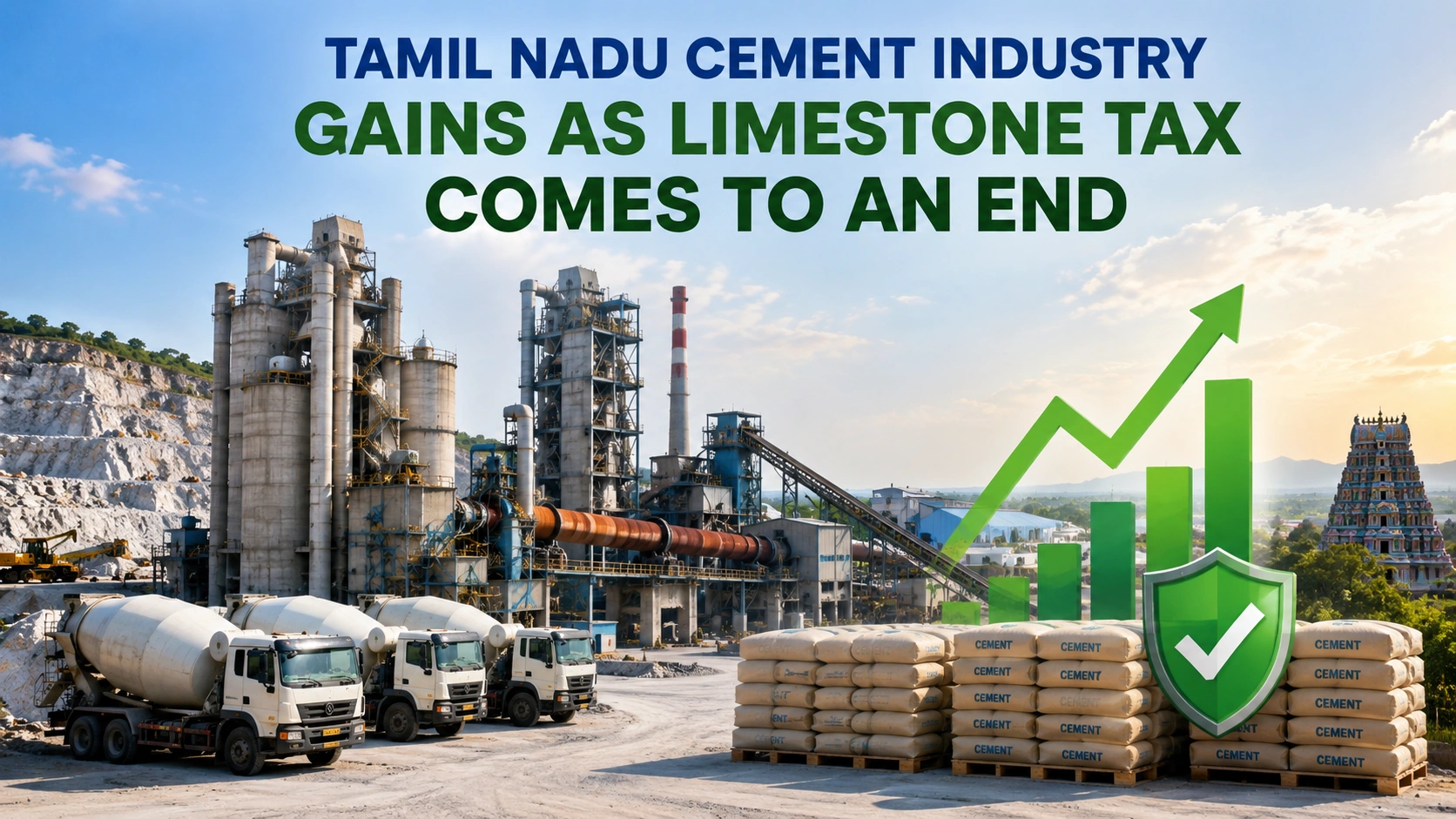
Cement manufacturers in Tamil Nadu are set to receive significant cost relief following the cessation of the Rs 160-per-tonne Mineral Bearing Land Tax (MBLT) on limestone. The development is expected to reduce the raw-material cost burden on cement producers and provide some relief to an industry that has been facing pressure from fuel, energy, and transportation expenses. The change follows the Mines and Minerals (Development and Regulation) Amendment Bill, 2026, which was passed by both Houses of Parliament on August 13, 2026. The amendment is aimed at providing greater stability and predictability to the major minerals sector. The Tamil Nadu government had introduced the Mineral Bearing Land Tax on limestone at Rs 160 per tonne from April 4, 2025. Since limestone is one of the primary raw materials required for cement manufacturing, the levy directly increased production costs. The additional burden contributed to an increase in cement prices across parts of South India. Although some of the price increases were subsequently reversed, the tax continued to affect the cost structure and profitability of cement manufacturers. With the cessation of the levy, producers will no longer have to bear this additional cost on limestone, providing immediate relief to their operations. Limestone plays a critical role in cement manufacturing. Large quantities of limestone are processed to produce clinker, which is then ground with other materials to manufacture cement. Because of the high volume of limestone required, even a relatively small charge per tonne can create a substantial financial burden for large cement producers. The removal of the Rs 160-per-tonne levy is therefore expected to have a meaningful impact on the industry's overall cost structure
The withdrawal of the tax does not automatically mean that cement prices will fall by Rs 160 per tonne.
Cement prices are influenced by several factors, including:
-
Fuel and power costs
-
Limestone and other raw-material prices
-
Transportation and logistics expenses
-
Market demand
-
Regional supply
-
Production capacity
-
Dealer margins
-
Competition among manufacturers
The amendment to the Mines and Minerals (Development and Regulation) Act, 1957, is intended to bring greater long-term stability to the major minerals sector. Importantly, the amendment does not completely remove state governments' authority over land and minerals. States will continue to receive a substantial share of taxes and statutory payments generated from mining activities. The amendment also does not take away the existing powers of state governments to regulate and impose taxes on minor minerals. Tamil Nadu has a significant cement manufacturing base and an established limestone supply chain. The removal of the levy is therefore particularly relevant to manufacturers operating in the state. The cessation of the Rs 160-per-tonne limestone tax is a major cost-relief development for Tamil Nadu's cement industry. The move is expected to reduce raw-material expenses, improve operating margins, and strengthen cash flows for manufacturers. The benefits could extend beyond cement producers to the broader construction and real estate sectors if lower input costs eventually translate into more stable cement prices. For Tamil Nadu's cement industry, the removal of the limestone levy provides much-needed relief and could improve profitability at a time when manufacturers continue to face pressure from fuel, energy, and transportation costs.