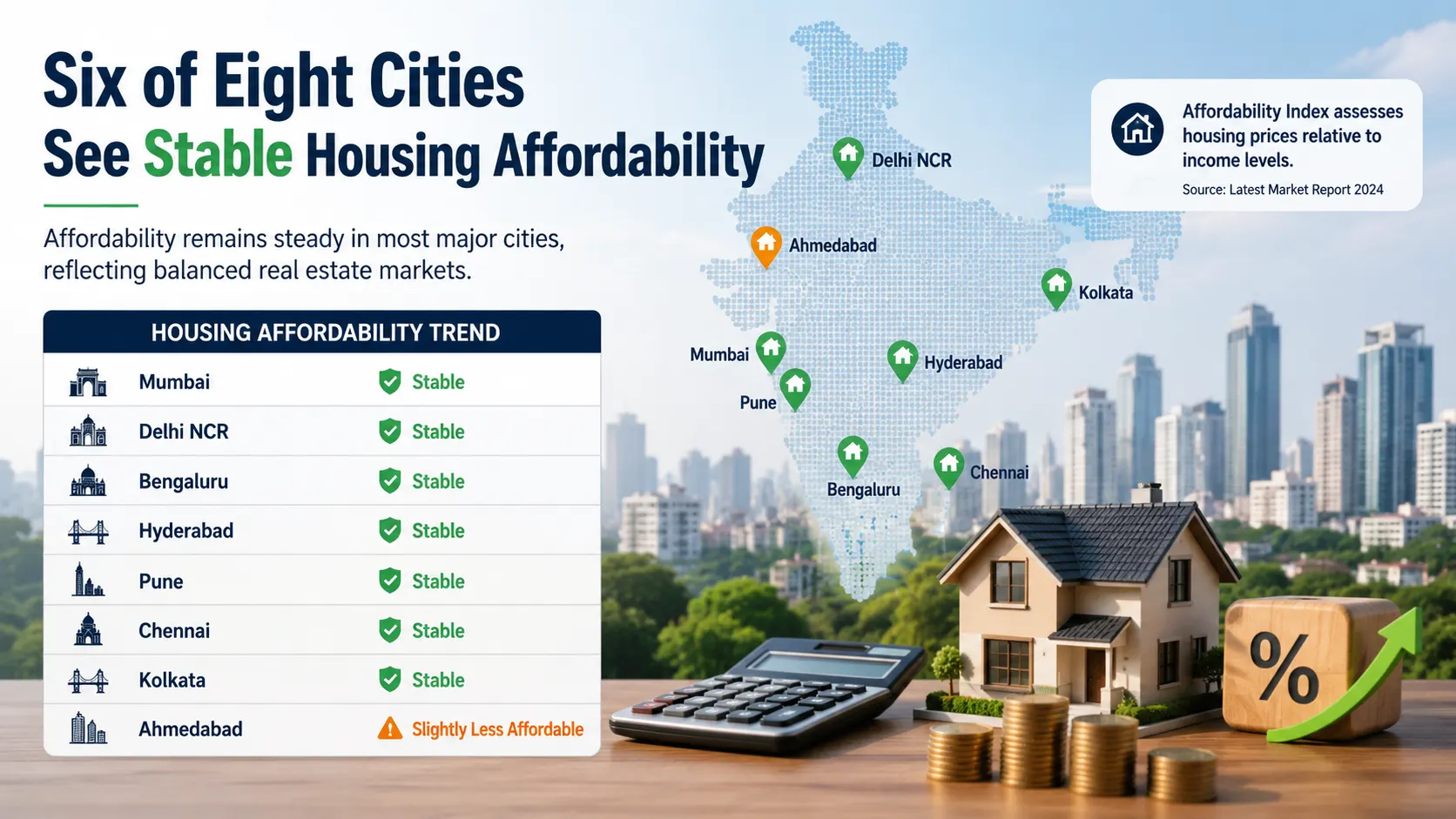
Housing affordability remained largely stable across most major residential markets during the first half of 2026, supported primarily by lower borrowing costs. Out of the eight key urban markets assessed, six continued to remain within the accepted affordability threshold, while two large metropolitan regions stayed above the 50% benchmark, indicating reduced affordability in those areas.
Among the markets studied, one western city emerged as the most affordable, with households spending just 23% of their income on monthly home loan repayments. This was followed by an eastern city at 25% and another western city at 28%. Two other major markets showed marginal deterioration in affordability compared with the previous year, with affordability ratios rising to 35% and 65%, respectively. The remaining cities experienced minimal change, reflecting overall stability in housing affordability levels.
Affordability is calculated as the proportion of a household’s income required to service equated monthly instalments for a housing unit. A ratio exceeding 50% is generally considered unaffordable, as it places significant pressure on household finances.
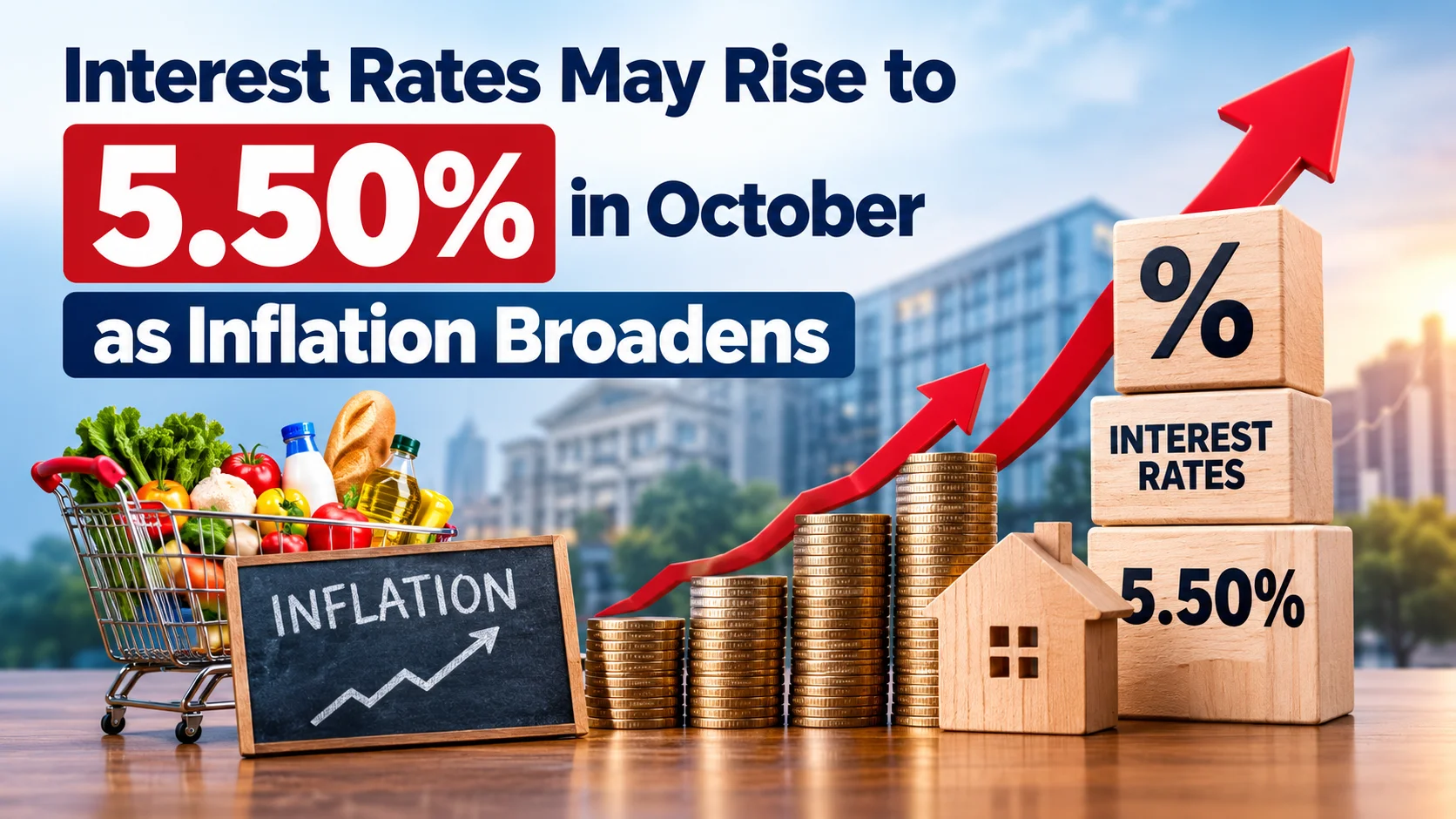
During this period, the central monetary authority maintained its policy interest rate at 5.25% in both its early-year and mid-year meetings. The decision was influenced by external risks related to energy prices amid geopolitical tensions in West Asia, as well as uncertainties surrounding seasonal rainfall conditions.
While earlier gains in affordability have moderated due to continued increases in residential property prices, demand has remained resilient. This has been supported by steady employment levels, stable household incomes, and favourable financing conditions, which together continue to underpin buyer confidence in the housing market.