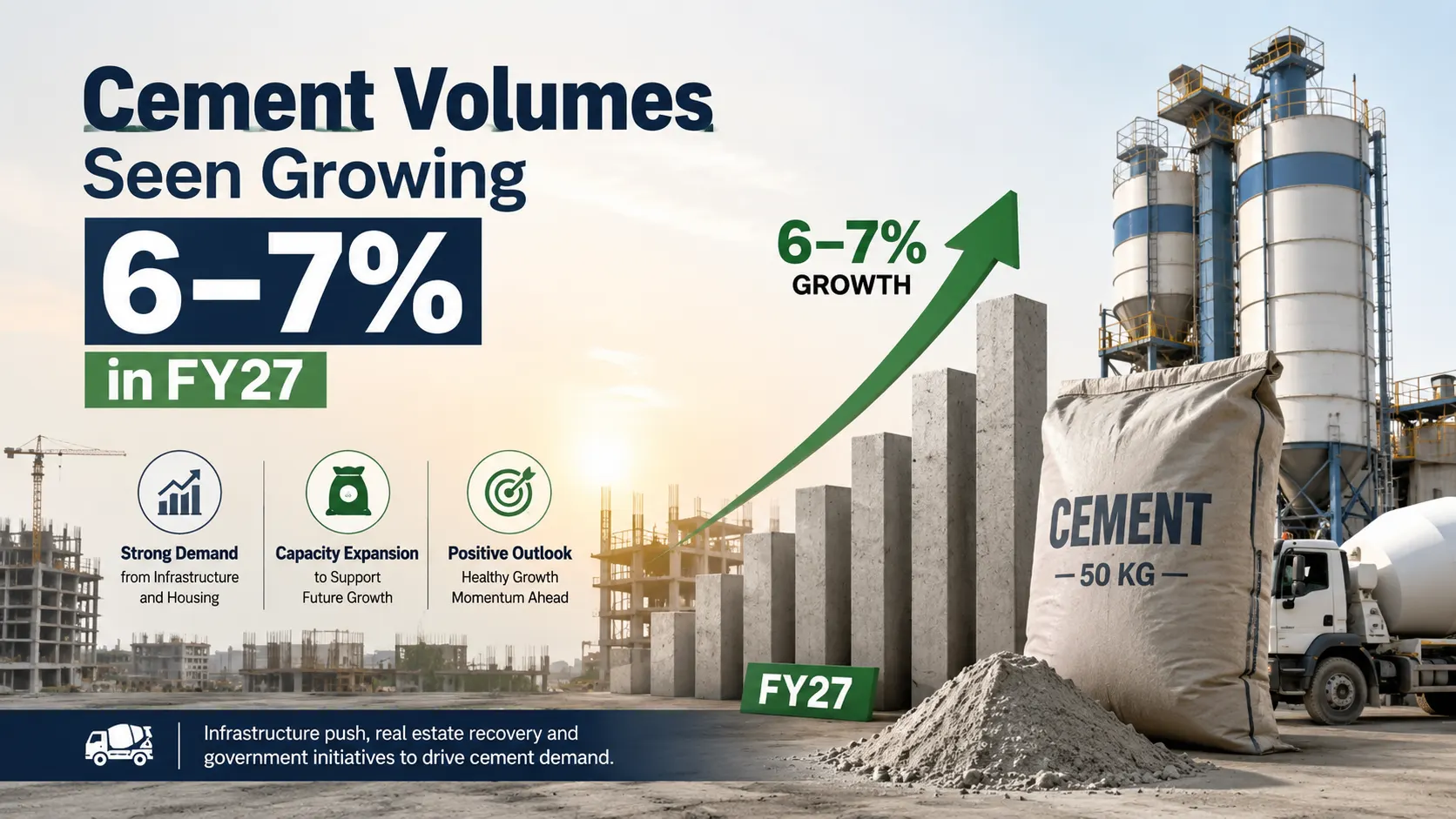
Cement volumes in India are expected to grow by 6–7% in FY27, moderating from the stronger 8.6% expansion seen in FY26. Demand in the previous year was largely driven by sustained activity in the housing and infrastructure segments. Momentum has remained healthy at the start of FY27, with cement volumes in the first two months rising about 8.3% year-on-year to nearly 85 million metric tonnes. Net sales realisations increased around 7% year-on-year in FY26 and are projected to rise further by 3–5% in FY27, supported by steady demand conditions. Input costs were largely stable during FY26; however, fuel and freight costs—closely linked to global crude oil prices—have been on an upward trend and may rise further in FY27, depending on geopolitical developments in West Asia. On the supply side, the industry added approximately 43 million tonnes per annum (MTPA) of capacity in FY26 and is expected to add another 30–34 MTPA in FY27. Despite these additions, capacity utilisation is likely to remain steady at around 70–71%, broadly in line with FY26 levels. Operating margins are expected to moderate by about 150–250 basis points in FY27, primarily due to higher input costs. Volatility in crude-linked petcoke prices and freight costs remains a key downside risk for profitability. Nevertheless, despite some pressure on margins and higher debt requirements arising from ongoing capital expenditure, overall debt protection metrics are expected to remain comfortable. In FY27, leverage, measured as total debt to operating profit before interest, depreciation and tax, is estimated to be in the range of 1.45–1.55 times, while the debt service coverage ratio is projected at around 3.2–3.4 times, indicating continued financial stability for the sector.
Cement Volumes Seen Growing 6to7percentgae in FY27
Jul 01 2026
Latest Newsletter

Chennai Property Tax Deadline Today: September 30 Last Day to Pay Without Penalty
Sep 30 2026

Interest Rates May Rise to 5.50 percentage in October as Inflation Broadens
Sep 29 2026

Housing Sales Decline 6 percentage in Top 9 Cities Amid Weakening Demand
Sep 28 2026

Directs Commercial Sites to Be Assessed Under Existing Master Plan Rules
Sep 26 2026

TN Housing Board to Build New Homes Based on Public Demand
Sep 25 2026