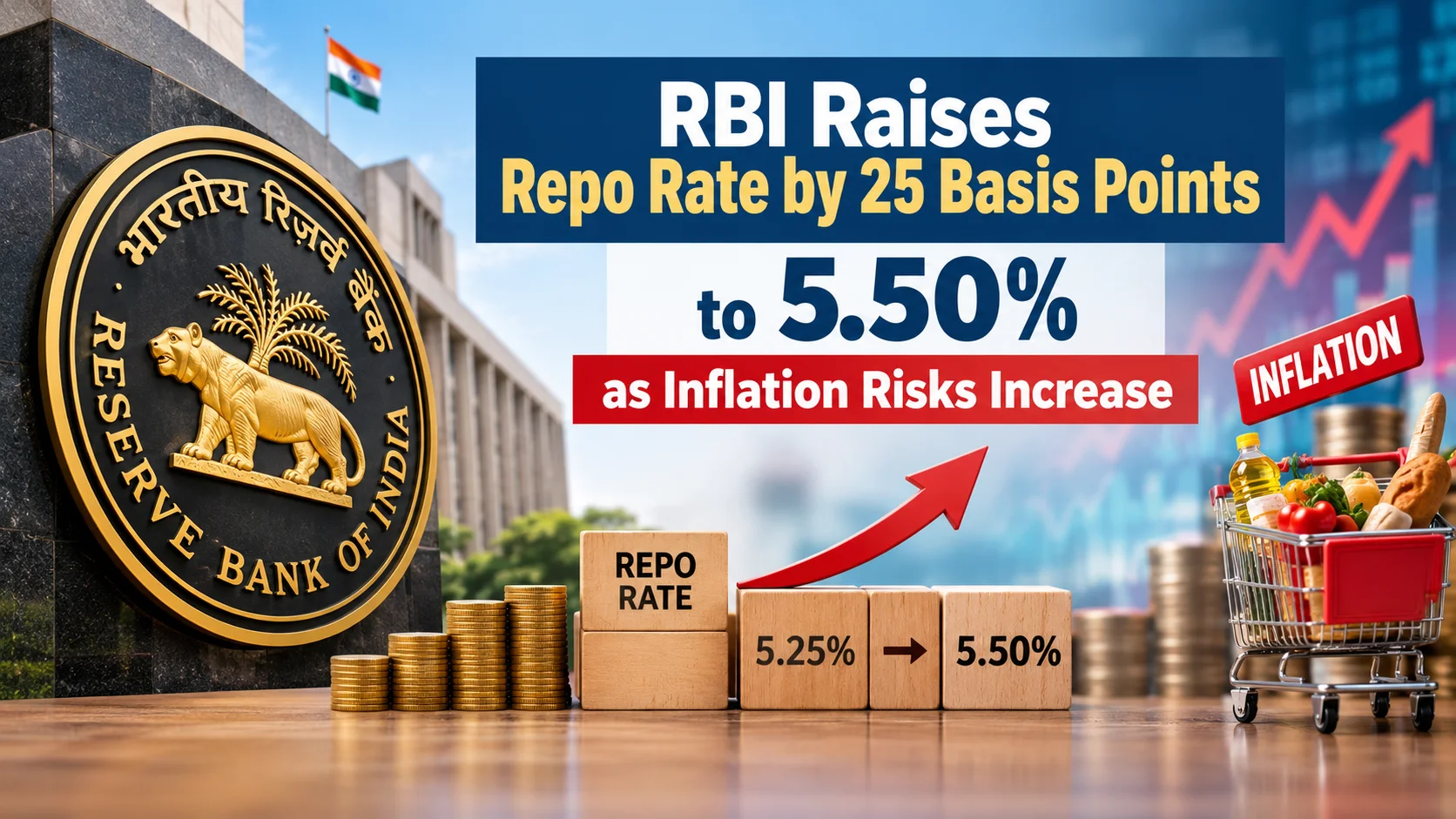
The Reserve Bank has increased the policy repo rate by 25 basis points to 5.50%, marking a shift towards tighter monetary policy. The decision comes as inflation risks strengthen, global bond yields remain elevated and domestic economic activity continues to show resilience. The policy rate was previously maintained at 5.25%. The latest increase signals a greater focus on managing inflation while maintaining a balance with economic growth. Following the repo rate hike, the Standing Deposit Facility (SDF) rate stands at 5.25%, while the Marginal Standing Facility (MSF) rate and Bank Rate have been increased to 5.75%. The rate increase comes amid concerns that inflation could strengthen due to changes in commodity prices, energy costs and global financial conditions. Higher global yields can also influence domestic borrowing costs and financial-market conditions. The monetary policy stance has shifted towards calibrated tightening, indicating that further policy decisions could remain focused on controlling inflation and preventing persistent price pressures. Despite the tighter policy environment, domestic economic activity remains resilient. The Indian economy recorded 7.8% growth in the first quarter of FY2026–27. Manufacturing, services and domestic consumption have continued to support economic activity. Strong economic growth provides greater room for monetary authorities to focus on inflation management without immediately compromising overall economic momentum. The repo rate has a direct impact on the broader borrowing environment. Banks and financial institutions may adjust lending rates depending on their funding costs and policy transmission. For homebuyers, a rise in lending rates could mean higher EMIs or increased interest costs, particularly for loans linked to floating-rate benchmarks. This may cause some buyers to reassess their property budgets and borrowing capacity. The real estate market could also see changes in buyer behaviour if borrowing costs remain elevated. However, strong employment, income growth and continued housing demand could help support residential property sales. Future monetary-policy decisions are expected to depend on several factors, including inflation trends, crude oil prices, domestic growth, global interest rates and financial-market conditions. The latest decision therefore marks an important shift in the interest-rate cycle, with the possibility of further tightening depending on how inflation and economic conditions develop in the coming months.
RBI Raises Repo Rate by 25 Basis Points to 5.50 Percent as Inflation Risks Increase
Oct 07 2026
Latest Newsletter
RBI Repo Rate Hike Expected: How Will It Affect Home Loans and FDs
Oct 06 2026

National Housing Bank to Conduct Forensic Audit of SRG Housing Finance
Oct 05 2026

Tamil Nadu to End Saturday Property Registration at 100 Sub Registrar Offices from November 1
Oct 03 2026

Chennai Corporation Achieves Record Tax Collection of Rs 1,436 Crore in FY 2026To 27
Oct 02 2026

Cement Capacity Growth Set to Outpace Demand Through FY29
Oct 01 2026