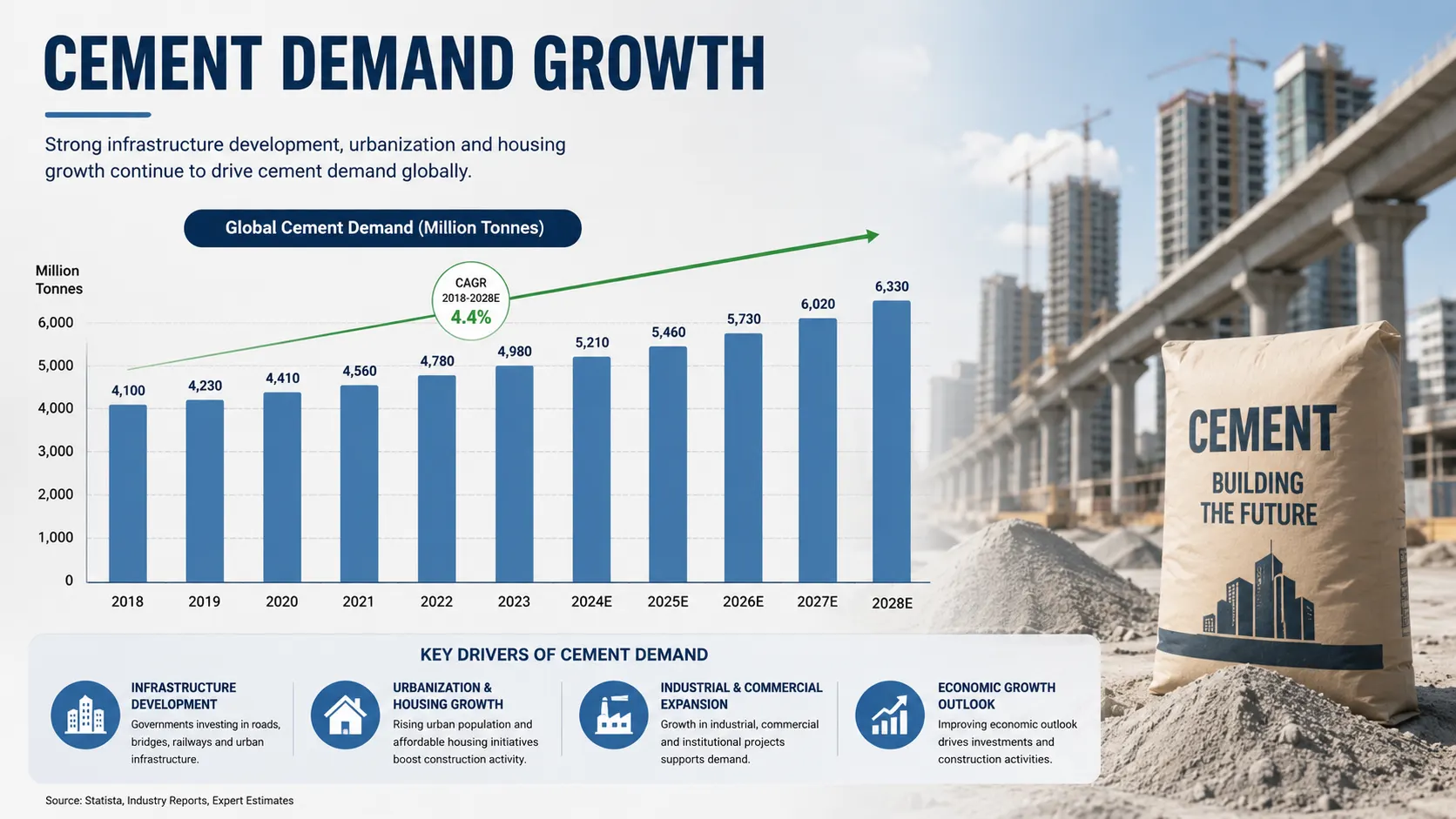
Demand growth in the domestic cement market is expected to moderate to around 5 per cent in the current financial year, compared to an estimated 6.5–7.5 per cent growth in the previous fiscal. The outlook reflects a gradual normalization of demand after a period of strong expansion. According to the annual report of one of the country’s leading cement producers, capacity expansion is being undertaken in a phased and calibrated manner. This approach is aimed at aligning new capacity with project pipelines and region-specific demand, while ensuring timely absorption of output and efficient use of capital. The company expects cement demand across India to grow by approximately 5 percent in FY 2026–27, driven mainly by continued demand from the housing and infrastructure segments. This follows robust growth of 6.5–7.5 percent recorded in FY 2025–26, supported by strong construction activity. Industry demand is expected to remain resilient, benefiting from urban housing developments, rural infrastructure initiatives, and ongoing investments in roads, railways, and other large-scale infrastructure projects. These sectors are likely to provide a steady base for cement consumption despite the moderation in overall growth rates. The cement sector has also seen significant consolidation in recent years, with a relatively new major player expanding rapidly through acquisitions of multiple cement companies across different regions. This inorganic growth strategy has helped strengthen market presence and expand production capacity nationwide. At the same time, the Indian cement industry continues to be highly competitive, with the market led by a dominant player that has a consolidated production capacity exceeding 200 million tonnes per annum. Capacity additions, pricing discipline, and regional demand dynamics are expected to play a crucial role in shaping industry performance in the coming years.
Cement demand growth projected to moderate to nearly 5 percentage
Jun 15 2026
Latest Newsletter

Chennai Property Tax Deadline Today: September 30 Last Day to Pay Without Penalty
Sep 30 2026

Interest Rates May Rise to 5.50 percentage in October as Inflation Broadens
Sep 29 2026

Housing Sales Decline 6 percentage in Top 9 Cities Amid Weakening Demand
Sep 28 2026

Directs Commercial Sites to Be Assessed Under Existing Master Plan Rules
Sep 26 2026

TN Housing Board to Build New Homes Based on Public Demand
Sep 25 2026