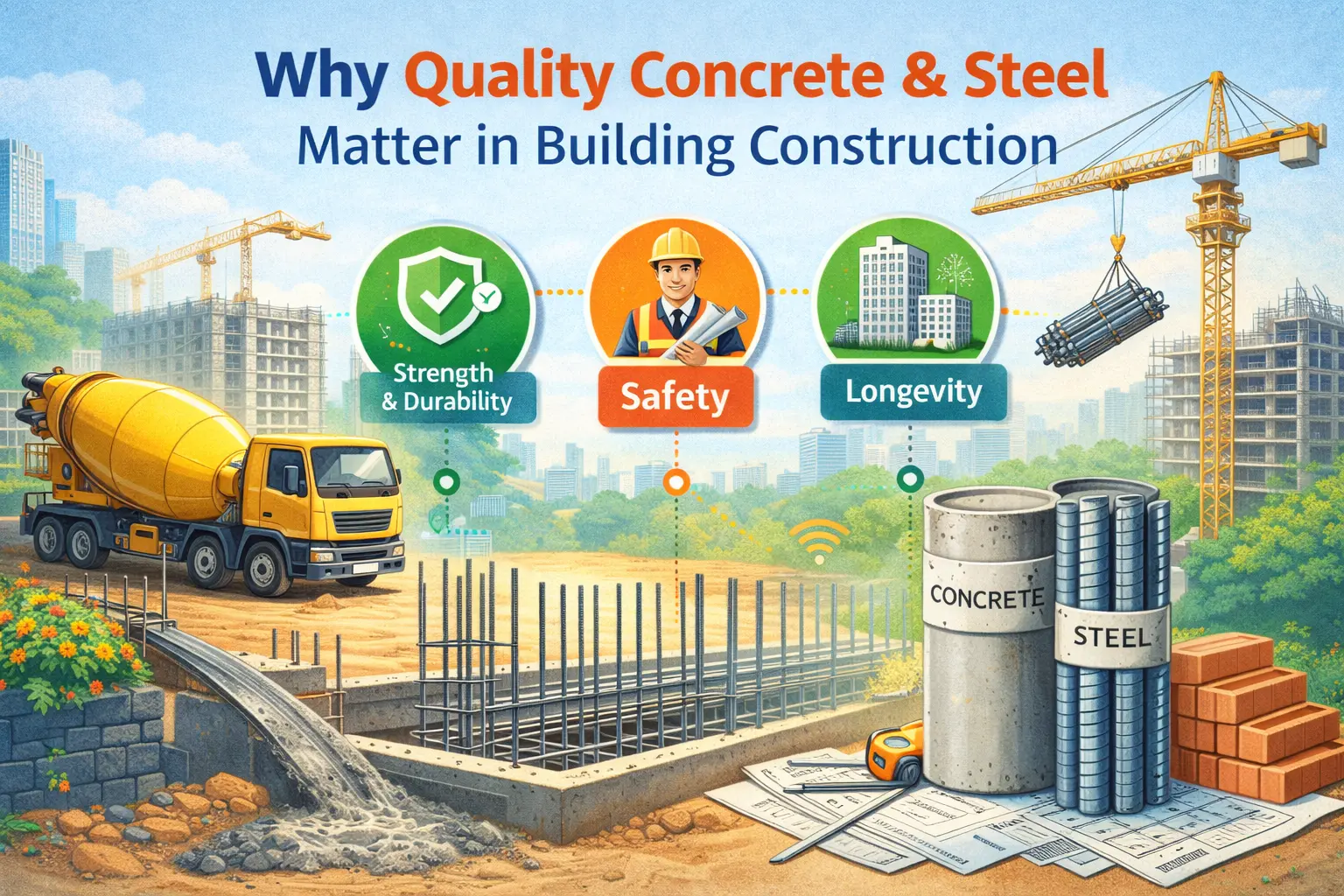
In building construction, concrete and steel form the backbone of nearly every structure—from residential homes to skyscrapers, bridges, and industrial facilities. While design aesthetics and architectural innovation often take center stage, the true performance, safety, and longevity of a building depend heavily on the quality of these two fundamental materials. Using high-quality concrete and steel is not just a technical choice; it is a critical investment in structural integrity, safety, and long-term value.
1. Structural Strength and Load-Bearing Capacity
Concrete and steel work together to support loads and resist forces such as gravity, wind, seismic activity, and thermal expansion. High-quality concrete offers superior compressive strength, allowing it to withstand heavy vertical loads without cracking or deforming. Quality steel, with proper tensile strength and ductility, absorbs tension and bending forces that concrete alone cannot handle. Inferior materials compromise this balance. Low-grade concrete may suffer from poor curing, improper mix ratios, or contamination, leading to reduced strength and early cracking. Similarly, substandard steel can fail under stress, increasing the risk of structural failure.
2. Safety and Risk Reduction
One of the most critical reasons quality materials matter is safety. Buildings constructed with high-quality concrete and steel are far more resistant to collapse, fire, and natural disasters. Properly manufactured steel maintains its integrity under extreme loads and performs predictably during seismic events, allowing structures to absorb and dissipate energy rather than fail suddenly. High-quality concrete also improves fire resistance, slowing the spread of flames and protecting embedded steel reinforcement. In contrast, poor-quality materials significantly increase the risk of accidents, endangering occupants and the surrounding environment.
3. Durability and Longevity
Durability is a defining characteristic of well-constructed buildings. Quality concrete resists environmental damage such as moisture penetration, chemical attack, freeze-thaw cycles, and corrosion of reinforcement. High-grade steel, when properly treated and coated, resists rust and fatigue over decades of use. Buildings constructed with inferior materials often experience premature deterioration—cracks, spalling, corrosion, and deformation—which leads to frequent repairs or even early demolition. High-quality materials extend a building’s service life, ensuring it remains functional and safe for generations.
Also Read: Construction Techniques
4. Cost Efficiency Over the Life Cycle
While high-quality concrete and steel may involve higher upfront costs, they result in significant savings over the building’s life cycle. Durable materials reduce maintenance expenses, repair frequency, and downtime. They also minimize the need for structural retrofits or emergency repairs. Low-quality materials may appear cost-effective initially, but hidden costs quickly emerge through frequent maintenance, safety concerns, and reduced property value. In long-term financial planning, quality materials deliver superior returns on investment.
5. Compliance with Standards and Regulations
Construction standards and building codes are established to protect public safety and ensure consistent performance. Quality concrete and steel are manufactured and tested to meet these regulatory requirements, ensuring compliance with local and international standards. Using substandard materials not only risks structural failure but can also lead to legal penalties, project delays, failed inspections, and loss of professional credibility. Compliance through quality materials safeguards both builders and owners.
6. Sustainability and Environmental Responsibility
Sustainable construction depends heavily on material quality. High-quality concrete and steel contribute to sustainability by lasting longer, reducing waste, and minimizing the need for replacements. Advanced steel production and optimized concrete mixes can also reduce carbon emissions through efficiency and recycling. Durable materials lower the environmental footprint of buildings by conserving resources and reducing demolition waste. Quality construction aligns with modern green building goals and responsible development practices.
7. Enhanced Performance and Design Flexibility
Quality materials enable engineers and architects to push design boundaries safely. High-strength steel allows for longer spans, slimmer columns, and more open spaces. Superior concrete mixes enable innovative forms, smoother finishes, and better integration with modern construction techniques such as precast and post-tensioned systems. Inferior materials limit design possibilities and often require excessive reinforcement or conservative designs to compensate for reduced performance.
8. Reputation and Trust in Construction Projects
The use of quality concrete and steel reflects professionalism, expertise, and commitment to excellence. Developers, contractors, and engineers who prioritize material quality build trust with clients, regulators, and end-users. This reputation is invaluable in an industry where safety, reliability, and performance are paramount.
Conclusion
Quality concrete and steel are not optional components in building construction—they are essential foundations of safety, durability, and long-term value. Their impact extends beyond structural strength to include cost efficiency, sustainability, regulatory compliance, and public trust. Investing in high-quality materials ensures that buildings not only stand tall but stand the test of time, protecting lives and delivering lasting performance in an ever-evolving built environment.
https://www.livehomes.in/live_insights