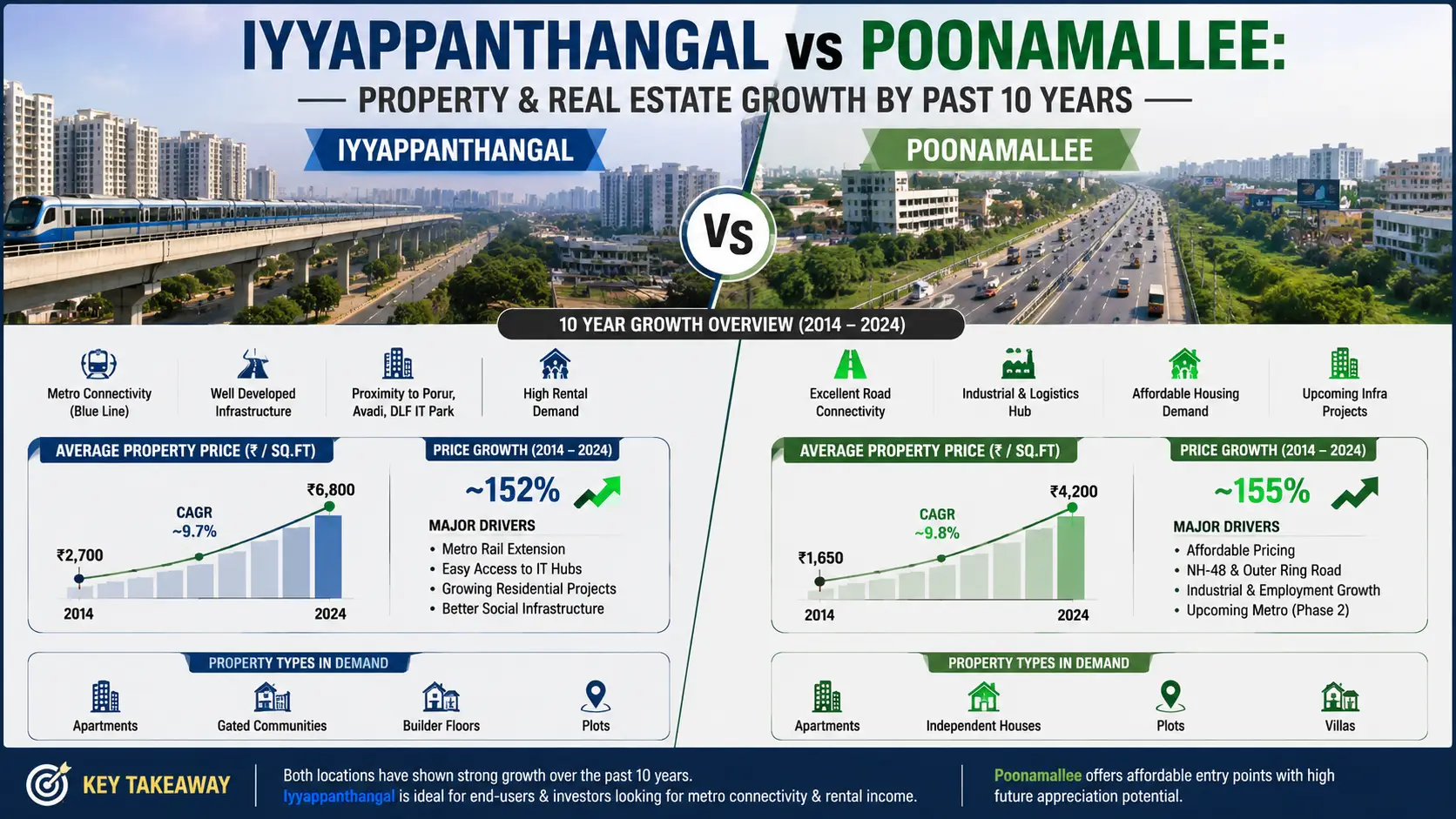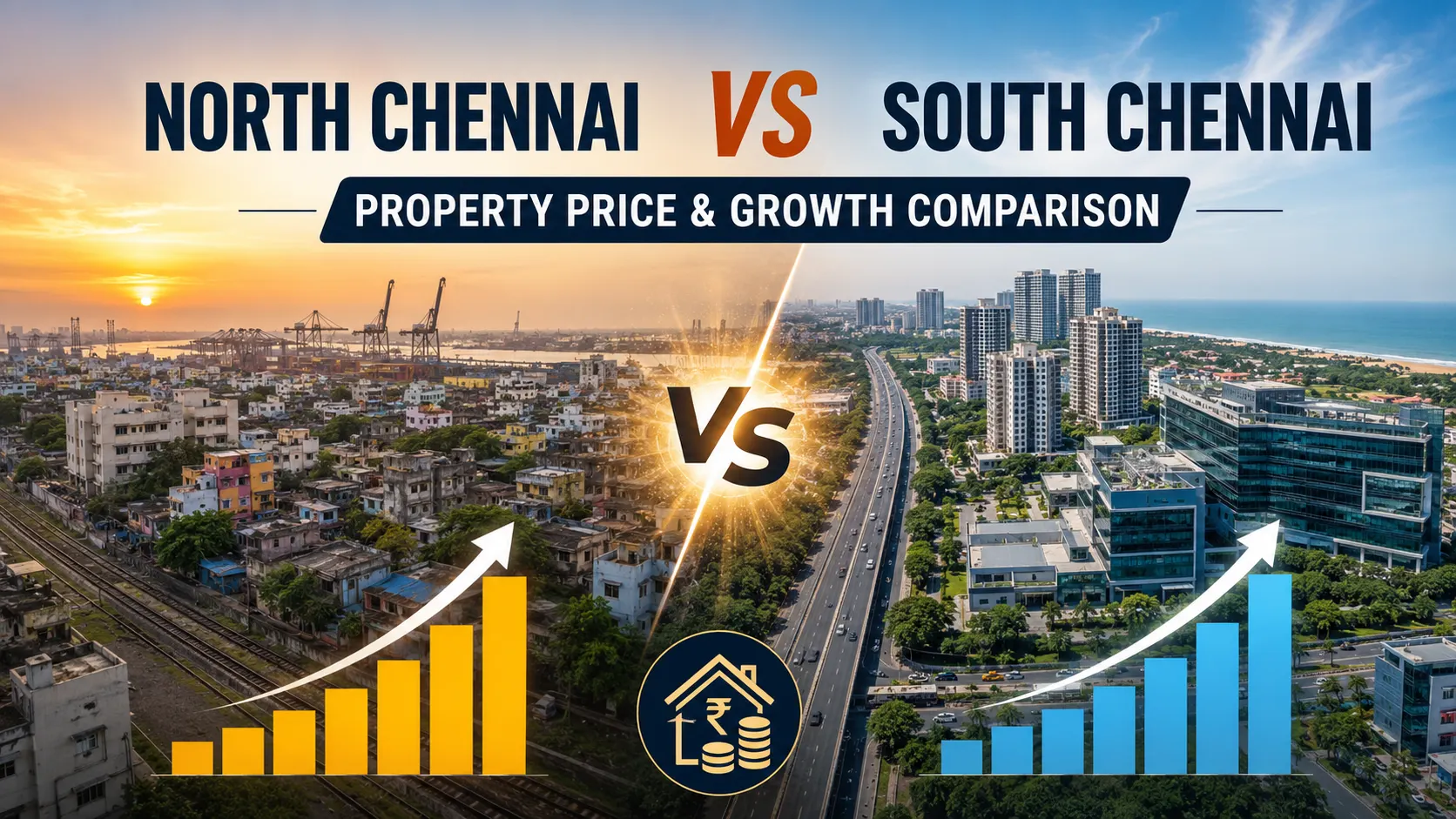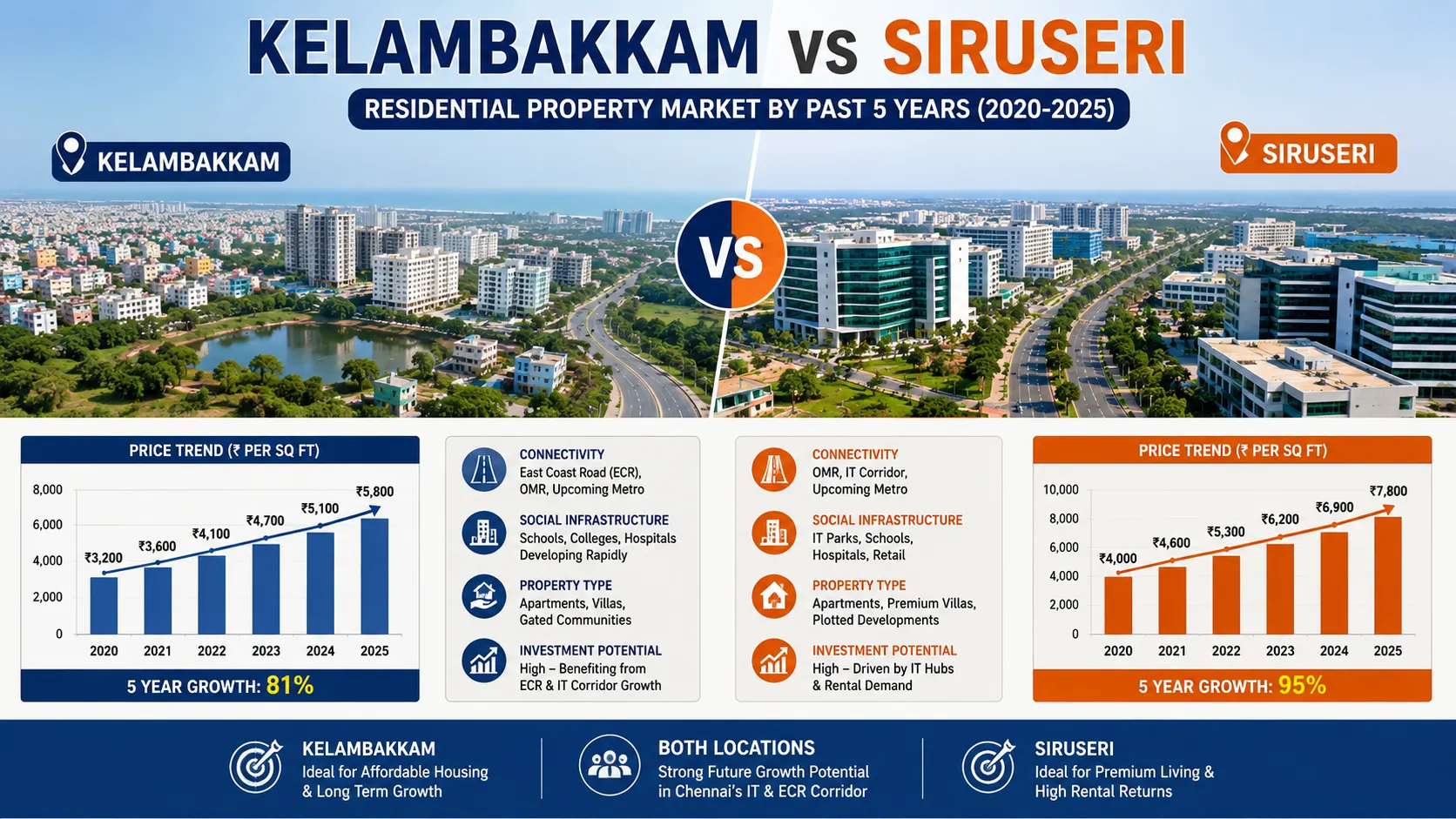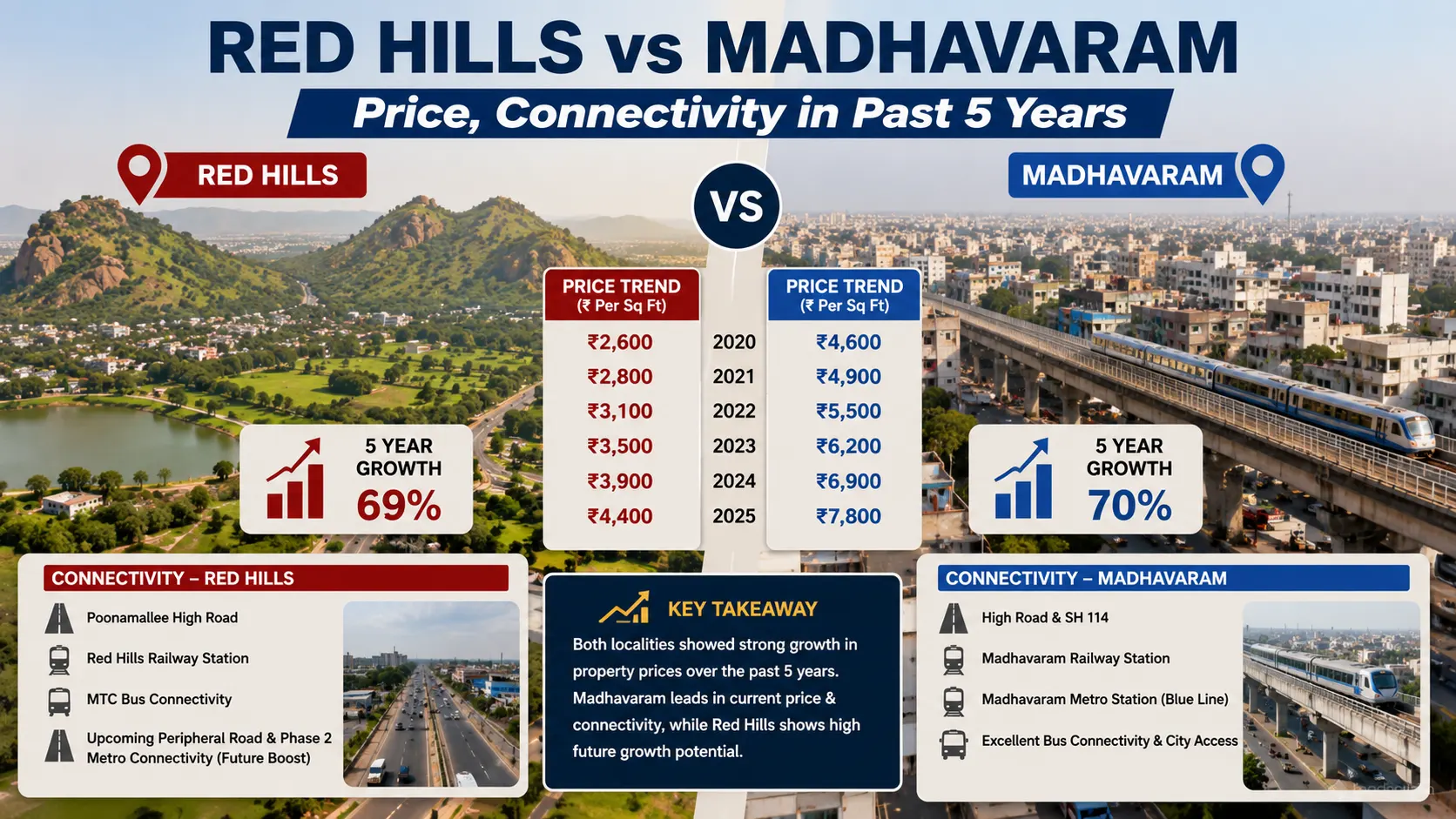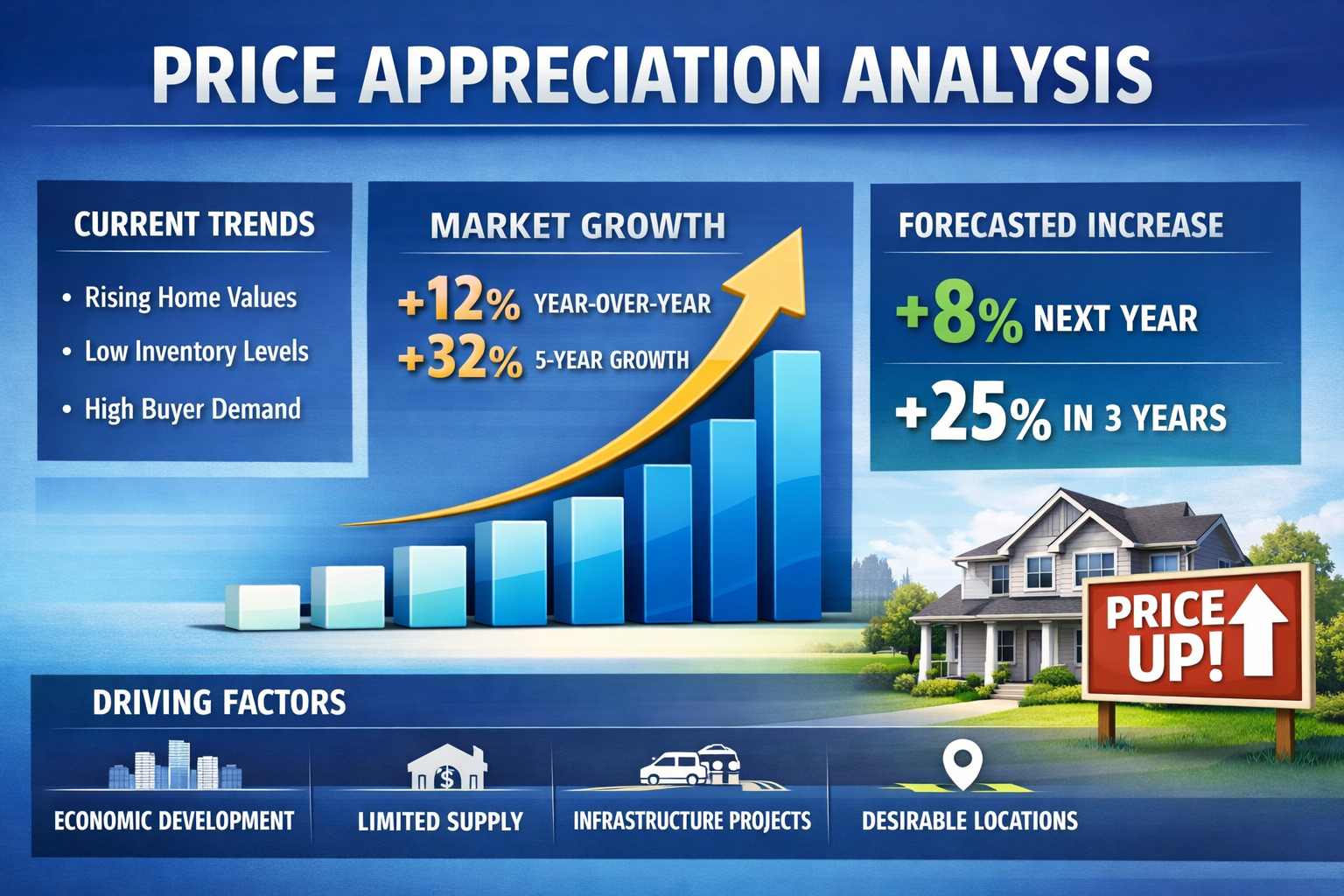
Over the last three years, the Chennai real estate market has shown steady and sustainable price appreciation, driven more by fundamentals than speculation. The trend reflects stability, gradual growth, and strong end-user demand.
1. Overall Price Movement (3-Year View)
- Residential property prices in Chennai have increased moderately and consistently, averaging 5–8% per year across most residential micro-markets.
- Unlike sharp spikes seen in some metros, Chennai’s appreciation curve has been linear, indicating a mature and resilient market.
Insight:
This pattern signals a low-risk, end-user-driven market, where prices rise due to genuine housing demand rather than short-term investor activity.
2. Micro-Market-Driven Appreciation
- Peripheral and suburban corridors have outperformed central city locations in percentage growth.
- Areas supported by IT employment hubs, metro connectivity, and arterial roads recorded higher appreciation than older, fully developed neighborhoods.
Insight:
Price growth is location-specific, not city-wide uniform. Infrastructure and job proximity have become the primary appreciation catalysts.
3. Demand Characteristics Influencing Prices
- The majority of buyers during this period were owner-occupiers, not speculators.
- Demand was concentrated in mid-income and upper-mid segments, keeping pricing realistic and absorption healthy.
Insight:
Because buyers intend to live in these homes, prices are supported by real affordability thresholds, preventing artificial inflation.
4. Supply Discipline and Its Effect on Prices
- New project launches remained measured, avoiding excessive inventory buildup.
- Developers focused on phased construction, which helped maintain price stability while allowing gradual increases.
Insight:
Balanced supply ensured prices moved upward without pressure discounts or price corrections.
5. Cost-Side Support for Appreciation
- Rising construction costs (cement, steel, labor) over the last three years pushed base prices higher.
- Developers passed on only part of the increased cost, resulting in incremental price hikes instead of sudden jumps.
Insight:
Price appreciation was supported by cost economics, not speculation—making the growth structurally strong.
6. Rental Market Reinforcing Capital Values
- Rental demand improved steadily due to office reopenings and workforce migration.
- Stable rental yields strengthened buyer confidence, indirectly supporting capital appreciation.
Insight:
When rentals rise gradually, capital values tend to follow, reinforcing long-term price growth.
7. What the 3-Year Trend Indicates About Chennai’s Market
- Chennai is a fundamentally strong but conservative market.
- Appreciation favors patience and long-term holding, not quick flips.
- Price growth aligns closely with economic activity, infrastructure delivery, and housing needs.
Conclusion
Over the past three years, Chennai’s real estate prices have appreciated in a controlled, predictable, and sustainable manner. The market rewards end-users and long-term investors, reflecting a city where real estate growth is rooted in employment, infrastructure, and livability, rather than speculative cycles.