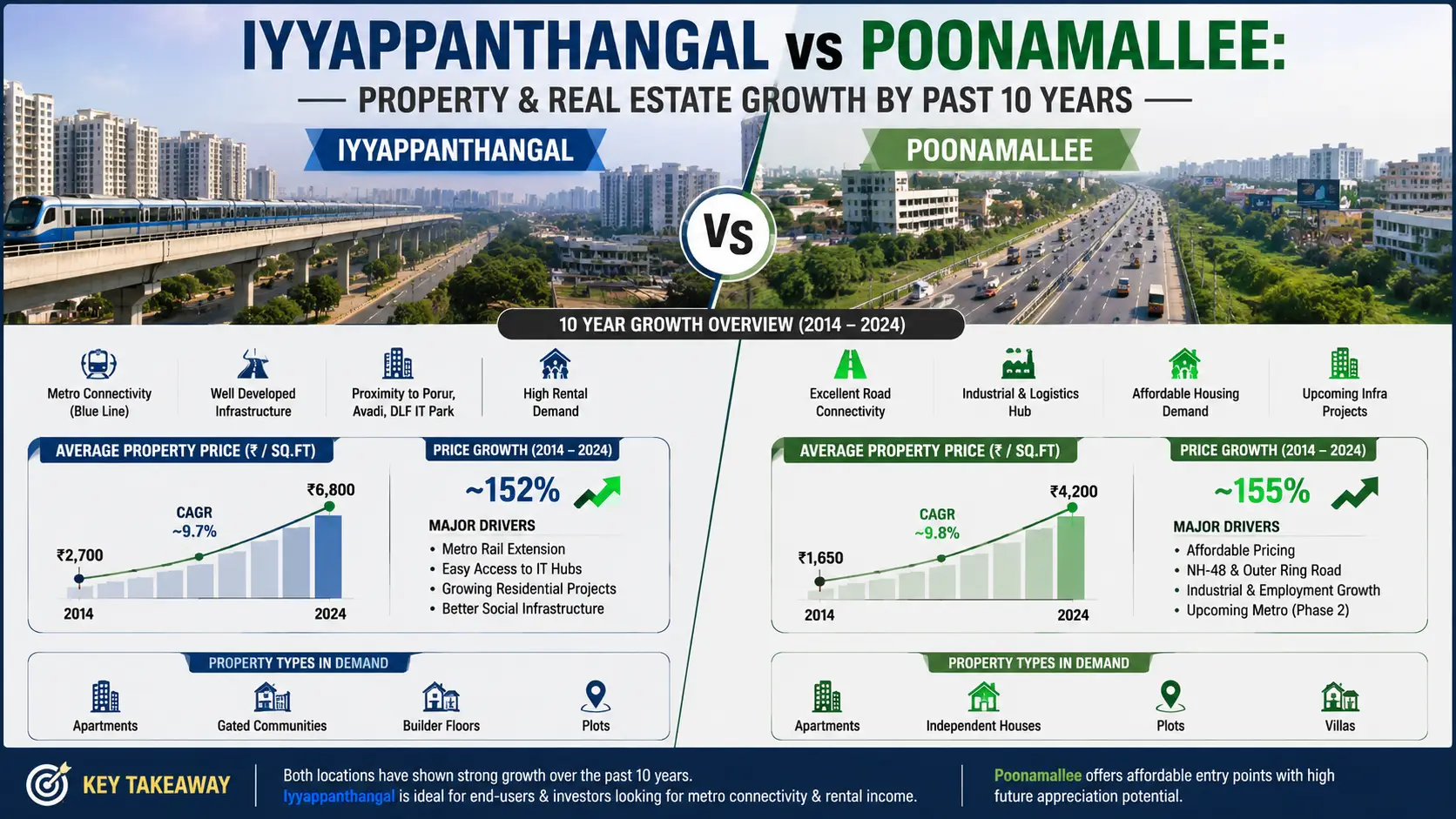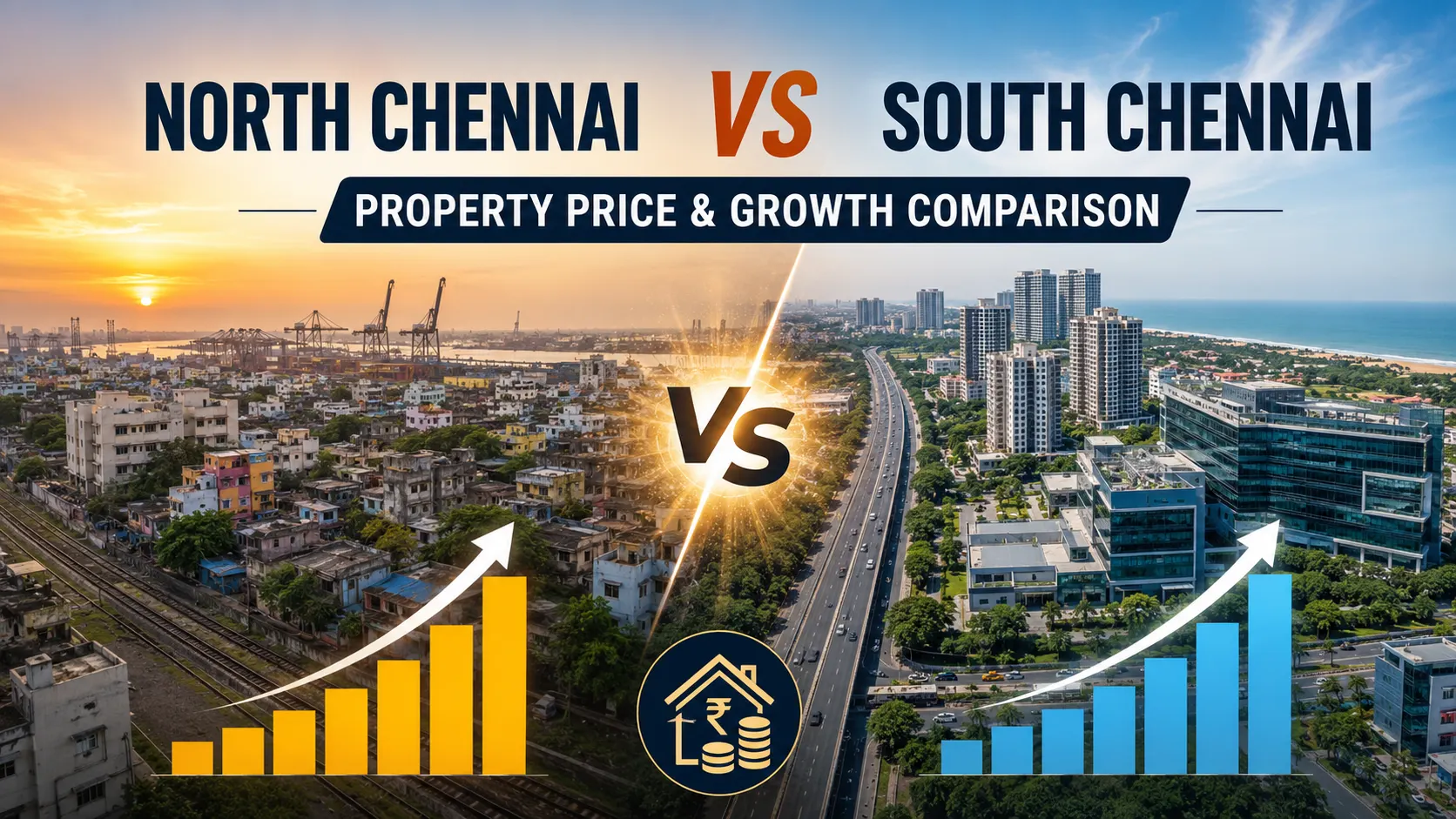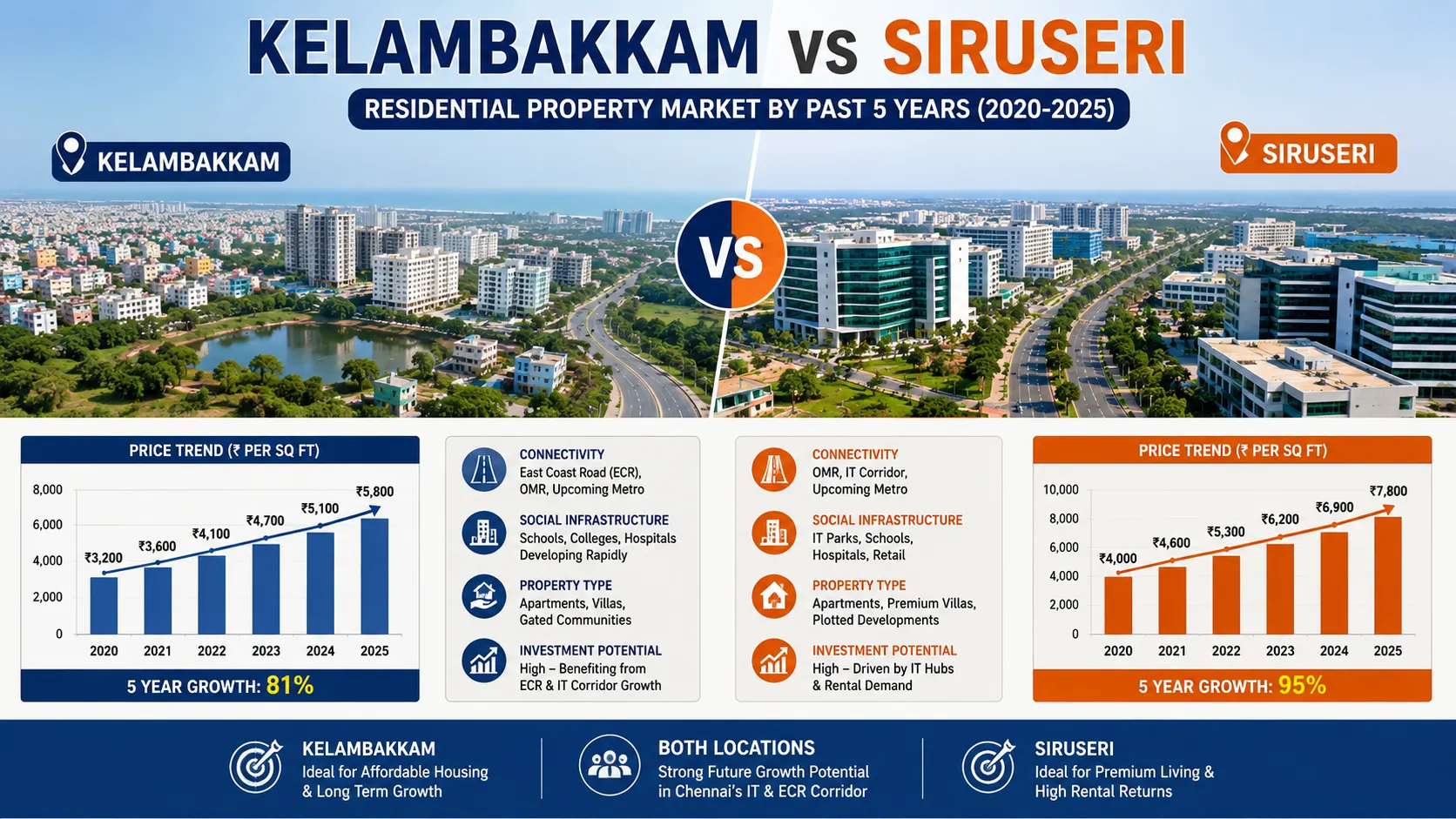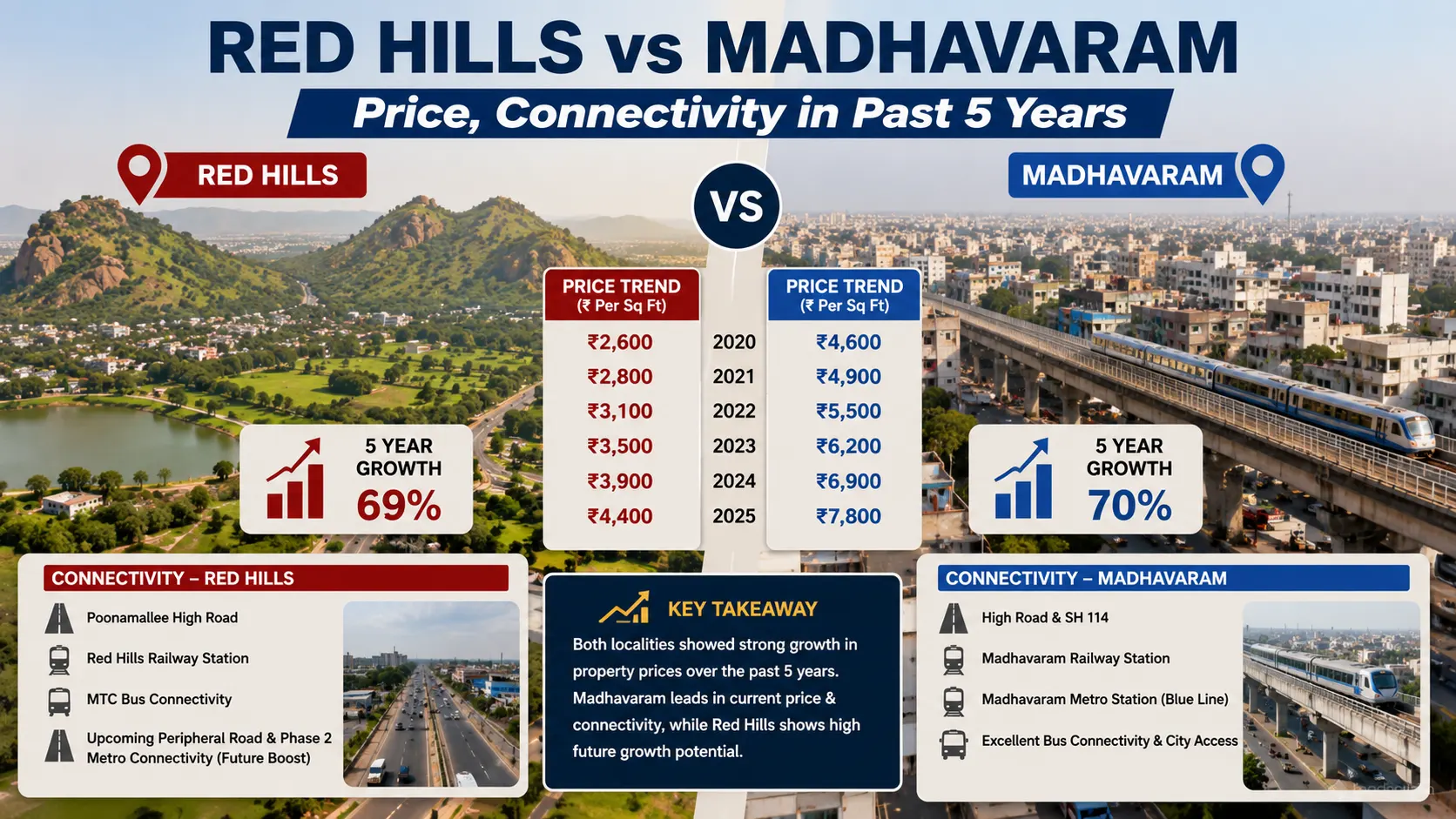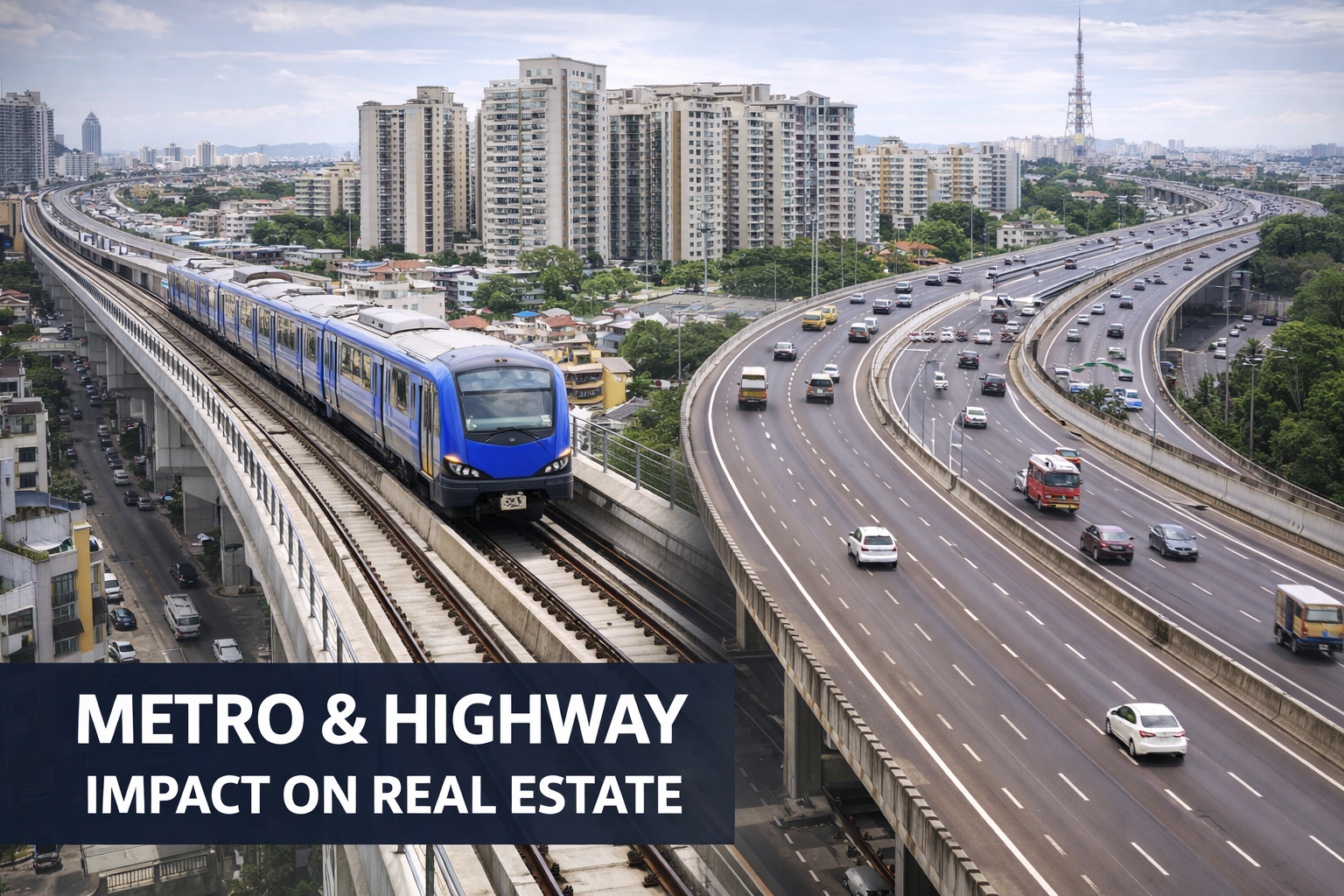
1. Urban Context of Chennai Real Estate
Chennai is a linear, corridor-driven city where employment hubs, residential zones, and industrial areas have historically developed along major roads such as the coast, Grand Southern Trunk (GST), and Old Mahabalipuram Road (OMR). Transportation infrastructure has therefore played a decisive role in shaping land values and real estate growth.
2. Impact of Metro Rail on Real Estate
2.1 Accessibility and Time Compression
The expansion of the Chennai Metro Rail reduces travel time between residential suburbs and employment centers. This “time compression” effect makes previously distant locations functionally closer to the city core, increasing their residential and commercial viability.
Real estate effect:
- Increased demand in areas connected by metro corridors
- Higher land utilization and denser developments near stations
- Shift in buyer preference toward transit-accessible locations
2.2 Property Value Appreciation Near Metro Corridors
Properties within walkable distance of metro stations typically experience:
- Higher capital values compared to non-metro areas
- Faster absorption rates for new residential projects
- Stronger rental demand from working professionals
This occurs because metro connectivity lowers daily commuting costs and improves predictability of travel.
2.3 Transit-Oriented Development (TOD) Influence
Metro infrastructure encourages compact, mixed-use development patterns:
- Residential + retail + office clustering near stations
- Increased Floor Space Index (FSI) utilization
- Vertical development replacing low-density housing
This reshapes land economics by increasing revenue potential per unit of land.
2.4 Construction-Phase vs Operational-Phase Impact
- Construction phase: Temporary disruptions (traffic diversions, noise, access issues) may slow price growth locally.
- Operational phase: Demand strengthens once stations open, often leading to sustained appreciation.
2.5 Social and Demographic Shifts
Metro connectivity attracts:
- Young professionals
- Nuclear families
- Tenants seeking mobility over car ownership
This alters the housing mix, increasing apartments and reducing independent housing in metro-served zones.
3. Impact of Highways and Major Roads on Real Estate
3.1 Expansion of Urban Boundaries
Highways extend the functional city limits by connecting peripheral land parcels to the main urban economy. This enables:
- Large-scale residential townships
- Industrial and logistics parks
- Warehousing and commercial clusters
Land that was earlier considered rural transitions into urban real estate.
3.2 Corridor-Based Real Estate Growth
Major highways such as:
- Old Mahabalipuram Road
- Grand Southern Trunk Road
have created linear real estate development, where property values increase progressively closer to the road and major junctions.
3.3 Differentiated Impact by Proximity
- Near (but not abutting) highways: Higher desirability due to access benefits
- Direct frontage properties: Mixed impact due to noise, pollution, and safety concerns
- Interior layouts with highway access: Often experience the strongest appreciation
3.4 Commercial and Industrial Real Estate Effects
Highways strongly influence:
- Logistics hubs
- Warehousing demand
- Automobile showrooms
- Office parks with large floor plates
This increases land value for non-residential use and changes zoning patterns over time.
4. Combined Impact of Metro and Highway Infrastructure
4.1 Multi-Modal Connectivity Advantage
Areas served by both metro lines and highways gain:
- Higher real estate liquidity
- Wider buyer and tenant base
- Balanced residential and commercial growth
Such locations become secondary urban centers rather than suburbs.
4.2 Redistribution of Real Estate Demand
Infrastructure reduces pressure on the traditional city core by:
- Shifting housing demand outward
- Creating multiple growth nodes
- Encouraging decentralized employment zones
This results in more uniform price growth across the metropolitan region.
4.3 Long-Term Price Stability
Infrastructure-led growth tends to be:
- Less speculative
- More resilient during market slowdowns
- Supported by end-user demand rather than short-term investors
5. Structural Changes in Chennai’s Real Estate Market
5.1 From Core-Centric to Corridor-Centric City
- Chennai’s real estate evolution shows a transition from:
- Central Business District dominance
to
- Infrastructure corridor dominance
- Metro lines and highways define future high-value zones more than traditional locality prestige.
5.2 Shift in Land Use Patterns
- Agricultural and vacant lands convert to residential layouts
- Low-rise housing replaced by apartments
- Commercial activity spreads beyond city center