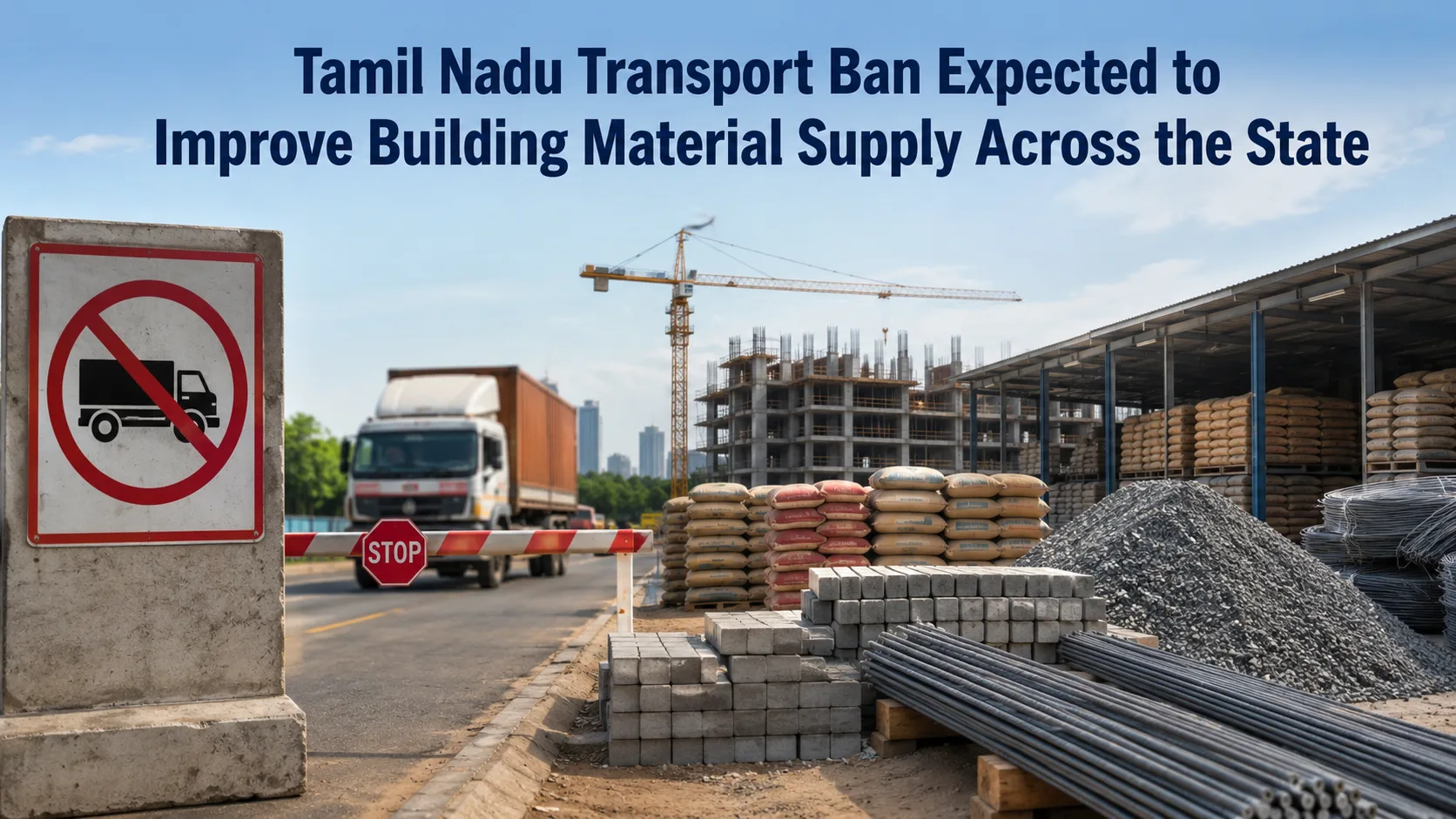
A temporary three-month restriction on transporting construction aggregates outside the state is expected to improve the availability of essential building materials for local construction activities. The measure has been introduced to address the growing gap between demand and supply, ensure adequate material availability for domestic projects, and discourage illegal mining practices. The construction industry has been facing a persistent shortage of legally sourced aggregates for several years. Rapid growth in residential housing, commercial developments, industrial projects, highways, bridges, and public infrastructure has significantly increased the demand for construction materials. However, the officially permitted production capacity has not kept pace with this rising demand, creating a substantial supply deficit. As a result, a considerable portion of construction materials has reportedly been sourced through unauthorized mining operations. Such activities not only violate mining regulations but also cause environmental damage, reduce government tax collections, and create an uneven playing field for legally operating quarry owners. Illegal extraction also affects the long-term sustainability of natural resources and increases the risk of safety and regulatory concerns. The temporary transport restriction is expected to retain a larger share of construction aggregates within the state, making them readily available for ongoing housing and infrastructure projects. With more materials remaining in the local market, builders and contractors may experience fewer supply disruptions and improved access to essential construction resources. The increased local availability of aggregates could also help stabilize market conditions by reducing dependence on unauthorized sources. Better supply is expected to improve transparency in the construction materials market and minimize artificial shortages created by limited availability. Industry experts believe this could also reduce the influence of unfair pricing practices and improve competition among legitimate suppliers. The restriction is likely to benefit various construction sectors, including residential apartments, independent houses, commercial buildings, industrial developments, government infrastructure works, and public utility projects. Improved material availability may also support faster project execution by reducing delays caused by shortages of M-sand, crushed stone, gravel, P-sand, rough stone, and other aggregates. Another expected outcome is a moderate reduction in mining violations. When legally produced materials become more readily available within the state, the incentive for unauthorized extraction is expected to decrease. This can strengthen regulatory compliance, encourage responsible quarry operations, and improve monitoring of mining activities. The construction sector may also witness better price stability during the restriction period. Although material prices depend on several factors such as fuel costs, transportation expenses, seasonal demand, and production levels, improved local availability could reduce sudden price fluctuations caused by supply shortages.
Key Highlights
-
Temporary transport restriction aims to improve local availability of construction materials.
-
Expected to reduce the gap between demand and legally permitted production.
-
Greater supply within the state may support residential, commercial, and infrastructure projects.
-
Improved availability could help reduce dependence on unauthorized mining.
-
Better market supply may discourage unfair pricing and improve competition.
-
Increased use of legally sourced materials can enhance tax compliance and government revenue.
-
Moderate reduction in mining violations is expected during the restriction period.
-
Builders and contractors may benefit from improved material availability and smoother project execution.