Tamil Nadu has announced a series of housing and urban development measures aimed at simplifying building approvals, expanding digital services and improving housing infrastructure across the state. As part of the proposed reforms, the land-use change application process will be fully digitised to make approvals more accessible and reduce procedural delays. The government will also expand self-certification for residential buildings up to 5,000 sq ft. Self-certification will additionally be introduced for small commercial buildings up to 1,500 sq ft. A third-party certification system is proposed for eligible commercial, residential and industrial buildings. The limits will cover commercial buildings up to 3,230 sq ft, residential buildings up to 8,070 sq ft and industrial structures up to 26,900 sq ft in approved industrial layouts. The approval limits for residential projects handled by local bodies will also be increased. Corporations and municipalities will be permitted to process residential projects up to 16,140 sq ft, while town and village panchayats will have approval limits of up to 12,912 sq ft. Alongside approval reforms, the state has announced a major programme to address ageing and unsafe housing. Around 12,648 dilapidated flats across 20 project areas are proposed to be reconstructed at an estimated cost of Rs 2,882.62 crore. The demolition of 9,918 unsafe units will be taken up as the first stage. The government also plans to spend Rs 96.63 crore on renovating 41,664 older flats. Another Rs 355 crore has been earmarked for improving civic infrastructure across 208 housing sites. A new integrated Smart Habitat Management Platform, estimated to cost Rs 75 lakh, is also planned to strengthen digital management of housing projects and related services. The measures are aimed at making construction approvals faster and more transparent while improving the safety, infrastructure and management of housing projects across Tamil Nadu. Implementation will follow through the relevant government orders and departmental procedures.
Tamil Nadu Housing Update 2026 Building Approval Reforms and Financial Relief Announced
Aug 29 2026

Latest Newsletter

Home Loans at Low Interest Rates How Borrowers Can Save Up to Rs 12 Lakh
Aug 28 2026

Tamil Nadu Cement Industry Gains as Limestone Tax Comes to an End
Aug 27 2026
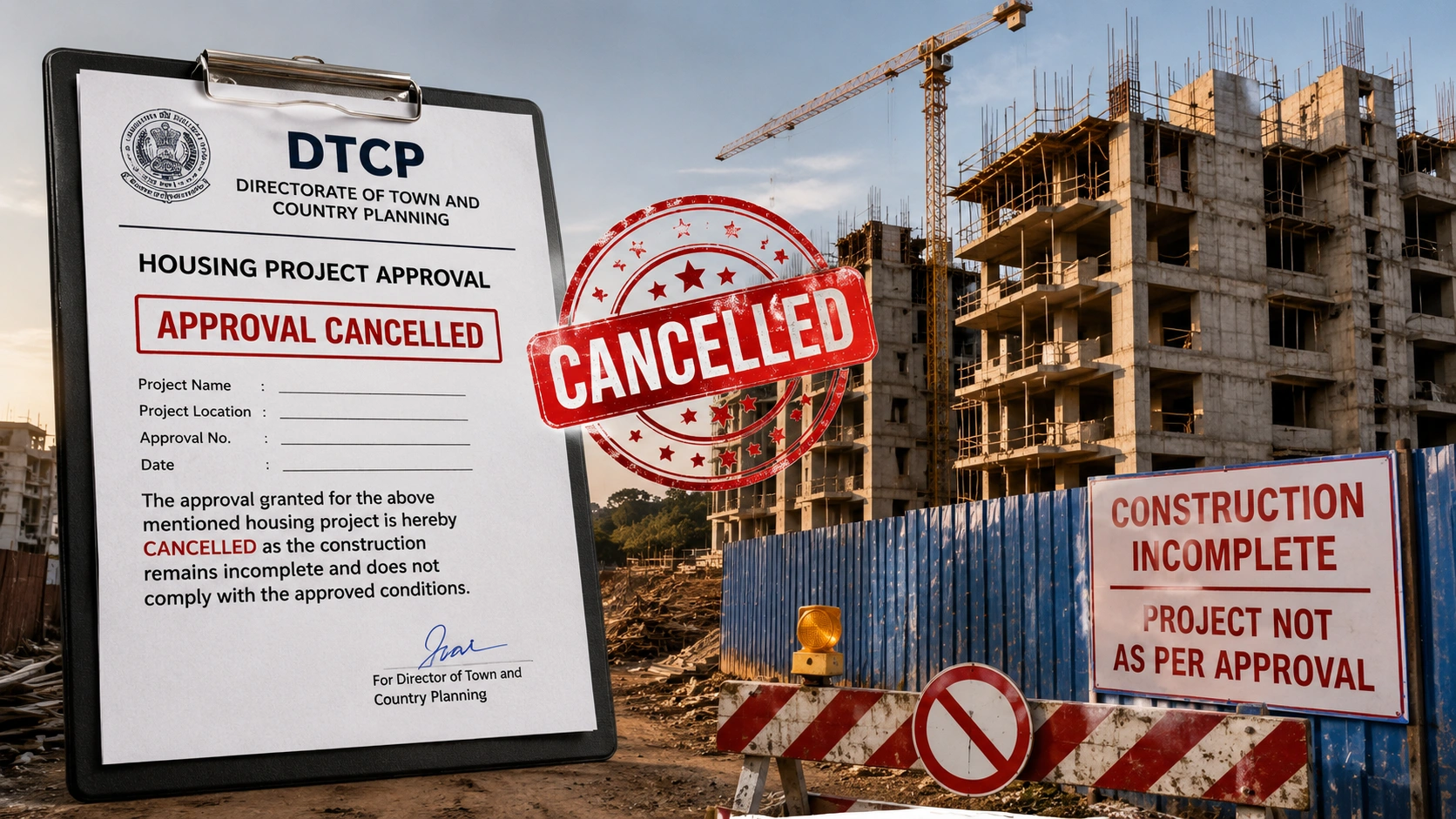
DTCP Cancels Housing Project Approval as Construction Remains Incomplete
Aug 26 2026

Chennai Airport Expansion What Happens to the Acquired Land
Aug 25 2026

Parandur Airport Project Scrapped Tamil Nadu Plans New Airport Site, Chennai to Get 5th Terminal
Aug 24 2026