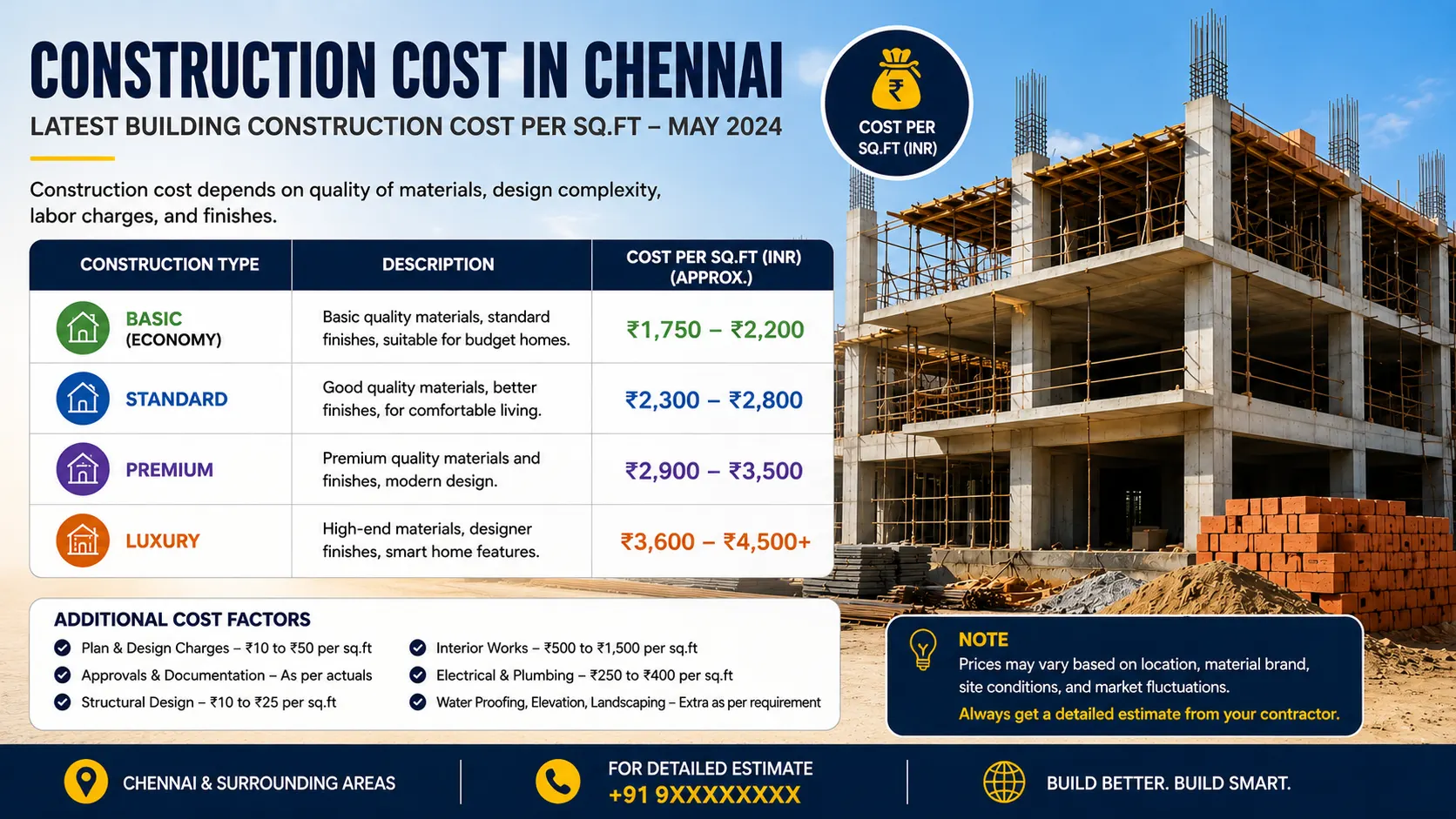
The cost of building a home is set to rise sharply as prices of key construction materials have increased by over twenty-three percent, industry sources said. As a result, a house currently priced at one crore could become nearly ten percent more expensive in the coming months, they warned. The surge in material costs has been attributed to a combination of global and local factors. Rising fuel prices, higher costs of explosives used in quarrying, and disruptions linked to geopolitical tensions in West Asia have pushed up input expenses. In addition, the shutdown of several unauthorized quarries has led to an acute shortage of raw materials, placing further strain on supply chains. Experts noted that price increases have been recorded across a wide range of construction inputs. These include ready-mix concrete, manufactured sand, processed sand, aggregates, and materials used for road construction. Ready-mix concrete prices have risen by three hundred to five hundred per cubic meter, depending on the grade. Commonly used grades such as M20, M25, and M30 have seen increases of at least five hundred per cubic meter. Construction aggregates have also gone up by around three hundred to five hundred. While the industry has broadly supported government action to curb illegal mining, developers said the sudden enforcement measures have significantly reduced material availability. This has created serious pressure on construction timelines and procurement systems, they added. Industry representatives pointed out that the housing sector was already facing challenges due to international developments affecting fuel and logistics costs. The recent supply disruptions have compounded these issues, making cost escalation unavoidable. They cautioned that if the situation persists, developers may have little choice but to pass on the higher costs to homebuyers. Activists, meanwhile, stressed the need for authorities to remain firm against illegal mining despite the supply crunch. They argued that stricter regulation is essential for long-term sustainability and suggested that construction materials sourced legally within the state should be prioritized for local use to stabilize supply and control prices.
Rising Construction Material Costs Push Up Home Prices, Warn Chennai Developers
Jun 11 2026
Latest Newsletter

Chennai Property Tax Deadline Today: September 30 Last Day to Pay Without Penalty
Sep 30 2026

Interest Rates May Rise to 5.50 percentage in October as Inflation Broadens
Sep 29 2026

Housing Sales Decline 6 percentage in Top 9 Cities Amid Weakening Demand
Sep 28 2026

Directs Commercial Sites to Be Assessed Under Existing Master Plan Rules
Sep 26 2026

TN Housing Board to Build New Homes Based on Public Demand
Sep 25 2026