What Happens When Guideline Value Increases?
1. Impact on Property Prices
- Developers and sellers usually increase asking prices to match the higher guideline value.
- It creates a new price floor, reducing under-reporting of property values.
Result: Prices move up, but affordability may drop.
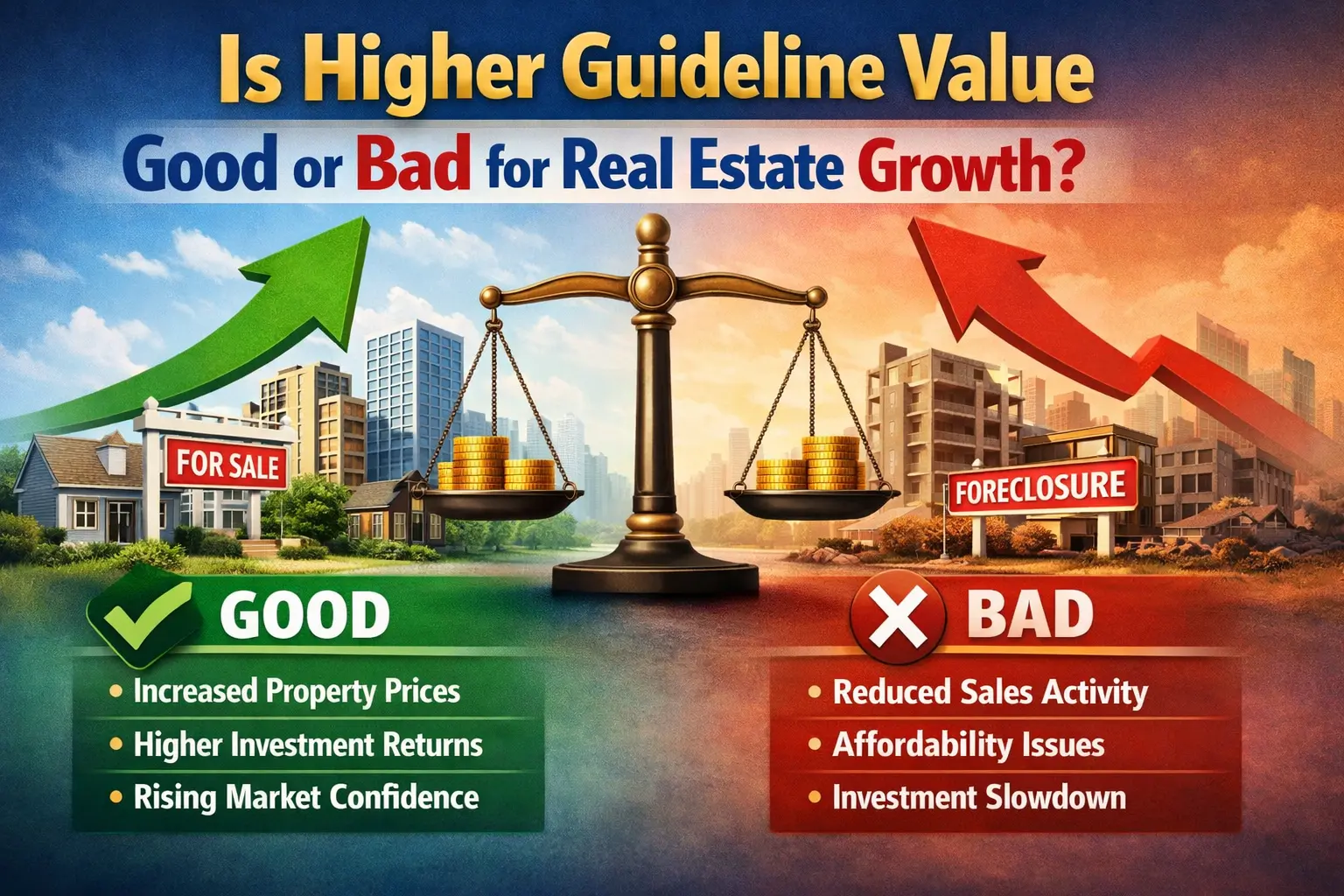
How to Higher Guideline Value HELPS Real Estate Growth
1. More Transparency & Less Black Money
- Reduces cash components in transactions
- Improves market credibility and investor confidence
2. Higher Government Revenue
- Increased stamp duty & registration income
- More funds for infrastructure, roads, metro, and public projects
- Infrastructure development boosts long-term real estate value
3. Strong Signal of Market Maturity
- Indicates government confidence in an area’s growth
- Attracts institutional investors and organized developers
4. Long-Term Appreciation
- Existing property owners benefit from higher asset valuation
- Encourages planned development instead of speculative underpricing
Best for:
- Long-term investors
- Landowners
- Established developers
- Prime and high-demand locations
Also Read: Paying Chennai Property Tax Online Benefits for Property Owners
How Higher Guideline Value Can SLOW Real Estate Growth
1. Reduced Affordability
- Buyers pay higher stamp duty and registration charges
- First-time buyers and middle-income households feel the pressure
2. Slower Sales Volume
- Short-term dip in transactions, especially in residential markets
- Budget homes and peripheral areas are most affected
3. Increased Project Costs for Developers
- Higher land acquisition and compliance costs
- Developers may delay launches or reduce new supply
4. Risk of Market Stagnation (If Increased Too Fast)
- If guideline value rises faster than market demand, it can freeze transactions
Worst for:
- End users
- Affordable housing segment
- Small builders
- Price-sensitive markets
Area-Wise Impact
- Prime city zones: Mostly positive, absorbs increase easily
- Developing suburbs: Mixed impact, depends on infrastructure
- Rural / fringe areas: Can negatively affect demand if growth is not organic
Conclusion: Good or Bad?
- A higher guideline value is GOOD for real estate growth in the long run
- It can be BAD in the short term if increased sharply or without infrastructure support
The key factor:
Growth must be gradual, data-driven, and aligned with market demand
Smart Advice
- Buyers: Buy before guideline revisions or negotiate better deals during slowdowns
- Investors: Focus on locations with upcoming infrastructure
- Developers: Align pricing strategy with absorption capacity