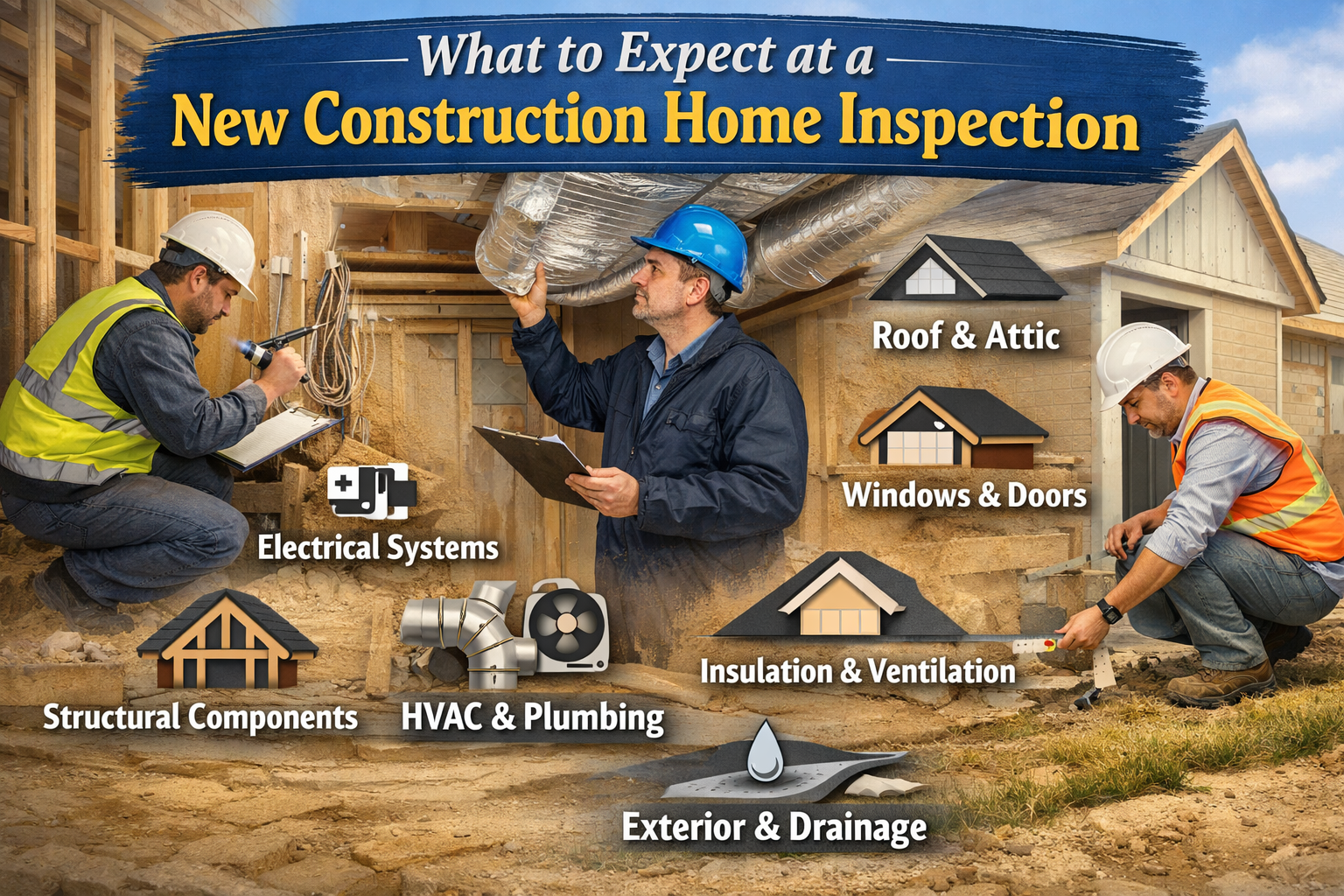
A new construction home inspection is a comprehensive, independent evaluation of a newly built home to verify that it has been constructed correctly, safely, and according to accepted residential construction standards. Even though the home is new, defects are common due to tight construction schedules, subcontractor turnover, human error, and incomplete oversight. A professional home inspection is not designed to criticize the builder but to protect the buyer by identifying problems early—before they turn into costly repairs, safety hazards, or long-term structural issues.
Understanding the Purpose of a New Construction Inspection
New homes are built in stages by multiple subcontractors—framers, electricians, plumbers, HVAC installers, roofers, and finish crews. Each trade works independently, and mistakes can be hidden once walls and finishes are installed. City or municipal inspections verify minimum code compliance, not workmanship quality or long-term performance. A private home inspector goes beyond code checks and evaluates whether systems are installed correctly, safely, and logically.
Types of New Construction Inspections
Pre-Drywall Inspection (Phase Inspection)
This inspection occurs after framing, plumbing, electrical, and HVAC rough-ins are completed—but before insulation and drywall are installed.
This is one of the most valuable inspections because it allows the inspector to see:
- Structural framing connections
- Plumbing routing and pipe supports
- Electrical wiring paths
- HVAC ductwork and airflow design
Problems found at this stage are easier and less expensive to fix.
Final New Construction Inspection (Pre-Closing)
This inspection happens when the home is substantially complete and ready for occupancy. All systems should be installed, energized, and functional. This is the inspection most buyers schedule if they only choose one.
11-Month Warranty Inspection
Most builders provide a one-year workmanship warranty. An inspection near the end of that period helps identify issues caused by:
- Settlement
- Seasonal changes
- Material shrinkage
- Wear from daily use
Also Read: Occupancy Certificate OC Rules for Chennai Apartments
Detailed Breakdown of What Inspectors Examine
Foundation and Structural Integrity
Inspectors examine the foundation for:
- Cracks (vertical, horizontal, stair-step)
- Uneven settling or displacement
- Improper drainage at foundation walls
- Inadequate anchor bolts or hold-downs
Structural framing is evaluated for:
- Proper spacing and sizing of studs and joists
- Secure connections using approved fasteners
- Over-cut framing that weakens load-bearing elements
- Improperly notched or drilled beams and joists
Even small structural errors can affect the home’s longevity and resale value.
Roofing System and Attic Structure
- Roof inspections include:
- Shingle or roofing material installation
- Flashing at valleys, chimneys, and penetrations
- Roof ventilation design
- Sheathing attachment
- Signs of premature wear or poor workmanship
In the attic, inspectors check:
- Truss integrity
- Proper bracing
- Insulation depth and coverage
- Ventilation balance
Roof issues are among the most expensive defects to repair after closing.
Electrical System Evaluation
Inspectors assess the electrical system for safety and functionality, including:
- Main service panel installation
- Proper breaker sizing and labeling
- Grounding and bonding
- GFCI and AFCI protection
- Secure wire connections
- Outlet polarity and spacing
Common new-construction electrical defects include loose wiring, missing safety protection, and overloaded circuits.
Plumbing System Inspection
Plumbing inspections include:
- Supply line materials and routing
- Drain, waste, and vent system configuration
- Proper pipe slope for drainage
- Leak testing at fixtures and valves
- Water heater installation and safety features
Improper plumbing installation can cause hidden leaks that damage framing, drywall, and flooring.
HVAC and Mechanical Systems
The HVAC system is evaluated for:
- Proper equipment sizing
- Secure installation
- Duct sealing and insulation
- Balanced airflow
- Correct thermostat operation
- Condensate drainage
- Combustion air and exhaust safety (if applicable)
HVAC defects are common in new homes and can cause comfort issues and high energy costs.
Insulation and Energy Efficiency
Inspectors examine:
- Insulation type and R-value
- Consistent coverage without gaps
- Proper vapor barrier placement
- Air sealing around penetrations
- Attic and crawlspace insulation
Poor insulation is one of the leading causes of energy loss and moisture problems.
Windows, Doors, and Openings
Inspectors check:
- Window and door installation
- Flashing and sealing
- Smooth operation
- Locking mechanisms
- Weather resistance
Improper window installation is a major source of water intrusion in new homes.
Interior Construction and Finishes
Interior inspection includes:
- Wall and ceiling alignment
- Cracks, nail pops, and uneven surfaces
- Flooring installation quality
- Stair safety and handrails
- Cabinet mounting
- Countertop support
While cosmetic issues are common, inspectors prioritize items that could worsen over time.
Exterior Components and Site Drainage
Inspectors evaluate:
- Siding or exterior cladding installation
- Grading and slope away from the foundation
- Decks and balconies
- Handrails and guardrails
- Walkways and driveways
- Gutter and downspout discharge
Poor drainage is a leading cause of foundation and moisture problems.
Safety and Code-Related Concerns
Inspectors verify:
- Smoke detectors and carbon monoxide alarms
- Proper stair dimensions
- Safety glass in required locations
- Fire separation between garage and living space
- Emergency egress windows
These items directly impact occupant safety.
The Inspection Report and What Happens Next
After the inspection, you receive a detailed report that includes:
- Written descriptions of issues
- Photographic documentation
- Safety concerns
- Maintenance recommendations
- Items needing correction or monitoring
You can submit this report to the builder for repair requests or warranty claims.
Why New Construction Inspections Matter
New does not mean perfect
Mistakes are common during fast-paced builds
- Repairs are easier before closing
- Hidden defects can surface months later
- Independent inspections protect your investment
Skipping an inspection often leads to regret.
Frequently Asked Questions (FAQs)
Can a builder refuse a private inspection?
In most cases, no. Buyers generally have the right to an independent inspection, though advance notice may be required.
Will the inspector check local building codes?
Inspectors reference accepted building standards but are not code enforcement officers. They often identify issues that technically passed code but were poorly executed.
What are the most common issues found in new homes?
Improper drainage, HVAC defects, missing insulation, electrical errors, roof flashing problems, and framing issues are among the most frequent.
Should I get more than one inspection?
Yes. A pre-drywall and final inspection together provide the most protection.
How much does a new construction inspection cost?
Costs vary by location and home size, but inspections are a small investment compared to repair costs.
Is cosmetic damage worth reporting?
Yes. Cosmetic defects can indicate rushed workmanship and may worsen over time.
Can inspection findings delay closing?
Sometimes, delays are often beneficial if they prevent future problems.